
My ExportersIndia

For Buyer

For Seller

For Help

Acharya Electronix
gstGST : 29AMHPV4546K1ZA Write a Review

Our Products

  1. Sensors 3 Products available
  2. Electrical & Electronic Testing Devices

    2 Products available
  3. Instrumentation & Control Equipment

    1 Products available
  4. Servo Motors

    1 Products available
  5. Electric Motors & Components

    1 Products available
  6. Rulers

    1 Products available
  7. Logic Controllers

    1 Products available
  8. IT Solutions

    1 Products available
  9. Weighing Scales & Measuring Tapes

    1 Products available
  10. DC Motor

    1 Products available
  11. Others Products 1 Products available

Our Products

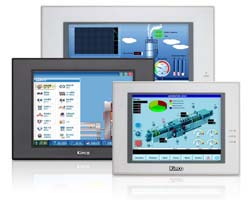
Leading Manufacturer, Supplier & Retailer of HMI Units.

Position Sensor

Widely acclaimed for providing high quality products, we are known as the well-known Supplier in the market. We are a flexible company. We support our clients wholeheartedly and provide them with the option to make payment online or offline. We are comfortable with diverse payment methods. Our sophisticated position sensors are available in various sensor areas ranging up to 500mm.  

View Complete Details

Servo Motors And Drives

A servomotor is a rotary actuator or linear actuator that allows for precise control of angular or linear position, velocity and acceleration.[1] It consists of a suitable motor coupled to a sensor for position feedback. It also requires a relatively sophisticated controller, often a dedicated module designed specifically for use with servomotors.Servomotors are not a specific class of motor although the term servomotor is often used to refer to a motor suitable for use in a closed-loop control system.Servomotors are used in applications such as robotics, CNC machinery or automated manufacturing.Torque ranging from 0.18 to 1650Nm is available.Drives : 30 watts to 15KW power, 3000RPM, with high resolution encoder, IP67 drives available
View Complete Details

Data Acquisition Systems

Data acquisition (DAQ) is the process of measuring an electrical or physical phenomenon such as voltage, current, temperature, pressure, or sound with a computer. A DAQ system consists of sensors, DAQ measurement hardware, and a computer with programmable software.Low, Medium and high channel count is available with 12 bit 32bit resolution. Dedicated measurements for temperature, strain, force, pressure, voltage and current DAQ systems are available
View Complete Details

Level Sensor

By using quality packing material, we make sure that the products are properly packed and there will be zero damage during transit. Moreover, our packaging experts stringently check the entire lot before making the final dispatch. Keeping pace with the contemporary market trends, we ensure on-time and safe delivery of the orders. Our advanced level sensor is designed for superior performance, easy use, low maintenance and long service life. 

View Complete Details

Magnetic Scales

 We are one of the leading Importers and Exporters of Magnetic Scales in Karnataka, India. We procure them from our prestigious vendors, who use the finest grade components and innovative techniques for manufacturing them. Owing to their operational fluency, sturdy structure, and accurate results, these are copiously demanded by our clients. We are well-capacitated to deliver them in bulk quantities, within the given time frame. We offer our Magnetic Scales at the leading market rate.


Description : 

  • Magnetic : Magnetic linear encoders[4] employ either active (magnetized) or passive (variable reluctance) scales and position may be sensed using sense-coils, Hall effect or magnetoresistive redheads. With coarser scale periods than optical encoders (typically a few hundred micrometers to several millimeters) resolutions in the order of a micrometer are the norm. 
  • Capacitive : Capacitive linear encoders work by sensing the capacitance between a reader and scale. Typical applications are digital calipers. One of the disadvantage is the sensitivity to uneven dirt, which can locally change the relative permittivity. 
  • Inductive : Inductive technology is robust to contaminants, allowing calipers and other measurement tools that are coolant-proof.[5] A well known application of the inductive measuring principle is the Inductosyn.[6]
View Complete Details

Load Cell

By employing impurities-free raw materials, our entire array of products is produced. We, as a trusted name, procure these raw materials only from reliable sources of the market. Bulk as well as retail order of the product can be fulfilled by us with ease. In addition, we guarantee to make delivery as per schedule. Our load cells are sturdy aluminium constructions and available in various capacities like 100kg, 250kg, 500kg, etc. 

View Complete Details

Micro DC Motors

We sell DC motors with gear heads. DC motors are applied in industrial machinery, robotics, tools, toys, simulators, transporters and other machines. SPUR, PLANETARY, BEVEL, Worm reducers are availabe. Rated voltage: 12, 24, 48VDC. On request dc motors with encoders are also available.

View Complete Details

Stepper, DC And BLDC Motors With Controllers

Stepper Motor:A stepper motor is an electro mechanical device which converts electrical pulses into discrete mechanical movements. The shaft or spindle of a stepper motor rotates in discrete step increments when electrical command pulses are applied to it in the proper sequence. 2 phase and 4 phase motors with NEMA 8 to NEMA 42 dimensions are available. DC Motor: A DC motor in simple words is a device that converts electrical energy (direct current system) into mechanical energy.we offer 3-watts to 240-watts with the speed of 2 - 215RPM motors are available with us. Rated torque 140 kgf cm availableBLDC Motors: DC brushless motors are electric 3-phase motors with Hall sensors.We offer power range up to 52 watts to 660W output with the rpm of 3000 to 4000 RPM. Rated torque from 1 to 21kgf cm.
View Complete Details

Data Acquisition System

Due to a vast industry experience, we have emerged as a prominent Importer and Supplier of Data Acquisition System. Our entity is based in Karnataka, India. Data acquisition (DAQ) is the process of measuring an electrical or physical phenomenon such as voltage, current, temperature, pressure, or sound with a computer. A DAQ system consists of sensors, DAQ measurement hardware, and a computer with programmable software. Compared to the traditional measurement systems, PC-based DAQ systems exploit the processing power, productivity, display, and connectivity capabilities of industry-standard computers providing a more powerful, flexible, and cost-effective measurement solution.

View Complete Details

Programmable Logic Controller

We are a distinguished Importer and Supplier of Programmable Logic Controller in Karnataka, India. The Programmable Logic Controller or programmable controller is a digital computer, which is used for the automation of typically industrial electromechanical processes, such as control of machinery on factory assembly lines, amusement rides, or light fixtures. PLCs are used in many machines, in many industries. PLCs are designed for multiple arrangements of digital and analogue inputs and outputs, extended temperature ranges, immunity to electrical noise, and resistance to vibration and impact. Programs to control machine operation are typically stored in battery-backed-up or non-volatile memory. A PLC is an example of a "hard" real-time system since output results must be produced in response to input conditions within a limited time, otherwise unintended operation will result.


Programmable Logic Controller, PLC, or Programmable Controller is a digital computer used for automation of typically industrial electromechanical processes, such as control of machinery on factory assembly lines, amusement rides, or light fixtures. PLCs are used in many machines, in many industries. PLCs are designed for multiple arrangements of digital and analog inputs and outputs, extended temperature ranges, immunity to electrical noise, and resistance to vibration and impact. Programs to control machine operation are typically stored in battery-backed-up or non-volatile memory. A PLC is an example of a "hard" real-time system since output results must be produced in response to input conditions within a limited time, otherwise unintended operation will result.


Programming : Early PLCs, up to the mid-1990s, were programmed using proprietary programming panels or special-purpose programming terminals, which often had dedicated function keys representing the various logical elements of PLC programs.[2] Some proprietary programming terminals displayed the elements of PLC programs as graphic symbols, but plain ASCII character representations of contacts, coils, and wires were common. Programs were stored on cassette tape cartridges. Facilities for printing and documentation were minimal due to lack of memory capacity. The oldest PLCs used non-volatile magnetic core memory. More recently, PLCs are programmed using application software on personal computers, which now represent the logic in graphic form instead of character symbols. The computer is connected to the PLC through Ethernet, RS-232, RS-485, or RS-422 cabling. The programming software allows entry and editing of the ladder-style logic. Generally the software provides functions for debugging and troubleshooting the PLC software, for example, by highlighting portions of the logic to show current status during operation or via simulation. The software will upload and download the PLC program, for backup and restoration purposes. In some models of programmable controller, the program is transferred from a personal computer to the PLC through a programming board which writes the program into a removable chip such as an EPROM


Functionality : The functionality of the PLC has evolved over the years to include sequential relay control, motion control, process control, distributed control systems, and networking. The data handling, storage, processing power, and communication capabilities of some modern PLCs are approximately equivalent to desktop computers. PLC-like programming combined with remote I/O hardware, allow a general-purpose desktop computer to overlap some PLCs in certain applications. Desktop computer controllers have not been generally accepted in heavy industry because the desktop computers run on less stable operating systems than do PLCs, and because the desktop computer hardware is typically not designed to the same levels of tolerance to temperature, humidity, vibration, and longevity as the processors used in PLCs. Operating systems such as Windows do not lend themselves to deterministic logic execution, with the result that the controller may not always respond to changes of input status with the consistency in timing expected from PLCs. Desktop logic applications find use in less critical situations, such as laboratory automation and use in small facilities where the application is less demanding and critical, because they are generally much less expensive than PLCs.


Features : Control panel with PLC (grey elements in the center). The unit consists of separate elements, from left to right; power supply, controller, relay units for in- and output.The main difference from other computers is that PLCs are armored for severe conditions (such as dust, moisture, heat, cold), and have the facility for extensive input/output (I/O) arrangements. These connect the PLC to sensors and actuators. PLCs read limit switches, analog process variables (such as temperature and pressure), and the positions of complex positioning systems. Some use machine vision.[4] On the actuator side, PLCs operate electric motors, pneumatic or hydraulic cylinders, magnetic relays, solenoids, or analog outputs. The input/output arrangements may be built into a simple PLC, or the PLC may have external I/O modules attached to a computer network that plugs into the PLC.


Scan time : A PLC program is generally executed repeatedly as long as the controlled system is running. The status of physical input points is copied to an area of memory accessible to the processor, sometimes called the "I/O Image Table". The program is then run from its first instruction rung down to the last rung. It takes some time for the processor of the PLC to evaluate all the rungs and update the I/O image table with the status of outputs.[5] This scan time may be a few milliseconds for a small program or on a fast processor, but older PLCs running very large programs could take much longer (say, up to 100 ms) to execute the program. If the scan time were too long, the response of the PLC to process conditions would be too slow to be useful. As PLCs became more advanced, methods were developed to change the sequence of ladder execution, and subroutines were implemented.[6] This simplified programming could be used to save scan time for high-speed processes; for example, parts of the program used only for setting up the machine could be segregated from those parts required to operate at higher speed. Special-purpose I/O modules may be used where the scan time of the PLC is too long to allow predictable performance. Precision timing modules, or counter modules for use with shaft encoders, are used where the scan time would be too long to reliably count pulses or detect the sense of rotation of an encoder. The relatively slow PLC can still interpret the counted values to control a machine, but the accumulation of pulses is done by a dedicated module that is unaffected by the speed of the program execution.


System Scale : A small PLC will have a fixed number of connections built in for inputs and outputs. Typically, expansions are available if the base model has insufficient I/O. Modular PLCs have a chassis (also called a rack) into which are placed modules with different functions. The processor and selection of I/O modules are customized for the particular application. Several racks can be administered by a single processor, and may have thousands of inputs and outputs. Either a special high speed serial I/O link or comparable communication method is used so that racks can be distributed away from the processor, reducing the wiring costs for large plants. Options are also available to mount I/O points directly to the machine and utilize quick disconnecting cables to sensors and valves, saving time for wiring and replacing components.


User Interface :  

  • See Also : User interface and List of human-computer interaction topics 
  • PLCs may need to interact with people for the purpose of configuration, alarm reporting, or everyday control. A human-machine interface (HMI) is employed for this purpose. HMIs are also referred to as man-machine interfaces (MMIs) and graphical user interfaces (GUIs). A simple system may use buttons and lights to interact with the user. Text displays are available as well as graphical touch screens. More complex systems use programming and monitoring software installed on a computer, with the PLC connected via a communication interface.


Communications : 

  • PLCs have built-in communications ports, usually 9-pin RS-232, RS-422, rs-485, Ethernet. Various protocols are usually included. Many of these protocols are vendor specific.
  • Most modern PLCs can communicate over a network to some other system, such as a computer running a SCADA (Supervisory Control And Data Acquisition) system or web browser.
  • PLCs used in larger I/O systems may have peer-to-peer (P2P) communication between processors. This allows separate parts of a complex process to have individual control while allowing the subsystems to co-ordinate over the communication link. These communication links are also often used for HMI devices such as keypads or PC-type workstations.
  • Formerly, some manufacturers offered dedicated communication modules as an add-on function where the processor had no network connection built-in.


Programming :  

  • PLC programs are typically written in a special application on a personal computer, then downloaded by a direct-connection cable or over a network to the PLC. The program is stored in the PLC either in battery-backed-up RAM or some other non-volatile flash memory. Often, a single PLC can be programmed to replace thousands of relays.[7]
  • Under the IEC 61131-3 standard, PLCs can be programmed using standards-based programming languages. A graphical programming notation called Sequential Function Charts is available on certain programmable controllers. Initially most PLCs utilized Ladder Logic Diagram Programming, a model which emulated electromechanical control panel devices (such as the contact and coils of relays) which PLCs replaced. This model remains common today.
  • IEC 61131-3 currently defines five programming languages for programmable control systems: function block diagram (FBD), ladder diagram (LD), structured text (ST; similar to the Pascal programming language), instruction list (IL; similar to assembly language), and sequential function chart (SFC).[8] These techniques emphasize logical organization of operations.[7]
  • While the fundamental concepts of PLC programming are common to all manufacturers, differences in I/O addressing, memory organization, and instruction sets mean that PLC programs are never perfectly interchangeable between different makers. Even within the same product line of a single manufacturer, different models may not be directly compatible.


Security : Prior to the discovery of the Stuxnetcomputer worm in June 2010, security of PLCs received little attention. PLCs generally contain a real-time operating system such as OS-9 or VxWorks, and exploits for these systems exist much as they do for desktop computer operating systems such as Microsoft Windows. PLCs can also be attacked by gaining control of a computer they communicate with.[9]


Simulation : In order to properly understand the operation of a PLC, it is necessary to spend considerable time programming, testing, and debugging PLC programs. PLC systems are inherently expensive, and down-time is often very costly. In addition, if a PLC is programmed incorrectly it can result in lost productivity and dangerous conditions. PLC simulation software such as PLCLogix can save time in the design of automated control applications and can also increase the level of safety associated with equipment since various "what if" scenarios can be tried and tested before the system is activated.[10]


Redundancy : Some special processes need to work permanently with minimum unwanted down time. Therefore, it is necessary to design a system which is fault-tolerant and capable of handling the process with faulty modules. In such cases to increase the system availability in the event of hardware component failure, redundant CPU or I/O modules with the same functionality can be added to hardware configuration for preventing total or partial process shutdown due to hardware failure.


PLC compared with other control systems : PLCs are well adapted to a range of automation tasks. These are typically industrial processes in manufacturing where the cost of developing and maintaining the automation system is high relative to the total cost of the automation, and where changes to the system would be expected during its operational life. PLCs contain input and output devices compatible with industrial pilot devices and controls; little electrical design is required, and the design problem centers on expressing the desired sequence of operations. PLC applications are typically highly customized systems, so the cost of a packaged PLC is low compared to the cost of a specific custom-built controller design. On the other hand, in the case of mass-produced goods, customized control systems are economical. This is due to the lower cost of the components, which can be optimally chosen instead of a "generic" solution, and where the non-recurring engineering charges are spread over thousands or millions of units.

View Complete Details

VFD Drives

A Variable Frequency Drive (VFD) is a type of motor controller that drives an electric motor by varying the frequency and voltage supplied to the electric motor. Other names for a VFD are variable speed drive, adjustable speed drive, adjustable frequency drive, AC drive, microdrive, and inverter. We offer 34 hp to 1000hp VFD drives with open and closed loop vector control
View Complete Details
Tell Us What are you looking for? Will call you back

Contact Us