 GST : 09AAOCA5341B1ZU
 4.0/5
4.0/5
Our Services
We offer a complete product range of Global GAP Certification Services, GHP Certification Services, HSE MS Certification Services, Brc Certification Services and BSCI Certification Services
Introduction:-
The British Retail Consortium (BRC) is the leading trade association for UK retailing. Although the BRC food safety standard began in the UK, it is now recognized as a global standard. There are over 17, 000 BRC certified sites worldwide, and a large network.
The BRC was the first standard to be recognized as meeting the GFSI benchmark. Benchmarking to GFSI ensures that the BRC Global Standard for Food Safety is accepted by many of the world’s biggest retail groups, e.g., Walmart. The BRC’s ability to react to changing food safety concerns, meet customer requirements, and yet provide a simple, easy-to-follow process for manufacturers, has resulted in the Standard becoming one of the most popular GFSI standards.
The Standard provides benefits not only for the retail industry, but also for food manufacturers, importers, caterers, ingredient suppliers and the food service industry. It is currently used by suppliers in Europe, Africa, the Middle East, Asia, the Far East, North and South America and Australia.
This Standard is most applicable to manufacturers of food contact packaging for retailers labelled products and branded products as well. Manufacturers have an obligation to put appropriate systems and controls in place to ensure the suitability of their packaging for safe food use.
The BRC and IOP (Institute of Packaging) have developed this Standard to assist retailers and food manufacturers in the fulfilment of their legal obligations. This Standard will help in the protection of the consumer by providing a common basis for the audit of companies supplying packaging for food products to retailers.
The main sections of the Standard are :

Business Social Compliance Initiative (BSCI Certification)
The BSCI is the European social monitoring system for ethical sourcing initiated by the Brussels-based Foreign Trade Association (FTA). The BSCI is based on ILO (International Labour Organisation) labour standards and supports the continuous improvement of the social performance of suppliers. Its ultimate objective is to become certificated to standards such as SA 8000 or equivalent, thereby promoting sustainable working conditions in factories worldwide.
The BSCI code of conduct covers the following areas :
Capability Maturity Model Integration (CMMI)
It is a guide for implementing development practices that continuously improve software quality. This has been created by SEI (Software Engineering Institute) – a research and development centre operated by Carnegie Mellon University.
"CMMI" refers to the integration of diverse tool sets and appraisal methods related to CMM. CMMI builds on and extends on the best practices of the :
CMMI will help Software and Systems Engineering Companies to Study, Define, Implement, Improve and Appraise their internal Processes to result in improvement of the Development Cycle Time, Timely deliveries to Customers, Reduction in Schedule, Effort and Cost variances, reduced Defect levels, reduced Rework, improved Productivity and Profitability.
CMMI Maturity Levels
There are 5 maturity levels viz.
For more information, please feel free to write to us at info@acumic.in
Food safety includes food handling, food preparation, food storage & food distribution according to the standardized procedures and guidelines as stated in compliance to Food Safety and Standards Regulations. All consumers have the right to expect safe, hygienically prepared and good quality food. This is the reason that the handling of food requires care to prevent the hazards. Good Hygiene Practices are the set of requirements to prevent contamination of food in order to provide safe food to the consumers. Food borne illnesses can result from contamination due to improper practices like when there is
Successful domestic and international trade in food and a sustainable agriculture-based development depend on safe food supplies that meet buyers’ quality requirements. Food businesses meet their food safety and quality responsibilities by implementing quality assurance systems along the food production chain. These set of controls may include Good Agricultural Practices (GAP), Good Manufacturing Practices (GMPs), Good Hygienic Practices (GHPs), Hazard Analysis and Critical Control Point (HACCP) systems. Many businesses can face challenges, but in particular small scale producers and traders in developing countries need support in planning and implementing food safety management programmes in line with international requirements.
Health Safety & Environment Management System
What is HSE-MS ?
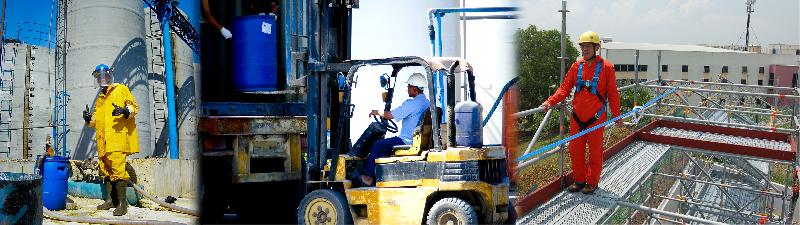
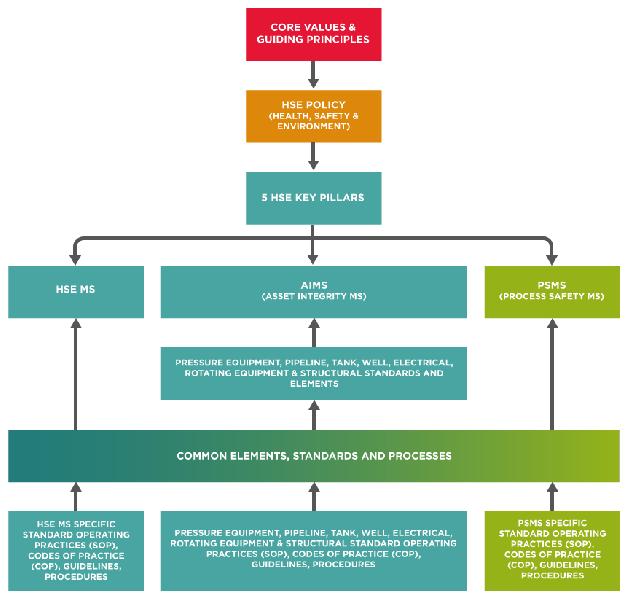
HSE-MS (Health Safety & Environment Management System) is set of Guideline developed for considering environmental protection, Occupational Health and Safety at work as important as providing quality products. Normally department focus on Quality and Products, but HSE specify that Health and Safety management must be implied in organization, special for the Chemical Industry.
Background of HSE: HSE MS came into the picture after few serious incidences were occurred in chemical industry like Bhopal disaster (India) (1984) and Seveso disaster (Italy) (1976) due to failure of the Management System.
Bhopal Disaster : Bhopal Gas Tragedy was world's worst industrial disaster, a gas leak incident, which happen in heart of the India and killed approximately 3, 787 to 19, 000+ people which happen on 2–3 December 1984 at the Union Carbide India Limited (UCIL) pesticide plant in Bhopal, Madhya Pradesh, India. This loss can neither be compensated in Financial nor in Emotional manner. Over 500, 000 people were exposed to Methyl Isocyanate (MIC) gas and other chemicals. Loss can’t be estimated in exact figure, but you may guess that On 8 June 2012, the Centre for incineration of toxic Bhopal waste agreed to pay INR250 million (US$4.2 million) to dispose of UCIL chemical plants waste. A government affidavit in 2006 stated the leak caused 558, 125 injuries including 38, 478 temporary partial injuries and approximately 3, 900 severely and permanently disabling injuries.
Why EHS Management System? : Environmental, Health and Safety (EHS) Management System could have avoided the happening which happens due to lack of skill or system in Organisation or departments. EHS Management has two general objectives: prevention of incidents or accidents that might result from abnormal operating conditions on the one hand and reduction of adverse effects that result from normal operating conditions on the other hand.
The first formal EHS management approach was introduced in 1985 by the chemical industry as a reaction to several catastrophic accidents; this worldwide voluntary initiative called “Responsible Care” is in place in about 50 countries and centrally coordinated by the International Council of Chemical Associations (ICCA). It involves eight fundamental features that ensure plant and product safety, occupational health and environmental protection but also try to demonstrate by image-building campaigns that the chemical industry acts in a responsible manner. Still, this initiative is restricted to the chemical industry. Source: Wikipedia
Since 1990s, International Standards were issued various standards like ISO 14001 & OHSAS 18001 for environmental management and for occupational health and safety management and EMAS, meanwhile in 1998 EHS Guideline were issued by International Finance Cooperation.
EHS Guidelines of the International Finance Corporation: The EHS Guidelines are Technical Reference Documents with general and industry specific instances of Good International Industry Practice (GIIP). Mainly it covers following points. All requirements and guideline are classified in four categories.
First Parameter : Environmental
Second Parameter : Occupational Health and Safety
Third Parameter : Community Health and Safety
Fourth Parameter : Construction and Decommissioning
Key Elements :- The following 15 elements give guidance, as well as providing minimum standards in formulating an HSE Management System appropriate to each Business Unit. Surely situations may warrant much more and only by exception, will any require less :
For more information, please feel free to write to us at info@acumic.in
Global GAP
The Global GAP standard ensure food safety from farm to fork is what both the human community is looking forward to. Cultivating agriculture production is the first link of the food supply chain, thus ensuring the safety of agricultural productions and food very significant decision for the safety of the food on the table.
Global GAP is a set of standards designed to apply voluntarily for agriculture production (crop, livestock and fisheries) worldwide. Legal representative of Global GAP Secretariat is a non-profit organization called Food PLUS GmbH based in Germany.
Global GAP standards developed by an equal association of manufacturers, retailers, service organization, suppliers of agricultural products, certification organizations, consulting companies, manufacture of fertilizers and crop protection products, university and their association. These members join Global GAP from different objectives but are Global GAP general purpose.
Global GAP Association provides standard and framework for independent third-party certification for the production process at the farm crops, livestock, and fisheries and only admits the accredited certification bodies force in ISO / IEC Guide 65 or EN 45011. So far, Global GAP with participation of more than 100 certification organizations from 80 different countries. The ultimate goal of Global GAP is a sustainable agriculture development on the member states.
Requirement of the Global GAP standard
Global GAP standard released the first version in 2000, every three years, applying Global GAP standard are reviewed and revised (if necessary), 4th edition will be published in 2011. The current version was issued in March / 2007, written in 22 languages including English, updated free. To be able to apply to farm with different products (crop, livestock, and fisheries) with different production characteristics, the standard is designed into three types of documents including :
The Control Points and Compliance Criteria (CPCCs) are also modular-based consisting of :
So to get certified, producers must comply with all the CPCCs relevant for their sub-scope. For example, a strawberry grower must comply with the All Farm Base CPCCs, the Crops Standard CPCCs and the Fruit & Vegetables CPCCs to receive a GLOBALG.A.P. Fruit & Vegetables Standard Certificate.
Global G.A.P. Certification covers :-
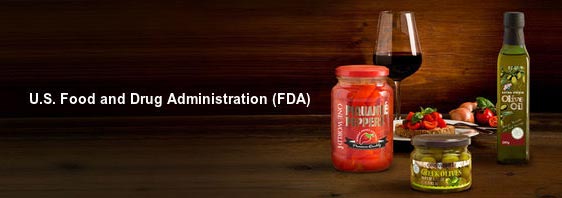
We provide FDA Certification in following areas of India: FDA Certification in Gurgaon, FDA Certification in Noida, FDA Certification in Faridabad, FDA Certification in Manesar, FDA Certification in Ghaziabad, FDA Certification in Ambala, FDA Certification in Dehradun, FDA Certification in Haridwar, FDA Certification in Alwar, FDA Certification in Jodhpur, FDA Certification in Gandhinagar, FDA Certification in Nashik, FDA Certification in Aurangabad, FDA Certification in Nagpur, FDA Certification in Thane, FDA Certification in Mumbai, FDA Certification in vijayawada, FDA Certification in Delhi, FDA Certification in coimbatore, FDA Certification in Baddi, FDA Certification in Solan, FDA Certification in Kolkata, FDA Certification in Durgapur, FDA Certification in Haldia, FDA Certification in Bhubaneshwar, FDA Certification in cuttack, FDA Certification in Sonepat, FDA Certification in Rohtak, FDA Certification in Satna, FDA Certification in Rewa, FDA Certification in Goa, FDA Certification in Daman, FDA Certification in Siliguri, FDA Certification in Dimapur, FDA Certification in Kota, FDA Certification in udaipur , FDA Certification in Rourkela, FDA Certification in Bhiwadi, FDA Certification in Rewari, FDA Certification in Aligarh, FDA Certification in Panipat, FDA Certification in Bhilwara, FDA Certification in Korba, FDA Certification in Bhilai, FDA Certification in Jalandhar, FDA Certification in Amritsar, FDA Certification in Jammu, FDA Certification in Srinagar, FDA Certification in Kashmir. FDA Certification in Ahmadabad, FDA Certification in Gorakhpur, FDA Certification in Jhansi, FDA Certification in Kanpur, FDA Certification in Agra, FDA Certification in Meerut, FDA Certification in moradabad, FDA Certification in Bareilly, FDA Certification in Varanasi, FDA Certification in saharanpur, FDA Certification in Chandigarh, FDA Certification in Mohali, FDA Certification in Panchkula, FDA Certification in allahabad, FDA Certification in Ranchi


 Mr. Jitendra Chandra (Acumic Management Consultant Private Limited)
 C-1667, Rajajipuram India, Rajaji Puram, Lucknow, Uttar Pradesh - 226017
 Share us via