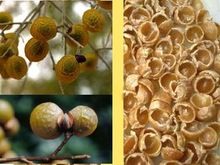
We are offering kaempferia galanga l. Names: kaempferia galanga, kapoor kachri, zodiary roots, spiked ginger, resurrection lily galanga, galgant-spice lily, hinguru-piyali, maraba, shannai (tcm), kuunkuun, sidhoul, camphor root, gisol, kencur, aromatic ginger, sand ginger, cutcherry. Kaempferia galangal is called "cekur", "cekuh" or "kecil galanga" in malay; "kencur" or "kentjoer" in indonesia; "ingurupiyali" or "hingurupiyali" in sri lanka; "proh hom", "hom proh", "waan teendin" or "waan hom" in thailand. There are also names in other languages referring to sand, such as german ("sandingwer") and chinese ("saa jiang") . In sindhi, urdu & hindi kapoor kachri. The scientific name is in honour of german botanist engelbert kaempfer. This short-stemmed herb has flat, green, round leaves that measure 3-6 inches across. The white flowers (with a purple spot on the lip) are ephemeral, grow from the center of the plant, and grow to about 1 inch breadth. Kaempferia galanga is found in tropical areas of africa, and in southeast asia (hofmann et al. 1992, 46). Traditional uses: kaempferia galanga is used as an entheogen and aphrodisiac in new guinea. There, it is taken as part of the final three stages of initiation rituals along with species of boletus mushrooms, heimiella sp., russula sp. And psilocybe mushrooms (voogelbreinder 2009, 207). Every species in the genus is prized for the highly aromatic rhizome, which is used to flavor rice, and as a medicine. In malaysia, the plant was added to arrow poison prepared from antians toxicaria. It is used to make incense in japan. In thailand, the root and leaves are put into curries as a flavoring, and the plant is used as a medicine, as well.





 Write a Review