Write a Review
Our Products
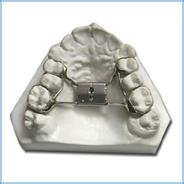
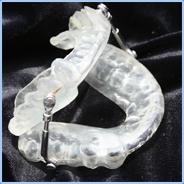
Our Complete range of products are SOFT NIGHT GUARDS Custom Teeth, Dental ANTI SNORING, Thumb Sucking Habit Breaking Appliance Dental and Dental HYRAX.
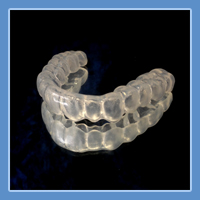
Over the past yearsBracket Dental Labhas been fabricating night guards of all types and sizes. We have seen plenty of new materials, methods and spent extra preparation time on casts to insure the best possible fit.
Soft night guards are usually made of silicone or another malleable plastic, and tend to be mushy or squishy when placed between the teeth. The material's composite allows the formulation of a high quality night guard that is both resilient and dual able, and is very comfortable. The soft laminate night guard is great for first time splint users and for those with minor to moderate grinding problems. It can also be worn on either the lower or the upper arch, and is non-abrasive to both the natural teeth and the opposing teeth.
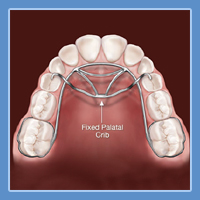
Thumb Sucking Habit Breaking Appliance
Sucking is a natural reflex that relaxes and comforts babies and toddlers. Children should cease thumb sucking when the permanent front teeth are ready to erupt. Typically, children stop between the ages of 2 and 4 years. Thumb sucking that persists beyond the eruption of permanent teeth can cause improper growth of the mouth and malalignment of the teeth. A more permanent solution to thumb sucking is an appliance called a fixed palatal crib The appliance is cemented on the upper six year permanent molars and is positioned behind the upper front teeth on the roof of the mouth. The crib consists of semicircular stainless steel wires that are fastened to molars using steel molar bands. The stainless steel wires fit behind the childs upper front teeth, and they are barely visible, if at all. This appliance does not cause any discomfort and is not affected by eating. It serves as a reminder to the child that the thumb is not suppose to be in his mouth. The crib usually stops the habit of thumb sucking within weeks or months.
Tongue Thrust Habit Breaking Appliance
Tongue thrusting, simply defined, is the habit of placing the tongue in the wrong position during swallowing, either too far forward or to the sides. It is estimated that every 24 hours you swallow a total of 1, 200 to 2, 000 times, with about four pounds of pressure per swallow. This constant pressure of the tongue will force the teeth and arches out of alignment. Besides the pressure exerted while swallowing, nervous thrusting also pushes the tongue against the teeth while it is at rest. This is an involuntary, subconscious habit that is difficult to correct. A tongue thrusting appliance is made for the patient that is permanently cemented in place. It is necessary to correct this habit prior to doing orthodontic treatment on a patient. If this habit is not corrected, the teeth will relapse after orthodontics due to the tongue pushing against the teeth when swallowing.
 Bracket Dental Lab (Bracket Dental Lab)
 Sector 16 B, House No. 406, Vasundhara, -., Ghaziabad, Uttar Pradesh - 201012, India
 Share us via