Our Products
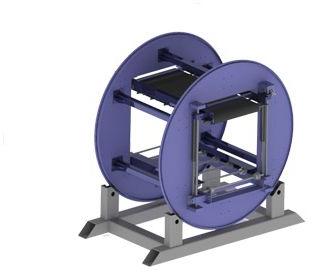
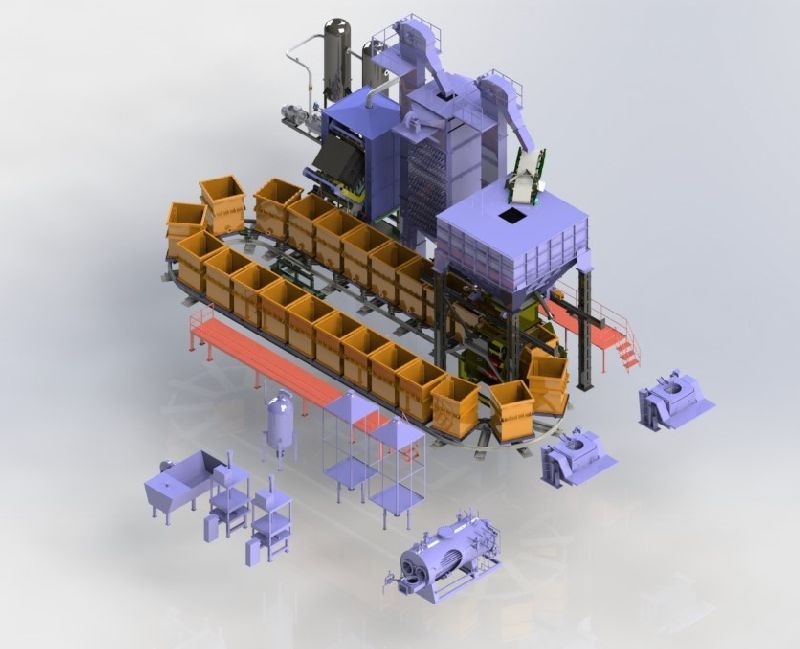
We offer the best product range of Lost Foam Casting Process, Sand Process Rollover and Oven.
Features:
A pattern is made frompolystyrene foam, which can be done by many different ways. For small volume runs the pattern can be hand cut or machined from a solid block of foam; if the geometry is simple enough it can even be cut using ahot-wire foam cutter. If the volume is large, then the pattern can be mass-produced by a process similar toinjection molding. Pre-expanded beads of polystyrene are injected into a preheated aluminummoldat low pressure. steamis then applied to the polystyrene which causes it to expand more to fill the die. The final pattern is approximately 97. 5% air and 2. 5% polystyrene. Pre-made pouring basins, runners, andriserscan behot gluedto the pattern to finish it.[1]
next, the foam cluster is coated with ceramic investment, also known as therefractorycoating, via dipping, brushing, spraying or flow coating. After the coating dries, the cluster is placed into a flask and backed up withun-bonded sandwhich is compacted using a vibration table. The refractory coating captures all of the detail in the foam model and creates a barrier between the smooth foam surface and the coarse sand surface. Secondly it controlspermeability, which allows the gas created by the vaporized foam pattern to escape through the coating and into the sand. Controlling permeability is a crucial step to avoid sand erosion. Finally, it forms a barrier so that molten metal does not penetrate or cause sand erosion during pouring. Once the sand is compacted, the mold is ready to be poured. Automatic pouring is commonly used in lfc, as the pouring process is significantly more critical than in conventionalfoundrypractice.
there is no bake-out phase, as for lost-wax. The melt is poured directly into the foam-filled mold, burning out the foam as it pours. As the foam is of low density, the waste gas produced by this is relatively small and can escape through mold permeability, as for the usual outgassing control.
advantages and disadvantages
this casting process is advantageous for very complex castings that would regularly requirecores. It is also dimensionally accurate, maintains an excellent surface finish, requires nodraft, and has no parting lines so noflashis formed. The un-bonded sand of lost foam casting can be much simpler to maintain than green sand and resin bonded sand systems. Lost foam is generally more economical than investment casting because it involves fewer steps. Risers are not usually required due to the nature of the process; because the molten metal vaporizes the foam the first metal into the mold cools more quickly than the rest, which results in naturaldirectional solidification. foam is easy to manipulate, carve and glue, due to its unique properties. The flexibility of lfc often allows for consolidating the parts into one integral component; other forming processes would require the production of one or more parts to be assembled.
the two main disadvantages are that pattern costs can be high for low volume applications and the patterns are easily damaged or distorted due to their low strength. if a die is used to create the patterns there is a large initial cost.
 Mr. Ketan (Castomech Technology LLP)
 PLOT NO – 18, SURVEY NO - 150, KALPATARU INDUSTRIAL ESTATE NR: KHATRAJ CROSS ROAD, VILLAGE - KAROLI, TA, KALOL,, Gandhinagar, Gujarat - 382721
 https://www.castomech.co.in
 Share us via