Write a Review
Our Products
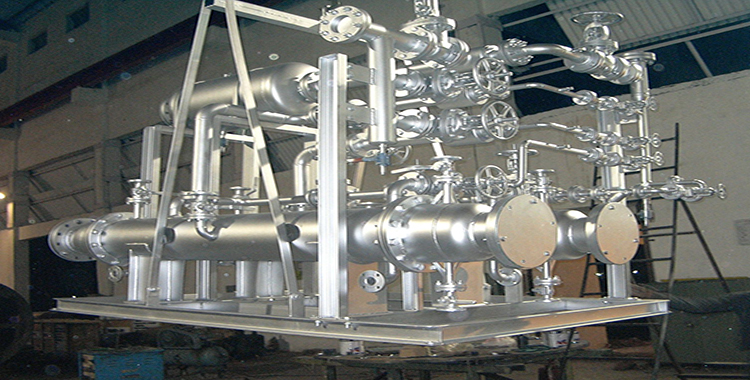
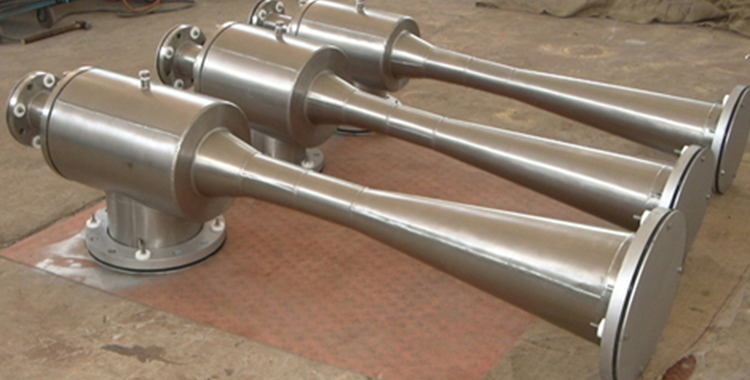
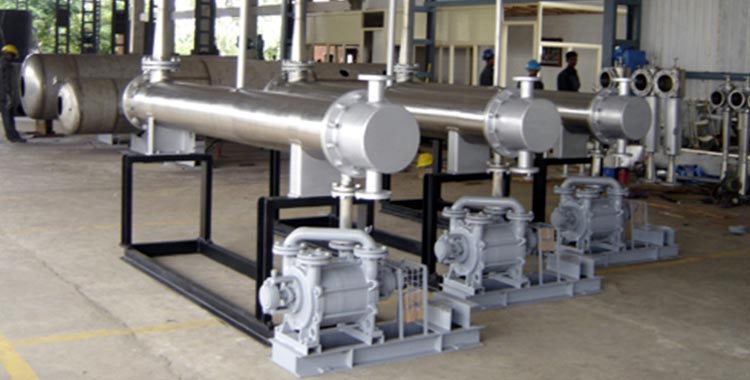
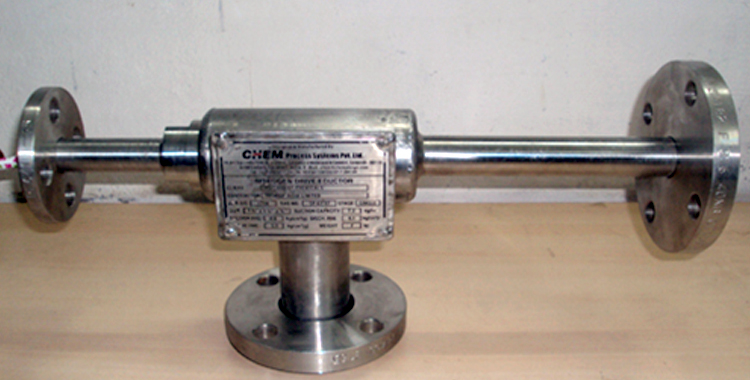
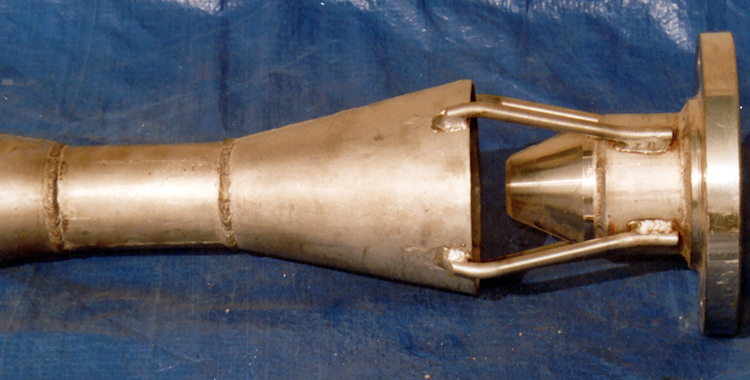
We offer a complete product range of Rising Film Evaporation Tubes, Air Extractions, Thermocompressor, Ring Jets and Eductors
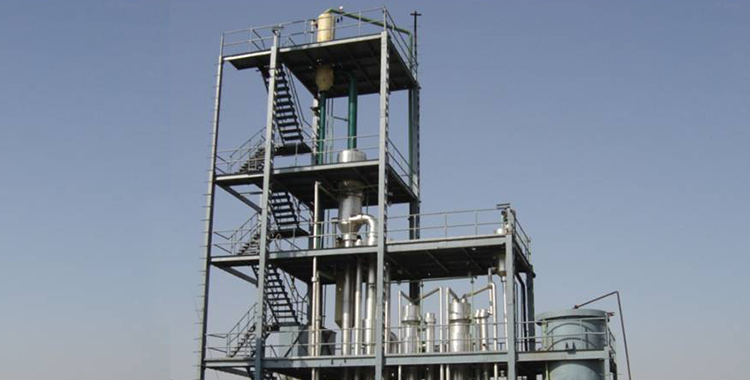
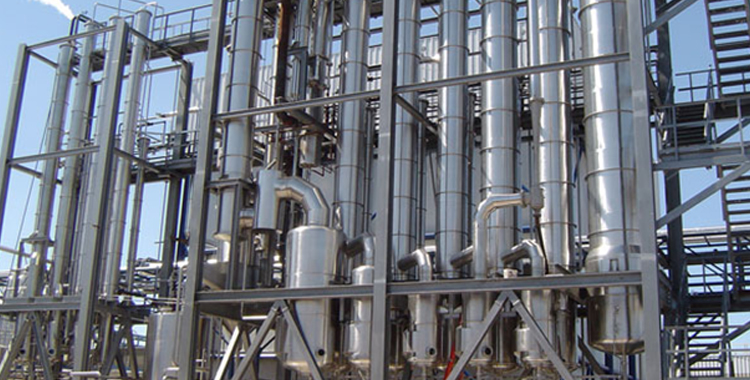
Our Combination Type Evaporators are a uniquely designed and engineered systems to provide the solution for certain processes where viscosity and chemical property degradation play a vital role. These most economic evaporators utilize falling film tubulars or plates, with either thermal vapor recompression (TVR) or mechanical vapor recompression (MVR). However with many duties, the required concentration of the final product requires a viscosity that is too high for a film evaporator. The solution is to use film evaporation for the pre-concentration and then a forced circulation finisher evaporator to achieve the ultimate concentration; E.g.: a stillage or spent distillery wash evaporator.
The material would typically be concentrated from 4% to 40% in a falling film evaporator and then from 40% to 50% in a forced circulation evaporator. Usually the finisher would be a completely separate evaporator since the finishers duty is usually relatively low. In the duty specified above, almost 98% of the evaporation would take place in the high efficiency film evaporator. For cases where the finishers load is relatively high, it is possible to incorporate the forced circulation finisher as one of the effects in a multi-effect evaporator. However this is an expensive proposition due to the low coefficients at the high concentration.
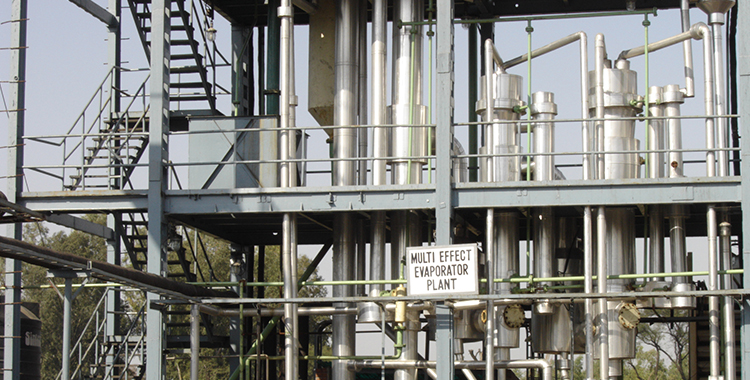
In Multi-Effect Distillation Evaporators, the upper end of the rising film evaporation tubes protrude from the upper tube plate of the calandria, so that the liquid after evaporation does not flow back into the tube and the vapor produced inside the tubes can leave the tubes without passing the liquid level on the upper tube plate. This avoids the excessive entrainment of the liquid and higher vapor and distillate salinity.
Chem Process Multi-Effect Distillation Evaporators have removable covers for easy accessibility to the demister pads. On the condensation side, the heating elements are designed with special internal air cooling zones which ensure optimum concentration of the non-condensable gases which are evacuated by the ejector.
 Chem Process Systems (Chem Process Systems)
 15 Natraj Industrial Estate, Sanand-Viramgam Highway, Vasna-lyava, Sanand - 382 170. Ahmedabad. India., Gujarat - 382170
 Share us via