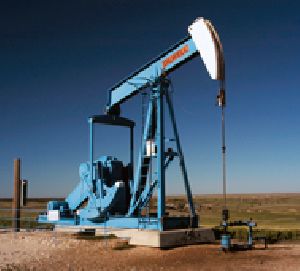
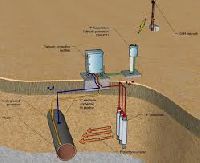
SRP Automation SRP (Sucker Rod Pumps) is one of the most common forms of reciprocating artificial lift systems employed by O&G companies worldwide. However, being mechanical in nature they are prone to faults and therefore need constant supervision to ensure continuous operation. This is a challenging task, considering that most oil wells are located in remote places that are difficult to access. Principle of SRP operation A belt driven prime mover rotates and transfers the power to the connecting rod through gear mechanism. The connecting rod moves in a circular motion causing up-down movement of the reciprocating rod. This reciprocating movement of the rod results in pumping action at the bottom hole. A motion sensor senses the reciprocating motion and the output of the sensor are fed to iRTU digital input. The intelligent device counts the number of strokes and calculates total stroke counts to estimate production rate. The intelligent Remote Terminal Unit stores all the configuration data and well data locally in a non-volatile memory. The configuration allows defining limits of various parameters and can diagnose / report the following: Main power failure, Motor tripping due to overloading, Single phasing of the prime mover, Breakage of belts, Pump start / stop based on programmed pump schedule The control station is generally located at the Group Gathering Stations (GGS), collects data from each iRTU. In case of any security breach or exceptional situation, the iRTU dials out to report the situation to GGS, MCS and the mobile transreceivers depending on options exercised during programming. The electrical power input is measured by an energy meter and the same is communicated to the iRTU through RS 232 protocol. Common Problems Associated with SRP installations Fluid Pound As the rod pump continues to produce, the bottom hole characteristics remains dynamic and the pump filling percentage changes due to change in reservoir behavior, or sand etc. Matching pump displacement to oil infow remains one of the biggest challenges. As the oil inflow rate decreases due to sand, fluid pressure, gas locking etc. the pump fills partially. During the upstroke it creates a void inside the tube. As soon as the downstroke starts the liquid column and the rod string experience a free fall and the plunger hits the fluid level in the pump barrel. The sudden transfer of load from the rod string to the tubing causes a shock wave which is transmitted throughout the pump. This is called fluid pound. Fluid pound affects performance of a SRP in the following way: Uncontrolled fluid pound increase energy cost Increases wear & tear of tube, rod and plunger Decreases gear box life Decreases life of the pumping system Demand more maintenance & down time




 Ellisbridge, Ahmedabad, Gujarat
  Write a Review