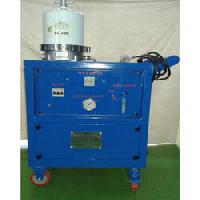
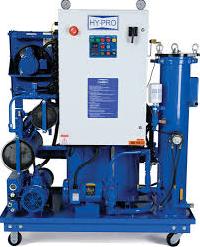
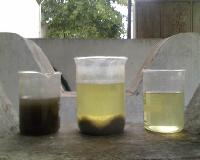
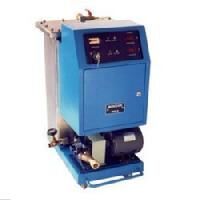
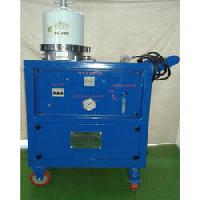
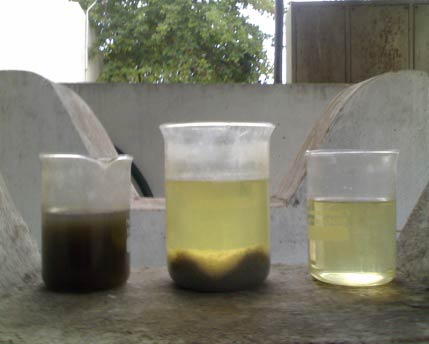
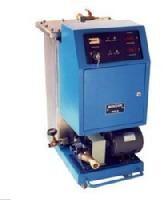
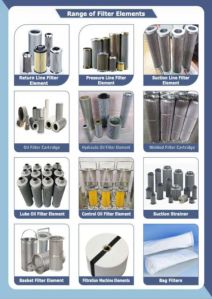
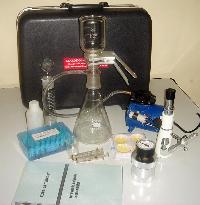
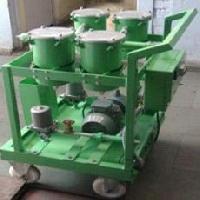
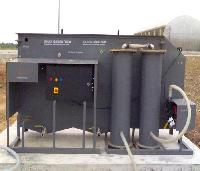

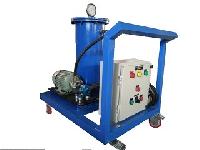
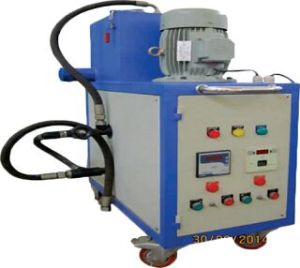
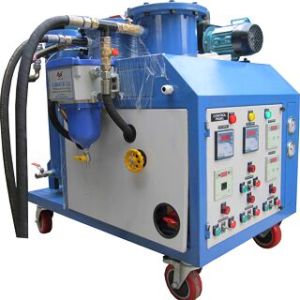
Machines come equipped with filtration system. Then why do we need an additional filtration system such as Klarol! Machine Filters cannot remove contamination smaller than clearances of critical components Small percentage of water can also reduce component life which machine filters cannot remove. Machine filters cannot remove air bubbles that cause thermal oxidation of oil. Therefore, it is important that an additional filtration system is required to maintain oil clean for optimum performance of hydraulic systems. Here, comes the role of Klarol Hydraulic Oil Cleaning System. Klarol System Cleans Oil In Two Stages : Stage-1 : Removes solids contamination by Depth filtration and Electrostatic attraction. Stage-2 : Removes water, fuels, entrained air and gases by evaporation. Applications : Klarol can be used to clean oil as a mobile machine. Klarol can be installed directly on any machine as a by-pass oil cleaning unit. Cleanliness Levels Of Oil : NAS Class 9 : indicates the particulate levels of hydraulic fluid as received from the refinery or oil supplier. NAS Class 7 : indicates the particulate level of hydraulic fluid required for most conventional hydraulic systems that do not include hydraulic pressure regulators or hydraulic servo-control valves. NAS Class 5 : indicates the particulate level of hydraulic fluid required for hydraulic systems when there are hydraulic pressure regulating valves and hydraulic servo-valves. Utility : Klarol Oil Cleaning Systems can be utilized to clean almost all industrial oil such as : Hydraulic Oils Compressor Oils Transmission Oils Synthetic Oils Engine Oils Gear Oils Turbine Oils Honing Oils Water Glycol Kerosene & Any Other Industrial Oils
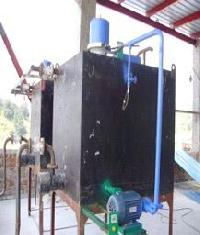
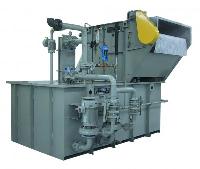
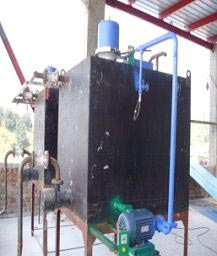
Oil water separation is no more a hassle. Kleen SEP Oil Water Separators are of advanced design with world class features such as Disc filters/ Auto oil evacuation/On-line monitoring and are available in capacities ranging from 1000 lph to 200 m 3 /hour. Principles of Separation / Coalescence : First, oil and water are not soluble in each other. Even the so called soluble oils are really an emulsion not a true solution. Second, water is denser than oil or petroleum based solvents. Naturally, unless other factors interfere, oil tends to separate and float on water –if given sufficient time. Separation : Separating oil or solvents from water by mechanical means involves the application of some basic physical principles : by making the oil droplets larger (rises faster), by making the flow slower (get more time to separate), or by making the tank shallower (shorter average distance to rise to the surface). All this assumes the flow in the tank is non-turbulent to prevent remixing the oil and water. Coalescence : Coalescence means coming together. It refers to small oil droplets coming into contact with other droplets and combining to form larger drops. In the dense coalescing media used in OWS the process is speeded up and oil separated out quickly. Technology : Oily water is pumped into the system by a centrifugal pump/air operated diaphragm pump, using a self levelling floating suction device that pulls in large amounts of floating oil along with water. The oily water travels through the Oil-Water Separator where oil is separated by coalescing media. The oil rises to the top of the separator and is continuously removed to an Oil collection tank on top of the separator and drains out continuously. Built-in simple back wash to clean the coalescing media in oil water separator is provided. Applications : Coolant tank tramp oil removal Component washing solution cleaning Compressor condensate water cleaning Ship bilge water recycling Rolling mill waste water...
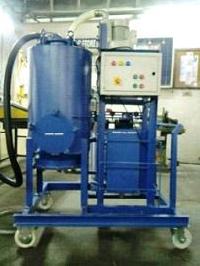
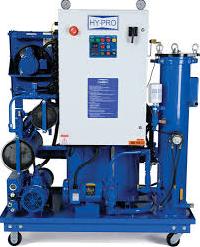
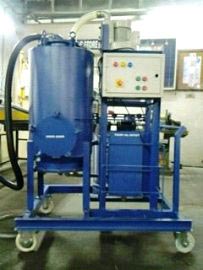
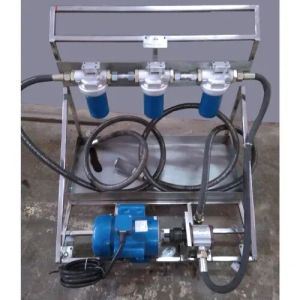
Are You Throwing Away The Expensive Metal Working Coolants.? Coolants are a major expense, for any metal working industry like yours. Coolants are becoming expensive by the day. Replacing them is a messy and time-consuming job. Disposing them is an equally expensive affair in the face of today’s tough environmental regulations. Dirty Coolants with tramp oil and solid particles contribute to increased tool wear, poor surface finish and not-so-clean components. Also dirty coolant encourages bacterial growth giving rise to foul smell and skin irritation. It is prudent, therefore to take steps to maintain your coolant clean and with KleenCOOL Recycling Systems it is an easy task. We are a reliable KleenCOOL Emulsion Coolant Recovery System Supplier based in Punjab, India. What’s more, you can recycle your coolant 2 to 3 times before disposing and recover as much as 80% every time you recycle. That’s a huge saving on your coolant oil budget! The Types of Contaminants : Tramp oil - formed by hydraulic and lube oil mixing with coolant. Solid particles – burrs, chips and rust particles. Bacteria, bad odour and skin irritation due to bacteria.. How Does KleenCOOL Purify? You can recycle and reuse the contaminated coolant 2 -3 times and recover 80% of it per recycle by removing tramp oil, solid particles, smell and bacteria. Technology: Powerful vacuum pump pulls out chips/sludge and floating oil along with coolant from all corners of machine sump in no time. A large strainer in vacuum tank holds the chips. You can take out the chips from the side discharge door quickly. From the vacuum tank a centrifugal pump sends the coolant to the Tramp oil separator where all the free tramp oil is removed. The coolant is pumped through 80 and 20 micron reusable filters for fine filtration. An Ozone generator diffuses ozone in the coolant for complete bacterial disinfection. Clean coolant is returned to the sump. All these are done without stopping your machine! Benefits : Contaminated waste coolant is made usable again and again. Approx.80% of coolant recoverable. Improved surface finish on components Increased tool life Better operator health Cleaner machines and shop environment..
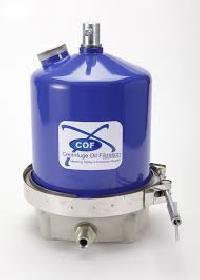
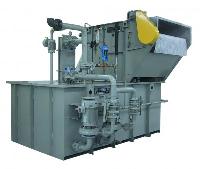
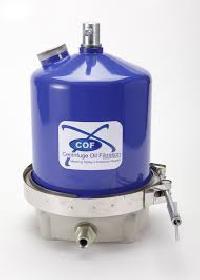
During quenching, the oil becomes contaminated with scales, soot & degradation products, which interfere with the performance of the oil and may result in unsatisfactory, surface appearance or lower physical properties, such as hardness, than specified. Removal of these contaminants by filtration or centrifuging is necessary to restore the oil to a satisfactory condition for trouble free quenching and good product quality. We supply Oilmax Centrifugal Oil Cleaning System all over the country. Sludge : One of the greatest problems with quench oils is sludge formation. The presence of sludge may cause non-uniform heat transfer, increased thermal gradients and increased cracking and distortion. Sludge may also plug filters and foul heat-exchanger surfaces. The loss of heat-exchanger efficiency can cause overheating excessive foaming and fires. Advantages of Centrifuge : Soot particles up to sub - micron level are removed from quenching oil. This results in better confirmation of cooling rate with TTD diagrams. Oxidation of oil is substantially reduced; hence frequent top-ups are not required. In absence of soot, dis-colorization of work piece is eliminated. Sludge is caused by Quench Oil Thermal and Oxidative Degradation. Applications : Quenching oil Furnace oil Wire drawing oil Gear oil Thermic fluids Engine oil Rust preventive oil and Stamping oil.
Share your thoughts with other customers for Green Solutions
Add Review Narendra Singh (Green Solutions)
 #202, B-4, Surya Tower, VIP Road, Distt. - Mohali, Zirakpur, Punjab - 140603, India
 Share us via







 GST : 03AENPT0775Q1ZQ
