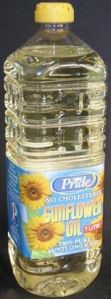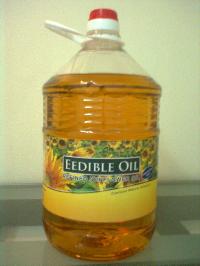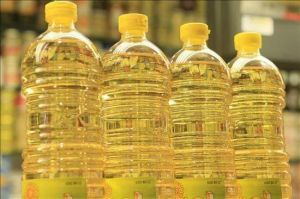



Welcome to Farrow Oil Limited
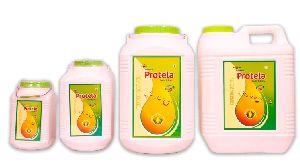
Manufacturer / Exporter / Supplier Of Refined Palm Oil, Refined Sunflower Oil, Refined Canola Oil, Refined Sesame Oil, Refined Soybean Oil, Refined Olive Oil, Fancy Ladies Kurti, Refined Sunflower
 johor, Malaysia
 Write a Review
Welcome to Farrow Oil Limited
Manufacturer / Exporter / Supplier Of Refined Palm Oil, Refined Sunflower Oil, Refined Canola Oil, Refined Sesame Oil, Refined Soybean Oil, Refined Olive Oil, Fancy Ladies Kurti, Refined Sunflower
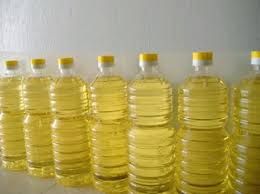
Sunflowers have a large flower head, usually with a large, almost black central part which is made up of thousands of tiny florets that later become seeds set in a spiral pattern. The petals are typically bright yellow, although some varieties are orange or red. Its stem is rough and hairy while the leaves are large and rough with coarse jagged edges. Sunflowers typically grow to between one and a half and three and a half metres, with some giant variants reaching up to eight metres.
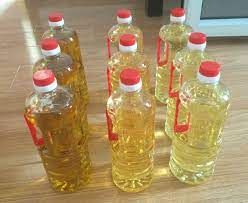
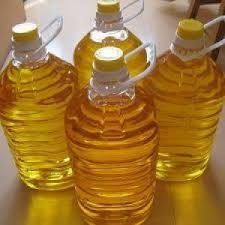
Olive oil comes from olives, the fruit of the olive tree. Olives are a traditional crop of the Mediterranean region. People make olive oil by pressing whole olives.People use olive oil in cooking, cosmetics, medicine, soaps, and as a fuel for traditional lamps. Olive oil originally came from the Mediterranean, but today, it is popular around the world.In the diet, people preserve olives in olive oil or salted water. They eat them whole or chopped and added to pizzas and other dishes.They can use olive oil a dip for bread, for drizzling on pasta, in cooking, or as a salad dressing. Some people consume it by the spoonful for medicinal purposes.
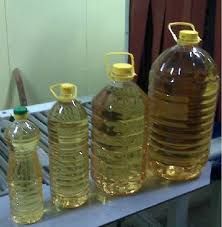
Sunflowers have a large flower head, usually with a large, almost black central part which is made up of thousands of tiny florets that later become seeds set in a spiral pattern. The petals are typically bright yellow, although some varieties are orange or red. Its stem is rough and hairy while the leaves are large and rough with coarse jagged edges. Sunflowers typically grow to between one and a half and three and a half metres, with some giant variants reaching up to eight metres.
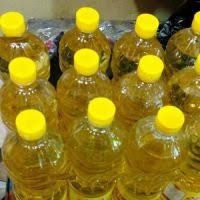
The oil was extracted from sesame seed with two extraction methods. Traditional (Ardeh oil) and industrial method (cold pressing method: virgin and refined sesame oil) oil extraction was studied to compare the quality and heavy metal content of extracted oils. The chemical properties (fatty acid composition, peroxide, anisidine, acid values, and TOTOX) and heavy metal contents were investigated. The Hazard Quotient (HQ) and Hazard Index (HI) of heavy metal intakes were calculated. The results demonstrated that the predominant fatty acid in oil samples was oleic, linoleic, palmitic, and stearic acids. It was indicated the peroxide, anisidine, acid values, and TOTOX of oil samples were as the order of Ardeh oil > virgin sesame oil > refined sesame oil. The reduction pattern of Pb > Zn >Cu > Cd >As was reported in sesame seed. Although the oil refining had greatly reduced the Pb of oil sample, it had yet been much higher than the permissible levels set by Codex Alimentarius. The HQ and HI of all heavy metals were less than one, but they were higher in Ardeh oil compared to others. It is necessary to monitor the presence of heavy metal contaminants and the quality of imported sesame seeds prior to oil preparation.
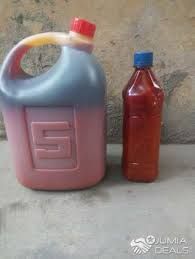
Palm oil has a balanced fatty acid composition in which the level of saturated fatty acids is almost equal to that of the unsaturated fatty acids. Palmitic acid (44%-45%) and oleic acid (39%-40%) are the major component acids, with linoleic acid (10%-11%) and only a trace amount of linolenic acid. The low level of linoleic acid and virtual absence of linolenic acid make the oil relatively stable to oxidative deterioration.
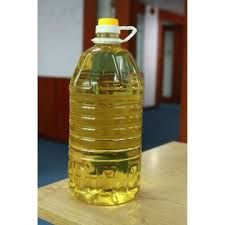
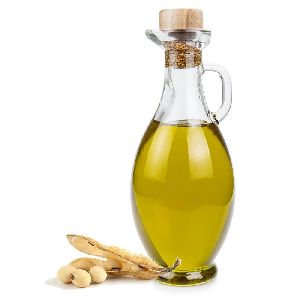
Soybean Oil is manufactured according to a process that should confer to the finished product

Share your thoughts with other customers for Farrow Oil Limited
Add Review Jebat Yang (Farrow Oil Limited)Meiden Malaysia Sdn Bhd(Johor Office),No46-01,level,1,Johor perms perms 15/1, Baru permas jaya,81750 masai, Malaysia
 Share us via