 Write a Review
Our Products
Our Complete range of products are Calcium Lignosulfonate, Lignin Powder, Sodium Lignosulfonate, Quebracho Extract Powder and Nut Shell Powder.
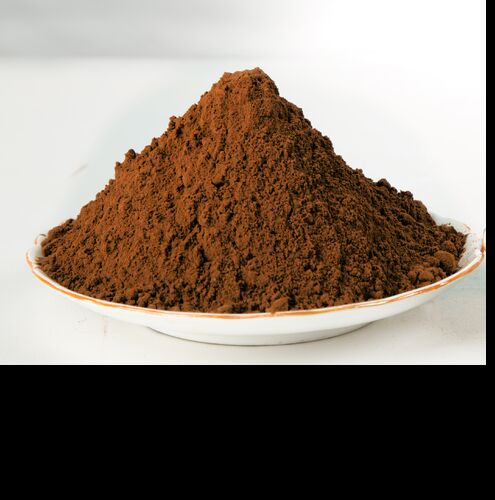
We are manufacturers, exporters and wholesale suppliers of Quebracho powder also known as Tannin Based Mud Thinner /Deflocculant/Chrome free Tannin Extract, it can also be used as dispersent which is an all-natural tannin for your leather and is commercialized in the form of easy-to-use spray-dried moistened powder. It is also used in oil drilling mud industries. Quebracho is an evergreen tree you can find in the countries of Argentina and Paraguay, in South America.
The name comes from the Spanish quebrar and hacha, meaning the axe breaker. Quebracho powder is used regularly in the production of all types of leather that we use, from car seats, shoes, bags, saddles to belts. It makes these types of leathers tear-resistant and very pleasant to the touch.
Coldwater in-soluble quebracho extracts can be blended with phenolic syntans, themselves, or vegetable extracts. Quebracho is said to contain the largest amounts of tannin as compared to other vegetable extracts. It boasts of quick penetration in water to create water-soluble quebracho. The chemical structure of this quebracho can be described as a polymer of epicatechin.
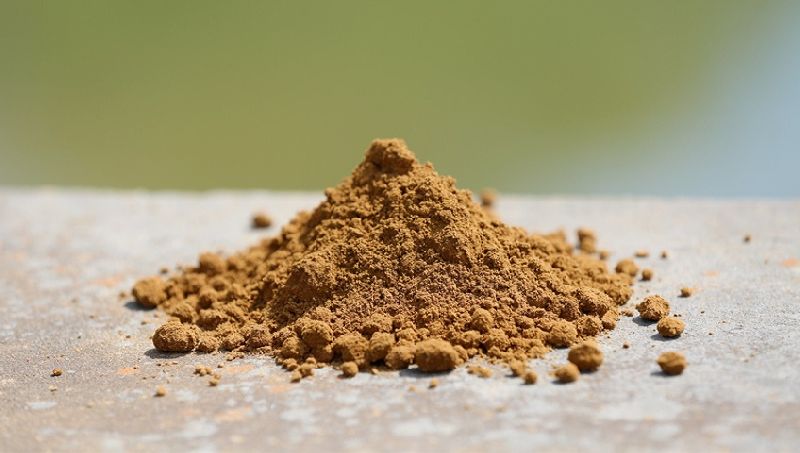
We are also manufacturers, exporters and wholesale suppliers of alkali lignin from India, which is a natural polymer prepared from alkaline papermaking black liquor. Lignin is the natural glue that holds wood fibres together. It is biodegradable, renewable and abundant in most plant fibres. Lignin is a class of complex polymers that consists of about 1/3rd the mass of lignocellulose, which is a manufactured extract of paper. Lignin can be used in a wide variety of commercial uses. Lignosulphates isolated from spent sulfite pumping liquors is the most important commercial.
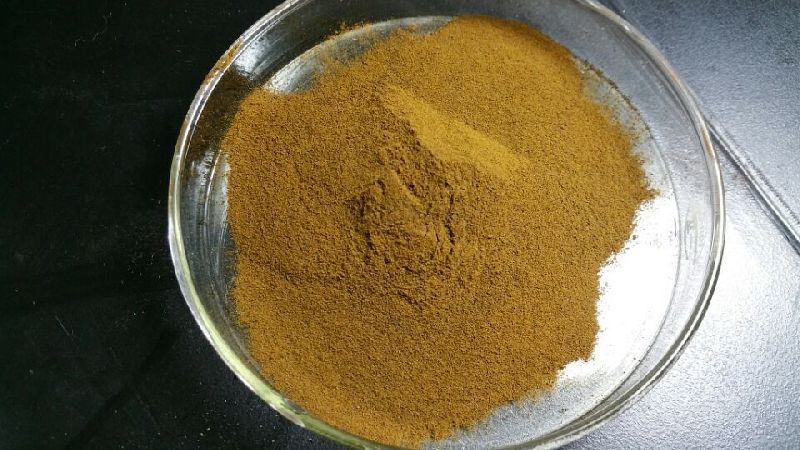
This product appears as a brown powder with no special smell. It is non-toxic, being up to 98% soluble in water and alkali. It undergoes precipitation upon coming across acid. Has a strong ability to disperse.
Sodium Lignosulfonate Uses:Application Areas:
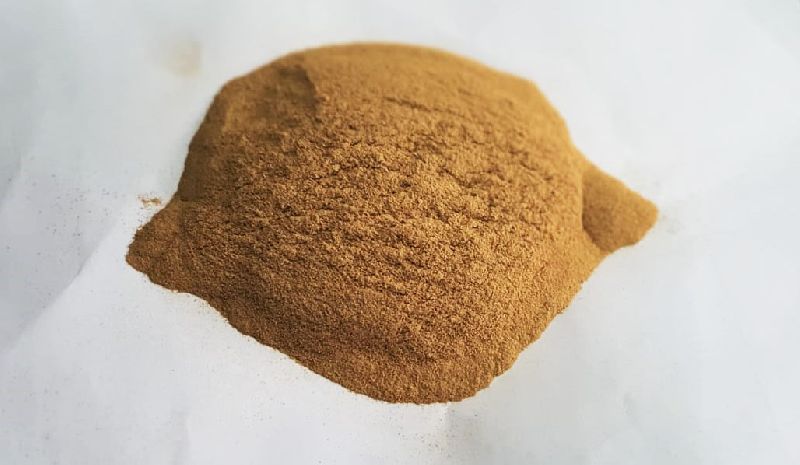
Calcium lignosulfonate (40-65) is an amorphous light-yellow-brown powder obtained from the sulfite pulping of softwood.
Calcium Lignosulfonate Uses:The additive calcium lignosulfonate as described in the Food Chemicals Codex (FCC, 6th ed, US Pharmacopeia, Rockville, MD 20852 USA (2008)) has been used for a number of years in the food industry, serving, for example, as an emulsifier in animal feed, as raw material in the production of vanillin, and as a boiler water additive. The additive calcium lignosulfonate (40-65), evaluated by the 69th JECFA, is of higher purity than the calcium lignosulfonate described in the FCC, with a higher degree of polymerization and a lower content of sugars.
 Dedatta Gaikward (noyeroverseas)
 Noyer Overseas Pvt. Ltd.
Office# 9, C-Type,
Sr.No. 43/1, Ashok Nagar,
Kharadi Bypass, Pune-411014, Maharashtra, India
Noyer Overseas Pvt. Ltd.
Office# 9, C-Type,
Sr.No. 43/1, Ashok Nagar,
Kharadi Bypass, Pune-411014, Maharashtra, India Share us via