Write a Review
Our Products
We offer a complete product range of Moving Bed Bio Reactor, FLUIDIZED AEROBIC BED REACTOR, Electro Coagulation System, Disinfection System and Zero Liquid Discharge Plant
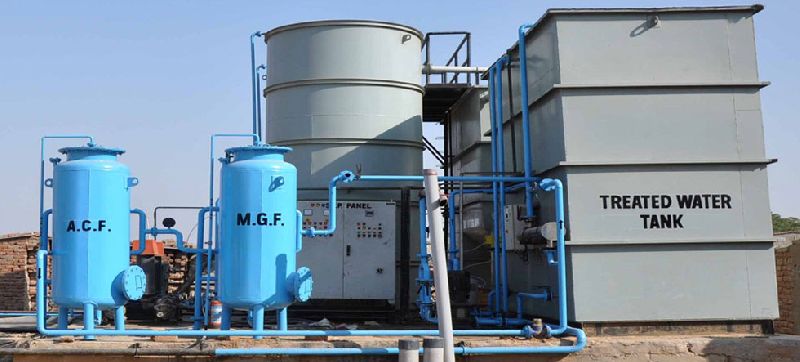
The FBR process is the latest advance in attached growth aerobic biological treatment technology. FBR employs RING PAC MEDIA, neutrally buoyant bio film carrier elements, to achieve outstanding BOD/COD removal productivity from a compact bioreactor. In Fluidized Bed Reactors, the liquid to be treated is pumped through a bed of small media at a sufficient velocity to cause fluidization. In the fluidized state the media provide a large specific surface for attached biological growth and allow biomass concentrations in the range 10-40 kg/m3 to develop.
For aerobic treatment processes the reactor is aerated. This is done by recalculating the liquid from the reactor to an oxygenator where air, or possibly oxygen, is bubbled. To overcome problems related to high re-circulation rates, needed when there is high oxygen demand in the reactor, the reactor might be aerated directly. The basis for the use of fluidized bed systems is the immobilization of bacteria on solid surfaces. Many species of bacteria (and also other microorganisms) have the ability for adhering to supporting matrices. In this process, a volume of Ring Pac media is immersed in water and is fluidized (kept in constant motion) through the movement of gas and liquid in the treatment reactor. As the media supports a biomass concentration several times that achievable in activated sludge systems, treatment is significantly more productive.
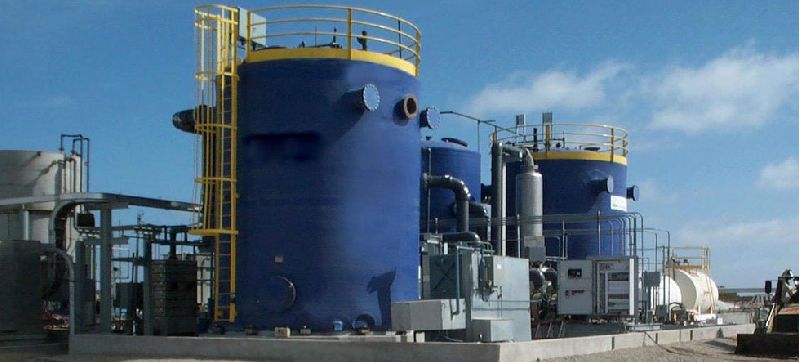
The FBR process is the latest advance in attached growth aerobic biological treatment technology. FBR employs RING PAC MEDIA, neutrally buoyant bio film carrier elements, to achieve outstanding BOD/COD removal productivity from a compact bioreactor. In Fluidized Bed Reactors, the liquid to be treated is pumped through a bed of small media at a sufficient velocity to cause fluidization. In the fluidized state the media provide a large specific surface for attached biological growth and allow biomass concentrations in the range 10-40 kg/m3 to develop.
For aerobic treatment processes the reactor is aerated. This is done by recalculating the liquid from the reactor to an oxygenator where air, or possibly oxygen, is bubbled. To overcome problems related to high re-circulation rates, needed when there is high oxygen demand in the reactor, the reactor might be aerated directly. The basis for the use of fluidized bed systems is the immobilization of bacteria on solid surfaces. Many species of bacteria (and also other microorganisms) have the ability for adhering to supporting matrices. In this process, a volume of Ring Pac media is immersed in water and is fluidized (kept in constant motion) through the movement of gas and liquid in the treatment reactor. As the media supports a biomass concentration several times that achievable in activated sludge systems, treatment is significantly more productive.
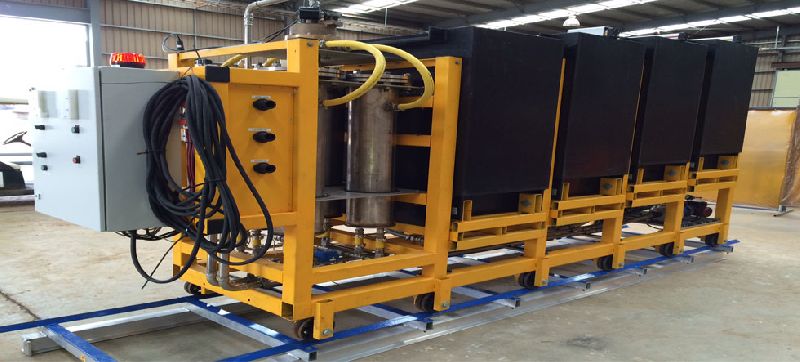
Electro coagulation is based on the science of electrolysis. Electrolysis involves passing of electricity through the effluent. The electric current destabilizes the dissolved colloidal particles and alters the charge on suspended particles to coagulate the pollutants (Electro Coagulation). These coagulants trap the gaseous products of Electrolysis Reaction and start floating in the water (Electro Floatation). A combination of Electro Coagulation and Electro Floatation removes the pollutants from the Effluent.
Advantages
Controlling chemical and biological load in water is a challenge. With the ever stringent pollution norms, it is becoming important to use environment friendly technologies, which are effective. At Oxybee solutions a complete range of products and equipment, together with a commitment to service, enable us to provide our customers with a range of solutions specifically tailored to their needs.Mixed Oxidants generation systemworks on the principle of electrochemical activation of water. Electrochemical activation of water involves, Electroyzing a weak electrolyte, using a patented flow through electro chemical cell (FEM), at specific current, voltage, pressure, flow, pH & conductivity settings. The FEM electrolyses and then separates the solution coming out of the Anodic and Cathodic chambers. The solution coming out of the Anodic Chamber calledOxylite, is a mixture of oxidants. These oxidants contained in micro-bubbles exist in a metastable state. The presence of such a large number of oxidizing species has a synergic effect, imparting an extremely high oxidizing potential toOxylite, , making it a broad spectrum, fast acting, non toxic, eco friendly oxidant and biocide for universal application. Oxi-Lyte can replace all types of biocides like Chlorine, Chlorine Dioxide, HypoChlorite, Bromides, Ozone, UV etc.
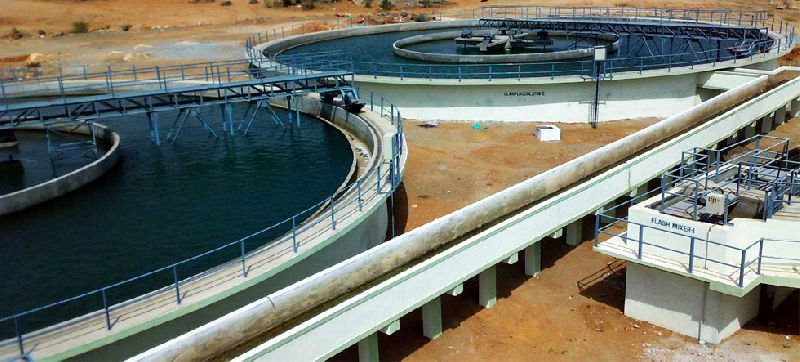
Zero Liquid discharge refers to installation of facilities and system which will enable industrial effluent for absolute recycling of permeate and converting solute (dissolved organic and in-organic compounds/salts) into residue in the solid form by adopting method of concentration and thermal evaporation. ZLD will be recognized and certified based on two broad parameters that is, water consumption versus waste water re-used or recycled (permeate) and corresponding solids recovered (percent total dissolved / suspended solids in effluents).The significant industrial sectors like Sugar, Distilleries, Tanneries, Pulp & Paper, Textile, Dyeing, and Dairy would need special emphasis for enforcement of ZLD. It is important to mention that in the name of ZLD, no forceful injection into ground water table is to be tried 3 nor utilizing effluents / permeate for irrigation / or horticulture. ZLD would strictly means recycling treated effluent back for re-use in industrial / or domestic purpose but, exclude use / disposed in ambient environment. ZLD is applicable to industries having high BOD and COD load, colour bearing effluents, having metals, pesticides and other toxic / hazardous constituents.
Applications Oxybesolutions (Oxybesolutions)
 G-18, Rock Enclave, Opp. Joy Ice Cream, Charkop, Kandivali (West), - . ., Mumbai, Maharashtra - 400067, India
 Share us via