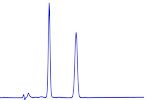
Fundamentals of HPLC Grasp the principles of how liquid chromatography separates compounds via a liquid mobile phase and a solid stationary phase, focusing on different ≤RP‑HPLC and other modes. Fundamentals of HPLC Grasp the principles of how liquid chromatography separates compounds via a liquid mobile phase and a solid stationary phase, focusing on different ≤RP‑HPLC and other modes. Choosing the Right Mode and Components Learn how to select the appropriate HPLC mode (e.g., reverse-phase, normal-phase, size-exclusion, affinity), together with the right column chemistry and mobile phase for specific analytes. Optimising Method Parameters Dive into optimising HPLC conditions—flow rate, temperature, mobile phase composition, and detection settings—to balance resolution, run time, and reproducibility. Method Validation Essentials Understand how to validate your HPLC method using parameters like specificity, linearity, accuracy, precision, detection limits, and robustness. Impurity Detection & Stability Testing Use HPLC for impurity profiling, degradation product analysis, and stability studies—key for ensuring drug quality throughout shelf life. Applications Across the Product Lifecycle Discover how HPLC supports drug development—from screening in discovery, through formulation studies and ADME (absorption, distribution, metabolism, excretion) profiling, to quality control of finished products. Regulatory and Quality Compliance Learn about the importance of regulatory alignment (FDA, EMA, ICH), system suitability tests, documentation, and data integrity in HPLC workflows. Emerging Techniques & Innovations Get introduced to advanced methods like UHPLC, hyphenated techniques (e.g., LC‑MS), monolithic columns, and emerging trends such as automation, green chemistry, and microfluidics.




 Huda Sector, Faridabad, Haryana
  Write a Review