 GST : 27AAHPZ5528M1ZV
 5.0/5
5.0/5
Our Product / Services
We offer the best product range of BAP Certification Service, IATF 16949:2016 Certification Service, Halal Kosher Tank Certification, Haccp Certification and RMC Certification.
Benefits of implementing ISO HACCP / ISO 22000 FSMS
A preventative approach to food safety
Can help identify process improvements & reduced customer complaints
Reduces the need for, and the cost of end product testing
Is complementary to quality management systems such as ISO 9000
Provides evidence of due diligence & reduces the likelihood of product recall & adverse publicity
Enhances customer satisfaction / reduces dissatisfaction
Facilitates better understanding of food packaging safety issues throughout the organization
Improves staff performance through the promotion of team spirit & improves staff morale and motivation through a cleaner working environment.
A clear, auditable, global standard providing a framework to bring together all parts of your Food Safety Management System (FSMS)
Demonstrates commitment to customer satisfaction
Tests compliance with statutory and regulatory requirements and your own systems through internal audits and management reviews
Improves internal and external communications
Improves your organizations image
Links pre-requisite programs (PRP’s & OPRP’s), HACCP with the Plan-Do-Study-Act philosophies of ISO9001 to increase the effectiveness of your food management system
Requires regular testing of data integrity / lot recall programs and process audits
Aligns with other management systems (ISO 9001, ISO 14001)
HACCP Principles
The standard approach to HACCP is that specified by the Codex Alimentary, 1997, and follows 7 basic principles:
Conduct a hazard analysis
Determine the critical control points.
Establish critical limits.
Establish a system to monitor control of the CCP.
Establish the corrective action to be taken when monitoring indicates that a particular CCP is not under control.
Establish procedures for verification to confirm that the HACCP system is under control.Establish procedures for verification to confirm that the HACCP system is under control.
Establish documentation concerning all procedures and records appropriate to these principles and their application.
About IATF 16949:2016
IATF 16949:2016 (1st edition) represents an innovative document, given the strong orientation to the customer, with inclusion of a number of consolidated previous customer specific requirements.
ISO/TS 16949 (1st edition) was originally created in 1999 by the International Automotive Task Force (IATF) with the aim of harmonizing the different assessment and certification systems worldwide in the supply chain for the automotive sector. Other revisions were created (2nd edition in 2002, and 3rd edition in 2009) as necessary for either automotive sector enhancements or ISO 9001 revisions. ISO/TS 16949 (along with supporting technical publications developed by original equipment manufacturers [herein referred to as OEMs] and the national automotive trade associations) introduced a common set of techniques and methods for common product and process development for automotive manufacturing worldwide.
In preparation for migrating from ISO/TS 16949:2009 (3rd edition) to this Automotive QMS Standard, IATF 16949, feedback was solicited from certification bodies, auditors, suppliers, and OEMs to create IATF 16949:2016 (1st edition), which cancels and replaces ISO/TS 16949:2009 (3rd edition).
The IATF maintains strong cooperation with ISO by continuing liaison committee status ensuring continued alignment with ISO 9001.
Benefits of IATF 16949
Why is IATF 16949 a good idea for your organisation?
The benefits of IATF 16949 cannot be over-stressed, companies large and small have gained great benefits from using the standard by discovering cost and efficiency savings. Some of the other benefits are listed below.
Credibility and image
IATF 16949 is an internationally recognised standard; it has become the basis for creating a Quality Management System (QMS) around the world and has replaced many previously published requirements. When a customer is looking for a supplier the requirement to have a QMS based on IATF 16949 is often a major consideration if you are competing for work in the automotive industry.
Credibility to supply the automotive industry
This can be one of the main drives for companies to become registered to IATF 16949. In order to get large customers from the automotive industry, organisations need to demonstrate their ability to provide quality products with no defects.
Improvement
One of the 7 quality management principles subscribed to by IATF 16949 is to improve customer satisfaction by planning for and striving to meet customer expectations. This can be achieved by improving customer satisfaction which will result in customer retention and repeat business. Happy and satisfied customers are the key to keeping customer loyal.
Process approach
Through looking at the process sequence and interactions using the process approach of IATF 16949 organisations will be able to identify improvements in efficiency and drive cost savings. Again, the elimination of waste throughout the supply chain that occurs is one of the fundamental goals of IATF 16949.
Decision making
Another quality management principle of IATF 16949 is the use of evidence-based decision making. By driving your decisions based on factual data, organisations will focus on placing resources in the areas that will give maximum improvement in efficiency and effectiveness. In addition monitoring the process organisations will be able to measure improvement based on actual data.
Continual improvement
Continual improvement is another quality management principle of IATF 16949. By improving your processes, organisational output efficiencies and cost savings, can be then a measurable benefit. By making continual improvements, year on year, companies can see continuing benefits.
Employee motivation and empowerment
If employees are involved in the improvements of the processes they become more engaged. Who is better placed than the people working within the processes to identify the areas of improvement. Engaged employees are more productive and will help the company improve and save, especially if they understand how the quality of the process depends on them and the impact it can have on the customer.
GLOBALG.A.P. is a farm assurance program, translating consumer requirements into Good Agricultural Practice. EurepGAP is a common standard for farm management practice created in the late 1990s by several European supermarket chains and their major suppliers. GAP is an acronym for Good Agricultural Practices. It is now the world's most widely implemented farm certification scheme. Most European customers for agricultural products now demand evidence of EurepGAP certification as a prerequisite for doing business.
The standard was developed using the Hazard Analysis and Critical Control Points (HACCP) guidelines published by the United Nations Food and Agriculture Organization, and is governed according to the ISO Guide 65 for certifications schemes. Unlike other farm certification schemes, it has definitive rules for growers to follow, and each production unit is assessed by independent third party auditors. These auditors work for commercial certification companies who are licensed by the EurepGAP secretariat to conduct audits and award certificates where merited.
In September 2007, EurepGAP changed its name to GLOBALG.A.P. The decision was taken to reflect its expanding international role in establishing Good Agricultural Practices between multiple retailers and their suppliers. A series of the standards can be accessed online.[1]
In February 2009 GLOBALG.A.P. launched 'ChinaGAP' following successful completion of the benchmarking of ChinaGAP against the GLOBALG.A.P. Good Agricultural Practice reference code.
Whether perusing the beauty and personal care products at Target or Whole Foods or shopping online at Sephora, consumers are increasingly encountering the phrase "paraben-free."
What exactly does paraben-free mean, and why might it matter? We take a closer look - including sussing out pretty makeup products that are paraben-free.
What are parabens?Parabens are the most widely used preservatives in cosmetics and personal care products such as soap, moisturizers, shaving cream and underarm deodorant, according to the Food and Drug Administration. To get a bit science-y, parabens are esters (a compound formed from acid and alcohol) of p-hydroxybenzoic acid. The FDA says the most common are methylparaben, propylparaben and butylparaben.
Companies use parabens to extend the shelf life of products and prevent growth of bacteria and fungi in, for instance, face cream. And that's good, right? Mold is essential to blue cheese, but who wants to smear her face with it?
Why BAP Certification?
We're well-respected in our industry.The Best Aquaculture Practices is the only third-party aquaculture certification program to be compliant with the Global Food Safety Initiative (GFSI), Global Social Compliance Programme (GSCP) and Global Sustainable Seafood Initiative (GSSI).
We’re your seafood supply chain solution – a “one-stop shop” for certification. Producers appreciate the time saved from having to patch together various certification programs to cover only a portion of what our BAP standards cover.
We are market-driven. Our market development team actively promotes the advantages of BAP certification to an influential network of retailers and foodservice operators on behalf of all BAP-certified facilities.
BAP certification is administered by the Global Aquaculture Alliance (GAA), a nonprofit organization dedicated to advocacy, education and leadership in responsible aquaculture. GAA continually invests in advocacy initiatives – including addressing the 95% of aquaculture facilities worldwide that are not yet third-party certified.
Halal literally means "permissible" in Arabic and refers to food items that are permissible to consume under Sharia law, whereas haram refers to any substance not permitted to consumeHalal Certificateassures that the products are thoroughly checked in accordance to the Islamic Shariah Laws by the concerned board. AsHalalconsumers/buyers accept and buy only the productscertifiedwithHalalseal, it isnecessaryto obtain this certain before you sell or export your products to theHalalbuyers.
Additional Information:
Payment Terms :
Delivery Time : 4-5 days

CE marking is an administrative marking with which the manufacturer or importer affirms its conformity with European health, safety, and environmental protection standards for products sold within the European Economic Area. It is not a quality indicator or a certification mark.
Additional Information:
Payment Terms :
A kosher certification agency is an organization or certifying authority that grants a hechsher to ingredients, packaged foods, beverages, and certain materials, as well as food-service providers and facilities in which kosher food is prepared or served.
Additional Information:
Payment Terms :
Delivery Time : 4-5 days
ISO 9001:2015specifies requirements for a quality management system when an organization: a) needs to demonstrate its ability to consistently provide products and services that meet customer and applicable statutory and regulatory requirements
Additional Information:
Payment Terms :
Good manufacturing practice(GMP) is a system for ensuring that products are consistently produced and controlled according to quality standards. It is designed to minimize the risks involved in any pharmaceutical production that cannot be eliminated through testing the final product
Additional Information:
Payment Terms :
Delivery Time : 4-5 days
Hazard analysis and critical control points, or HACCP, is a systematic preventive approach to food safety from biological, chemical, physical hazards and more recently radiological hazards in production .
Additional Information:
Payment Terms :
Delivery Time : 4-5 days
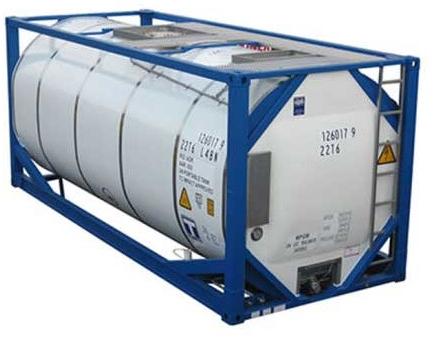
We provide Halal and Kosher Tank Certification for Exporters
 Mr. Bhaskar Zinurde (Quality Advisors)
 A - 414, Shiv Chamber, Plot No. 21, Sector -11, CBD Belapur, Navi Mumbai, Maharashtra - 400614, India
 Share us via