


Welcome to Ca Collection
Manufacturer / Exporter / Supplier Of Synthesizer, Stage Outfit, Bacigalupo Barrel Organ, Grand Piano, Harpsichord, Hurdy Gurdy Instruments, Fiddle, Aeolian Piano, Guitar, Bonafinis Virginal Piano
 Write a Review
Welcome to Ca Collection
Manufacturer / Exporter / Supplier Of Synthesizer, Stage Outfit, Bacigalupo Barrel Organ, Grand Piano, Harpsichord, Hurdy Gurdy Instruments, Fiddle, Aeolian Piano, Guitar, Bonafinis Virginal Piano
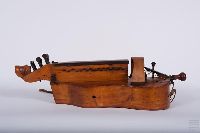
One of the most eccentric instruments, the hurdy-gurdy is an unlikely mash-up of the violin and the bagpipes. Believed to have originated in 12th-century Europe, and possibly derived from stringed instruments brought from the Middle East and North Africa during the Moorish invasion of Spain, it remains a popular instrument in many folk music traditions. This particularly ornate, decorative model is an example of the so-called vielle à roue (wheel fiddle) style, which emerged in 18th-century France and was popular with the nobility.
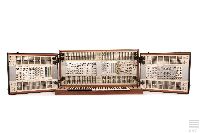
In the 1977 sci-fi classic Close Encounters of the Third Kind, five electronic-sounding notes allow humanity to communicate with aliens. The source of those notes likely came from the ARP 2500—a modular, analog synthesizer. Designed by former NASA electrical engineer Alan R. Pearlman, the instrument’s most significant innovation is its matrix of patchable sliders. These sliders stand in stark contrast to the loose patch cables found on the more conventional Moog and Buchla systems of the time. The company’s first instrument was not a commercial success however—only selling about 100 units.
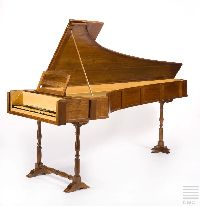
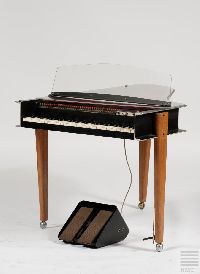
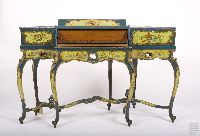
Famously heard on “Because”—the trippy, mournful second cut on side two of The Beatles’ album Abbey Road—this electric harpsichord was used extensively throughout the psychedelic ’60s. Popularized by Baroque revivalists and bands like The Doors, the Beach Boys and the Grateful Dead, the instrument was produced in very small numbers—with only 500 units remaining in existence today. Essentially consisting of an acoustic harpsichord, turbocharged by an electric guitar’s pick-up system, the electric harpsichord is now a highly prized collector’s item.
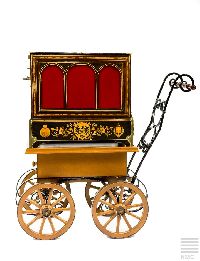
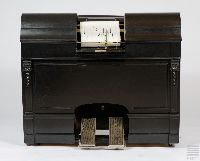
At a time when most popular music was performed in concert halls by professional musicians, the portable, self-playing barrel organ gave people the opportunity to listen to music and—for those without training—to play it. The Italian organ builder Giovanni Bacigalupo, who immigrated to Germany in 1873, manufactured this particular organ sometime around 1880 in Berlin. His family continued to produce such instruments in their Prenzlauer Berg factory for over a century, closing it in 1977.
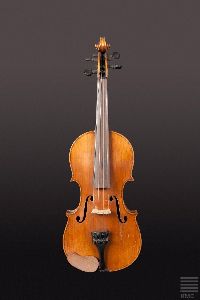
This instrument was formerly owned by the great Canadian fiddler Al Cherny. Born in Medicine Hat, Alberta, in 1932, Cherny gained a reputation for being a talented and flashy fiddler—often playing with the instrument held behind his back or under his leg. In the 1950s he relocated to Ontario to perform with CKNX’s Barn Dance radio show and eventually made it to CBC’s The Tommy Hunter Show, where he became a regular, bringing his upbeat style, infused with a dash of Ukrainian folk, to a national audience.
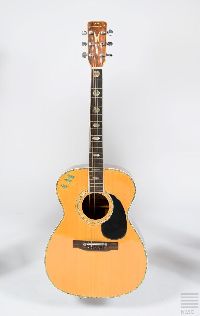
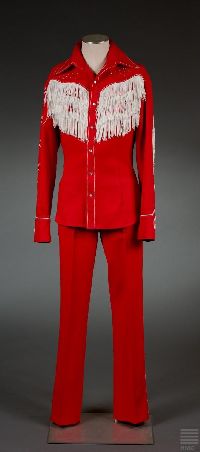
A fittingly patriotic outfit for a musician who went by the handle “Captain Canada”—this suit and belt combination was once owned by legendary fiddler Brian Sklar. Designed in the flamboyant Nudie Cohn style favoured by country and rock artists throughout the ’60s and ’70s, this outfit likely had its time in the spotlight. The prolific Sklar, along with his band the Western Senators and the Tex Pistols, has toured Europe 32 times, released 29 studio albums, appeared in over 250 television productions and performed at 39 Calgary Stampedes.
Share your thoughts with other customers for Ca Collection
Add Review Rafi (Ca Collection)
 1544, Point View St., United States
 Share us via