


Welcome to HELITUNE, INC.
Manufacturer / Exporter / Supplier Of Flitepad Tablet PC, RT-Balancer, Helitune Rotortuner, Optical Pick-Up unit
 Write a Review
Welcome to HELITUNE, INC.
Manufacturer / Exporter / Supplier Of Flitepad Tablet PC, RT-Balancer, Helitune Rotortuner, Optical Pick-Up unit
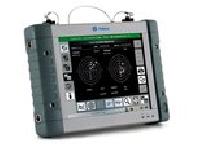
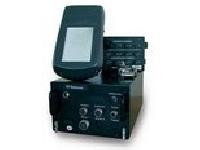
System Control Overall control of the RT Balancer is through an ergonomically designed Hand-held System Controller (HHSC) with a touch sensitive membrane over a high-resolution back-lit LCD display. It is robust and easily readable making it ideally suited to the demands of the flight deck or cockpit environment, and is powered from the Data Collection Unit. All data and solutions may be viewed in flight and hard copies obtained from the integral printer. The unit currently supports two user-selectable languages; English, or German. Data Input and Storage Data from up to 8 accelerometers and 4 tachometer channels are integrated in the Data Collection Unit to provide data viewable as polar balance plots and frequency domain vibration signatures. All data is stored to a removable PCMCIA Card which is used for data transfer and subsequent detailed off-line analysis in the RT Vision Ground Support Station. Data Analysis The capabilities of the RT Balancer are determined by the Firmware currently installed, a full description of which may be found in the Firmware Data Sheet. In general the system will collect balance data from up to 8 different flight conditions and supply balance solutions according to the operators requirements, a range of vibration signatures up to 1000 Hz and 6400 lines resolution are available with at least one range covering the 1 x P and N x P frequencies. Other ‘windowed’ ranges may be configured to extract and highlight frequencies of special interest for specific aircraft diagnostic requirements. Firmware Upgrade Options. The system is designed so that future improvements and upgrades to the overall systems functionality, as well as refinements to aircraft information, may be incorporated through the use of Firmware Upgrade Cards or Aircraft Data Cards supplied on PCMCIA cards. Customer Support The team members are experienced aircraft engineers with a wealth of experience in aviation maintenance specialising in Rotor Track & Balancing of dynamic components as well as propeller balancing, and Vibration Analysis. We can be contacted directly by telephone, fax, e-mail or through the website. Helitune promotes a personal service and is happy to create customised configurations to suit special requirements.
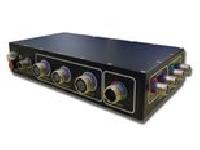
The RT-JEM is specifically configured at build to accommodate individual engine design characteristics, and test criteria using FPGA technology. Different transducer types are supported with specific built-in signal conditioning modules. For operators of existing Rotortuner 2000 (utilising the latest Voyager terminal) or Rotortuner 5JS+ the RT-JEM shares the same user interface permitting engine tests to be integrated with RTB activities. The RT-JEM may also be used independently, using the touch screen ‘Voyager’ interface for monitoring installed engines, or through a PC interface for Engine Test House installations. With full 4x4 tachometertransducer channel mapping and simultaneous data acquisition capability the RT-JEM supports consecutive data collections from two 2x2 equipped engines, without hardware transfer during a single start on each engine. Run-up and run-down data is presented live to the operator during acquisition. The plots may be displayed with respect to the chosen tachometer input together with overall filtered RMS broad band levels, or Order 1 values being displayed from each transducer. On completion of the test the parameters and levels are validated against the test criteria and a PassFail report generated. The RT-JEM stores the processed data to the system ‘Test Card’. It also supports, if required, the storage of the raw data for subsequent re-analysis within the RT-JEM itself, or using RT- Vision.
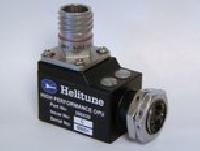
The Optical Pick-Up unit works by transmitting a beam of infra red light, which is reflected back to the unit by the passing of a target of reflective tape or paint attached to the rotating component. An electrical pulse is produced each time the target comes into view and the red LED indicator illuminates on the OPU body. This signal is used to generate a speed output and a timing reference for balance data, vibration signatures and tracking information.Helitune also produces OPU’s for special applications. The 'Onboard' OPU is designed for permanent fit as part of a HUMS system and meets the interface requirements of the Rotorcraft Industry Technology Association (RITA). The OPU complies with EMC and environmental requirements of Mil Std 810E, Def Stan 59 41, BS.3G.100 and RTCA DO160C.
Share your thoughts with other customers for HELITUNE, INC.
Add Review (HELITUNE, INC.)
 Elk Grove Village, IL 60007 map, United States
 Share us via