Welcome to Orbital ATK
Manufacturer / Exporter / Supplier Of Caliber Ammunition, Combat Caravan, Booster Separation Motors, Proximity Sensor, Rocket Motor Testing, Propellant Tanks, Strap on Booster System, JPL Mission Operations
 Write a Review
Welcome to Orbital ATK
Manufacturer / Exporter / Supplier Of Caliber Ammunition, Combat Caravan, Booster Separation Motors, Proximity Sensor, Rocket Motor Testing, Propellant Tanks, Strap on Booster System, JPL Mission Operations
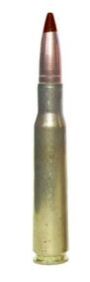
CALIBER: Caliber .50 (12.7x99mm) CARTRIDGE: M17 Tracer BULLET: 40 g (618 gr) FMJ (copper) Boat-Tail with Mild Steel Core and Tracer Mix VELOCITY: 855 18 ms (24 m from muzzle) @ 70 2 F or 2905 60 fts (78 ft from muzzle) @ 70 2 F ACCURACY: Average Mean Radii Maximum: 15.9 cm @ 182 m (6.25 in @ 200 yds) or 30.5 cm @ 548 m (12 in @ 600 yds) AVERAGE CHAMBER PRESSURE: Maximum: 448 Mpa @ 21 C (65, 000 psi @ 70 F) TRACE PERFORMANCE: Visible Trace 91 m to 1460 m (100 yds to 1600 yds) BULLET PULL: Minimum of 90 Kg (200 lbs) CASE: Brass (Copper Alloy No. 260) PRIMER: 50M Boxer Style TIP ID: Brown OPERATING RANGE: -54C to 52 C (-65 F to 125 F) PRIMER SEALANT: Yes CASE MOUTH SEALANT: Yes HEADSTAMP: LC manufacturer symbol and the year of manufacture. PROPELLANT DETECTION: 100% mechanical andor electrical detection of propellant levels within the cartridge PACKAGING OPTIONS Bulk Linked Manufactured to U.S. Military Specifications: MIL-DTL-1318D MIL-STD-636 MIL-STD-1916 Drawing: 7672

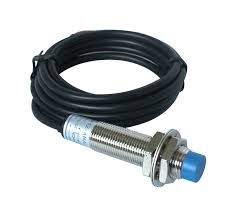
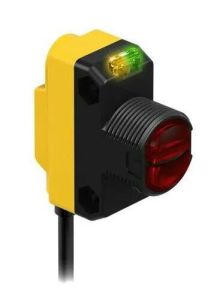
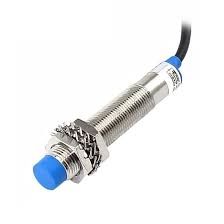
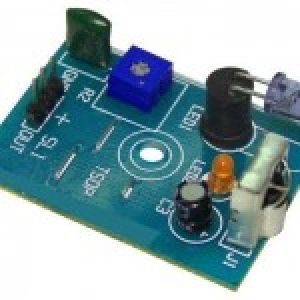
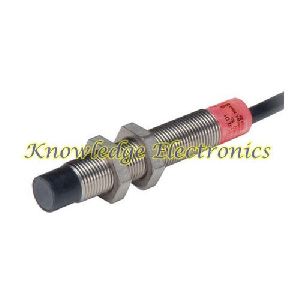
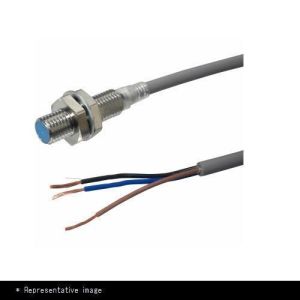
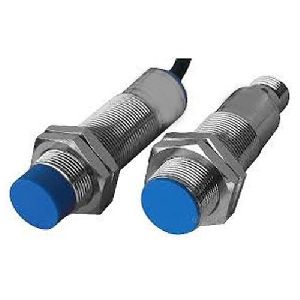
The DSU-33D/B Proximity Sensor is an all-weather, battery-operated, active, radio-frequency, ranging radar. It is a single-mission device capable of operating in an electronic countermeasure environment (ECM). The sensor mounts on and provides a proximity function for the MK 80 and M117 series general purpose. The sensor is capable of both high- and low-drag releases, and it meets the unique requirements of the U.S. Air Force and Navy. For the Air Force and Navy are equipped with an FMU-139C/B or FMU-152A/B fuze, an FZU-48/B, FZU-55/B or FZU-63/B and a filtered power-cable assembly. Mix-and-match combinations of fuze, sensor and initiator provide the lowest-cost alternative to fuze/sensor in one hardware package. Provisions for both ground and in-flight safety are incorporated as integral design features to ensure that the sensor will operate the fuze only under specific and selected conditions. The DSU-33D/B has passed appropriate environmental tests. The sensor features advanced electronics technology, solid-state circuit design and highly reliable parts. It is subjected to extensive testing during all production stages. In terms of accuracy, the DSU-33D/B allows for multiple drop configurations. The sensor-processor signal returns from the weapon release all the way to the ground. When jamming occurs, the ground signal overcomes the jamming signal and initiates an above-ground burst, and when no jamming is present, the sensor provides a very accurate height of burst. Orbital ATK has delivered over 154, 000 DSU-33 series Sensors since 1999. The DSU-33D/B is currently in production for the U.S. Government under a new Full Rate Production Contract, Orbital ATK�s fourth.�

The AC-208 Combat Caravan offers a robust daynight intelligence, surveillance and reconnaissance solution now available with precision counterinsurgency, intelligence, surveillance and reconnaissance capabilities (ISR). It is easily convertible from “Clean Wing” ISR to armed operation with Hellfire Missiles. Ownship targeting and weapons employment is provided via integrated targeting and fire control systems. Off-board data links provide full-motion video to ground stations or other aircraft. Features Orbital ATK's STAR Mission System, with the STAR Compact MPU, 18-inch Avedon color display and integrated fire-control system MX-15D EOIR sensor with integrated laser designator and IMU AGM-114MK Missile (other weapons coming soon) Wing Hardpoint Installation Missile Pylon Integration AAR-47ALE-47 Defensive Countermeasures System Ballistic panels for cockpit and passenger protection BMS AG and AA data link (other data links available) VHFUHF communications Cockpit tactical displays

Orbital ATK Booster Separation Motors (BSMs) were rigorously qualified for manned space flight, successfully used on the last fifteen space shuttle missions, and are a critical part of NASA’s next-generation Space Launch System (SLS). Four BSMs are installed in the forward frustum of each solid rocket booster, and four are installed in the aft skirt. Designed to push the spent motors safely away from the core vehicle at staging, all 16 BSMs fire simultaneously at booster separation a little over two minutes into the mission, approximately 25 nautical miles above the earth’s surface. Travelling 3, 000 miles per hour at ignition, each BSM provides about 20, 000 pounds average thrust over its one-second burn, ensuring successful launch to orbit.

Orbital ATK’s test facilities use multiple test bays capable of testing solid rocket motors up to 12.2 feet in diameter and 152 feet long. Test stands of various sizes and configurations are available and are capable of supporting up to 4.3 million lbs. of thrust Six degrees-of-freedom test stand for small motors Motor conditioning facilities Custom test-stand design and manufacture Remote camera stations and television monitoring systems 200-ton gantry crane for large motor tests

Orbital ATK is the world's leading producer of titanium propellant tanks used in military, scientific and commercial satellites, space-launch vehicles, and space-exploration vehicles, with more than 400 designs qualified and more than 5, 000 tanks delivered. The tanks have been a part of nearly every large U.S. launch vehicle and geosynchronous earth-orbit satellite, with 100 percent reliability. Orbital ATK propellant tanks have landed on Mars, Venus and the Moon, and have visited every planet in the solar system. They have been an integral part of nearly every major space-exploration vehicle, including Cassini, Mariner, Pioneer and Voyager. Launch vehicles with Orbital ATK tanks have included Delta III and Delta IV, the space shuttle and the entire Atlas family of vehicles.

Orbital ATK produces the Graphite Epoxy Motor (GEM) for use on ULA’s Delta IV and Delta II launch vehicles. The 60- and 40-inch-diameter GEM motors are strap-on booster systems that can fly in different configurations depending on payload requirements with either fixed or vectorable nozzles. These motors have 100% mission success with over 1, 000 motors flown. First flown in 1991, the 40-inch-diameter GEM 40 is a strap-on booster system developed to increase the payload-to-orbit capability of the Delta II vehicle. The GEM 40 flies in three, four or nine-motor configurations, depending on payload requirements. The three-motor and four-motor configurations are ground-ignited. The nine-motor configuration ignites six motors on the ground and three in the air. The GEM 40 also comes in a vectorable nozzle model.

Orbital ATK is the prime contractor supporting the Jet Propulsion Laboratory (JPL) for mission operation support including, but not limited to: mission planning and sequencing support, flight control support, and science data team support.
Share your thoughts with other customers for Orbital ATK
Add Review (Orbital ATK)
 Dulles, VA 20166 map, United States
 Share us via