Welcome to Vectorply Corporation
Manufacturer / Exporter / Supplier Of Reinforcement Fibers, Carbon Fiber, Stitch-Bonded Reinforcements, Reinforcement
-

Year of Establishment
1992
-

Primary Business
Supplier
-

Number of Employees
50-99
 Write a Review
Welcome to Vectorply Corporation
Manufacturer / Exporter / Supplier Of Reinforcement Fibers, Carbon Fiber, Stitch-Bonded Reinforcements, Reinforcement
Year of Establishment
1992
Primary Business
Supplier
Number of Employees
50-99
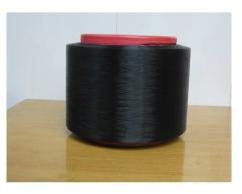
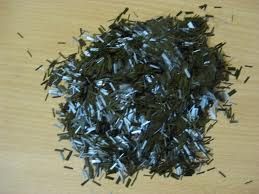
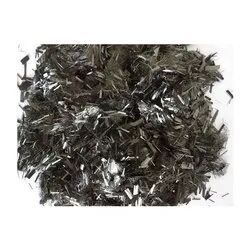
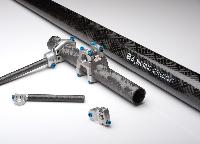
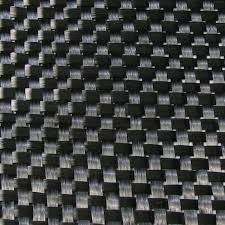
Carbon fiber has been increasingly utilized in high-performance applications such as aerospace, sporting goods, marine, and infrastructure over the past several decades. The combination of excellent stiffness, strength, fatigue resistance, and light weight make it the ideal reinforcing fiber for high-performance composites.
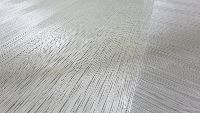
INTRODUCTION Glass Fiber: E-glass E-glass (“Electrical” grade glass) is by far the most used fiber in reinforced plastic composites. In many industries, it represents over 90% of the reinforcements used. Its main advantages are: Low cost??????????????????????????????? High strength Light weight (relative to steel) High chemical resistance The main disadvantages are: Low modulus (relative to other reinforcing fibers) Low fatigue resistance (relative to carbon fibers) High weight (relative to other reinforcing fibers) Highly abrasive when machined Susceptibility to stress corrosion Because of its widespread use, the advantages have a tendency to outweigh the disadvantages. Almost all glass fibers are sold in strands of grouped fibers, or rovings, associated with a particular yield. The yield is the number of yards of roving per pound. The metric unit of measure is TEX which is the weight in grams per kilometer (1, 000 meters). The equation for conversion between TEX and yield (YPP) is:
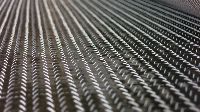
REINFORCEMENT SERIES – VECTORULTRA VectorUltra reinforcements are designed to be used in laminates where lightweight, high stiffness and strength are key elements of the design criteria. Depending upon the application, reinforcements can be manufactured exclusively from high modulus fibers, such as carbon, aramid, and S-glass, or can be offered as hybridized versions with E-glass. Carbon fiber is used primarily to provide high stiffness (or modulus), but also provides high fatigue resistance, thermal and electrical conductivity, and low thermal expansion. Aramid fiber (often known by the brand name KEVLAR® by Dupont) may be used to add toughness, abrasion resistance, and increase impact resistance. In most cases VectorUltra™ reinforcements are made to order but Vectorply stocks several styles for immediate delivery such as C-BX 1200, a 12ozyd² (400 gsm) carbon double bias, or C-LA 1812, an 18.8ozyd² (640 gsm) carbon unidirectional. Double bias aramid and E-glass hybrids in 12ozyd² (400 gsm) and 17ozyd² (570 gsm) are also normally available. Call for details or click on the link at the bottom of the page for a complete listing of standard VectorUltra reinforcements. Custom versions can be designed to suit the requirements but may be subject to minimum order restrictions. THE CARBON ADVANTAGE Nothing reinforces composites quite like carbon fiber. Pound for pound, compared to steel, carbon fiber is 3.5 times stiffer and more than 12 times stronger. There are two different kinds of carbon fiber – PAN and Pitch based. PAN based fibers, the most popular in the industrial and sporting goods industry are easy to process, have excellent mechanical properties, and are much more widely produced than Pitch based fibers. PAN fibers are acrylic (polyacrylonitrile) containing carbon backbones that are heated under tension at 200-300ºC to align the molecules for higher stiffness (or modulus). The temperature is then raised to 1000ºC in a nitrogen atmosphere to carbonize the fibers. To produce high modulus carbon fibers (>45 Msi) PAN fibers are then heated under an inert atmosphere at 3000ºC to arrive at almost pure carbon. Here is the distinction between graphite fibers and carbon fibers. While carbon is approximately 93% to 95% carbon, graphite is almost 100% pure carbon. The price difference between carbon and graphite is significant. Pitch based carbon fibers on the other hand are generally higher in modulus, lower strength, and can be more difficult to process. Lower modulus versions of pitch based carbon are available as well, and are typically used in thermal management applications due to their high thermal conductivity. Examples of applications requiring carbon fiber would be aerospace parts where there’s a demand for high strength, and light weight. Components such as the International Space Station, satellites, rocket motor casings, and expendable launch vehicles used the Boeing Delta rocket programs all require carbon fiber reinforcements to meet performance and weight criteria. Typical carbon fiber used in boat building is standard modulus (33 Msi) where low weight is essential, but some stiffness is traded for greater elasticity or impact resistance. Carbon is being used as the primary reinforcement in not only hull sides and bottom, but in the superstructure of large boats and ships as well. Carbon unidirectional fibers placed on deck beam stringer caps can help reduce the depth of the beam thus lowering overall deck height and increasing the span between bulkheads, opening the door for more interior design options. Carbon fiber’s stiffness and strength can also be used to handle the highly concentrated loads such as those found on a sailboat i.e. mainsheet travelers, chainplates, rudder bearings, masts and booms.
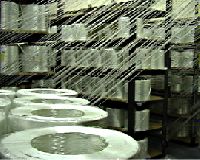
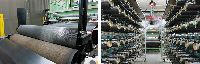
INTRODUCTION The development of stitch bonded, multiaxial reinforcements has allowed for faster fabrication of parts with better physical and mechanical properties. Parts made from these reinforcements have led to cost effective solutions for a variety of applications including marine, transportation, infrastructure, sports and recreation and aerospace. The cost effective solution begins with engineering the laminate requirements at the point of fabric manufacture. As you will see, the strength demands can be engineered right into the reinforcement by considering fiber weight and fiber angle of any given ply. Stitch-bonding fabric is essentially an automated process and highly efficient compared to a shop fabricated laminate using unidirectional or woven fabrics. COMPARISON OF NON-CRIMP AND WOVEN FABRICS While some composite builders continue to use a combination woven roving and chopped mat, the nature of weaving fabric has limitations. The crimping of yarns, inherent in weaving, causes stress points in the laminate and a subsequent knockdown in strength and stiffness. Pound for pound non-crimp reinforcements are 30% stronger than woven fabrics. Secondly, the coarse surface created by the weaving of fibers translates into poor shear properties because of less fiber-to-fiber contact. Third, the interstices created by the weave allow resin to pool amongst the rovings contributing to lower properties, adding unwanted weight and cost – see Figure 1. Figure 1. Cross section of woven fabric. When a load is applied to a woven fabric a stress concentration occurs at every point where one fiber bundle passes over or under another. This causes unwanted stresses in the resin, which is much weaker than the fibers. Repeated loading and unloading, or cycle fatigue, will cause a breakdown of the resin leaving the fibers unsupported and free to buckle in compression loading. Pound for pound non-crimp stitched reinforcements are 30% stronger than woven fabrics. Figure 2. Woven roving 24 oz: The woven fabric, with larger surface interstices, has lower shear properties compared to non-crimp fabrics and will depend upon the resin for ultimate strength. Figure 3 & 4. The cross section of non-crimp stitch bonded fabrics’ show how fibers are straight and directly aligned with the load path. The surface finish, having fewer interstices, less likely to print through, consumes less resin, and has better shear properties. MULTIPLE FIBER ARCHITECTURE FOR MULTIPLE BENEFITS Stitch bonded fabrics offer greater range and flexibility compared to woven fabrics, especially in the field of multiaxial (3 plies or more). Multiaxial reinforcements can be engineered to meet specific requirements and perform multiple tasks such as providing good surface finish, impact and abrasion resistance, and structural integrity, all in one fabric. Just as important as the properties, is the element of cost. When the cost to fabricate a composite part becomes a large percentage of the total cost, engineers look to multiaxial reinforcements as a way to reduce fabrication time and therefore reduce labor cost. One example is Vectorply’s E-QX 3600; a 36oz quad (1215 gsm) with chopped mat which is a single ply replacement for the traditional 2 fabric laminate of a 17oz double bias and 18oz biaxial. Furthermore, the ability to place fibers on 0º90º+45º-45º, (see figure 1) means engineers can design composite laminates to handle loads from both the known and unknown directions. Quadraxial reinforcements are closer to the traditional building materials like steel and aluminum i.e. equal strength in all directions. The predictability of quadraxial laminates has created a comfort zone with engineers which have opened the door for new applications such as composite bridge decks, and infrastructure rehabilitation to name a few. Figure 5. Stitch bonded example-Quadraxial. Typical quadraxial ply stack includes 0º, 90º, +45º, and –45º plies. They are often made balanced (equal weight on all axes) but can also be tailored to suit a particular load case such as the typical boat bottom panel where bending occurs mostly in the transverse direction. In this case quads are designed with more 90º fiber than the other axis. HOW IT’S MADE The machines are ‘fed’ with fiber from bobbins or roving packages (see fig. 6). The weight of each ply or layer is determined by the bulk of the roving bundle and the spacing between the bundles when stitched together. Fibers running in the direction of the roll are called the warp, longitudinal, or 0º direction. Fibers on any angle between 0º and 90º (+, – 45º is common) are called off axis, weft, or transverse, are transported by carriages that are driven back and forth across a conveyor belt moving towards the stitching head. Hooks on the edge of the belt capture the fibers and hold them in place until they reach the stitching head where all the plies are combined by polyester yarn. The finished fabric is then rolled, wrapped in plastic to seal out moisture, boxed and loaded onto pallets ready for shipment.. Figure 6. Machines are ‘fed’ with fiber from bobbins, or roving packages housed in creel racks. Figure 7. Multiaxial machine. Cross-plies of +45º, 90º, -45º or angle in between 22º and 90º are laid in place by a carriage that shuttles back and forth across the width of the roll. Figure 8. The stitch style and density is critical to the performance and handling of the fabric. The stitch pattern (chain, tricot, modified tricot, etc.), the frequency (courses per inch in the roll direction or 0º axis), and gauge (rows of stitching across the roll width) all impact the behavior of the finished fabric. The needles are mounted on the stitch bar, which can simultaneously move vertically, and horizontally to form the desired stitch pattern. Stitch yarn is most commonly polyester. Figure 9 & 10. Once the fabric is stitched it is slit to specified widths and taken up on rolls. Figure 11. Material rolls are then boxed or bagged and ready for shipment.
Share your thoughts with other customers for Vectorply Corporation
Add Review (Vectorply Corporation)
 Phenix City, AL 36867 map, United States
 Share us via