Welcome to Vedha Herbs
We are one of the leading herbs traders and manufacturer from India, Kerala.
-

Year of Establishment
2008
-

Primary Business
Retailer
 Write a Review
Welcome to Vedha Herbs
We are one of the leading herbs traders and manufacturer from India, Kerala.
Year of Establishment
2008
Primary Business
Retailer
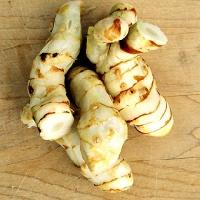
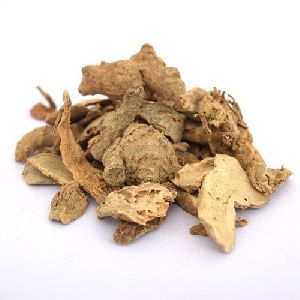
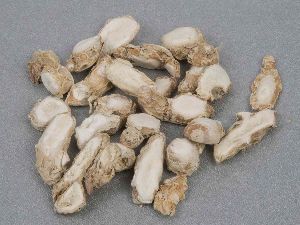
Galangal is a rhizome of plants in the ginger family Zingiberaceae, with culinary and medicinal uses originating in Indonesia. Galanga, called kah in Thai and known variously as "galangal" and "laos root, " is an immensely pungent and fiery rhizome related to the common ginger but with a personality distinctly its own. Its abundant usage in Thai cooking, almost to the exclusion of ginger, has earned it the title of Siamese or Thai ginger. Galanga has many medicinal properties similar to ginger. It is a digestive stimulant and also helps to settle stomach upsets, ease nausea and curb flatulence. At the same time, its mild, natural laxative effect keeps the bowels regular. Galanga's heat makes it a good agent in reducing cramping and numbness, in healing bruises and swelling, in treating respiratory ailments and skin diseases and in removing toxins from the body.
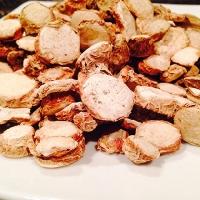
Zedoary root is actually a rhizome with a thin brown skin and a bright orange, hard interior. Its smell is similar to turmeric and mango. Because of the mango-like fragrance, zedoary is called amb halad in many Indian languages (amb means mango). The essential oil produced from the dried roots of Curcuma zedoaria is used in perfumery and soap fabrication, as well as an ingredient in bitter tonics. Zedoary is used for colic, spasms, loss of appetite, vomiting, cough and indigestion. Some people also use it for anxiety, stress, fatigue, and pain and swelling (inflammation).Zedoary is sometimes applied directly to the skin to keep mosquitoes away. Zedoary is valued for its ability to purify the blood. It is an antiseptic and a paste applied locally to cuts and wounds helps healing. Zedoary is used as anti-venom for the Indian Cobra. The herb, when taken in powdered form, helps in regularizing menstruation. It is used in the manufacture of liquors, stomach essences, bitters, perfumes and cosmetics. The herb proves useful in case of abdominal cramps, amenorrhea-abdominal pain and rheumatic pain. It is also used in anti-periodic pills.
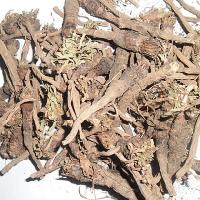
The Scientific Name of Pellitory Root is Anacyclus pyrethrum .Some of its Common names are Spanish chamomile, or Mount Atlas daisy.Itis a perennial herb much like chamomile in habitat and appearance. Pellitory root is widely used because of its pungent efficacy in relieving toothache and in promoting a free flow of saliva. The British Pharmacopoeia directs that it be used as a masticatory, and in the form of lozenges for its reflex action on the salivary glands in dryness of the mouth and throat. The tincture made from the dried root may be applied to relieve the aching of a decayed tooth, applied on cotton wool, or rubbed on the gums, and for this purpose may with advantage be mixed with camphorated chloroform. It forms an addition to many dentifrices.
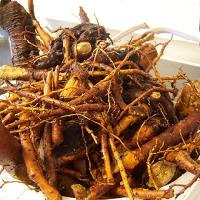
Rhubarb root is commonly called Turkish rhubarb. Its scientifc name is Rheum palmatum. Rhubarb is extensively used in traditional Chinese medicine.The root is used as an anticholesterolemic, antiseptic, antispasmodic, antitumor, aperient, astringent, cholagogue, demulcent, diuretic, laxative, purgative, stomachic and tonic. Rhubarb is used primarily for digestive complaints including constipation, diarrhea, heartburn, stomach pain, gastrointestinal (GI) bleeding, and preparation for certain GI diagnostic procedures. Some people use rhubarb so they have to strain less during bowel movements; this reduces pain from hemorrhoids or tears in the skin lining the anal canal (anal fissures) and for the treatment of hyperlipidemia and cancer. However, sound clinical evidence for its use is lacking. Rhubarb is sometimes applied to the skin to treat cold sores. In food, rhubarb stems are eaten in pie and other recipes. Rhubarb is also used as a flavoring agent.
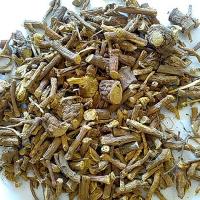
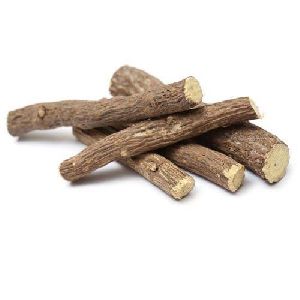
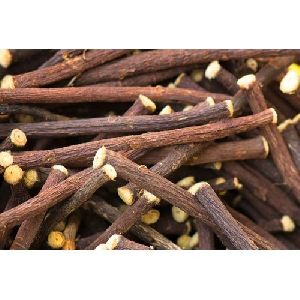
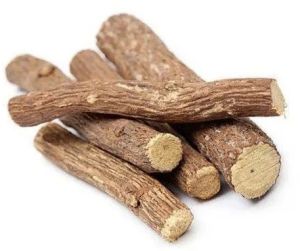
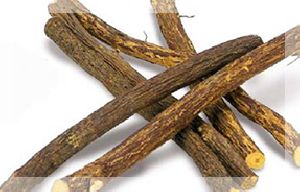
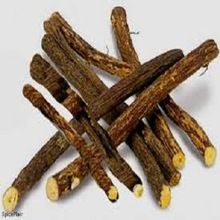
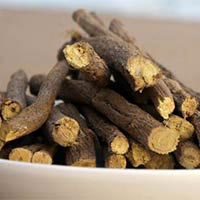
Liquorice or licorice is the root of Glycyrrhiza glabra from which a sweet flavour can be extracted.The latin name of Licorice Root are Glycyrrhiza glabra, Liquiritia officinali. Licorice root contains many anti-depressant compounds. Licorice is useful for many ailments including asthma, athlete's foot, baldness, body odor, bursitis, canker sores, chronic fatigue, depression, colds and flu, coughs, dandruff, emphysema, gingivitis and tooth decay, gout, heartburn, HIV, viral infections, fungal infections, ulcers, liver problems, Lyme disease, menopause, psoriasis, shingles, sore throat, tendinitis, tuberculosis, ulcers, yeast infections, prostate enlargement and arthritis. It helps in reducing stomach acid and relieving heartburn and indigestion, increasing bile flow and lowering cholesterol and also in improving resistance to physical and emotional stress. Some people use licorice as a shampoo to reduce oiliness in their hair.

Paris flower (Paris polyphylla) is an interesting little Asian woodland bulb, widespread across China and related to Trilliums. The genus name is derived from ‘pars’ referring to the symmetry of the plant. The species polyphylla means many leaves; poly meaning many and phyla meaning leaves. It is widely used in traditional Chinese medicine for antifebrile, alexipharmic, detumescent, demulsent, haemostatic and the treatment of haemopathy. It has been used to treat traumatic bleeding, inflammation, and microbial infection and over the pastdecade, the cancer. It’s root possess healing properties like analgesic, antiphlogistic, anti-spasmodic, anti-tussive, depurative and narcotic. A decoction of root is used in the treatment of poisonous snake bites, boils, ulcers, diphtheria and Japanese B encephalitis.
Costus is an herb. The root and oil from the root are used to make medicine.The Scientific Name of Costus Root is Saussurea costus. The root of Saussurea costus has been used as an incense and perfume ingredient for thousands of years.Costus root is used for treating worm (nematode) infections. Costus oil is used for asthma, cough, gas, and severe intestinal diseases such as dysentery and cholera. It is also used as a tonic and to stimulate digestion. In foods and beverages, costus oil is used as a flavoring component. Costus root acts on the spleen and large intestine. It helps ease abdominal pain and is good for dysentery. It can heighten body awareness and sensitivity, and can enhance libido. Because of its slightly astringent property, this is a major herb for tenesmus , strengthens the Spleen and prevents Stagnation. It is used with tonifying herbs to ameliorate their side effects.
Share your thoughts with other customers for Vedha Herbs
Add Review Ranjith (Vedha Herbs)
 , , Kozhikode, Kerala, India
 Share us via