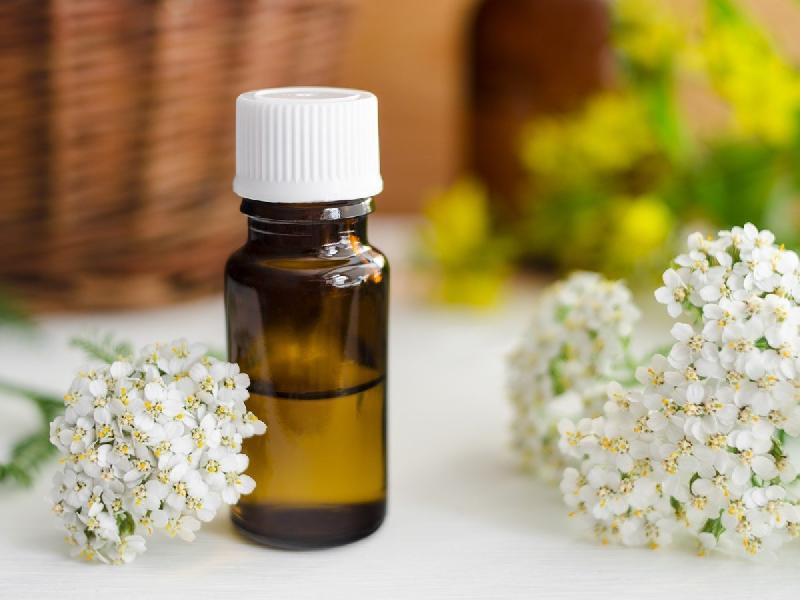
Achillea millefolium, or yarrow, originates from Europe .It is a long-stemmed member of the sunflower family found in the wild throughout the temperate regions. Yarrow leaves have been used for tea, and young leaves and flowers have been used in salads. Infusions of yarrow have served as cosmetic cleansers and medicines.
Features :
- Major Constituents of Yarrow Oil
- Sabinene
- Chamazulene
- B-Myrcene
- Germacrene D
- B-Pinene
- Camphor
- Camphene
Aromatic Uses :
- This herb plant was first used for treating external wounds on the skin. The flowers and leaves of yarrow were eaten and also made into a tea-like drink. Yarrow is highly known and widely used in herbal medicines and supplied either externally or internally.
- Yarrow has an antiseptic action, Fights bacteria. The oil found in the yarrow has been used to treat arthritis. It can be used as an Expectorant. It is helpful in relieving fevers, shortening the duration of cold and flu, helping improve relaxation during illness, and relieving cramps associated with hormones or illness. Applied topically, it is helpful with skin itching, rash or other issues.
Details :
- Aromatic Description - Yarrow Oil is sharp , woody and herbaceous
- Method of Extraction - Steam Distilled
- Part Used - Flowers/Buds/leaves
- Colour - Dark blue
- Consistency - Medium
- Perfumery Note - Middle
- Strength of Initial Aroma - Medium to Strong

 Dubai, United Arab Emirates
 Write a Review
 Ms. Viji Sam (Miris Oils)
 Share us via