 Sharjah, United Arab Emirates
 Write a Review
Our Products
We offer a complete product range of Waste Water Treatment
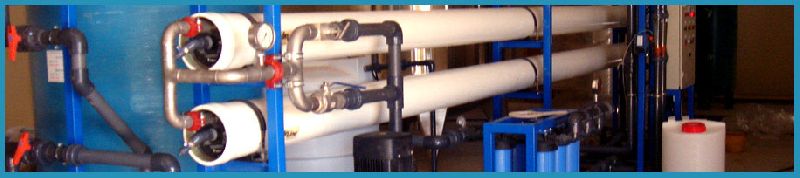
The principle of moving bed bioreactor is to provide a continuously operating bio- film reactor, which is non- cloggable, does not require backwashing and has a very low pressure drop. This is achieved by growing the bio-film on small carrier elements that move freely in the waste water in the reactor. The air stream constantly keeps the bio media in suspension and at the same time provides the required oxygen to the biomass.
The system uses specially designed bio- media, which provides a large surface area for biological growth. The bio-media is made of plastic material, which has a very long life. The media is cylindrical in shape and provides a large surface area in the given volume. The media provides about 500 m2 effective area for growth of the bio film per m3 of volume. The process has been developed and has been in use at many installations all over the world for treatment of sewage as well as industrial effluents. The bio- media used in these systems have been developed after years of research in the field.
| Domestic Effluent
|
Manual Bar Screen and Screen Chamber:
A coarse screen shall be provided at the inlet to the collection tank for removal of floating debris from the wastewater drain. The coarse screen shall have spacing of 10mm and shall be periodically cleaned. The outlet from the screen chamber is collected in the collection tank through the oil separator.
Grit cum oil separator:
The waste water shall contain oil and grease. Grit cum oil separator is used to remove oil and grease before it enters the collection tank.
Waste water collection and pumping system:
A collection tank is to be provided for receiving the waste water from various parts of the apartments. The collection tank shall be sized in a manner to have adequate volume to counter the peak flow. The waste water transfer pumps shall pump the waste water at a uniform rate to the aerobic treatment system. One pump shall be on duty and the other on standby.
Fine Screening:
The outlet from the collection tank shall be routed through an online fine screen to screen the waste water for any further solids which would have escaped the initial coarse screen. The screened waste water is then allowed to enter the first aeration chamber.
Aerobic treatment system:
The proposed Aerobic treatment system shall have the following major components :
a) Bio Reactor Unitsb) Flocculation Tankc) Settling Tankd) Aeration system
Bioreactors:
The aeration tanks are two in number and are located next to each other. Each of the tanks shall be provided with aeration pipelines at the bottom, which shall be in anticorrosive material are manifolded to cover the total periphery of the tank. The inlet of the aeration tank is on the top with the waste water falling freely into the tank. The outlet is located on the opposite side. Both compartments are connected to each other by openings. The outlet of the second tank is connected to the flocculation tank.
Aeration System:
The aeration system consists of 2 Nos. air blowers. One blower shall be on duty while the other shall be on standby. The blowers shall be used for aeration inside the aeration tanks.
Flocculation tank:
A mild dosage of coagulants and flocculants are dosed into the flocculation tank. The addition of these chemicals will aid in the formation of large flocs of the peel of sludge flowing in from the Bio reactors and precipitation of suspended organic matter. This step also helps in de- emulsifying the emulsified oil present in the waste water and precipitating the same along with the sludge.
Settling tank:
The waste water from the flocculation tank along with biological stabilized solids will flow by gravity to the settling tank. The separation of solid from waste water is achieved by laminar flow developed inside the settling tank. Due to this, heavier solids settle down, whereas the clear water rises up and flows out. The sludge settling at the bottom of the tanks shall be transferred from time to time to the aeration and sludge holding tanks . The clear water from the settling tank is then let into the filter feed tank.
Filtration system:
This consists of a pressure sand filter followed by an activated carbon filter that removes any remaining suspended solids and bad odor in the treated water so as to ensure its total conformance to the reuse standards. The filters are to be backwashed from time to time with water from the treated water tank.
Disinfection system:
The disinfection system, which comprises of a dosing system, ensures complete removal of any remaining harmful organisms in the water. The water flowing into the filter feed tank is dosed with an oxidant above and then allowed to remain in the tank for a predetermined time so that there is enough contact time for the oxidant to totally disinfect the water.
 FOURTECH ENGINEERING LLC (FOURTECH ENGINEERING LLC)FOURTECH Engineering LLC
P.O.Box: 24872
Sharjah, United Arab Emirates., United Arab Emirates
FOURTECH ENGINEERING LLC (FOURTECH ENGINEERING LLC)FOURTECH Engineering LLC
P.O.Box: 24872
Sharjah, United Arab Emirates., United Arab Emirates Share us via