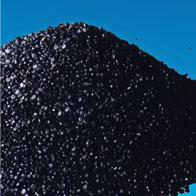
We are offering carbon black etc. Carbon black is a material produced by the incomplete combustion of heavy petroleum products such as fcc tar, coal tar, ethylene cracking tar, and a small amount from vegetable oil. Carbon black is a form of amorphous carbon that has a high surface-area-to-volume ratio, although its surface-area-to-volume ratio is low compared to that of activated carbon. It is dissimilar to soot in its much higher surface-area-to-volume ratio and significantly lower (negligible and non-bioavailable) pah (polycyclic aromatic hydrocarbon) content. However, carbon black is widely used as a model compound for diesel soot for diesel oxidation experiments.[1] carbon black is used as a pigment and reinforcement in rubber and plastic products. The most common use (70%) of carbon black is as a pigment and reinforcing phase in automobile tires. Carbon black also helps conduct heat away from the tread and belt area of the tire, reducing thermal damage and increasing tire life. Carbon black particles are also employed in some radar absorbent materials and in photocopier and laser printer toner. Total production was around 8, 100, 000 metric tons (8, 900, 000 short tons) in 2006.[2] about 20% of world production goes into belts, hoses, and other non-tire rubber goods. The balance is mainly used as a pigment in inks, coatings and plastics. For example, it is added to polypropylene because it absorbs ultraviolet radiation, which otherwise causes the material to degrade. Carbon black from vegetable origin is used as a food coloring, in europe known as additive e153. It is approved for use in australia and new zealand[
Additional Information:

 Sharjah Airport International, United Arab Emirates
 Write a Review
 Saju George (Nasco Chemsol International (fze))
 Share us via