 Abu Dhabi, United Arab Emirates
 Write a Review
Our Products
Our Complete range of products are Alloy Chain Slings and Chain Sling.
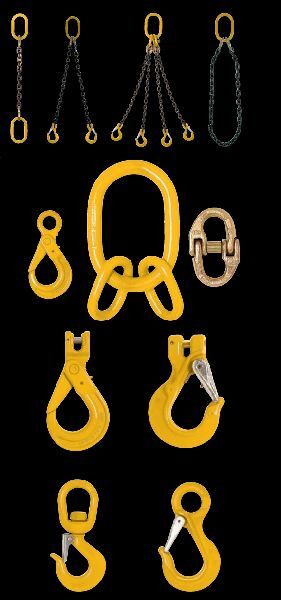
Alloy chain slings are designed for overhead lifting and offer unmatched durability. They provide excellent performance in harsh environments. Grade 80 Alloy chain is the most common grade of chain used today, but grade 100 alloy chain are used where fine tolerance is desirable such as in overhead cranes and other such applications. Types of alloy chain slings include single, single choker, double branch, triple branch and quadruple branch.
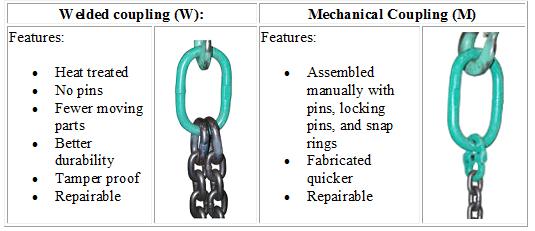
Welded and mechanically coupled products are designed and built for rugged lasting service. As with any quality product, certain precautions and standards of treatment should be observed. Proper care will extend the useful life of the chain sling.
When selecting an alloy chain sling, you will need to choose the type of coupling you prefer. The two types are (W) welded and (M) mechanically coupled.
Chain slings are often selected when operating under high temperatures or rugged conditions that would abrade or destroy other types of slings. They are flexible, durable and long lasting, ductile, easy to inspect, collapsible for convenient storage, and will adhere securely to the contours of a load.
Although chain will show little or no stretch at rated capacity, it does have the ability to elongate up to 20% prior to failure. This elongation serves as a visual warning sign prompting users to remove the sling from service before personal injury or equipment damage is sustained from a broken chain sling. The most advantageous feature of a chain sling is its ability to be repaired. Nearly any damaged component discovered during an inspection can be repaired and restored to useful condition.
During the repair process, slings will be refurbished, proof tested and recertified, offering an economical alternative to new chain sling replacement.
Chain slings used for overhead lifting applications must be manufactured from alloy steel.
Alloy chain, normally 8600 series alloy, is subjected to quality control techniques surpassing those applied to lower grades of chain and is designed, approved and specifically recommended for overhead lifting.
Alloy steel chains possess the strength, chemical content and mechanical properties necessary to meet government and industry standards. These specifications prescribe minimum elongation values, minimum proof test values, recommended working load limits and minimum statistical breaking strengths.
Alloy chain can be distinguished from other popular grades of welded chain through its hallmark, or identification code, which is embossed into chain links approximately every 12 to 18. Grade 80 (or System 8) is the most frequently used alloy chain.
Do not use any chain sling for overhead lifting before verifying that it is constructed from alloy steel by inspecting the chain prior to use.
Different types of chain slings can be fabricated and are usually designated by a three character symbol, based upon the number of legs and types of components used in the assembly as detailed below:First Character (Basic Type of Construction)S = Single leg slingSB = Single basketD = Double leg slingDB = Double basketT = Triple leg slingSE = Single endless basketQ = Quadruple leg slingDE = Double endless basketC = Single leg sling with master link at each end
Second Character (Type of Master Link or End Link):O = Oblong master link(recommended for all assemblies)P = Pear shaped master link (upon request only)
Third Character (Type of Hook):S = Sling hookG = Grab hookF = Foundry hook
 SAFETY SERVICES (SAFETY SERVICES)P.O. Box: 6322, Abu Dhabi, United Arab Emirates
 Share us via