 Write a Review
Our Products
Leading Manufacturer, Supplier & Retailer of Sesbania Gum Powder and Cassia Gum Powder.
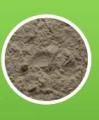
We are offering sesbania gum powder. Sesbania gum powder is one among the important ingredients in the list of gum extracts. Basically extracted from sesbania seeds which bears its origin from china, this gum extract becomes white in color when processed into powder texture. It contains viscous property that is several times higher than guar gum or other types of gum powders. This product is applied in many industries for its highly thickening characteristic and sizing properties.
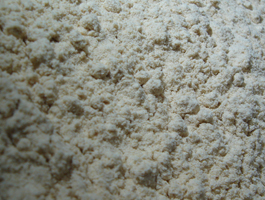
Cassia Tora L., (Cassia obtusifolia L.), Caesalpiniaceae, is a wild crop and grows in most parts of India as a . A natural gelling agent which has industrial and food applications is made commercially from the seed. Cassia grows in hot, wet, tropical climates both wild and commercially. Cassia is a tonic, carminative and stimulant. Cassia contains 1-2 % volatile cassia oil, which is mainly responsible for the spicy aroma and taste. The primary chemical constituents of Cassia include cinnamaldehyde, gum, tannins, mannitol, coumarins, and essential oils (aldehydes, eugenol, and pinene); it also contains sugars, resins, and mucilage, among other constituents.
Cassia tora powder made from cassia tora seeds and cassia tora splits are some ancient natural ingredients. In India, cassia tora is used as a natural pesticide in organic farms. Roasted seeds are substituted for coffee, like tephrosia seeds. Cassia tora powder is most popularly used in the pet-food industry. It is mix with guar gum for use in mining and other industrial application.
FFDCA, Federal Food, Drug, and Cosmetic Act; GRAS, generally recognized as safe; NTP, National Toxicology Program; OECD, Organisation for Economic Cooperation and Development; PADI, possible average daily intake.
Cassia gum is the purified flour from the endosperm of the seeds of Cassia tora and Cassia obtusifolia which belong to the leguminosae family. Seeds of Cassia occidentalis are a naturally occurring contaminant in the source material.
The intended use of Cassia gum is as thickener, emulsifier, foam stabilizer, moisture retention agent and/or texturizing agent in cheese, frozen dairy desserts and mixes, meat products and poultry products.
Cassia gum is combined with other hydrocolloids such as Carrageenan or Xanthan gum, they will synergistically form gels with unique properties.
Chemical Structure and Physical Properties of Cassia GumCassia gum is comprised of at least 75% high molecular weight (approximately 200, 000-300, 000) polysaccharide consisting primarily of a linear chain of 1, 4--D-mannopyranose units with 1, 6 linked -D-galactopyranose units. The ratio of mannose to galactose is about 5:1. The composition of saccharides is: mannose (77.2-78.9%), galactose (15.7-14.7%) and glucose (7.1-6.3%). Like most polysaccharides, the following formula applies: (C6H10O5)n.H2O. Cassia gum is related to carob bean gum, tara gum andguar gum in terms of structure and chemical properties.
Gel (synergy) with Carrageenan or Xanthan GumCassia gum forms firm, thermoplastic gels with carrageenan. As the level of cassia gum is increased, the gel strength of carrageenan solutions is also increase. Cassia gum and carrageenan gel is stable due to the excellent retorting stability of cassia gum.
Cassia gum and xanthan gum, on their own, do not have the ability to form gels. But cassia gum combined with xanthan gum, aqueous dispersions of cassia gum form cohesive, elastic gels. As with carrageenan, cassia is more efficient at forming gels with xanthan gum than other galactomannans, enabling lower total hydrocolloid levels in finished formulations. This is due to the unique branched polysaccharide galactose/mannose structure of cassia gum.
 Biren Patel (Agro Gums)
 636, G.I.D.C Estate, Phase-4., Vatva Ahmedabad, Gujarat 382445, India
 Share us via