
 GST : 27AATFA5501D1ZN
 4.7/5
4.7/5
Our Products
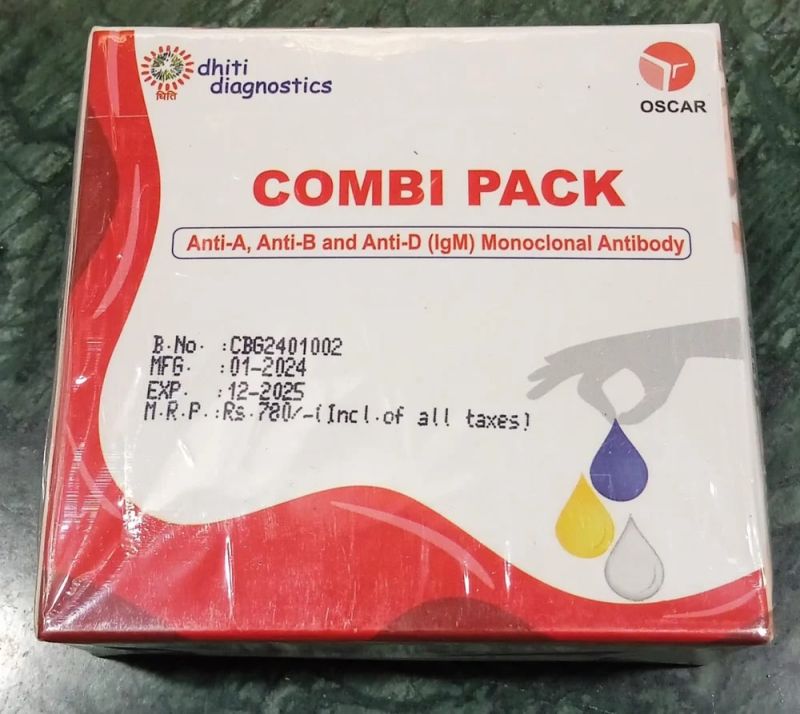
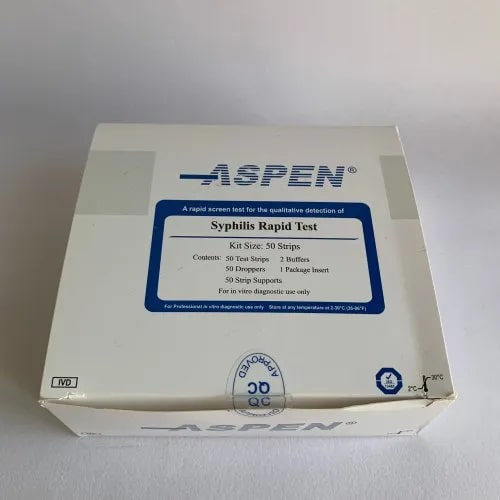
Our offered Product range includes Oscar Anti ABD Blood Grouping Kit, J. Mitra Typhi IgM IgG Card, Oscar Syphilis Rapid Test Kit, Oscar Typhi IgG IgM Tst Kit and Oscar Malaria PF-PV Test Kit.




Chikungunya virus (CHIKV) is an insect-borne virus, of the genus Alphavirus, that is transmitted to humans by virus-carrying Aedes mosquitoes. There have been recent breakouts of CHIKV associated with severe illness. CHIKV causes an illness with symptoms similar to dengue fever. CHIKV manifests itself with an acute febrile phase of the illness lasting only two to five days, followed by a prolonged arthralgic disease that affects the joints of the extremities. The pain associated with CHIKV infection of the joints persists for weeks or months, or in some cases years. As clinical symptoms & signs of this infection resemble those of many other infectious diseases including Dengue fever, clinical findings need to be confirmed by laboratory diagnostic techniques.
Advantage chikungunya igm card is one step immunochromatographic assay. The test sample is introduced to and flows laterally through an absorbent pad where it mixes with the conjugate. If the sample contains Chikungunya specific IgM antibodies, it forms a complex with the chikungunya antigen gold colloid conjugate. The complex then migrates through the nitrocellulose membrane by caplillary action. When the complex meets the line of immobilized Antihuman IgM antibodies (Test line, ‘T’), it generates a pink purple line, indicating that the sample is reactive. To serve as a procedural control, an additional control line ‘C’ has been immobilized at a distance from the test line on the strip. If the test is performed correctly, this will result in the formation of a pinkish-purple line at the control region upon contact with the conjugate.


1. IntroductionThe Viral Hepatitis caused by Hepatitis B Virus is termed as “Serum Hepatitis”. 1-5% infected people act as chronic carriers of HBV Virus. Major part of the chronic carriers secrete hepatitis B surface antigen (HBsAg) into blood and other secretions of the body like saliva and vaginal fluid. These chronic carriers are potentially infectious to other seronegative people. Hepatitis B Virus belongs to a family of enveloped DNA virus, the Hepadnavirus. Related viruses in this group cause chronic hepatitis. HBsAg has been accepted as a universal and the most reliable seromarker in case of acute HBV infection due to its appearance almost 2-4 weeks before the ALT level becomes abnormal and 3-5 weeks before the onset of symptoms or jaundice as an early detection system for hepatitis infection. In most cases of HBV infection, the incubation period varies from 40 days to 6 months. Within HBVs, antigenic diversity is recognised in the surface antigens. HBsAg particles contain common “a” antigen, linked to two sets of mutually exclusive determinants, “d” or “y” and “w” or “r” giving the four main types-adw, adr, ayw and ayr.
2. Intended useHepalisa is designed for in-vitro qualitative detection of Hepatitis B surface antigen (HBsAg) in human serum or plasma and is used as a screening test for testing of collected blood prior to transfusion.
3. Serological markers of clinical significance for hepatitis B virus (HBV)
HBsAg : First detected during the incubation period of 6-8 weeks before the appearance of symptoms. It can appear as early as 2 weeks and generally disappears within 3-4 months after exposure. It is the most reliable & universal marker of HBV infection. In the carrier and chronic state it persists more than6 months.
Anti-HBs : Appearance may take several weeks/months after HBsAg clearance causing a ‘window’ period. Best indicator of recovery & immunity to HBV. Quantitation allows pre-vaccination screening & follow-up of the post-vaccination response.
HBeAg : Appears within 1 week after HBsAg, lasts 3-6 weeks & disappears before HBsAg clearance. Its presence indicates a highly infectious state, except in pre-core mutants. Persistence > 10 weeks suggests progression to chronic carrier state/hepatitis.
Anti-HBe : It appears before clearance of HBsAg, indicates decreasing infectivity and is a good prognosis for the resolution of infection.

4th Generation Microlisa HIV Ag & Ab Elisa Test for the Detection of HIV-1 p24 Antigen and antibodies to HIV-1 (including Group O & Subtype C) and HIV-2 in Human Serum / Plasma)

I. HIST Orical review and aetiology of aids (acquired immuno deficiency syndrome)First confirmed case of Aids was identified in 1983 and by 1984 the etiologic agent, the Human Immunodeficiency Virus (HIV), subsequently named HIV-1 was isolated. Shortly afterwards in 1985 another retrovirus subsequently named HIV-2 was isolated in Africa. These two viruses belong to the retrovirus group and are slow viruses. The structure, gene organisation and serological behaviour of HIV-1 & HIV-2 and their complete nucleotide sequence has been determined. This knowledge has laid a foundation for the development of a new assay based on Recombinant DNA technology leading to the differential detection of antibodies to HIV-1 & HIV-2 (if present) in Human Serum or Plasma. Research has shown that antibodies produced against envelope gene are found in infected people as shown in graph, (Fig.-1).
HIV TRI-DOT has been developed and designed using gp41, C terminal of gp120 & gp36 representing the immunodominant regions of HIV-1 & HIV-2 envelope gene structure respectively. The device (an immunofiltration membrane) includes a "Built-in Quality Control DOT" which will develop colour during the test, thereby, confirming proper functioning of the device, reagents and correct procedural application. This Control dot is the "Built-in Quality Control." (Fig.2) HIV TRI-DOT has been specially researched, developed and engineered using several thousands of serum/plasma specimens. It has also been evaluated by UNAIDS (WHO) Geneva, using samples of European, Asian, Latin American & African origin. The Sensitivity and Specificity has been extremely high in these samples of diverse origin. The panel used for evaluation of HIV TRI-DOT by Institute of Tropical Medicine, WHO Collaborating Centre in AIDS, Belgium also included HIV-O Virus, which was found reactive with HIV TRI-DOT.
2. Intended use
The HIV TRI-DOT Test is a visual, rapid, sensitive and accurate immunoassay for the differential detection of HIV-1 & HIV-2 antibodies (IgM, IgG & IgA) in Human Serum or Plasma using HIV-1 & HIV-2 Antigens immobilized on an immunofiltration membrane. The test is a screening test for anti-HIV-1 & antiHIV-2 and is for in vitro diagnostic use only.
3. Description of symbols usedThe following are graphical symbols used in or found on J. Mitra diagnostic products and packing. These symbols are the most common ones appearing on medical devices and their packing. They are explained in more detail in the British and European Standard EN ISO 15223-1:2016.
4. Principle of the testHIV antigens are immobilized on a porous immunofiltration membrane. Sample and reagents pass through the membrane and are absorbed into the underlying absorbent. As the patient''s sample passes through the membrane, HIV antibodies, if present, bind to the immobilized antigens. Conjugate binds to the Fc portion of the HIV antibodies to give distinct pinkish purple DOT(s) against a white background. (Fig.-3)

Rapid Diagnostic test for the detection of Leptospira specific IgM & IgG antibodies in Human Serum/Plasma
Intended useAdvantage Leptospira IgM & IgG Card is a visual, rapid, sensitive, qualitative immnunoassay for the detection of Leptospira specific IgM and IgG antibodies in human serum or plasma.
IntroductionLeptospirosis is a world-wide occuring zoonotic disease, caused by infection with pathogenic spirochetes of the genus Leptospira. Although traditionally considered as an occupational risk among persons exposed to contaminated water or infected animal urine, leptospirosis is becoming recognised as a common cause of febrile illness in tropical environmments world-wide. The organism enters the human body through cuts or abrasions on the skin or through intact mucosa of the mouth, nose or conjunctiva. The clinical manifestations of leptospirosis range from a mild catarrh like fever, chills, nausea, muscle aches to icteric disease such as Weil’s syndrome, which are charaterized by renal failure, liver impairments & haemorrhages and have a high mortality rate. As clinical symptoms & signs of this infection resemble those of many other infectious diseases including Viral haemorrhage fever and Dengue fever, clinical findings need to be confirmed by laboratory diagnostic techniques.
Principle(Antigen-antibody reaction) Advantage Leptospira IgM & IgG Card is based on immunochromatographic assay principle. The test uses monoclonal anti-human IgM antibody (test line M) and monoclonal anti-human IgG (test line G) immobilised on a nitrocellulose strip. The test sample is introduced to and flows laterally through an absorbent pad where it mixes with the conjugate. The conjugate contains colloidal gold conjugated to leptospira antigen which is prepared from culture of micro-organisms. If the sample contains Leptospira specific IgM and/or IgG antibodies, it forms a complex with the leptospira antigen gold conjugate making antigen antibodies complex. This complex then migrates through the nitrocellulose membrane by caplillary action. When the complex meets the line of immobilized monoclonal antibodies (Test line, ‘M & G’), it generates a red line, indicating that the sample is reactive. A red procedural control line should always develop at ‘C’ region to indicate that the test has been performed properly.

Malaria is a serious, sometimes fatal, parasitic disease characterized by fever, chills, and anaemia and is caused by a parasite that is transmitted from one human to another by the bite of infected Anopheles mosquitoes. There are four kinds of malaria parasite that can infect human: Plasmodium falciparum, P. vivax, P. ovale and P. malariae. The disease now occurs in more than 90 countries worldwide, and it is estimated that there are over 500 million clinical cases and 2.7 million malaria-caused deaths per year. At present, malaria is diagnosed microscopically by looking for the parasites in a drop of blood. Malaria Ag Microlisa is a microlwell ELISA test for the diagnosis of infection with all four Plasmodium Species (P. falciparum/P. vivax/ P. malariae/ P. ovale) in human whole blood. Malaria Ag Microlisa is specially designed to exluded infected blood to prevent transfusion aquired malaria and is used to monitoring of anti-malarial theraphy
Intended useMalaria Ag Microlisa is an in-vitro qualitative enzyme immunoassay for detecting infection with plasmodium species (P. falciparum/P. vivax/ P. malariae/ P. ovale) based on pLDH antigen in human blood. It is intended for screening of blood donors or other individuals at risk for malaria infection and for clinical diagnostic testing
3. Principle of the test
Malaria Ag Microlisa test is an enzyme immunoassay based on sandwich ELISA. Anti-pLDH antibodies has been coated onto the wells of the microwell plate provided. Blood sample including controls are pipetted into these wells. During the first incubation, the plasmodium species pLDH antigen from samples and coated antibody is react and after washing the enzyme conjugate (anti-pLDH antibody HRPO) is added after incubation and washing to remove all the unbounded enzyme conjugate. A substrate solution which acts on the bound enzyme is added to induce a colured reaction product. The intensity of this coloured product is directly proportional to the concentration of pLDH present in the samples
4. Description of symbols usedThe following are graphical symbols used in or found on J. Mitra diagnostic products and packing. These symbols are the most common ones appearing on medical devices and their packing. They are explained in more detail in the British and European Standard EN ISO 15223-1:2016.


Oscar Troponin-I Card test is intended used for qualitative detection of cardiac Troponin-I (cTnI) in human serum / plasma as in aid of myocardial infarction (MI) / heart attack. This test can be used in emergencies /ICUs for diagnosis of MI in the suspected cases of cardiac attack. It is for in-vitro diagnostic use only. The test is based upon immuno-chromatographic principle. Monoclonal antibodies of Troponin-I have been used in the test formulation to make it highly sensitive and specific. Serum / plasma are preferred choice for testing. NO buffer is required along with serum / plasma for performing the test. Oscar Troponin-I Card test has shelf life of 24 months from date of manufacturing if stored at 2-30°C under sealed condition. Each kit of Oscar Troponin-I Card test contains 10 pieces of individually sealed pouches containing test cards and disposable sample droppers. Test can be performed using 2-3 drops of serum / plasma and result can be read within 5-20 minutes.

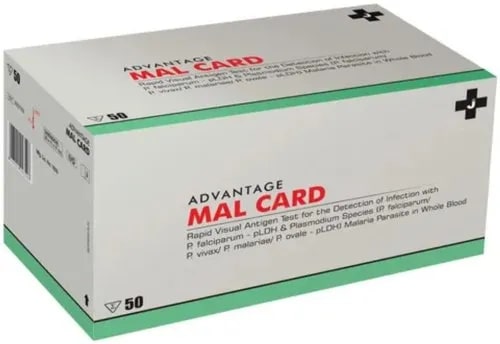
IntroductionMalaria is a serious, sometimes fatal, parasitic disease characterized by fever, chills, and anaemia and is caused by a parasite that is transmitted from one human to another by the bite of infected Anopheles mosquitoes. There are four kinds of malaria parasite that can infect human : Plasmodium falciparum, P. vivax, P. ovale, and P. malariae. As per WHO estimation. in 2012, there were an approximately 207 million cases and an estimated 627 000 deaths . Approximately 90% of all malaria deaths occur in sub-Saharan Africa, and 77% occur in children under 5 years. Malaria remains endemic in 104 countries, and, while parasite-based diagnosis is increasing, most suspected cases of malaria are still not properly confirmed, resulting in over-use of antimalarial drugs and poor disease monitoring. The use of antigen detecting rapid diagnostic tests (RDTs) is a vital part of malaria case management forming the basis for extending access to malaria diagnosis.
Intended useAdvantage mal card is a visual, rapid, qualitative and sensitive solid phase immuno chromatographic assay based on antigen detection and is as an aid in the qualitative diagnosis of infection with pLDH (Plasmodium Lactate Dehydrogenase) antigen specific to Plasmodium falciparum and other Plasmodium Species (P. vivax / P. malariae / P. ovale) in human whole blood. The kit is intended for professional use and as a screening test. All reactive samples should be confirmed by a supplental assay like microscopic examination of thick smear and thin blood films. It assists trained competent users in detecting plasmodium infections.
Principle (antigen-antibody reaction)Advantage mal card is an immunoassay based on the “sandwich” principle. The conjugate contains colloidal gold conjugated to monoclonal anti-pan specific pLDH (Plasmodium Lactate Dehydrogenase) antibody. The test uses monoclonal anti-P.f pLDH antibody (test line F) & monoclonal anti-Pan specific pLDH antibody (test line P) immobilized on a nitrocellulose strip. The test sample is added to the device. On addition of assay buffer, the red blood cells get lysed. If the sample contains P. falciparum and/or P. vivax/P. malariae/P. ovale, the colloidal gold antibody conjugate complexes the P.f. specific pLDH/Pan specific pLDH in the lysed sample. This complex migrates through the nitrocellulose strip by capillary action. When the complex meets the line of the corresponding immobilized monoclonal antibody, the complex is trapped forming a purplish pink band which confirms a reactive test result. Absence of a coloured band in the test region indicates a non-reactive test result. A red procedural control line should always develop at ‘C’ region to indicate that the test has been performed properly.
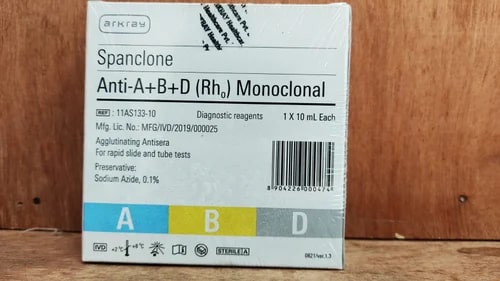
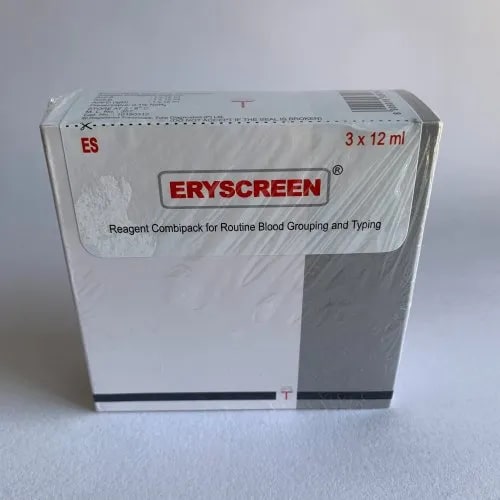
A blood type (also called a blood group) is defined as the classification of blood based on the presence or absence of inherited antigenic

 Mr. Parag Vora (Arjas Healthcare)
 1144, Nilav Coperative Housing Society, Bhopatkar Road, Sadashiv Peth, Pune, Maharashtra - 411030
 https://www.arjashealthcare.co.in
 Share us via