My ExportersIndia

For Buyer

For Seller

For Help

Kitchenware And Cookware

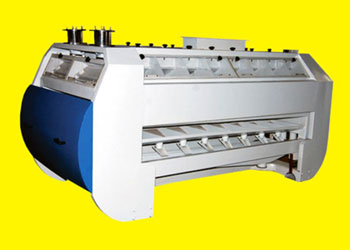
Our product range contains a wide range of ROLLER MILL and Atta Chakki

ROLLER MILL

It is used to grind and crush the grain in the cereal processing plants. It is designed to obtain flour and semolina in the flour and semolina mills by processing cleaned grain.

APPLICATIONS OF ROLLER MILL
  • At food industry.
  • Flour & semolina mills.
  • Corn, barley, rye and similar cereal processing plants.
  • At other food industries for rolling, crushing and other similar processes.
INNOVATIONS OF ROLLER MILL
  • Our new model of the roller mill is equipped with a belt system, which provides several advantages to the user compared to the geared type roller mill.
  • Since gearbox is not used, consequently, there is no need to modify gears because their size get smaller in geared type roller mills due to calibration of the rolls.
  • There is no need to inspect oil periodically. Periodic maintenance is minimized and there is no oil consumption.
  • The consumption time for maintenance and replacement of worn -out parts is minimized.
  • The erection and dismantling time of the rolls is very short comparing to the geared type roller mill.
  • Cost of operation and maintenance is very low.
  • The source of noise, which is caused by using geared type roller mill, is eliminated. Nevertheless, the machine is isolated from noise.
WORKING PRINCIPLE OF ROLLER MILL

The parallel working rolls are automatically opened and closed by pneumatic system, which is actuated by an electronic control unit. The clean grain enters the roller mill through a glass spout and the grinding process starts. Capacitive level indicators adjust the amount of grain, which enters the roller mill from its inlet, which controls the feeding rolls. The grain, which flows regularly through the rolls, undergoes processing. The adjusting system, which provides a very precise approach of the rolls to each other, can be easily integrated to the automation system. The air, which is sucked by means of a pneumatic system via specially created air channels, provides regular flow of grain between the rolls. The efficiency of the roller mill is increased due to such feature. The grinded product is discharged into a hopper, which is placed underneath the roller mill and then conveyed by means of a pneumatic system.

FEATURES & ADVANTAGES OF ROLLER MILL
  • High capacity and efficiency
  • Centrifugally casted parallel operating rolls
  • Easy and minimum periodical maintenance
  • Low operation and maintenance cost
  • Minimum consumption of spare parts
  • Cost of operation and maintenance is very low.
  • Low energy consumption.
  • Depending upon grain amount, by means of capacitive level indicators, automatically actuated flexible feeding control system.
  • Minimum time consumption during erection and dismantling of the rolls.
  • No need gears modification since they dont exist in the new model.
  • Durability and long life.
  • Easy adaptation to automation system.
  • Noiseless and smooth working conditions.
  • Automatic engagement and disengagement of rolls.
  • Double layer isolation prevents condensation.
View Complete Details

Atta Chakki

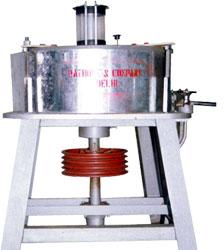
Chakki is a machine designed for grinding and de hulling of all types of food grains as well as wheat, pulses etc. Chakki is a type of horizontal grinding mill which is a cost effective solution capable of producing flour with high nutritional value.

APPLICATIONS OF CHAKKI
  • Flour and semolina mills
  • Corn, Spices, Sorghum plant
  • Millet, Turmeric, Red Chilly plant
  • At other similar industrial plants.
STRUCTURE OF CHAKKI
  • Chakki is a small set of two emery stones used to grind wheat into flour.
  • It consists of a hopper at the top from where the raw material enters in the chakki between the set of emery stones.
  • The emery stones are embossed with grooves that perform there task to break the wheat grain.
  • The entire structure is bolted to a mild steel table type platform with the motor at the bottom the emery stones and driven by belts.
WORKING PRINCIPLE OF CHAKKI

The working principle of Chakki is very simple and intuitive. The raw materila is fed into the hopper at the top of the chakki from where it goes directly in between the two emery stones. The grinding of solid matters occurs under exposure of mechanical forces that trench the structure by overcoming of the interior bonding forces. After grinding the state of the solid is changed: the grain size, the grain size disposition and the grain shape. The power to operate the emery stones is provided by means of a belt drive connected between the motor and the shaft of the chakki.

FEATURES & ADVANTAGES OF CHAKKI

  • Uniform grinding of materials.
  • Easy and minimum maintenance, hassle free operation by using vibro-motors.
  • While grinding, it prevents self color, volatile oil & flavor of the material
  • Dust free operation
  • Durability and long lifetime.
  • Quick and easy replacement of mesh and practical cleaning possible.
  • Noiseless working.
View Complete Details
Tell Us What are you looking for? Will call you back

Contact Us