Write a Review
Our Products
We offer the best product range of Investment Casting.
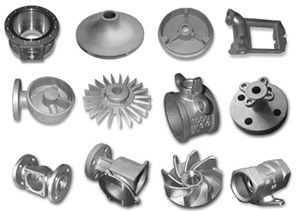
The technique of investment casting is both one of the oldest and most advanced of the metallurgical arts. Investment castings are at work in the fiery combustion chambers of jet aircraft and in the sub-zero vacuum of space. Yet, the root of this technology, the cire perdue or lost wax method dates back to at least the fourth millennium B.C. The artists and sculptors of ancient Egypt and Mesopotamia used the rudiments of the investment casting process to create intricately detailed jewelry, pectorals and idols. Remarkably, civilizations as diverse as Chinas Han Dynasty, the Benin Kingdom in Africa and the Aztecs of pre-Columbian Mexico employed similar techniques. The cross-cultural adoption of this complex process implies a great degree of commerce and communication in antiquity. In Renaissance Europe, the Italian Sculptor, goldsmith and author, Benvenuto Cellini, cast his bronze masterpiece Perseus and the head of Medusa using the lost wax process.
The investment casting technique was largely ignored by modern industry until the dawn of the twentieth century, when it was rediscovered by the dental profession for producing crowns and inlays. The first authenticated record of the use of investment casting in dentistry appears in a paper written by Dr. D. Philbrook of Council Bluffs, Iowa in 1897. However, the true significance of this process was not realized until Dr. William H. Taggart of Chicago published his research in 1907. During World War II, with urgent military demands overtaxing the machine tool industry, the art of investment casting provided a shortcut for producing near-net-shape precision parts and allowed the use of specialized alloys which could not readily be formed by alternative methods. The investment casting process proved practical for many military componentsand during the postwar period it expanded into many commercial and industrial applications where complex metal parts were needed, however, the process was still relatively obscure. In the decades that followed, many innovations such as the shell process, the steam autoclave, conveyorization, automation, and robotics have modernized and transformed the process.
In todays world, investment castings touch all of our lives. When we fly on an airplane, drive an automobile, play golf, use a utility tool, power tool or hand tool, we are using investment castings. Once thought of as suitable only for low volume, high cost applications, investment casting has evolved into a technology capable of producing quantities of millions of pieces per year, at costs rivaling those of less flexible and desirable methods.
SURFACE FINISH
As-cast finishes will vary with alloy specified but generally fall within the range quoted. For a ground finish an allowance of 0.010 in. (0.25mm) should be made.
|
Metal |
C.I.A. value |
|
|
Micro-inches |
||
|
As-cast |
Machined |
|
|
Stainless Steels |
90-126 60-125 |
|
|
Cobalt Chrome Alloys |
80-100 50-100 |
|
|
Carbon Steels |
90-125 60-125 |
|
GENERAL TOLERANCES
Shape and alloy selected will influence accuracies achieved but values given are normally accepted through out the investment casting industry.
|
Dimension |
Tolerance |
|
Upto 25 mm |
±0.25mm |
|
Above 25 mm |
±0.25mm/25mm |
Closer tolerance may be held on selected dimensions following design evaluation.
STRAIGHTNESS
There are practical limits to straightness which can be achieved but mechanical straightning can reduce variations.
|
Casting Length |
As-cost |
Corrected |
|
25 mm |
±0.50 mm |
±0.25 mm |
|
50-100 mm |
±0.75 mm |
±0.50 mm |
|
100-150 mm |
±1.00 mm |
±0.50 mm |
|
150 mm |
±1.50 mm |
±0.62 mm |
FLATNESS
Flatness is also affected by dimensions of casting. Addition of ribs will minimize bowing, twisting and distortion and mechanical straightning will reduce variations where necessary.
|
Casting Length |
As-Cast |
Corrected |
|
25 mm |
±0.20 mm |
±0.10 mm |
|
50 mm |
±0.37 mm |
±0.15 mm |
|
75 mm |
±0.50 mm |
±0.20 mm |
|
100 mm |
±0.62 mm |
±0.25mm |
CAST HOLES
Depth (D) and Diameter(d) of hole must allow for adequate penetration of investment material. Values given show usual limits for cast holes but pre-formed ceramic cores allow this restrictions tobe exceeded, although usually at increased cost.
|
Through holes |
|
|
Diameter (d) mm |
Maximum Depth (D) mm |
|
3.17-6.35 D upto 1.5 d |
|
|
6.35-12.70 D upto 3.0 d |
|
|
12.70 D upto 5.0 d |
|
|
Blind Holes |
|
|
Diameter (d) mm |
Maximum Depth (D) mm |
|
4.76-12.70 D upto 1.5d |
|
|
12.70 D upto 2.0 d |
|
CONCENTRICITY
The larger the outside diameter becomes, the closer to concentric an inside diameter can be cast.
Mechanical correction can normally be made where wall thickness is thin enough to allow plastic deformation.
|
O.D.(mm) |
I.D. (mm) |
Eccentricity (mm) |
|
|
As-cast |
Corrected |
||
|
18.75 |
6.25 |
±0.100 ±0.100 |
|
|
25.00 |
12.50 |
±0.125 ±0.125 |
|
|
37.50 |
18.45 |
±0.200 ±0.200 |
|
|
50.00 |
25.00 |
±0.250 ±0.200 |
|
ROUNDNESS
For solid bars roundness is affected by solidification stresses and tolerance required increases nearly in proportion to diameter, inline with usual 'Lost Wax' tolerances.
Values shown are for as-cost roundness on inside and outside diameters of tubes of varying sizes. Wall thickness is important and tighten tolerance can be obtained by mechanical correction if desired.
|
O.D. (mm) |
Tolerance (mm) |
I.D. (mm) |
Tolerance (mm) |
|
12.50 |
±0.25 |
upto 6.25 |
±0.30 |
|
25.00 |
±0.50 |
6.25-12.50 |
±0.40 |
|
37.50 |
±0.60 |
12.50-25.00 |
±0.50 |
|
50.00 |
±0.75 |
above 25.00 |
±0.50 |
MINIMUM SECTION THICKNESS
Wall thickness will depend upon area of casting and alloy selected. The following values are of guide from general experience.
|
Material |
Minimun wall thickness obtainable |
|
18/8 stainless steels |
1.62 mm |
|
25/12 stainless steels |
1.50 mm |
|
Carbon steels |
2.25 mm |
|
Cobalt-Chrome alloy |
1.12 mm |
PARALLEL SECTIONS
Parallelism can be maintain by adding fire-bars to minimize distorsions. Values shown are typical tolerances for various gap-widths between parallel sections per inch cost.
|
Gap (mm) |
Tolerance(mm) |
Corrected |
|
6.25 |
±0.075 |
±0.075 |
|
12.50 |
±0.125 |
±0.100 |
|
18.65 |
±0.150 |
±0.100 |
|
25.00 |
±0.175 |
±0.125 |
OTHER FEATURES :
Angles : Angular tolerance to ±1/2° (Closer by mechanical corrections).
Symbols : Latters, Numbers, etc., can be reproduce in relief or inset.
Serrations, Splines and Gear Teeth may be cast in certain instances subject to prior agreement.
 Prime Industries (Prime Industries)
 Amit, 1 Yogi Niketan Plot, Nirmala Convent Road, Kalavad Road, Rajkot, Gujarat - 360007, India
 Share us via