Our Products
We offer the best product range of Flowering Plants and Clary Sage.
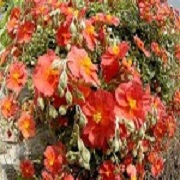
Cistus (from the Greek "Kistos") is a genus of flowering plants in the rockrose family Cistaceae, containing about 20 species. They are perennial shrubs found on dry or rocky soils through out the Mediterranean region. From Morocco to Portugal through to the Middle East and also on the Canary Islands.Together with its many hybrids and cultivars is commonly encountered as a garden flower.The common name rockrose is applied to the species.
A name also shared by the related genera Halimium.Helianthemum and Tuberaria all in the family Cistaceae.The common name gum cistus is applied to resin bearing species especially C. ladanifer.The leaves are evergreen, opposite, simple, usually slightly rough-surfaced, 28 cm long. In few species (notably C. ladanifer) the leaves are coated with a highly aromatic resin called labdanum.They have showy 5-petaled flowers ranging from white to purple and dark pink. In a few species with a conspicuous dark red spot at the base of each petal.
They are thermophilous plants. Which require open sunny places. This plant genus is peculiar in that it has developed a range of specific adaptations to resist summer drought and frequent disturbance events such as fire and grazing.In addition it can form both ectomycorrhizas and arbuscular mycorrhizas. More than 200 ectomycorrhiza-forming fungal species belonging to 40 genera have been reported so far to be associated with Cistus.
As with many other Cistaceae the species of Cistus have the ability to form mycorrhizal associations with truffles (Tuber) and are thus able to thrive on poor sandy soils or rocks. Cistus ladanifer has been found to have mycorrhizal associations with Boletus edulis, Boletus rhodoxanthus, and Laccaria laccata.Cistus are the only host of Cytinus hypocistis a small parasitic plant that lives on the roots and is noticeable only for a short period of time when in flower. The presence of the parasite does not seem to hurt the host population.
Cistus species are used as food plants by the larvae of some Lepidoptera species including Coleophora confluella and Coleophora helianthemella, the latter recorded on Cistus monspeliensis.Various Cistus species are known to emit volatile oils rendering the plants flammable.
Some sources state that under dry, hot conditions these species may be capable of self-ignition.In popular medicine, infusions of cistuses are used to treat diarrhea.Its soft and fruity aroma is calming and releasing.Cistus essential oil is spiritual oil and has been used for centuries for meditation.
It opens the third eye and oxygenates the brain.It helps quiet the nerves and may calm the insomniac. It also stimulates the five senses: touch, feel, hear, sight and taste. Cistus Products are extensively used in all kinds of Perfumery products , colour being a slight drawback.
Cistus Super absolute by BMV is a light coloured product derived from the Concrete. It is a must for heavy masculine notes , leathery accords , orientals , herbals etc. Has excellent fixation and is one of the best known fixatives. Burns exceptionally well and very stable in almost all fragrances.
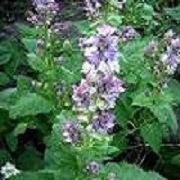
| CLARY SAGE Salvia sclarea, clary or clary sage is a biennial or short-lived herbaceous perennial in the genus Salvia. It is native to the northern Mediterranean, along with some areas in north Africa and Central Asia. |
 Mohit Gulati (MBV Fragrances Private Limited)
 J - 44,45 & 46, Surajpur Industrial Area, Site-V, Kasna, Gautam Budh Nagar, Greater Noida, Uttar Pradesh-201308.
 Share us via







 Write a Review
