My ExportersIndia

For Buyer

For Seller

For Help

Resins

Our offered Product range includes Low Density Polyethylene Resins, Linear Low Density Polyethylene Resins, Ultra Low Density Polyethylene Resins, Ultra High Molecular Weight Polyethylene Resins and High Density Polyethylene Resins.

Linear Low Density Polyethylene Resins

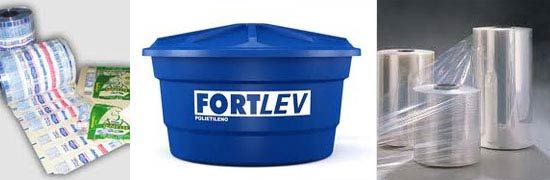
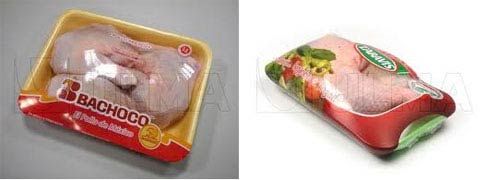
Linear low density polyethylene (LLDPE) is a copolymer of ethylene with an -olefin (propylene, 1-butene, 1-hexene or 1-octene). The LLDPE has linear molecular structure with short branching and narrow molecular weight distribution as compared with low density polyethylene (LDPE). The short chain branches has influence either LLDPE or LDPE , on the morphology and some physical properties such as stiffness, density, hardness and tensile strength. The properties of LLDPE films are attributed to its linearity and crystallinity. The molecular structure of the LLDPE is essentially linear due to the type of catalyst used. Their crystallinity, although much lower than HDPE, is greater than LDPE. This increased crystallinity in addition to linear polymeric chains, positively affect the mechanical properties of the films without causing a decrease in their optical characteristics. Compared to HDPE, LLDPE presents the tensile strenght and hardness lower as much as increasing content of ramifications, and exhibits greater resistance to impact and tearing (films). LLDPE is a thermoplastic with high capacity for heat sealing, being widely used in packaging of commodities , replacing LDPE in several applications. And used in films for industrial use, disposable diapers and absorbent pads in general, toys, pharmaceutical and hospital, wire and cable coating. The tubular film extrusion provides materials for packaging . In blends with HDPE or LDPE, LLDPE and used in industrial sacks, food packaging and agricultural film. The cast film extrusion provides products for use in plastic bubble. LLDPE can be used for injection caps for domestic use, containers, flexible articles and parts of general use.
View Complete Details

Low Density Polyethylene Resins

It is a polyethylene with a density approximately equal to 0.865 g/cm3 and offers greater strength, greater flexibility and better optical properties comapared to LLDPE. The main use of ULDPE is as a modifying resin, particularly for high polyethylene (HDPE) , low polyethylene ( LDPE) and polypropylene (PP). Adding ULDPE to polyethylenes and PP improves the impact resistance, flexibility and tear strength of these polymers. These resins are ideal for producing films for liquid packaging , because besides prevent leaks and spills, the packaging has a high resistance to tearing. The processing of cast films is made by blow or extrusion.
View Complete Details

Ultra Low Density Polyethylene Resins

It is a polyethylene with a density approximately equal to 0.865 g/cm3 and offers greater strength, greater flexibility and better optical properties comapared to LLDPE. The main use of ULDPE is as a modifying resin, particularly for high polyethylene (HDPE) , low polyethylene ( LDPE) and polypropylene (PP). Adding ULDPE to polyethylenes and PP improves the impact resistance, flexibility and tear strength of these polymers. These resins are ideal for producing films for liquid packaging , because besides prevent leaks and spills, the packaging has a high resistance to tearing. The processing of cast films is made by blow or extrusion.
View Complete Details

Ultra High Molecular Weight Polyethylene Resins

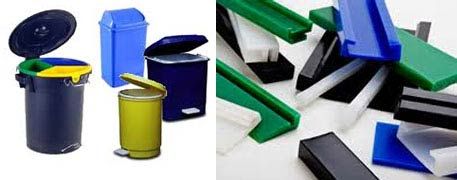
The polymerization process of UHMWPE uses a Ziegler-Natta catalyst similar to that used for conventional HDPE. The UHMWPE and HDPE (from 0.93 to 0.94 g/cm3), opaque white, with a glass transition temperature (Tg) of -100 o and -125 o and a temperature of melting (Tm) of 135 oC, crystallinity of around 45%. Based on long molecular chain, high density and the absence of branches in their structure give the UHMWPE properties such as resistance to abrasion higher than other thermoplastics, good resistance to corrosion, high cyclic fatigue resistance, high resistance to impact, high resistance to cracking tense, high chemical resistance, high hardness and low friction coefficient. The characteristics of resistance to abrasion, impact and chemicals, self-lubricating, low friction coefficient, noise absorption and others already mentioned, make PEAUPM particularly suitable for use in diverse applications :
  • Mining : coatings, mixers, scrapers, bearings and pipes.
  • Chemical industry : pipes, pumps, valves, filters, gaskets, mixers, metallic and concrete tanks coating .
  • Beverage and food industry : automatic packaging , conveyors, rollers, filling nozzles, pumps
  • Pulp and Paper : suction box covers and profiles.
  • Textile Industry : guides, bearings and noise reducers.
  • Other applications : industrial conveyors, sporting goods, surgical and orthopedic articles.

View Complete Details

High Density Polyethylene Resins

The linearity of the chains and consequently the highest density of HDPE make the orientation, alignment and packing of the chains are more efficient; intermolecular forces (Van der Waals) can act more intensively and, as a consequence, the crystallinity is higher than in case of LDPE. Being higher crystallinity, the merger may occur at higher temperature. Because of crystallinity and the difference in refractive index between the amorphous and crystalline phases, HDPE films (obtained via Ziegler-Natta or Phillips) are thin translucent, less transparent than LDPE (obtained via free radicals), and less than crystalline. While the electrical properties are little affected by the density and the molecular weight of the polymer, the mechanical properties suffer a strong influence on the molecular weight, the content of branches, the morphological structure and orientation. The orientation of the polymeric chains applies a strong effect to the mechanical properties of the polymer. Materials manufactured with highly oriented HDPE are about ten times more resistant than those made from polymer not oriented since the orientation increases packaging chains and consequently increases the stiffness of the polymer. In general, the HDPE has low chemical reactivity. At enviroment temperature, HDPE is not soluble in any solvent , although many solvents such as xylene, for example, cause a swelling effect. At high temperatures, dissolve in some HDPE aliphatic and aromatic hydrocarbons. HDPE is relatively heat resistant.HDPE is appliable in different segments of the plastics processing industry, covering the processing of blow molding, extrusion and injection molding.
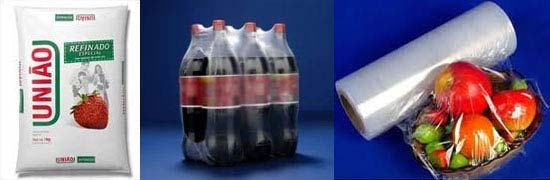
  • Injection : Through the injection process, the HDPE is used for making buckets, trays, bathtubs, toys, food containers, toilets seats, trays, lids and bottles, crates, water tanks, among others.
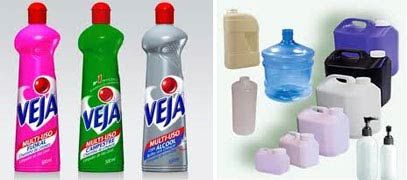
  • Blow : For blowing process Lotte HDPE resins offer an excellent combination of stifness and enviroment stress crack resistance, making them the materials for several application in industrial containers, household, bottles, drums, etc.
  • Extrusion : For extrusion, the HDPE is recommended for wire and cable insulation, freezer bags, metal pipe coating, pipe for sewerage and gas distribution, sanitary sewage, trash bags, grocery bags, etc. Some Brazilian industries are already exploring a new market, developing a specific HDPE grade for blow molding of fuel tanks. HDPE and LDPE has many common applications, but in general, HDPE is harder and resistant and LDPE is more flexible and transparent. An example of the relationship of hardness and flexibility is the fact that HDPE is used to make threaded caps (rigid) and LDPE threadless caps (flexible).
View Complete Details
Tell Us What are you looking for? Will call you back

Contact Us