1) Cleanroom Architecture Materials of construction and finishes are important in establishing cleanliness levels and minimizing the internal generation of contaminants from the surfaces.
2) Clean Room HVAC System The integrity of the cleanroom environment is created by the pressure differential compared with adjacent areas through heating, ventilation and air-conditioning system. The HVAC system requirements include:
- Supplying airflow in sufficient volume and cleanliness to support the cleanliness rating of the room.
- Introducing air in a manner to prevent stagnant areas where particles could accumulate.
- Filtering the outside and re-circulated air across high efficiency particulate air (HEPA) filters.
- Conditioning the air to meet the cleanroom temperature and humidity requirements.
- Ensuring enough conditioned makeup air to maintain the specified positive pressurization.
3) Interaction Technology Interaction technology includes two elements: (1) the movement of materials into the area and the movement of people and (2) maintenance and cleaning. Administrative instructions, procedures and actions are necessary to be made about the logistics, operation strategies, maintenance and cleaning.
4) Monitoring systems Monitoring systems include a means of indicating that the cleanroom is functioning properly. The variables monitored are the pressure differential between the outside environment and the cleanroom, temperature, humidity and, in some cases, noise and vibrations. Control data should be recorded on a routine basis.
- HVAC SYSTEM DESIGN FOR CLEAN FACILITY
HVAC systems in cleanrooms are substantially different from their counterparts in commercial buildings in terms of equipment design, system requirements, reliability, size and scale.
A cleanroom differs from a normal comfort air conditioned space, in the following ways.
- Increased Air Supply:Whereas comfort air conditioning would require about 2-10 air changes/hr, a typical cleanroom would typically require 20 60 air changes and could be as high as 600 for absolute cleanliness.
- The use of high efficiency filters:The use of high efficiency particulate air (HEPA) filters having filtration efficiency of 99.97% down to 0.3 microns is another distinguishing feature of cleanrooms. The HEPA filters for stringent cleanrooms are normally located at the terminal end and in most cases provide 100% ceiling coverage.
- Room pressurization:The cleanroom is positively pressurized (to 0.05 in-wc) with respect to the adjacent areas. This is done by supplying more air and extracting less air from the room than is supplied to it.
- CHEMPHARM ENGINEERED SYSTEM INCLUDES ENERGY EFFICIENT KEY COMPONENT AS-
- Reciprocating/Screw/Scroll type Chiller Unit with VFD Controller.
- DX Unit/VRF unit Built-in PLC System for Low tonnage requirement.
- Hot Water Generator with Built-in PLC for Winter Heat/ Monsoon Reheat requirement.
- CHW/CDW pumps with VFD Drive to control the speed as per demand.
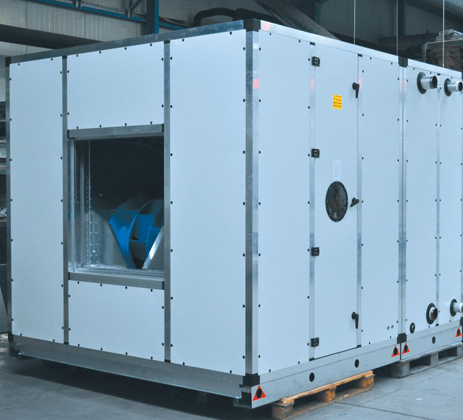
- Air Handler with centrifugal plug fan or DIDW Backward Curve fan has been select for controlled flow air based on the Flow & Static Pressure requirement of Varies application.
- Dehumidifier/ Humidifier System to Maintain the Inside RH/Tem all-round the Year.
- Heat recovery System to enhance the power saving.
- Thermal Filtration System with HEPA (H-13) or ULPA (H-14) filter where ever required as per Clean Room Classification.
- Factory built Square, Round or Oval Ducts having slip on or TDF type flanges based on the line / system pressure and requirements All ducts are built as per ASHRAE 2012 Duct construction Standard.
- Thermal Insulation are chosen based on Application & ambient condition but fibre free and as per ASTM standards Standard specification / material are Nitrile Rubber, XLPE , PU BASED , ROCK WOOL , MINERAL WOOL , GLASS etc
 Write a Review
 Neha Verma (Chempharm Group)
 C-71, Sector-63, Sector 63, Noida, Uttar Pradesh - 201301, India
 Share us via