-
Min. Order (MOQ)
1 Set(s)
-
Number Of Flower
Vibrating Conveyor
-
Packaging Type
As the customer required
-
Availability
<9000 kg
-
Material
Carbon steel or stainless steel
-
Material Feature
Heat Resistant
-
Structure
Conveyor System
-
Load Capacity
15~500 t/h
-
Guarantee
1 year( wearing parts exclued)
-
Certificate
ISO9001:2000
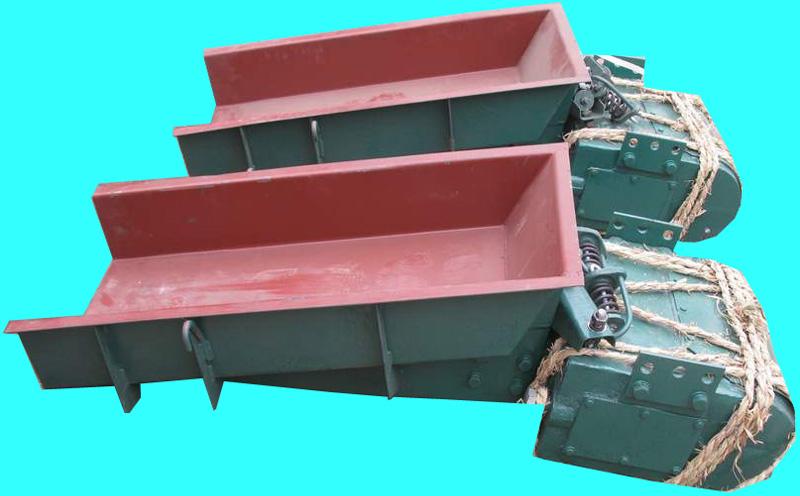
Introduction: Vibrating feeders are a variety of controls available for the different types of vibratory feeders. Pneumatic feeder controls include a quick-acting valve, an air line filter, a pressure regulator gauge, a lubricator and a long air hose. A transformer-type device, available for electromagnetic vibratory feeders, adjusts the intensity of vibration by varying the applied voltage. Electromechanical feeders have a wall-mounted control box with an on/off button or switch and overload protection. Special controls for remote operation include two speed, maximum-to-minimum material flow controls for batch weighing and panel board controls for multiple feeder installation. An accelerometer can be attached to the drive unit to monitor the amplitude and to apply a correction to the feeder, which tends to vibrate more quickly as the material level drops. Vibrating Feeder Feature: 1) flexible design 2) extra heavy-duty construction 3) exclusive vibrator technology 4) ease-of field-changes in grizzly opening and deck-slope Principle: Vibrating feeders are a variety of controls available for the different types of vibratory feeders. Pneumatic feeder controls include a quick-acting valve, an air line filter, a pressure regulator gauge, a lubricator and a long air hose. A transformer-type device, available for electromagnetic vibratory feeders, adjusts the intensity of vibration by varying the applied voltage. Electromechanical feeders have a wall-mounted control box with an on/off button or switch and overload protection. Special controls for remote operation include two speed, maximum-to-minimum material flow controls for batch weighing and panel board controls for multiple feeder installation. An accelerometer can be attached to the drive unit to monitor the amplitude and to apply a correction to the feeder, which tends to vibrate more quickly as the material level drops. Application: Vibratory feeders are utilized in the pharmaceutical, automotive, chemical and mining industries. Other industries include steel, glass, foundry, concrete, recycling, bakery, railroad unloading and plastics. Chemical plants typically use vibratory feeders to control the flow of ingredients to the mixing tanks. Foundries use them to add binders and carbons to sand reprocessing systems. The pulp and paper industry uses vibratory feeders for chemical additive feeding in the bleaching process, while the metal working industry uses them for feeding metal parts to beat treating furnaces. Vibratory feeders also are used by water and sewage treatment plants in chemical additive handling. Other materials that are separated by vibratory feeders include powder, plastic pellets, dry chemicals, coal, metals, ore, minerals, aluminum, mining and aggregates, grains, seed, dry detergents, ceramics, textiles, rubber, fibers, wood chips, salt, sugar and many, many more.
Additional Information:
Payment Terms :
L/C, T/T
Packaging Details : Wooden case or standard export packing
Delivery Time : 5-10days
 HeNan, China
 Write a Review
 Raccoon (Xinxiang Shengxiang Material Trading Co., Ltd.)
 Share us via