Write a Review
Our Products
Our product range contains a wide range of Multi-sample Moisture Content Analyzer and Lab Instruments
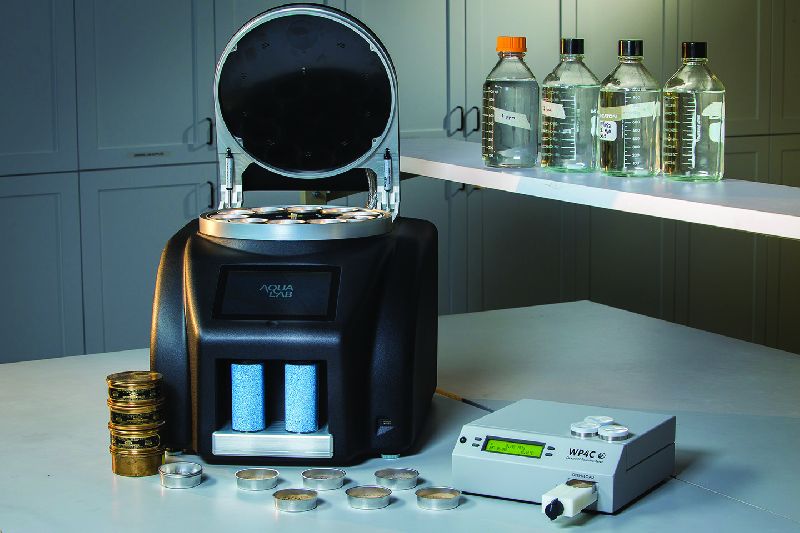
Measure the moisture content of nine soil samples with just four minutes of hands-on work time.
To start a measurement, place up to 9 soil samples in TrueDry"s rotating tray, close the lid, and select a program.
Select Temperature and Time
TrueDry lets you select the drying temperature and time (or alternatively, allows you to dry to constant weight).
Monitor Weight Automatically
As the sample dries, TrueDry monitors the weight automatically, cycling each sample onto a high precision electromagnetic balance for repeated weight measurements.
Dry to a StandardTrueDry finishes the drying process by passingheated, dessicated airover the sample. Each sample is dried to a uniform value of1% relative humidity.
Eliminate Error Due to Ambient Conditions
Differences in ambient humidity can cause significant variation in oven dry values.The enclosed sample chamber protects the sample from ambient temperature and humidity effects to provide consistent results.
Just One Interruption
TrueDry gives you the precision of a drying oven without moving samples between balances, ovens, and dessicators--just one interruption of your workflow to measure nine samples.
Using a method called "controlled contact drying, " TrueDryheats the sample, not the sample chamber. Heater coils and sensors are located just millimeters from each individual sample forprecise temperature control.
Save Electricity and Labor Costs
You may only run a few samples, but your lab oven is probably on most of the time. Running constantly, TrueDry will use just 25% of the energy of a lab oven. As typically used, it requires even less.
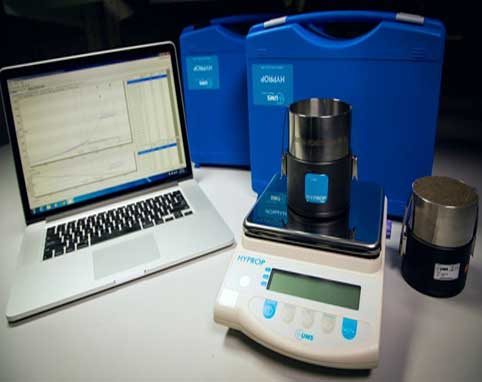
Essentially, there are only two highly accurate ways to measure water potentialwith a tensiometer or with vapor pressure. The tensiometer works in the wet range of water potentialfrom 0 to about -0.2 MPa. Vapor pressure methods work in the dry range of water potentialfrom about -0.1 MPa to -300 MPa (0.1 MPa is 99.93% RH; -300 MPa is 11%). With recent advances in technology, a skilled user with excellent methods and the best equipment can finally measure the full water potential range in the lab.
The pressure plate doesnt actually measure the water potential of a sample. Instead, it brings the sample to a specific water potential by applying pressure to the sample and allowing the excess water to flow out through a porous ceramic plate. When the sample comes to equilibrium, its water potential will be equivalent to the pressure applied.
 Pulkit (Das & Kumars)
 D 63/10 Mahmoorganj , Varanasi, Uttar Pradesh, India
 Share us via