Our Products
We offer a complete product range of Turmeric Fingers and Powder, Asafoetida and Star Anise
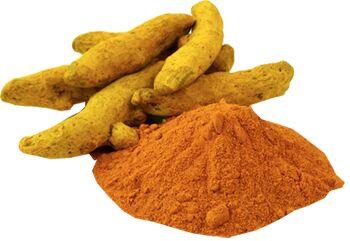
ln India, turmeric is known for its antiseptic and healingproperties. Turmeric is used to add fragrance, colour and aroma to the dishes. The turmeric fingeris the purest form of turmeric and is used in medicines, food and dyeing processes. Theproduct is sourced from the farmers who grow the crop in natural and organic manner.Turmeric is widely grown in Erode. Turmeric powder is made from turmeric fingers. We offeroptimum quality turmeric fingers at competitive prices.
We export Erode's special Agmark certified turmeric fingers. These are stringently tested byour experts on varied parameters, in order to ensure excellent quality. We also supplyAgmark Certified Erode Turmeric Bulbs that are sourced from reliable farmers, who usenatural and environment friendly methods to grow them.There is a huge demand for ourIndian Turmeric in US, Canada, Japan, Russia, UK, France and other European countries.We monitor the crop right from the sowing stage to harvesting and provide fortnightly report.
Few popular grades of Indian Turmeric finger are -
Few popular grades of Indian Turmeric finger are -
Specs
| Turmeric Finger Curcuma | Turmeric Finger Bold | Turmeric Finger Sannam | Turmeric Bulp |
| HS Code | 91030 | 9103090 | 9103090 |
| Curcumin | 5.0% | 3.6 - 4 % | 3.2 - 3.6 % |
| Moisture | 10.00% | 10--12% | 12.00% |
| Origin | INDIA | INDIA | INDIA |
| Packing | 25/50/60 KG | 25/50/60 KG | 25/50/60 KG |
| Loading | 13 MT(20 FT) I26 MT (40 FT) | 13 MT(20 FT) I26 MT (40 FT) |
13 MT(20 FT) I26 MT(40 FT) |
| Minimum order quantity | 1 * 20 FCL | 1 *20 FCL | 1 *20 FCL |
| Inspection certificate | Sgs/intertek | Sgs/intertek |
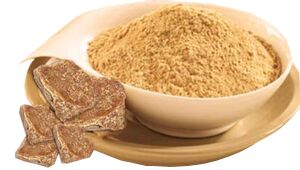
Asafoetidais the dried latex (gum oleoresin) exuded from the living underground rhizome or tap root of several species of Ferula (three of which grow in India), which is a perennial herb (1 to 1.5 mtr. High).
The species are distributed from the Mediterranean region to Central Asia. In India it is grown in Kashmir and in some parts of Punjab. The major supply of asafoetida to India is from Afghanistan and Iran. There are two main varieties of asafoetidaie. Hing Kabuli Sufaid (Milky white asafoetida) and HingLal (Red asafoetida). Asafoetida is acrid and bitter in taste and emits a strong disagreeable pungent odour due to the presence of sulphur compounds therein. The white or pale variety is water soluble, whereas the dark or black variety is oil soluble. Since pure asafoetida is not preferred due to its strong flavour, it is mixed with starch and gum and sold as compounded asafoetida mostly in bricket form. It is also available in free flowing (Powder form) or in tablet forms.
UsesAsafoetida is extensively used for flavouring curries, sauces, and pickles. It is also used in medicines because of its antibiotic properties.
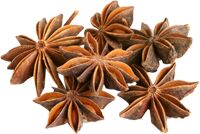
Star anise is the dried, star shaped fruit of Illiciumverum. It is an evergreen tree attaining a height of 8-15 meters and a diameter of 25 cm. The leaves are entire, 10-15 cm long, 2.5 5 cm broad, elliptic, flowers are solitary, white to red in colour. Fruits are star shaped, reddish brown consisting of 6-8 carpels arranged in a whorl. Each carpel is 10 mm long, boat shaped, hard and wrinkled containing a seed. Seeds are brown, compressed, ovoid, smooth, shiny and brittle.
Star Anise is indigenous to South Eastern China. Commercial production is limited to China and Vietnam. In India, it is produced to a small extent in Arunachal Pradesh. The crop requires specific agro climatic conditions available only in the traditional growing areas, which has prevented repeated attempts of other countries to grow star anise. However it prefers woodlands, sunny edges, and dappled shade. The plant grows well in humus rich, mildly acidic to neutral soils, which are light to medium and having good drainage. It tolerates temperatures down to 10 degree C.
 DreamSoft IT Solutions Pvt. Ltd (DreamSoft IT Solutions Pvt. Ltd)
 B/102, Twinkle Apartments, New Link Road, Andheri West, Mumbai, Maharashtra 400053
 Share us via







 Write a Review