 Write a Review
Our Products
We offer a complete product range of Tamarind, Ceylon Cinnamon and Star Anise

Tamarind is a delicious, sweet, and sour fruit that has a wide variety of uses, both for medicinal and culinary purposes. It is a medium-sized bushy tree with evergreen leaves and a fruit that develops in pods characterized by long, brown shells. Inside is a sticky, fleshy, juicy pulp, which is the tamarind fruit. This is where the nutrition and taste reside! As it is both sweet and sour in taste, people either tend to immediately like it or have a natural disposition against it!
Tamarind has long been considered a natural laxative and its dietary fiber content is a major reason for this property. Eating tamarind as a fruit or as a spice can increase the efficiency of your digestive system, while the fiber can bulk up your stool, making it move through the smooth muscles of the intestinal tract easily.
Tamarind is also a bilious substance, meaning that it stimulates the activity of bile, which can help dissolve food faster, and the fiber stimulates gastric juices to speed up digestion.
Tamarind has long been considered a natural laxative and its dietary fiber content is a major reason for this property. Eating tamarind as a fruit or as a spice can increase the efficiency of your digestive system, while the fiber can bulk up your stool, making it move through the smooth muscles of the intestinal tract easily.
Studies on tamarind have shown it to be effective in reducing blood pressure and cholesterol.
The impressive level of vitamin C in tamarind also has something to do with it as well. Vitamin C is an antioxidant that can reduce the impact of free radicals, the pesky by-products of cellular metabolism that have been linked to heart diseases and a number of other health conditions.
Tamarind is a very good source [5] of iron and a single serving can provide more than 10% of your daily requirement. A healthy supply of iron in the body guarantees proper red blood cell count in the body, which can ensure appropriate oxygenation of different muscles and organs to function properly.
One of the most significant vitamins in tamarind is the B complex. Tamarind is responsible for improving nerve function, as well as muscle development, which can help you remain active, maintain your reflexes, and stay strong.
One of the unique compounds that can be extracted from tamarind or gained as a benefit from it when used as a spice is called hydroxycitric acid (HCA). HCA is connected to weight loss because it has been shown to inhibit an enzyme in the body that specifically helps to store fat.

Ceylon cinnamon has been hailed as the "true cinnamon" or the "real cinnamon" that possesses outstanding health benefits especially for the diabetics and those challenged by obesity and high cholesterol issues.
As for the cinnamon sticks, there are several ways of determining whether you are getting the real deal. I've taken a picture of the two types and placed them side by side. Study the following table and check the cinnamon sticks in your kitchen right away to find what you have been eating all this time.
Ceylon cinnamon stimulates insulin-like activity. It reduces insulin resistance in the body. This helps glucose metabolize in the liver, according to research.
Ceylon cinnamon is a promising treatment for people looking for alternatives to synthetic insulin therapy.
Ceylon cinnamon contains anti-inflammatory, antioxidant, and antimicrobial effects. These properties mean Ceylon cinnamon supports your immune health. Ceylon cinnamon was part of a study that showed it enhanced antioxidant enzyme activity. This means it may prevent or treat certain types of cancer.
Research on Ceylon cinnamon dates back to 1975. The research concluded Ceylon cinnamon could help blood pressure. Weakening of the heart due to problems in the cardiovascular system often causes heart disease. Ceylon cinnamon supports cardiovascular function and contributes to healthy heart function.
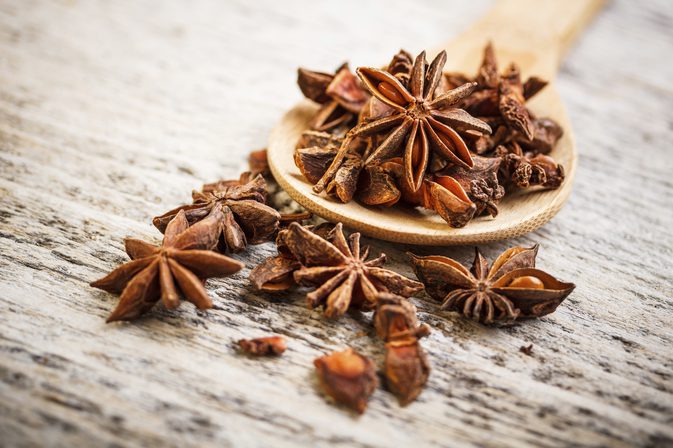
Native to China and Vietnam, star anise is today grown almost exclusively in southern China, Indo-China, and Japan. Star anise, Illicium verum, is sometimes called Chinese star anise. Its important to distinguish it from Japanese star anise, Illicium anisatum, which is highly toxic. Star anise is not related to the common anise, Anisum vulgare. It was first introduced into Europe in the seventeenth century. The oil, produced by a process of steam extraction, is substituted for European aniseed in commercial drinks.
Star anise is the unusual fruit of a small oriental tree. It is, as the name suggests, star shaped, radiating between five and ten pointed boat-shaped sections, about eight on average. These hard sections are seed pods. Tough skinned and rust coloured, they measure up to 3cm (1-1/4) long. The fruit is picked before it can ripen, and dried. The stars are available whole, or ground to a red-brown powder.
Star anise is used in the East as aniseed is in the West. Apart from its use in sweetmeats and confectionery, where sweeteners must be added, it contributes to meat and poultry dishes.
Like anise, star anise has carminative, stomachic, stimulant and diuretic properties. In the East it is used to combat colic and rheumatism. It is a common flavouring for medicinal teas, cough mixtures and pastilles.
Star anise, in its natural form, can help the bodys immune system fight off many strains of flu, as well as many other health challenges. Shikimic acid, a compound present in star anise is used for preparing drug for curing influenza or the flu virus. Star anise can also be used as for its sedating properties to ensure a good sleep.
The oil of star anise is useful in providing relief from rheumatism and lower back pain. Star anise can also be used as a natural breath freshener. Linalool, a compound present in star anise contains anti-oxidants properties
 Dry Fruit House (Dry Fruit House)
 NR TOWERS,17th Cross, 19th main Road,sector 4 HSR layout 560102, Sector 4, HSR Layout, Bengaluru, Karnataka 560102
 Share us via








