
 GST : 07AFTPR0550G1Z8
 4.0/5
4.0/5
Our Product / Services
We offer a complete product range of Zero Liquid Discharge Plant and Effluent Treatment Plant
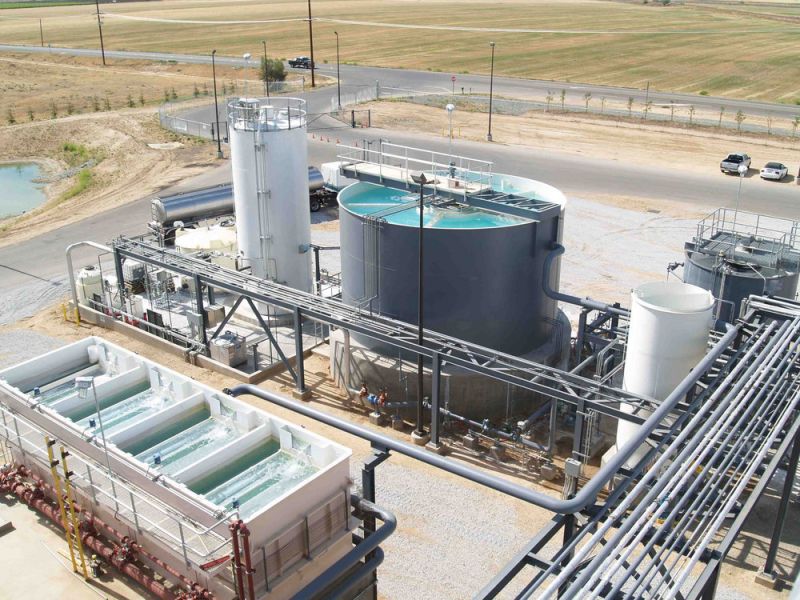
ZERO LIQUID DISCHARGE: In the current Scenario, companies understand the importance of sustainable
operations. With the increasing focus on water usage and water discharge, companies look ways to
consumption and reduce discharge to the environment. ZLD not only helps to reduce water usage, but also
concentrates on eliminating water discharge is known as zero liquid discharge (ZLD). ZLD processes purify and
recycle plant wastewater, changing liquid waste into disposable dry solids and delivering effluent water back
into the plant process stream to be reused.
WE are involved in offering Zero Liquid Discharge Plant, We supply systems based on membrane processes,
evaporative processes or a hybrid combining the two processes to achieve Zero Liquid Discharge from the
plants in a cost-effective manner.
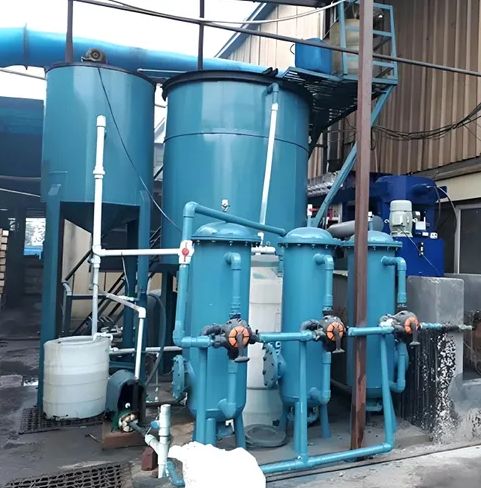
Specifications
| MBBR | MBR | SBR | EXT. AERATION | |
|---|---|---|---|---|
| INTRODUCTION | MBBR is a biofilm process. | This technology is a | A variant of Activated Sludge | A reactor in which the |
| This technology is essentially | combination of membrane | Process (ASP) Technology & | microorganism responsible | |
| the same as Activated Sludge | process like :- | is essentially a batch | for treatment are kept in | |
| Process (ASP) except that the | Microfiltration, | treatment by combination of | suspension and aerated | |
| media suspended in the | Nanofiltration, | primary settling, aeration, | Liquid-solids separation in a | |
| reactor offers additional | Ultrafiltration | secondary settling and | sedimentation tank | |
| surfaces for the microbes to | with biological waste water | decanting the treated sewage | ||
| grow which supports the | treatment process i.e. ASP – | in a series of sequenced and | ||
| growth of microbes in a given | ACTIVATED SLUDGE PROCESS. | or simultaneous reactions in | ||
| volume of aeration tank | the same basin on a time | |||
| deferred cycle. | ||||
| PROCESS DETAILS | When compared to the | It overcomes drawbacks of ASP | Thus, among the multiple | A recycle system for |
| conventional aeration | that includes | basins, one basin is used in | returning solids removed | |
| without the media and to that | big space for secondary | one part of the cycle of | from the liquid-solids | |
| extent, it does appear | clarifiers, | aeration, settling and | separation unit back to the | |
| preferable. Diffused aeration | liquid–solid separation | discharging the treated | reactor (to maintain a | |
| is also required. Sludge | issues, | sewage in a cyclically | sufficient conc. Of biomass in | |
| recycle is provided to | production of excess | repeated operation is done in | the aeration tank) | |
| increase MLSS and maintain | sludge. | another tank. Membrane of | ||
| BOD levels as per CPCB | Ability to hold & sustain MLSS | high efficiency fine bubble | ||
| norms | 3–4 times, helps in minimizing | non-clog for diffused aeration | ||
| space. | is preferred. | |||
| Diffused aeration is required. | ||||
| Different membrane with | ||||
| various shapes as flat sheet, | ||||
| cross flow, dead end flow etc, | ||||
| which makes it easy for | ||||
| validated std design criteria. |
 Mr. Ajay Kumar (Ecotech System)
 Building No - 47, 3rd Floor, Mehrauli Mahipalpur Road, Masoodpur, Vasant Kunj, Delhi - 110070
 Share us via









