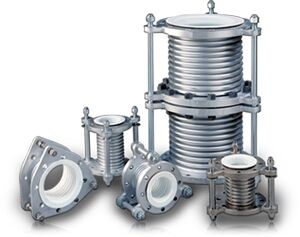
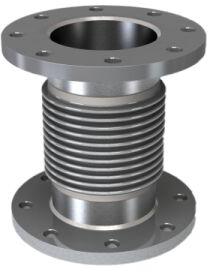
Metallic expansion joints of two bellows elements joined together by a common spool piece so it is also called as Double Bellows Expansion Joint or Universal Bellows.
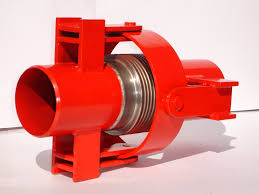
Gimbal Expansion Joints are used to absorb angular rotation in any plane, using two pairs of hinges attached to a common floating gimbal ring. This type of construction provides a close control over the movement imposed up on the bellows and also supports the dead weight of the pipe. The wind and shear loads are also taken care of by the gimbal structure. Gimbal bellows joints are designed to absorb the full pressure thrust load of the expansion joint and thus guard the adjacent equipment from damage due to thrust loading.Since gimbal bellows joints are not restricted to a single plane they offer greater flexibility of usage.
Bellow expansion joint It is used where pressure loading on the piping or equipment is not acceptable.While the joint balances out the pressure forces , the force required to move the joint itself is not balanced.
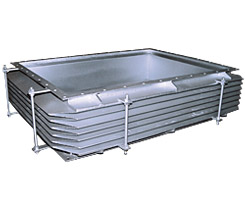
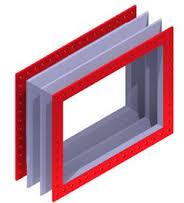
Square expansion joints can be manufactured with round or bevel corners. It absorbs axial, lateral and angular movements similar to the round metal expansion joints. The bellows element is manufactured from austenitic stainless steels of SS 304SS321SS 316 grade depending up on service conditions.
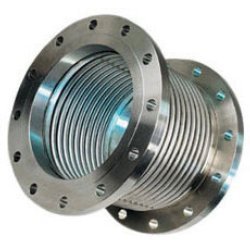
Stainless steel expansion joints These hinges are designed to absorb the full pressure thrust of the expansion joint. In addition they can be designed to support the dead weight of the piping and equipment, wind loads and similar external loads.
Rectangular Expansion Joints are manufactured to individual sizes and functional requirements by combining standard corrugated elements and corner configurations with self developed fabricating methods to be used as Duct Expansion Joints. Available as single or universal rectangular joints, they are designed to absorb both axial and lateral movements resulting from thermal expansion of rectangular duct systems.
High temperatures in manifold area , more than 400 deg CAbsorption of high thermal expansion and severe vibrations.Temperature peaks according to engine output.Compact overall dimensions due to space restrictions.Easy dismantling and assembly to avoid engine down-time.