
 GST : 07DTDPK7371H1ZG
 5.0/5
5.0/5
Our Products
Leading Manufacturer, Supplier & Retailer of Candelilla Wax, Ceresin Wax, Microcrystalline Wax, Carnauba Wax and Paraffin Wax.
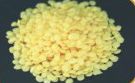
Candelilla wax is a plant based wax, derived from the leaves of the small candelilla shrub native to northern Mexico and the southwestern United States. The wax is obtained from the above-ground parts of the plant. The plant is dried, boiled in water (to separate the wax and the plant material) and the wax is then skimmed off by decanting. Candelilla wax is rich in nutrients and helps to bind other ingredients together, whilst also creating a workable texture that is easily absorbed into the skin.
Applications:
Specifications
| Name | Appearance | Heavy Metals | Melting Point | Acid Value | Saponification Value |
|---|---|---|---|---|---|
| Candelilla wax (USP) | Yellowish, hard, brittle and opaque to translucent | NMT 20 ug/g | 68.5° - 72.5°C | 12 – 22 | 43 – 65 |
Graph
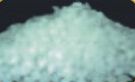
Ceresin is a waxy mixture of hydrocarbons obtained by purification of ozokerite, a naturally occurring mineral wax. It is not a vegetable wax, but more closely related to paraffin wax (petroleum wax).Market grades are purified Ozokerite obtained from lignite. Ceresin waxes are important in rubber compounding due to their low acid number (less interference with cure) and inert qualities.
Applications:
Specifications
| Name | Description | Solubility | Melting range | Acid value | Sulphated Ash | Density (g/cm3) | Specific Gravity |
|---|---|---|---|---|---|---|---|
| Ceresin Wax | White waxy cubes | Insoluble in water; soluble in 30 parts of benzene, chloroform | 61° -78°C | Nil | NMT 0.1% w/w | 0.91 - 0.93 | 0.88 - 0.92 |
Graph
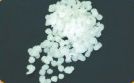
Microcrystalline waxes are a type of wax produced by de-oiling petrolatum, as part of the petroleum refining process. They differ from paraffin waxes in that they have poorly defined crystalline structure, darker color, and generally higher viscosity and melting points. Microcrystalline waxes are moisture free and range in color from a white to a brown, depending on the degree of refinement. Highly refined Micros are white. Microcrystalline waxes excellent for laminating, coating, or hardening materials.
Applications:
Specifications
| Name | Description | Odour | Color | Melting point | Acidity | Alkalinity | Organic acid | Consistency | Residue on ignition | Fats, fixed oils & Rosin | Ash |
|---|---|---|---|---|---|---|---|---|---|---|---|
| Microcrystalline wax IP | A White or cream-coloured waxy solid | Odourless | Complies | 54°-102°C | No pink or No pink or red color is produced | No pink or No pink or red color is produced | Not more than 0.4 ml of 0.1M sodium hydroxide is required | - | - | Complies | NMT 0.1% |
| Microcrystalline USP | White slab or pastilles | - | Complies | 54°-102°C | No red or pink colour is produced | The solution does not acquire a pink colour | Not more than 0.4 ml of 0.1N sodium hydroxide is required | 3 - 100 (0.3 -10.0 mm) | Not more than 0.1% | No oily or solid matter seperates | - |
Graph
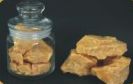
Carnauba wax is a vegetable wax obtained from the leaves of a Brazilian palm tree (Copernicia cerifera) known as the "Tree of Life." Carnauba wax is the hardest natural wax available. Carnauba wax has the ability to retain oil and has excellent gloss properties.
Carnauba wax is sold in several grades, labelled T1, T3, and T4, depending on the purity level. Purification is accomplished by filtration, centrifugation, and bleaching.
Applications:
Specifications
| Name | Appearance | Solubility | Melting range | Acid value | Saponification value | Relative Density | Residue on Ignition | Heavy Metals | Total Ash |
|---|---|---|---|---|---|---|---|---|---|
| Carnauba Wax BP | Pale yellow or yellow powder, flakes or hard mass | Practically insoluble in water, soluble on heating in ethyl acetate and in xylene, practically insoluble in alcohol | 80° to 88°C | 2 to 7 | 78 to 95 | About 0.97 | - | - | Max 0.25% |
| Carnauba Wax IP | Pale yellow to light brown coarse powder, flakes or lumps | 80° to 88°C | Not more than 12.0 | 78 to 95 | - | - | Complies | Max 0.25% | |
| Carnauba Wax USP | Pale yellow or yellow hard masses | 80° to 88°C | 2 to 7 | 78 to 95 | - | Not more than 0.25% | 20 ppm | - | |
| Carnauba Wax EP | Pale yellow or yellow powder, flakes or hard mass | Practically insoluble in water, soluble on heating in ethyl acetate and in xylene, practically insoluble in alcohol | 80° to 88°C | 2 to 7 | 78 to 95 | About 0.97 | - | - | Max 0.25% |
Graph
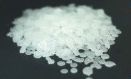
Paraffin wax is colorless or white, somewhat translucent, hard wax consisting of a mixture of solid straight-chain hydrocarbons. Paraffin wax is obtained from petroleum by dewaxing light lubricating oil stocks. Paraffin waxes are classified according to oil content, melting point, and the amount of processing put in.
Applications:
Specifications
| Name | Description | Solubility | Melting point | Congealing point | Acidity | Alkalinity | Sulphates | Sulphated ash | Oil content | Penetration at 25°C (1/10mm) |
|---|---|---|---|---|---|---|---|---|---|---|
| Paraffin wax BP | White slab or pastilles | Practically insoluble in water, freely soluble in methylene chloride, practically insoluble in ethanol (96%) | 50°-61°C | - | Not more than 0.5ml of 0.01M acid is required | - | Max 150ppm | - | <0.5% as as per ASTM D721 | 9 - 20 as per ASTM D1321 |
| Paraffin wax IP | White or colorless, translucent mass, slab or pastilles | - | 50°- 65°C | Not more than 0.1ml of 0.1M sodium hydroxide is required | Not more than 0.1ml of 0.1M sodium hydroxide is required | - | NMT 0.1% | <0.5% as as per ASTM D721 | 9 - 20 as per ASTM D1321 | |
| Paraffin wax USP | White slab or pastilles | - | - | 47° - 65°C | Not more than 0.1ml of 0.01M sodium hydroxide is required | Not more than 0.5ml of 0 01M hydrochloric acid is required | - | - | <0.5% as as per ASTM D721 | 9 - 20 as per ASTM D1321 |
| Paraffin wax EP | Colorless or white or almost white mass | Practically insolublein water, freely soluble in methylene chloride, practically insoluble in ethanol (96%) | - | - | Not more than 0.5ml of 0 01M hydrochloric acid is required | Not more than 0.5ml of 0 01M hydrochloric acid is required | Max 150ppm | - | <0.5% as as per ASTM D721 | 9 - 20 as per ASTM D1321 |
Graph
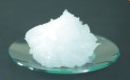
Petroleum Wax, also called Petrolatum is a translucent gelatinous substance obtained from petroleum; used as a lubricant and in medicine as an ointment base and protective dressing. It is an ingredient in many cosmetics and lotions because of its moisturizing properties. Petroleum Jellies are favored by personal care and pharmaceutical companies as very versatile, safe and economical formulation base.
Applications:
Specifications
| Name | Appearance | Melting point | Solubility | Acidity | Alkalinity | Organic acid | Consistency at 25 C | Light absorption | Residue on ignition | Specific gravity at 60° C | Sulphated ash | Fixed oils, fats and rosin |
|---|---|---|---|---|---|---|---|---|---|---|---|---|
| White Petroleum Wax BP | White or almost white, translucent, soft unctuous mass | 35 - 70°C | Practically insoluble in water, ethanol glycerol, slightly soluble in methylene chloride | Complies | Complies | - | 60 to 300 | - | - | - | Max 0.05% | - |
| White Petroleum Wax IP | A white, translucent, soft unctuous mass | 38° - 56°C | - | Not more than 0.1ml of 0.1M sodium hydroxide is required | Not more than 0.1ml of 0.1M sodium hydroxide is required | - | 100 - 300 dmm | NMT 0.5 | - | - | Not more than 0.1% | No precipitates or oily matter is produced |
| White Petroleum Wax USP | Snow white soft unctuous mass | 38° - 60°C | - | No red or pink color is produced | Not acquired a pink color | NMT 400ul of 0.1 N sodium hydroxidre is required | 100 - 300 dmm | - | NMT 0.05% | 0.815 - 0.880 | - | No oily or solid matter separates |
| White Petroleum Wax EP | White or almost white, translucent, soft unctuous mass | 35° - 70°C | Practically insoluble in water, ethanol glycerol, slightly soluble in methylene chloride | Not more than 0.5ml of 0 01M sodium hydroxide is required | Not more than 0.5ml of 0 01M sodium hydroxide is required | - | 60 to 300 | - | - | - | Not more than 0.05% | - |
Graph
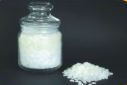
Emulsifying wax is a cosmetic emulsifying ingredient. It is created when a wax material (either a vegetable wax or a petroleum-based wax) is treated with a detergent (typically sodium lauryl sulphate or polysorbates).
Emulsifying wax is an ideal medium for the blending of fine creams, lotions and other fluid cosmetics which contain oil and water. An-ionic emulsifying wax is most suitable in water in oil type of emulsion, whereas the non-ionic grade is most suitable in oil in water type of emulsion. The ability of emulsifying wax to bind oil and water in perfect union is unparalleled, and today it remains the most ubiquitous substance in a cosmetic manufacturers' formulary. Emulsifying wax assists in improving the consistency and texture of final products without leaving a greasy film on the outer skin after application. It is a white waxy solid with a low fatty alcohol odour.
Applications:
Specifications Of Emulsifying Wax - An Ionic
| Name | Description | Solubility | Odour | Melting point | Acidity | Alkalinity | Iodine value | Saponification value | Unsaponifiable matter | Alcohol | Sodium alkyl sulphate | Sulfated Ash | Water |
|---|---|---|---|---|---|---|---|---|---|---|---|---|---|
| Emulsifying wax An Ionic IP | White or pale yellow waxy solid or pastilles | - | Faint and characteristics | - | NMT 1.0 ml of 0.1 M Sodium Hydroxide is required | Complies | Not more than 3.0 | Not more than 2.0 | Not less than 86.0% | Complies | Not less than 8.7% | - | Not more than 4.0% w/w |
| Emulsifying wax An Ionic BP | Almost White or pale yellow waxy solid or pastilles | Practically insoluble in water, producing an emulsion; soluble in ethanol (96%); partly soluble in ether | - | 50 to 60°C | NMT 1.0 ml of 0.1 M Sodium Hydroxide is required | Complies | Not more than 3.0 | Not more than 2.0 | Not less than 86.0% | Complies | Not less than 8.7% | 1.8 to 3.3 % | Not more than 4.0% w/w |
Specifications Of Emulsifying Wax - Non Ionic
| Name | Description | Solubility | Solidifying point | Acid value | Saponification value | Hydroxyl Value | Alkalinity | Refractive Index at 60° C | Sulfated ash |
|---|---|---|---|---|---|---|---|---|---|
| Emulsifying wax Non-ionic BP | A White or almost wax white waxy solid or pastilles | Practically insoluble in water, producing an emulsion; moderately soluble in ethanol; partially soluble in ether | 45° to 53°C | Not more than 0.5 | Not more than 2.0 | 175 to 192 | NMT 0.5ml of 0.1M HCL is required | 1.435 to 1.439 | NMT 0.1% |
Specifications Of Emulsifying Wax NF
| Name | Description | Melting point | pH 3%, w/v dispersion in water | Iodine value | Saponification value | Hydroxyl Value |
|---|---|---|---|---|---|---|
| Emulsifying NF pastilles | Solid waxy Slab / pastilles | 50° to 54°C | 5.5 - 7.0 | Not more than 3.5 | Not more than 14 | 178-192 |
Graph
 Mr. Deepak Kaushal (Foresight International)
 B-836, Avantika, Sector-1, Rohini, Delhi - 110085
 Share us via