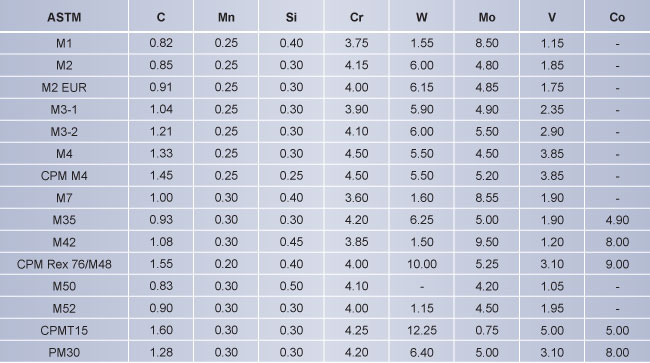
Alloy steels are made by combining carbon steel with one or several alloying elements, such as manganese, silicon, nickel, titanium, copper, chromium and aluminum. These metals are added to produce specific properties that are not found in regular carbon steel. The elements are added in varying proportions (or combinations) making the material take on different aspects such as increased hardness, increased corrosion resistance, increased strength, improved formability (ductility); the weldability can also change. The most important and desired changes in alloy steel are: increased hardenability.Increased corrosion resistance.Retention of hardness and strength.Nearly all alloy steels require heat treatment in order to bring out their best properties. alloying elements & their effects chromium adds hardness. Increased toughness and wear resistance.Cobalt used in making cutting tools; improved hot hardness (or red hardness).Manganese increases surface hardness. Improves resistance to strain, hammering & shocks.Molybdenum increases strength. Improves resistance to shock and heat.Nickel increases strength & toughness. Improves corrosion resistance.Tungsten adds hardness and improves grain structure. Provides improved heat resistance.Vanadium increases strength, toughness and shock resistance. Improved corrosion resistance.Chromium-vanadium greatly improved tensile strength. It is hard but easy to bend and cut.
Additional Information:
Payment Terms :
T/T
Packaging Details : As per request
Delivery Time : Ready Stock

 Write a Review
 Anil Gupta (FountainHead Alloys)
 B-12A, Flox Chambers, Tata Road No. 1
Opera House, Mumbai, Maharashtra, India
B-12A, Flox Chambers, Tata Road No. 1
Opera House, Mumbai, Maharashtra, India Share us via