 Write a Review
Our Products
We offer the best product range of Barlow Lens.
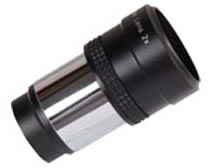
A Barlow is a negative (diverging) lens that is placed between the objective lens (or primary mirror from now on these words will be used interchangeably) and the eyepiece of a telescope. It increases the effective focal length of an objective lens, thereby increasing the magnification. The idea is that 2 eyepieces and a Barlow will give you the flexibility of magnification of 4 eyepieces, and will give higher magnifications with less powerful eyepieces.
What are its Advantages and DisadvantagesAssuming that the Barlow is a good one, the only disadvantage is a slight loss of light throughput this is of the order of 3%. The advantages are numerous:
 Gnomon Astrotech Private Limited (Gnomon Astrotech Private Limited)
 DB-42-E-1440, LIG G8, Near Hari Nagar Clock Tower, Hari Nagar, Rajouri Garden, West Delhi, New Delhi - 110064, Dist. New Delhi, Delhi, Janakpuri - 110058, India
 Share us via








