
 Write a Review
Our Products
We offer a complete product range of Vicat Needle Apparatus, Consolidation Test Apparatus, CBR Test Apparatus, De Aired Water Apparatus and Ring And Ball Test Apparatus

Material: Cast Iron or Mild Steel Frame
Plunger Diameter: 10 mm
Plunger Length: 50 mm to 60 mm
Scale Graduation: 0 to 50 mm with 1 mm least count
Movable Rod: Carrying the plunger or needle with adjustable weight
Initial Setting Needle: 1.13 mm diameter
Final Setting Needle: Circular with annular collar
Mould Dimensions: 80 mm diameter 40 mm height (split type)
Base Plate: Non-porous glass or metallic
Standard Compliance: IS 4031, IS 2645, ASTM C187, C191
Application: Determines setting time and consistency of cement paste
Accessories: Vicat mould, glass base plate, initial and final setting needles
Technical Specification
| Cat. No. | Specification | Type |
|---|---|---|
| IL- 216 | Vicat Apparatus | |
| IL- 217 | Vicat Apparatus | with Dashpot |
| IL- 217001 | Vicat Mould | |
| IL- 218 | Shrikage Bar Mould | Single |
| IL- 218.1 | Shrikage Bar Mould | Double |
| IL- 218.2 | Shrikage Bar Mould | Tripple |
| IL- 219 | Cement Spatula | Spring Steel Plate |
| IL- 220 | Flow Table | Manual |
| IL- 220.1 | Flow Table | Motarised table size -2500mm |
| IL-221 | Automatic Universal | Penetrometer |
| IL- 222 | Pozzolana Cement | Permeability four cell |
| IL-223 | Cement Mortar & Concrete | Permeability Appratus |

Type: Manual / Motorized loading
Loading Device: Lever arm or screw jack system
Loading Ratio: 10:1 (lever arm type)
Max Load Capacity: 5 kg/cm to 20 kg/cm (depends on model)
Consolidation Cell: Fixed or floating ring type
Specimen Size: 60 mm diameter 20 mm height (standard)
Material of Cell: Brass or stainless steel
Dial Gauge: 0.01 mm least count, 10 mm or 25 mm travel
Water Reservoir: Provided with inlet/outlet valves
Weights: Calibrated slotted weights included
Base: Heavy-duty metal or cast aluminum base
Accessories Included:
Cutting ring
Porous stones
Filter papers
Spacer
Power Supply (Motorized Type): 220V AC, 50 Hz
Application: Determining settlement properties of soil under load

We offer Cbr Apparatus. This test is used in selection of materials and control of subgrades. It keeps a check on bearing value of highway sub-bases and subgrades of mixtures.
Technical Specification
| Cat. No. | Type & Capacity |
|---|---|
| IL- 512 | Manual (50kN) |
| IL- 513 | Motorised |
| IL- 513001Mould | Gun Metel |
| IL- 513002Mpould | M.S. |
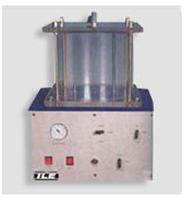
Material: Borosilicate glass / Stainless steel chamber
Vacuum Chamber Capacity: 5 to 20 liters (customizable)
Degassing Method: Vacuum pump assisted
Vacuum Level: Up to 700 mm Hg or better
Vacuum Pump: Oil rotary / diaphragm type (optional or included)
Water Inlet/Outlet: Fitted with stopcocks and tubing connections
Air Vent: Fine control needle valve
Lid Type: Airtight with rubber or silicone gasket
Viewing Window: Transparent chamber (if glass) or sight glass (if steel)
Power Supply (if pump included): 220V AC, 50 Hz
Mounting: Table-top with rubber feet
Application: Preparation of de-aired water for soil testing (e.g., triaxial tests)
Compliance: As per IS, ASTM standards for geotechnical lab use
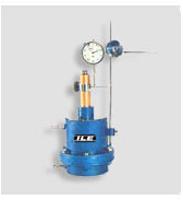
The Cross Permeability Test Apparatus is used to measure the permeability of soil or rock samples by determining the rate at which water or other fluids pass through them. It consists of a main test chamber to hold the soil sample, with inlet and outlet ports for fluid flow. The apparatus typically includes pressure gauges or manometers to measure hydraulic head difference across the sample. Flow rate is controlled and measured precisely to determine permeability coefficients. The frame and components are made from corrosion-resistant materials like stainless steel or brass. It often features transparent sections or windows to observe the sample during testing. The device is compatible with standard sample sizes and complies with testing standards such as ASTM D2434 or IS 281. Power supply requirements vary if the unit has electronic components, but many models operate manually or with simple hydraulic controls. Accessories may include sample holders, pressure regulators, and flow meters.
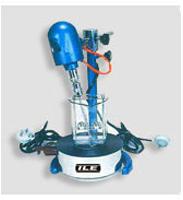
Material: Brass Rings and Steel Balls
Heating Medium: Glycerin or Water Bath
Temperature Range: Up to 100C or more (depending on model)
Stirring Mechanism: Magnetic or Manual Stirrer
Support Frame: Stainless Steel / Mild Steel
Ball Diameter: 9.5 mm
Ring Dimensions: Inside Diameter 17 mm, Height 6.4 mm
Thermometer Range: 0C to 110C or as per standard
Power Supply: 230 V AC, 50 Hz
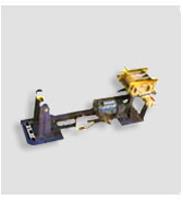
Application: Compaction of cement mortar specimens
Operation: Motorized with automatic stroke counter
Stroke Frequency: 60 5 jolts per minute
Jolting Height: 15 0.3 mm per stroke
Specimen Mould Size: Typically 40 mm 40 mm 160 mm
Power Supply: 230V, 50Hz, Single Phase
Finish: Powder coated for corrosion resistance
Standard Compliance: IS 4031, EN 196, ASTM C349
Usage: Laboratory testing of cement and mortar strength
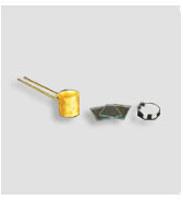
Technical Specification
| Cat. No. | Modules |
|---|---|
| IL- 210 | IL- 211 |
| IL- 211 | Le chatlier mould (set of 6) |
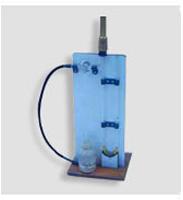
Material: Precision-machined brass, glass, and rubber components
Measuring Cell: Brass permeability cell for cement samples
Manometer: U-tube glass manometer with colored liquid
Test Range: Specific surface area of 10005000 cm/g
Standard Sample Weight: Typically 2.5 to 4 grams (depends on cement type)
Accessories: Rubber aspirator bulb, filter paper, and glass funnel
Application: Determines fineness of cement using air permeability method
Usage: Laboratory testing of Portland cement and other powders
Compliance: As per IS: 5516 / ASTM C204 / EN 196-6 standards
Finish: Corrosion-resistant polished or coated components
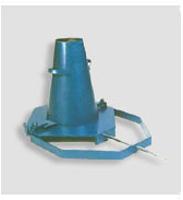
Material: Mild Steel
Slump Cone Height: 300 mm
Top Diameter: 100 mm
Bottom Diameter: 200 mm
Cone Thickness: 1.6 mm to 2 mm
Base Plate: Mild Steel, 500 mm x 500 mm (approx.)
Tamping Rod: Mild Steel, 16 mm diameter, 600 mm length with rounded end
Finish: Powder Coated or Galvanized
Weight: Approx. 710 kg
Standards: IS:1199, ASTM C143, BS EN 12350-2
Application: Measurement of workability/slump of fresh concrete
Technical Specification
| Cat. No. | Type | Specification |
|---|---|---|
| IL- 149 | Slump Text Appratus | 0 - 70kg/cm2 cap. |
| IL- 149001 | Slump Cane only |
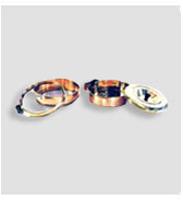
Dry Sieve Test Apparatus is used for particle size analysis of soil and aggregates. It typically includes a set of standard test sieves made of stainless steel or brass with mesh sizes as per IS 460 or ASTM E11. The sieves are mounted on a sieve shaker which operates at a fixed amplitude and frequency, usually 200-300 vibrations per minute. The standard sieve diameters are 200 mm or 300 mm. The stack consists of a pan at the bottom and a lid on top. The apparatus is powered by an electric motor, generally operating at 220V AC, and is suitable for dry analysis only. It is compliant with IS 2720 (Part 4) and ASTM C136 standards.
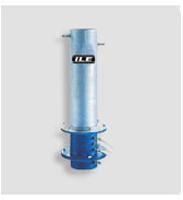
Gradient Ratio Test Apparatus conforms to ASTM D5101 standard and includes a permeameter cell made of transparent acrylic or stainless steel. The cell has a diameter ranging from 100 mm to 150 mm and a height of 250 mm to 300 mm. It is equipped with a water reservoir of 5 to 10 liters capacity. Pressure measurement is done using piezometers or pressure gauges placed at the top, middle, and bottom of the cell. The hydraulic head range is 0 to 300 mm. Flow measurement is facilitated by a graduated cylinder or flowmeter. The setup includes inlet and outlet control valves made of brass or PVC, connected via flexible tubing. The entire apparatus is supported by a rigid metal stand with leveling screws. It is designed for testing soil and geotextile specimens and operates without the need for electrical power, relying on gravity flow. The apparatus complies with ASTM D5101 and ISO 11058 standards where applicable.
Technical Specification
| Cat. No. | Specimen dia | Compaction of Soil | Head of Water |
|---|---|---|---|
| IL- 704 | 100 mm | 10cm of dia x 11.2cm height | upto 37.5cm |
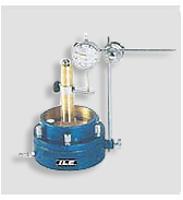
Material: Mild Steel
Type: Constant Head or Falling Head type
Application: Measures permeability (coefficient of permeability) of soil samples
Specimen Size: 100 mm dia 127.3 mm height (standard mold)
Manometer: Glass or Acrylic tubes for water head measurement
Control Valves: Provided for water inflow and outflow regulation
End Plates: Made of brass or aluminum with porous stones
Gasket: Rubber or neoprene seals for leak-proof testing
Test Standard: Conforms to IS 2720 (Part XVII), ASTM D2434
Use: Soil testing labs for fine and coarse-grained soil permeability analysis
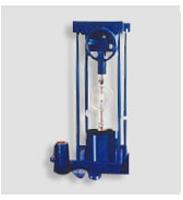
Material is mild steel with blue powder-coated finish
Application is for determining the swelling properties of soil
Container Size is typically 100 mm diameter 127.3 mm height
Dial Gauge Range is 010 mm with 0.01 mm least count
Load Plate is made of corrosion-resistant metal
Support Frame is rigid with adjustable rods
Standards followed are IS:2720 (Part 29)
Water Chamber is leak-proof with smooth finish
Usage is in geotechnical labs for clay and expansive soils
Weight and build designed for lab bench setups
Additional Information:
Payment Terms : L/C, T/T
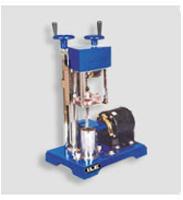
Application is for determining undrained shear strength of cohesive soils
Vane Size is typically 38 mm diameter 76 mm height (standard)
Torque Measurement is via calibrated proving ring or digital torque meter
Drive Mechanism is hand-operated or motorized rotation
Rotation Speed is approximately 0.1/sec (manual)
Capacity of Proving Ring is generally 2 kgcm to 10 kgcm
Material is stainless steel or powder-coated mild steel
Mounting is bench-top with adjustable base plate
Usage is suitable for both field and lab compacted soil samples
Additional Information:
Payment Terms : L/C, T/T
Technical Specification
| Cat. No. | Rate of rotation |
|---|---|
| IL- 550 | Motorised |
| IL- 550.1 | Manual |
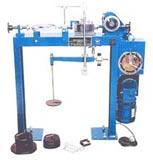
Type is direct shear testing equipment
Structure is heavy-duty blue painted body
Material is mild steel with anti-rust coating
Shear Box Size is typically 60 mm 60 mm 25 mm
Normal Load Capacity is up to 1000 N or more
Shear Force Application is via geared motor with lever arm
Proving Ring Capacity ranges from 2 kN to 10 kN
Displacement Measurement is through dial gauge or digital indicator
Drive Mechanism is motorized with variable speed (usually 1.25 mm/min)
Power Supply is 230 V AC, single phase, 50 Hz
Application is for determining shear strength of soil and similar materials
 Amit Gupta (Imperial Lab Equipments Pvt. Ltd.)
 109, Vardhman Plaza Tower, H-3, Netaji Subhash Place,District Center, Pitampura., Delhi - 110034, India
 Share us via