
 GST : 24AAAFI6493D1ZJ
 5.0/5
5.0/5
Our Products
Our offered Product range includes Electrolytic Polisher & Etcher and Electrolytic Polisher.
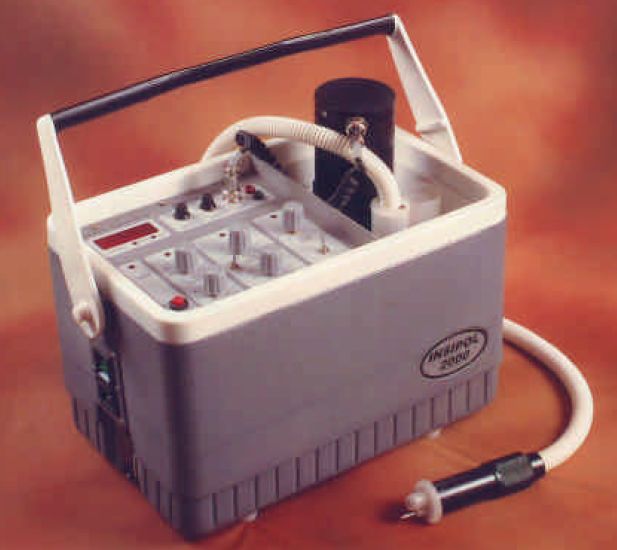
In-situ metallographic has become one of the important NDT tools for industrial inspection system. Over the years demand is observed in the developing countries like India. In current scenario, in-situ metallographic is widely accepted in many areas of industries from quality control to life prediction of operating plant structures. In-situ metallographic is useful where microstructures are prepared to minimize the damage to the material being analyzed and at the same time derive metallurgical information.
Important Areas Of In-Situ Metallographic
To meet these demands, we are delighted to introduce INSIPOL-2000. A unique portable electrolytic polisher/etcher with advanced control system and ease of operation. The INSIPOL-2000 is designed to help practicing metallurgist to overcome practical difficulties.
Principle of Electrolytic Polishing & EtchingElectrolytic polishing produces a highly polished distortion free surface that is ideal for microscopic examination. The main advantage is that there are no deformation layers to observe the microstructure-view as no abrasives are used. When an electrolyte is flown between anode (a metal to be polished) and cathode, the micro protruding metal will dissolve to get uniform polished surface at particular current. The flow of electrolyte ensures the removal of metal products accumulated due to dissolution. The quantity of polishing also depends on lamella flow, which removes uniform metal. Etching generally occurs at the lower current than polishing, when only grain boundary is attacked preferentially. INSIPOL-2000 is designed to get single stage polishing/etching on variety of metals. Single-phase alloy/metals are easy to polish with electrolytic polishing where as multiphase alloys/metals it poses certain difficulties.
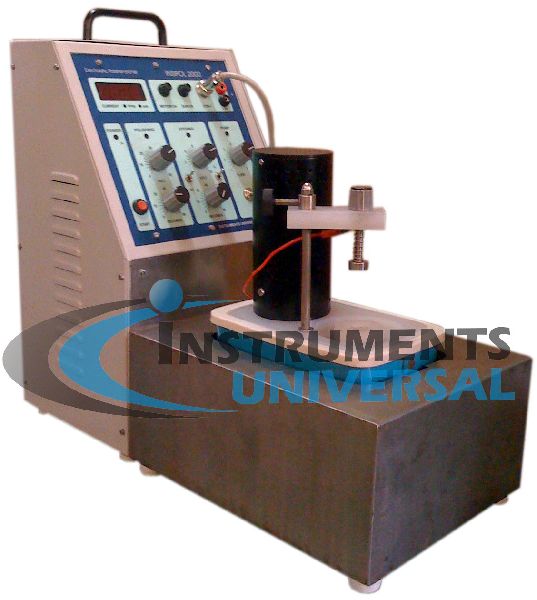
In-situ metallographic has become one of the important NDT tools for industrial inspection system. Over the years demand is observed in the developing countries like India. In current scenario, in-situ metallographic is widely accepted in many areas of industries from quality control to life prediction of operating plant structures. In-situ metallographic is useful where microstructures are prepared to minimize the damage to the material being analyzed and at the same time derive metallurgical information.
Important Areas Of In-Situ Metallographic
To meet these demands, we are delighted to introduce INSIPOL-2000. A unique portable electrolytic polisher/etcher with advanced control system and ease of operation. The INSIPOL-2000 is designed to help practicing metallurgist to overcome practical difficulties.
Principle of Electrolytic Polishing :Electrolytic polishing produces a highly polished distortion free surface that is ideal for microscopic examination. The main advantage is that there are no deformation layers to observe the microstructure-view as no abrasives are used. When an electrolyte is flown between anode (a metal to be polished) and cathode, the micro protruding metal will dissolve to get uniform polished surface at particular current. The flow of electrolyte ensures the removal of metal products accumulated due to dissolution. The quantity of polishing also depends on lamella flow, which removes uniform metal. Etching generally occurs at the lower current than polishing, when only grain boundary is attacked preferentially. INSIPOL-2000 is designed to get single stage polishing/etching on variety of metals. Single-phase alloy/metals are easy to polish with electrolytic polishing where as multiphase alloys/metals it poses certain difficulties.
 Mr. Paresh J Choksi (Instruments Universal)
 15/B BEI Compound, Opp. Mona Tiles. Chhani Jakat Naka, Vadodara, Gujarat - 390002, India
 Share us via