My ExportersIndia

For Buyer

For Seller

For Help

Products / Services

Our offered Product range includes DAF (Dissolved Air Flotation), Belt Filter Press (L Series), Pressure Sand Filter, Megacell TM and Minicell TM Dissolved Air Flotation Units.

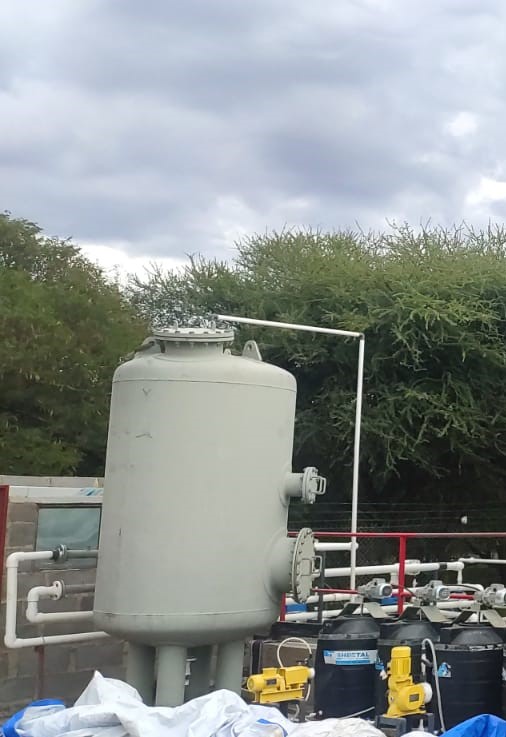
Pressure Sand Filter

4 Lakh - 18 Lakh / Unit Get Latest Price
  • Country of Origin India
  • Material SS or MS
  • Size Starting at 1 ton

Tertiary treatment equipment to reduce TSS

View Complete Details

Daf (Dissolved Air Flotation)

Dissolved Air Flotation (DAF) is a physio-chemical process of solid and liquid separation. This technology was developed by Krofta. It is often used in the pre-treatment or primary stage of a waste water treatment plant to initiate suspended solids removal in the system. Krofta has also achieved success with using our DAF as a secondary clarifier to reduce properties such as colour and turbidity.
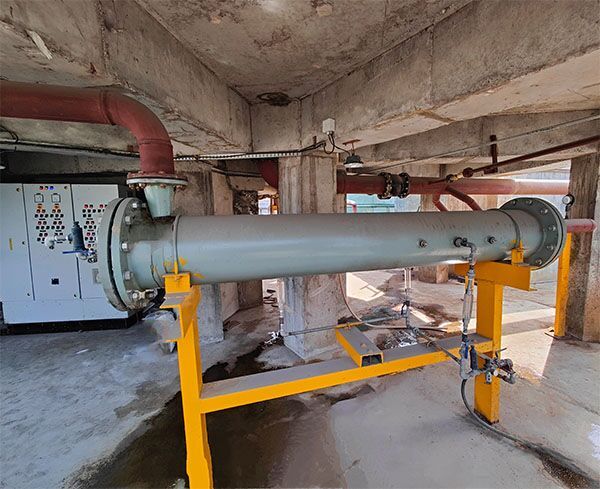
The system involves the Krofta DAF main tank, Krofta Air Dissolving Tube (ADT), chemical dosing system, recirculation pump and an air compressor. Our DAFs can be constructed in fully metallic structures with any type of coating to meet client requirements. Further, we recommend civil tanks with metallic internal parts for very high flow rates.
The application of Dissolved Air Flotation is to separate solids from liquid,
such as suspended solids, oils, fats and grease with the help of micro bubbles. These bubbles formed in the Krofta ADT attach themselves to light weight solid particles and rise to the surface of the DAF main tank. These solid particles then form a top layer of scum which are either scrapped by blades and removed from the top by a paddle wheel, in the case of our rectangular DAFs, or scooped out and removed by our scoop in the case of our circular DAFs.
The heavier Solid particles settle at the bottom of the main DAF tank and are periodically removed with the help of timer activated purge valves. The treated water passes through the middle and passes out from the outlet nozzle.
Krofta DAF systems are designed to handle high total suspended solids (TSS) and Fats Oils and Grease (FOG) loading. We can treat a range of water flow rates starting as low as 5 m3/hr going up to over 1000 m3/hr with a single DAF unit. This is also done with the help of flocculants and coagulants which are to be dosed as per the rate and quantity mentioned by our engineers for optimal results. We additionally also offer completely automated chemical dosing systems with agitators. Additionally, Krofta DAFs do not need pipe flocculators since we use inline dosing methods, however, if the client specifically requires it, we do design and manufacture them as well.
The benefits of using our floatation unit with our ADT are:
  • Entire process of air saturation takes only approximately 12 seconds
  • Krofta ADT has a small footprint and easy O&M
  • Micro bubbles lead to very high solids removal efficiency
  • Other air systems may choke in the presence of TSS > 2000 mg/L, however, Krofta DAF systems give highly efficient solids removal at much higher TSS levels.
We offer 5 different DAF models, selection of which is based on the inlet parameters and application after being studied by our technical experts
View Complete Details

Megacell Tm

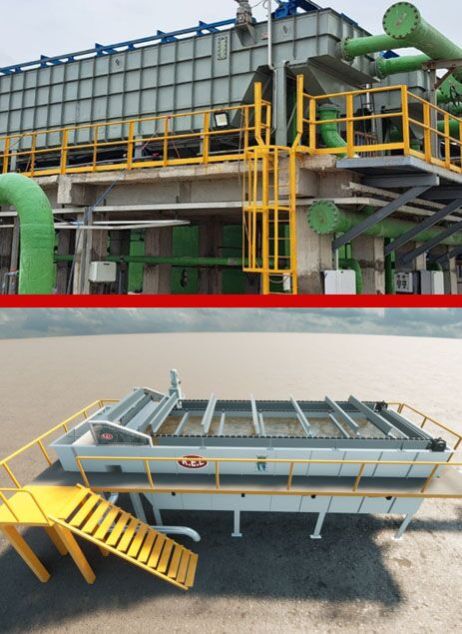
The Megacell is our rectangular DAF with lamella plates inside. It is designed to handle high solids loading and high flow rates and offers increased surface area due to the presence of the lamella plates. It has a chain and scrapper mechanism which pushes the top layer of scum to one end which is later removed with the help of a paddle wheel. The bottom conical shaped hoppers store the settled sludge which are removed periodically from the system with the help of timer activated purge valves.
The floated scum is pushed to one side with the chain and scrapper mechanism and the paddle as wheel removes the scum from the top. It is designed to have a retention time of 7-10 minutes. It can handle a range of flow rates as low as 10 m3/hr up to over 1000 m3/hr in a single unit.
Megacell started out as a revolutionary DAF to increase the efficiency of the recovered fiber in paper mills. After several successful installations it is now running in various industries, most popularly for sea water desalination applications.
Main Advantages
  • Low Operation Cost, low power requirement and minimal manpower intervention required
  • Higher Capacity Product can handle high flow rates in a single unit
  • Low Footprint, fully metallic structure with minimal to no civil construction required and is highly compact
  • Low Installation Cost, plug and play type system
  • Highly efficient unit*
(*Subject to proper operation and maintenance as mentioned by Krofta Engineering Limited)Popular Applications
  • Pulp & Paper
  • Sea water and River Water Desalination
  • Power plants
  • Oil and Gas Refineries
  • Abattoirs and Meat Processing
  • Steel Mills
View Complete Details

Minicell Tm

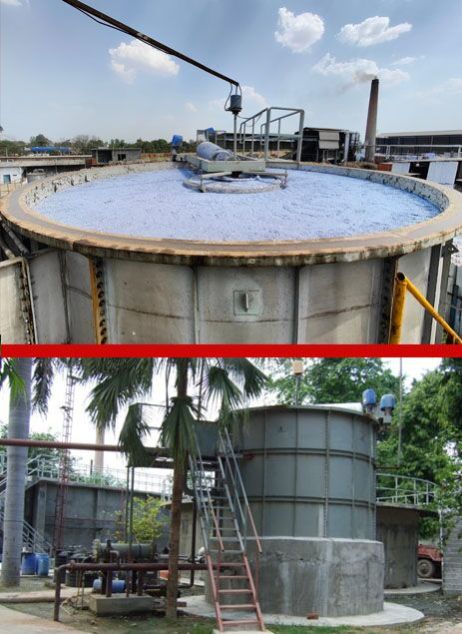
The minicell is the operationally simplest circular DAF model. It was developed especially for effluent having difficult and fragile solids and oil. Another special technical offering of the minicell is the three different height options available depending on the application, flow rate and solids loading. It has a scoop-type system to remove the floated sludge. The minicell is the operationally simplest circular DAF model.
It was developed especially for effluent having difficult and fragile solids and oil. Another special technical offering of the minicell is the three different height options available depending on the application, flow rate and solids loading. It has a scoop-type system to remove the floated sludge.
The bottom sludge is directed to one side with the help of wiper blades and removed periodically with the help of timer-activated purge valves. A single unit can handle a flow rate as low as 16 m3/hr and go as high as 712 m3/hr.
Main Advantages
  • Low footprint, fully metallic structure with minimal to no civil construction required and is a compact unit
  • Competitive pricing as compared to traditional larger height circular DAF units
  • 3 height options available for the most efficient performance based on the inlet characteristics
  • Simple operation, installation and maintenance
  • Excellent efficiency for suspended solids and oil removal*
(*Subject to proper operation and maintenance as mentioned by Krofta Engineering Limited
Popular Applications
  • Food and Beverage
  • Dairy
  • Automobile and paint shops
  • Chemical and Pharmaceutica
View Complete Details

Sedicell Tm System

The Sedicell is a mechanically simple, yet robust circular DAF. It can be constructed in a civil tank for longevity and high flow rates, with wetted parts manufactured in metal, or the entire DAF can be constructed in metal as well. It has a spiral scoop system to remove floated sludge.
Sedicell has a retention time of around 30 minutes due to its height, hence it is perfectly suited to handle very high solids. This also leads to a high sludge blanket formation with high sludge consistency, making the sludge easier to handle for further de-watering processes. Sedicell has been supplied successfully as a secondary clarifier as well for colour and TSS removal in pulp and paper applications. The largest single unit of Sedicell can handle up to 2000 m3/hr flow.
Main Advantages
  • Sedicell is a low sensitivity clarifier and has the ability to deal with variations in inlet flow and shock loading, and will continue to provide high efficiency removal.
  • Due to its height, the Sedicell has a retention time of 30 minutes and provides for better sedimented solids removal
  • It has a civil constructed base for longevity of use
Popular Applications
  • Pulp & Paper
  • Biological Sludge Clarification
  • Sludge Thickening
  • Municipalities and CETP
  • Chemicals
View Complete Details

Supercell Tm System

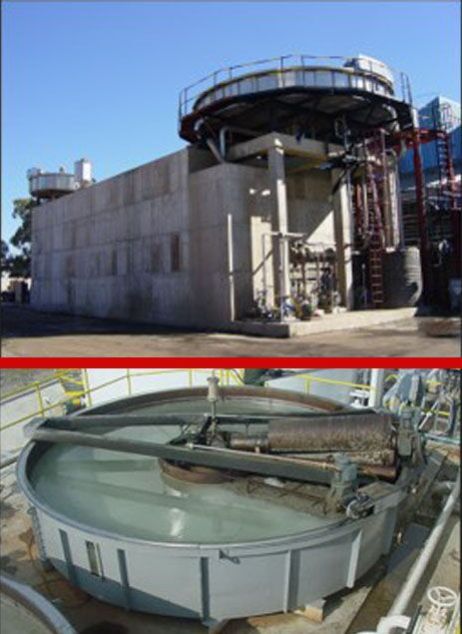
The supercell is Kroftas original and flagship DAF model. It has a smaller surface area for its capacity because it attains a very specific clarification degree. The water level in the tank is lower than all other Krofta DAF models. Supercell has a retention time of just 3 minutes due to its tank height of 600 mm.It has a spiral scoop system to remove floated sludge and the wiper blades direct the settle sludge to the built-in sump which is dispersed periodically with the help of timer activated purge valves.
MAIN ADVANTAGES
  • Low installation cost due to completely metallic manufactured structure
  • Minimal height requirement. Multiple Supercell DAFs can be seen stacked on top of each other with a minimal gap to optimally use space
  • Low cost due to minimal load factor and small tank height, when compared with similar performance clarifiers
POPULAR APPLICATIONS
  • Pulp & Paper
  • Tanneries
  • Dairy
  • Edible Oils
View Complete Details

Unicell Tm

Unicell is a horizontal DAF with strong mechanical components to provide efficient sludge removal and clarification of heavy and fatty effluents. It is designed to accommodate lower flow rates with high efficiency.
The floated scum is pushed to one side with the chain and scrapper mechanism and the paddle as wheel removes the scum from the top. It is designed to have a retention time of around 30 minutes. It can handle a range of flow rates as low as 10 m3/hr up to 170 m3/hr in a single unit. The bottom conical-shaped hoppers store the settled sludge which are removed periodically from the system with the help of timer-activated purge valves.
MAIN ADVANTAGE
  • High retention time of around 30 minutes to deal with high solid loading
  • Special hydraulic design to allow efficient operation with minimally optimized or no chemical dosing
  • Very efficient surface and bottom sludge removal systems allowing for high inlet solids
  • Top sludge chain scrapper system gives high floated sludge consistency
View Complete Details

Sludge Dewatering

Wastewater sludge dewatering is a crucial process in wastewater treatment plants and various industrial sectors that generate sludge as a byproduct of their operations. Sludge is a semi-solid mixture of water, organic matter, and inorganic particles that remains after the wastewater treatment process. Dewatering involves removing a significant portion of the water content from the sludge, transforming it from a wet, slurry-like substance into a more manageable and less voluminous material. This process holds substantial importance for several reasons:
Volume Reduction:The primary benefit of dewatering is the significant reduction in the volume of sludge. Removing water from sludge leads to a reduction in its weight and volume, which lowers transportation and disposal costs. This is particularly important as sludge disposal can be expensive, and reducing the volume makes it more cost-effective to handle and transport.
Cost Savings:As mentioned, dewatering reduces the weight and volume of sludge, which translates to lower transportation and disposal costs. Since many wastewater treatment plants and industries have to manage large quantities of sludge, even a slight reduction in volume can result in substantial cost savings over time.
Resource Recovery:Depending on the specific characteristics of the dewatered sludge, it might be suitable for further processing to recover valuable resources.
For instance, some dewatered sludges can be used as fertilizers, soil conditioners, or even converted into biogas through anaerobic digestion, thus turning waste into a resource
View Complete Details

Belt Filter Press (L Series)

The Belt Filter Press (BFP-L) is an industrial machine, used for solid/liquid separation processes, particularly the dewatering of sludge in various industries.
Brought to India with the help of a technical collaboration between Krofta Engineering Limited and AJV Engineering Ky. in 2007, it is a continuously operating double belt dewatering machine. The presses are designed for dewatering different kind of sludge by means of progressive compression between two permeable belts. Liquid sludge is conditioned by adding polymer to obtain the separation between liquid and solids. This operation is performed in an in-built flocculator tank with an agitator. Sludge flows from the flocculator to the distributor of the machine, where the sludge flows as an even mat to the gravity zone and then passes the low-pressure zone (also called wedge zone) before entering the high-pressure zone (also called S zone).
BPL
LSeries
In the gravity zone, sludge drains the greatest part of free water. The belt is supported by series of bars, which improve the drainage by producing discontinuity and breaking the water surface tension. In the wedge zone, upper and lower belts gradually and slightly increase specific pressure applied to the sludge. The perforated rollers increase the pressure applied to the sludge.In the high-pressure zone two belts form S configuration rounding these rollers. In this way the pressure directed to the sludge gradually increases and removes as much water as possible. Dewatered cake is finally discharged from the belt by two doctor blades. The belts are continuously cleaned under the washing manifold which has spraying nozzles.
Main Advantages
  • Inbuilt flocculation tank with stirrer
  • Low energy consumption
  • Economical option as compared to centrifuge
Popular Applications
  • Pulp & Paper
  • Sewage Treatment Plants & Municipalities
  • Petrochemical Refinery
  • Dairy
  • Poultry and Slaughterhouse
View Complete Details
Tell Us What are you looking for? Will call you back

Contact Us