My ExportersIndia

For Buyer

For Seller

For Help

Our Products

Leading Manufacturer, Supplier & Retailer of ZX2 Thermal Modulator, Autochro - 2000 Chromatograph Data System, Young Lin Carbamate Analyzer, ASAP 2050 HP Extended Pressure Sorption Analyzer and Chemisorption Analyzer.
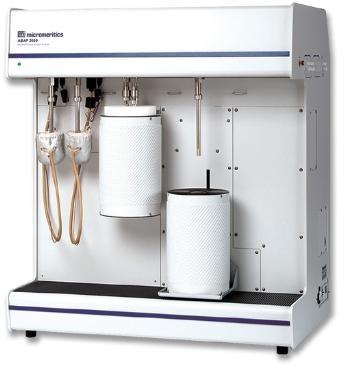
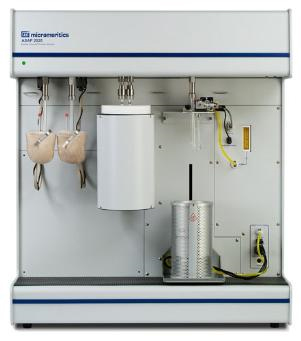
ASAP 2050 HP Extended Pressure Sorption Analyzer

  • Purity A highly flexible and interactive reporting system that includes an extremely versatile graphic user interface allowing custom presentation of results
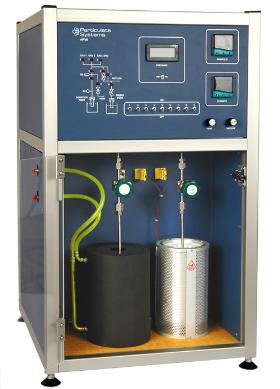
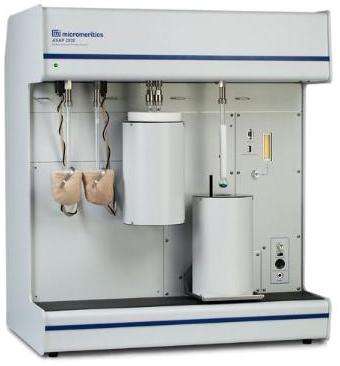
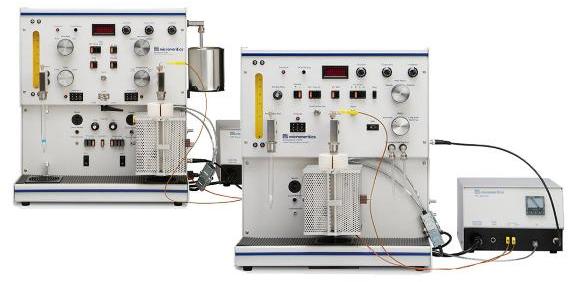
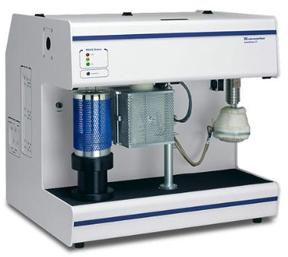
Micromeritics ASAP 2050 Xtended Pressure Sorption Analyzer is an easy-to-use instrument capable of collecting high-resolution, high-pressure adsorptive isotherms from vacuum to 10 atmospheres. While retaining many design elements of the popular ASAP 2020, the ASAP 2050 offers an extended range of capabilities that enables the instrument to obtain data in an elevated-pressure environment. The instrument also allows the user to collect traditional isotherms for determining surface area and porosityThe performance of the metal hydride is characterized by its hydrogen storage capacity (adsorption) and subsequent release (desorption) of hydrogen. The adsorption capacity of alkaline-exchanged zeolites is a key parameter for the design and optimization of pressure swing adsorption processes. The active surface area and porous structure of catalysts have a great influence on production rates. The ASAP 2050 is also useful in generating surface area and porosity data for materials such as nanotubes, activated carbons, and ceramics.
View Complete Details

Chemisorption Analyzer

  • Features Oil-free “dry” vacuum option to prevent oil contamination, Two Independent vacuum systems that allow preparation and analysis to proceed concurrently,
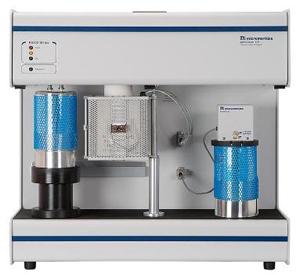
Catalysts are used in a variety of applications from the production of consumer goods to the protection of the environment. Optimum design and efficient utilization of catalysts require a thorough understanding of the surface structure and surface chemistry of the active material. Chemical adsorption (chemisorption) analysis techniques provide much of the information necessary to evaluate catalyst materials in the design and production phases, as well as after a period of use. Catalytic activity is evaluated by measuring the amounts and types of reactive gas adsorbed. This volume of gas, along with an understanding of the reaction stoichiometry, is used to calculate metal dispersion, active surface area, size of crystallites, and surface acidity. Micromeritics instruments are specifically designed for the highly aggressive environment present during chemisorption analysis. Internal components are constructed of highest-quality stainless steel to prevent reactivity with most commonly used chemisorptives. Heated manifolds, gas lines, and detectors are provided to allow analysis with condensable vapors. Sample preparation occurs in situ to prevent contamination prior to analysis. Samples can be prepared at high temperatures (up to 1100 deg C) and at low pressures (
View Complete Details

Autopore IV - Mercury Porosimeter

  • Purity Available with two low and one high-pressure ports or four low and two high-pressure ports for increased sample throughput
Micromeritics AutoPore IV 9500 Series characterizes a materials porosity by applying various levels of pressure to a sample immersed in mercury. The pressure required to intrude mercury into the samples pores is inversely proportional to the size of the pores. This is called mercury porosimetry, or often, mercury intrusion. The AutoPore IV series provides high-quality analysis data and comes with enhanced data reduction and reporting packages, faster pressure ramp rates, a more flexible and controllable vacuum system, and a redesign of both the low-and high-pressure generation systems.
View Complete Details

Particle Insight Dynamic Image Analyzer

  • Features Sample handling automation and flexibility, Security and Regulatory Compliance., Data reporting flexibility
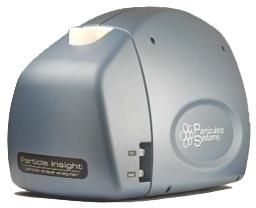
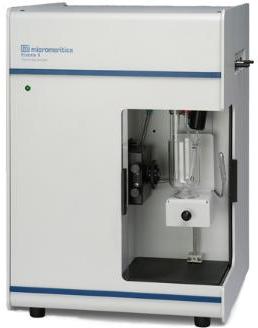
The Particle Insight is a state-of-the art dynamic image analyzer which is ideal for applications where the shape of raw materials, not just the diameter, is critical to raw materials. The Particle Insight offers up to 28 different shape parameters analyzed and reported real-time for samples in either aqueous or organic solvent suspensions.The system operates in a range suitable for a wide variety of industrial, biological, and geological specimens from 3 m up to 300 m in its standard configuration. Its unique recirculating sample module and precision optics are designed to acquire and report statistically valid measurements quickly, an essential quality control capability in many manufacturing processes. The Particle Insight also has an automated fill and rinse feature allowing for true walk-away operation.
View Complete Details

HPVA - 100 / 200 - High Pressure Volumetric Analyzer

  • Purity Pressure Ranges from ultra-high vacuum to 200 bars., Fully automated analysis and sample evacuation.
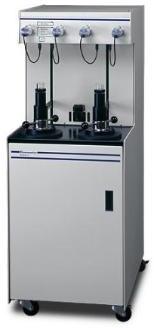
The HPVA instruments are designed to measure the high-pressure adsorption isotherms with hydrogen, methane, carbon dioxide and other gases using the static volumetric method. Typical applications for this instrument include catalysts, zeolites, activated carbons, carbon nanotubes, and hydrides. Understanding the adsorption characteristics of materials is critical in the research and advancement of hydrogen storage, fuel cells and batteries stack gas scrubbers, and hydrocarbon traps. The HPVA product operating pressure ranges from high vacuum to 200 bars. The span of the sample temperature during analysis can be from cryogenic to 500 oC. Sample analysis data collection is fully automated to assure quality data and high reproducibility.
View Complete Details

Sub Sieve Autosizer

  • Purity Superior Software, Quick and Easy Set-up, Real Time Data Display
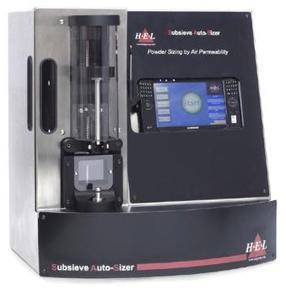
The H.E.L. Limited Subsieve AutoSizer (SAS) is a new addition to the established field of air-permeability particle sizing. It has been developed as a direct and improved successor to the widely used Fisher Model 95 Sub-Sieve Sizer (FSSS). The SAS adds automated functions, and electronically recorded and presented data, to an established particle sizing technique. The SAS uses the principle of pressure drop across a packed bed of powder. By varying the sample height, and hence the porosity of the bed, average surface area and particle size can be determined as a function of pressure drop in accordance with the Carmen equation. The SAS measures particle size in the range of 0.2 m to 75 m and has a compression accuracy of less than 0.05 mm.
View Complete Details

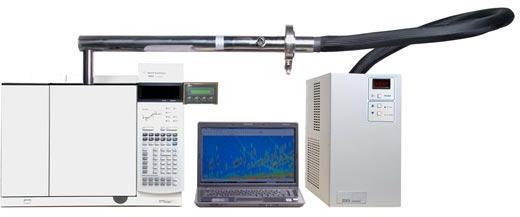
ZX2 Thermal Modulator

  • Purity No liquid cryogen needed for cold jet, Easy to handle and manage without cryogenic liquids
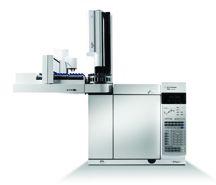
2 stage loop modulatorClosed cycle cooling assembly for cold jet. Eliminates LN2Modulation rated for C7+Installs on Agilent 7890GC, 6890GC, 5975QMS, Shimadzu GC-2010 & GCMS-QP2010Plus, Thermo Trace GCSecondary oven installed as an option. Can run both columns under same temperature programSecondary oven can lead or lag the main oven up to 40CNo moving partsModulation cycle range from 1000ms 32000ms
View Complete Details

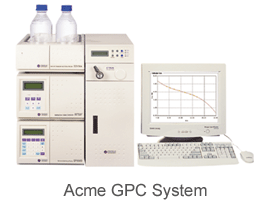
Acme GPC System

  • Purity Economical and precise Gradient Pump, Wide dynamic range of RI Detector
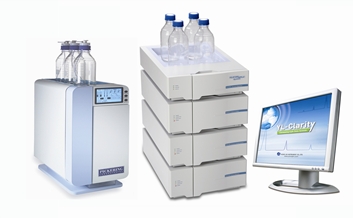
The Acme GPC System used for analysis of average molecular weight and molecular weight distribution for polymers, rubbers, plastics and synthetic fibers provides you with various information on physical properties of polymers. As small difference in average molecular weight or molecular weight can affect the physical properties of final polymer products considerably, flow accuracy of pump and stability of RI detector are considered of high importance. The GPC System offers you high accurate and reproducible GPC analysis. With the Autochro-GPC Workstation, you can process the data with ease and convenience.
View Complete Details

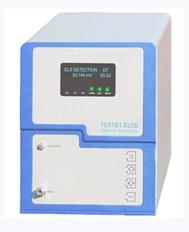
YL9181 ELSD Universal Detector

  • Features Sensitive Detection for a Wide Variety of Chemical Classes and Structures, Very low detector volume resulting in the smallest peak within 3 sec
Our new ELSD is an essentially universal detector, primarily used in High Performance Liquid Chromatography (HPLC). Young Lin ELSD is an ideal substitute, or supplement to, traditional HPLC detectors for liquid chromatography concentration detection. In comparison to other ELSD detectors, Young Lin ELSD has the ability to vary the split ratio smoothly over a wide range with a new patented (Patent No. US 7, 290, 723 B1) Thermo-Split Technology. This precise vapor phase control combines a gentle bend with a temperature controlled spray chamber. This means that with one low cost detector you can handle high volume as well as difficult to evaporate mobile phases optimally, efficiently and easily, all without sacrificing sensitivity.
View Complete Details

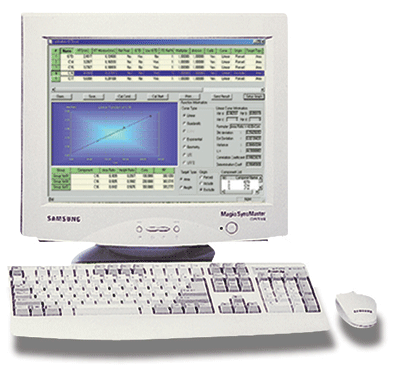
Autochro - 2000 Chromatograph Data System

  • features Use the latest icons, independent window, enhanced user interface, Intuitive on-line s upport each menu
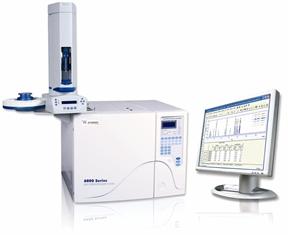
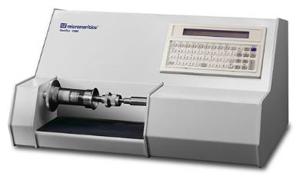
Autochro-2000 chromatographa data system is fully compatible with MS Windows XP. It provides data acquisition and processing and also full control of Acme HPLC & Acme 6000 GC.
View Complete Details

Young Lin Carbamate Analyzer

  • Purity High sensitivity : detection limits of 0.1-0.5ng(or 0.2-1ppb levels for drinking water) can be routinely achieved.
Young Lin Carbamate Analyzer is a system for analysis of carbamate pesticides using post column derivatization method. The analysis of carbamate using post-column derivatization method offers qualitative and quantitative analysis results by automated sample preparation at the same time. It alternates the GC-ECD method and also analyzes 13 kinds of Carbamate pesticides not included in the 10 compounds specified by the U.S. Environmental Protection Agency (USEPA) Method 531.1 and AOAC Protocol 29.A05.
View Complete Details

Residual Solvent Analyzer

  • features Easy sample preparation with headspace autosampler, No needs of extra heating module (installed oven inside.)

Organic solvents are used during the manufacturing of active pharmaceutical ingredients, excipients and drug products and found in the inks used for the printing of packaging materials for foods If these solvents are remained and ingested, these are hazardous to human health. On the United States Pharmacopoeia , the residual solvents are classified as Organic volatile impurities(OVIs) and regulates the concentration of toxic solvents contained in medicine. European Pharmacopoeia also describes Identification and control of residual solvents. Since the residual solvents on the food packing material can affect to human health, Korea Food and Drug Administration set the regulation standard. Young Lin Residual Solvent Analyzer can accurately and efficiently detect and quantify residual solvents.

View Complete Details
Tell Us What are you looking for? Will call you back

Contact Us