
 GST : 36AAECL2246C1ZW
 Write a Review
Our Products
Our product range contains a wide range of Cashew Nuts and Almond Kernels
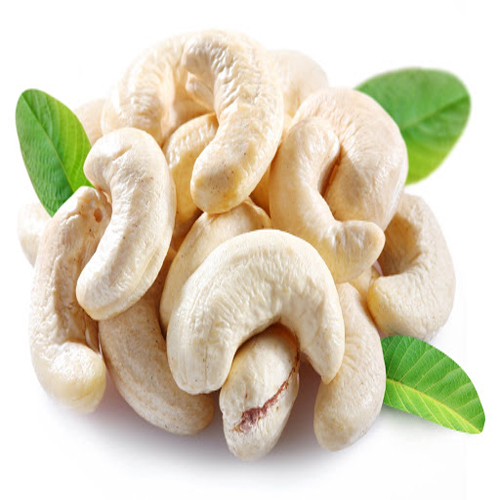
Description :
Technical Requirements of Cashew Cultivation :Soil: The general notion is that "cashew is very modest in its soil requirements and can adapt itself to varying soil conditions without impairing productivity". While Cashew can be grown in poor soils, its performance would be much better on good soils. The best soils for cashew are deep and well-drained sandy loams without a hard pan. Cashew also thrives on pure sandy soils, although mineral deficiencies are more likely to occur. Water stagnation and flooding are not congenial for cashew. Heavy clay soils with poor drainage and soils with pH more than 8.0 are not suitable for cashew cultivation. Excessive alkaline and saline soils also do not support its growth. Red sandy loam, lateritic soils and coastal sands with slightly acidic pH are best for cashew.
Climate :Cashew is a tropical plant and can thrive even at high temperatures. Young plants are sensitive to frost. The distribution of cashew is restricted to altitudes upto 700 m above mean sea level where the temperature does not fall below 20°C for prolonged period. Areas where the temperatures range from 20 to 30°C with an annual precipitation of 1000 - 2000 mm are ideal for cashew growing. However, temperatures above 36°C between the flowering and fruiting period could adversely affect the fruit setting and retention. Heavy rainfall, evenly distributed throughout the year is not favourable though the trees may grow and sometimes set fruit. Cashew needs a climate with a well-defined dry season of at least four months to produce the best yields. Coincidence of excessive rainfall and high relative humidity with flowering may result in flower/fruit drop and heavy incidence of fungal diseases.
Preparation of Land :The land should be ploughed thoroughly and levelled in case of agricultural lands. In case of forestlands, the jungle should be cleared well in advance and the debris burnt. After clearing the jungles, land is to be terraced or bunds constructed on sloppy land. In order to ensure better moisture conservation, soil trenches are dug across the contours. The cost of land preparation will vary depending upon the type and method of soil working. Nowadays, use of JCB for soil working is most popular; hence a provision for use of soil working is made in the model. The land preparation work should be completed prior to the onset of monsoon season i.e. during May – June.
Varieties :
Season June – December is optimum for cultivation.
Management
Requirement of plantsAbout 200 plants/ha can be planted.
Preparation of fieldPits of 45 cm x 45 cm x 45 cm size are dug and filled up with a mixture of soil + 10 kg FYM + one kg neem cake
SpacingA spacing of 7 m either way is adopted
High Density PlantingSpacing of 5 x 4 m accommodating 500 plants per hectare is recommended prune the interlocking branches during the July-August to maintain the frame
Irrigation/CultivationThe plant starts yielding 3rd year onwards. The peak picking months are March and May. Good nuts are grey green, smooth and well filled. After picking, the nuts are separated from the apple and dried in the sun for two to three days to bring down the moisture content to 10 to 12 %. Properly dried nuts are packed in alkathene bags. This will keep for 6 months.
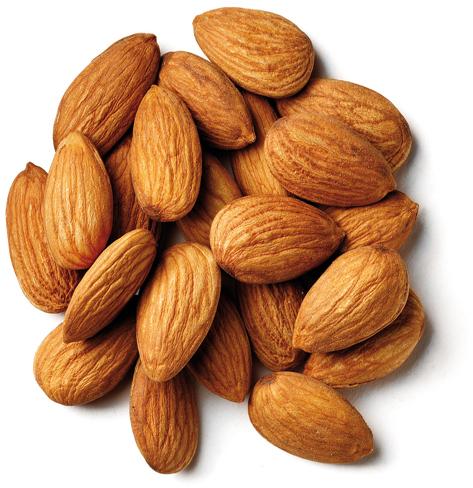
Description : The almond is a species of tree native to Iran and surrounding countries but widely cultivated elsewhere. The almond is also the name of the edible and widely cultivated seed of this tree. Within the genus Prunus, it is classified with the peach in the subgenus Amygdalus, distinguished from the other subgenera by corrugations on the shell surrounding the seed.
The fruit of the almond is a drupe, consisting of an outer hull and a hard shell with the seed, which is not a true nut, inside. Shelling almonds refers to removing the shell to reveal the seed. Almonds are sold shelled or unshelled. Blanched almonds are shelled almonds that have been treated with hot water to soften the seedcoat, which is then removed to reveal the white embryo.
Sustainability:Almond production in California is concentrated mainly in the Central Valley, where the mild climate, rich soil, abundant sunshine and water supply make for ideal growing conditions. Due to the persistent droughts in California in the early 21st century, it became more difficult to raise almonds in a sustainable manner. The issue is complex because of the high amount of water needed to produce almonds: a single almond requires roughly 1.1 US gallons (0.92 imperial gallons; 4.2 litres) of water to grow properly. However, cow's milk requires more water to produce than almond milk, and in 2014, California produced 42.3 billion pounds of cow's milk, while in the same year California produced only 2.14 billion pounds of almonds
Health:Almonds are included as a good source of protein among recommended healthy foods by the US Department of Agriculture. A 2016 review of clinical research indicated that regular consumption of almonds may reduce the risk of heart disease by lowering blood levels of LDL cholesterol.
Potential allergy:Almonds may cause allergy or intolerance. Cross-reactivity is common with peach allergens (lipid transfer proteins) and tree nut allergens. Symptoms range from local signs and symptoms to systemic signs and symptoms including anaphylaxis (e.g., urticaria, angioedema, gastrointestinal and respiratory symptoms).
Cultural aspects :
Similarly, Christian symbolism often uses almond branches as a symbol of the Virgin Birth of Jesus; paintings and icons often include almond-shaped haloes encircling the Christ Child and as a symbol of Mary. The word "Luz", which appears in Genesis 30:37, sometimes translated as "hazel", may actually be derived from the Aramaic name for almond (Luz), and is translated as such in some Bible versions such as the NIV. The Arabic name for almond is ??? "lauz" or "l?z". In some parts of the Levant and North Africa it is pronounced "loz", which is very close to its Aramaic origin.
Varieties :
Commercial varieties of ALMONDSBelow are some of the commercial varieties of Almond cultivated in India. Non Pareil, Claifornia paper Shell, Merced, IXL, Shalimar, Makhdoom, Waris, Pranyaj, Other high yielding cultivars are Ne Plus Ultra, Primorskij, Peerless, Carmel, Thompson, Price, Butter, Monterey, Ruby, Fritz, Sonora, Padre and Le Grand.
Season lmond requires climate having slightly hot summer temperature ranging from 30C to 35C and cool winters for plant growth and kernel filling. Unopened blossoms shall withstand cold up to – 2.2C, but blossoms at petal fall stage are damaged at 0.50 C to – 1.1 C. The blossoms can withstand temperature from -2.2 C to -3.3 C for a short time but if low temperature continuous for long hours they get damaged easily.
Management
Therefore, pruning should be done in such a manner that 1-5 of the fruiting wood is replaced every year. Prune in such a way that new wood with new spur growth is constantly replacing spur that are no longer fruitful or useful. To meet or achieve this, only prune or remove older tree branches that is 1.2 cm to 3.7 cm in diameter. Thin out very little of the smaller wood, except to remove unwanted suckers or water sprouts. The success of pruning in almond plantation can be judged in part by the length of new shoots over the entire tree every year, if other factors are not impacting growth.
Inter cropping in almond farming: – During the almond orchard pre-bearing stage, inter cultivation with several suitable crops are recommended for some extra income through sustainable utilization of inter spaces. The best inter crops in almond farming are like saffron, pea, pulses, carrot, seed production of turnip, knoll khol, mustard and bulb production of onion and garlic, and aromatic plants and medicinal plants like lave dine, lavender. Besides getting some extra income, the growing of legumes like pulses and pea will increase the soil fertility, turnips seed production and mustard augmenting to pollination by attracting bees, and growing some medicinal and aromatic trees like garlic, lavender, lave dine etc are acting as repellent to ant pests, insects and diseases.
Irrigation/CultivationThe critical stages of almond plantation which are most sensitive to water shortages are flowering (Feb to March) and fruit development (April-May-June).Therefore, watering must be provided during these stages for getting higher yield of quality almond nuts. The drip irrigation watering method found very efficient in almond farming, try to adopt drip irrigation for better water management.
 RAJU (LIMPEX GLOBAL PRIVATE LIMITED)
 Rajas Courtyard, 179 Pillar, Near ICBM College, Upperpally, Rajendra Nagar Mandal,, Attapur, Hyderabad, Telangana - 500048, India
 Share us via