
My ExportersIndia

For Buyer

For Seller

For Help

Oleoresin

Our offered Product range includes Ginger Oleoresin, Turmeric Oleoresin, Cardamom Oleoresin and Mace Oleoresin.

Ginger Oleoresin

  • Botanical Name Zingiber officinale
  • Family Name Zingiberaceae
  • Flavour Characteristics Hot and Pungent.
  • Usage Profile Foods, Preservatives and Medicines.
  • Commercial part The rhizome.
  • Harvesting Season December to February in plains, February to March in higher elevations.

Ginger oil, Oleoresins are the volatile oil derived by steam distillation of ginger and oleoresin is obtained by percolating the powdered rhizomes of Ginger, Zingiber officinale with volatile solvents. Ginger contains 1 to 4% of volatile oil 5-8% of pungent acrid oleoresin and starch. Zingiberene is the chief constituent of oil of ginger. Oil is employed for flavoring of all kinds of food products and confectionary and finds limited use in perfumery. Oleoresin, commercially called Gingering contains pungent principles viz. gingerol and shogaol apart from the volatile oil of ginger and are used as an aromatic, carminative, stomachic and stimulant.
Specifications
Description
Ginger Oleoresin is obtained by solvent extraction of the dried seeds of rhizomes of Zingeber officianalis.
Colour & appearance
Dark brown in colour & viscous liquid.
Odour
Characteristic odour of ginger.
Volatile oil content
35%.
Residual solvent
View Complete Details

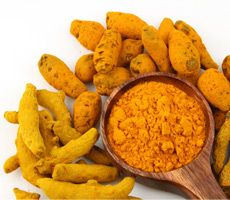
Turmeric Oleoresin

  • Botanical Name Curcuma longa
  • Family Name Zingiberaceae
  • Flavour Characteristics Musky Flavour, slightly bitter and fragrant
  • Usage Profile Foods, medicines and cosmetics
  • Commercial part Rhizome or underground stem
  • Harvesting Season December to July

It is oleoresin obtained by extraction of tubers of Curcuma longa Linn, with volatile solvents and concentration to remove the solvent. The oleoresin chiefly contains volatile oil, resin and yellow colouring matter known as curcuminoids. The chief component of curcuminoids is curcumin. Tumerone, zingiberene are the other constituents of volatile oil. It is reported to possess many pharmacological and anti inflammatory actions.
Specifications Description Extract of dried rhizomes of Curcuma longa L. (Family: Zingiberaceae). Storage Store in full, tight containers in a cool dry place, protected from sun light. Appearance Orange yellow to reddish brown coloured semi solid. Odour Characteristic mild flavour of turmeric. Dispersibility/solubility Can be dispersed in dry carriers such as salt, dextrose, etc. Spice Equivalent One kg replaces 60 kg of raw Turmeric Colour Value 14100 to 14500 CU – EOA Curcumin content 94 to 96.5% Residual solvent 10 ppm - EOA Microbiology Free from microbial contaminants. Shelf life 12 months under the specified storage conditions. Handling Avoid contact with skin and eyes.
View Complete Details

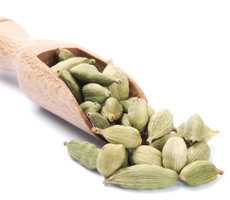
Cardamom Oleoresin

  • Number Of Flower Clear to Pale Yellow
  • Botanical Name Elettaria cardamomum
  • Family Name Zingiberaceae
  • Consistency: Thin
  • Strength of Aroma Strong

Cardamom (also spelled Cardamon) is best known as a pungent and aromatic spice used to season dishes in Southeast Asia. This perennial herb belongs to the same plant family as Ginger (Zingiberaceae) and exhibits much of the same warming quality. The plant is native to the forests of Southern India but mostly cultivated in Sri Lanka and Guatemala. The growth habit of Cardamom is rhizomatous in nature. A mature Cardamom plant can have towering-high leafy shoots reaching 1.5 to 6 meters tall. Cardamom essential oil is found in the large parenchyma cells under the epidermis of the seed coat, with content varies from 2 to 10%. The oil is extracted from dried ripe seeds through steam distillation.
Herbal / Folk tradition Used extensively as a domestic spice, especially in India, Europe, LatinAmerica and Middle Eastern countries. It has been used in traditional Chinese and Indian medicine for over 3000 years, especially for pulmonary disease, fever, digestive and urinary complaints. Hippocrates recommended it for sciatica, coughs, abdominal pain, spasms, nervous disorders, retention of urine and also for bites of venomous creatures. Current in the British herbal Pharmocopoeia as a specific for flatulent dyspepsia.

Aromatherapy / Home use Digestive system anorexia, colic, cramp, dyspepsia, flatulence, griping pains, halitosis, heartburn, indigestion, vomiting. Nervous system mental fatigue, nervous strain.

Other uses Employed in some carminative, stomachic and laxative preparations; also in the form of compound cardamom spirit to flavor pharmaceuticals. Extensively used as a fragrance component in soaps, cosmetics and perfumes especially oriental types. Important flavor ingredient particularly in curry and spice products.

Distribution Native to tropical Asia especially southern India; cultivated extensively in India, Sri Lanka, Guatemala and El Salvador. The oil is produced principally in India, Europe, Sri Lanka and Guatemala

Extraction Essential oil by steam distillation from the dried ripe fruit. An oleo resin is also produced in small quantities.

Characteristics A colorless to pale yellow liquid with a sweet-spicy, warming fragrance and a woody-balsamic undertone. It blends well with rose, olibanum, orange, bergamot, cinnamon, cloves, caraway, ylang ylang, labdanum, cedarwood, orange blossom, and oriental bases in general.

Actions Antiseptic, antispasmodic, aphrodisiac, carminative, cephalic, digestive, diuretic, stimulant, stomachache, tonic (nerve).

View Complete Details

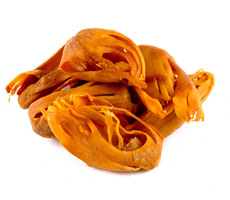
Mace Oleoresin

Mace tree grows to a height of 65 feet (20 meters). The nutmeg fruit is pendulous and is similar to peach fruit. It splits in two parts, when fully mature, exposing a crimson-colored aril. This is the mace which surrounds the nutmeg pit. Mace is a red-colored seed husk that covers aril. It has a spicy scent reminiscent of nutmeg. Used for medicinal purposes in combination with nutmeg and was used to combat fevers and digestive issues.

Specifications
Description
Mace Oleoresin is the end product obtained by solvent extraction of the dried flowers of Myristica fragrance van Houtte, Myristicaceae with the subsequent removal of the solvent.
Plant Part
Husk.
Extraction Method
Steam Distilled.
Origin
India
Color
Pale yellow to brownish yellow liquid.
Consistency
Thin
Note
Middle
Strength of Aroma
Medium.

View Complete Details
Tell Us What are you looking for? Will call you back

Contact Us