 GST : 24BLSPP1032P1ZN
 4.5/5
4.5/5
Our Products
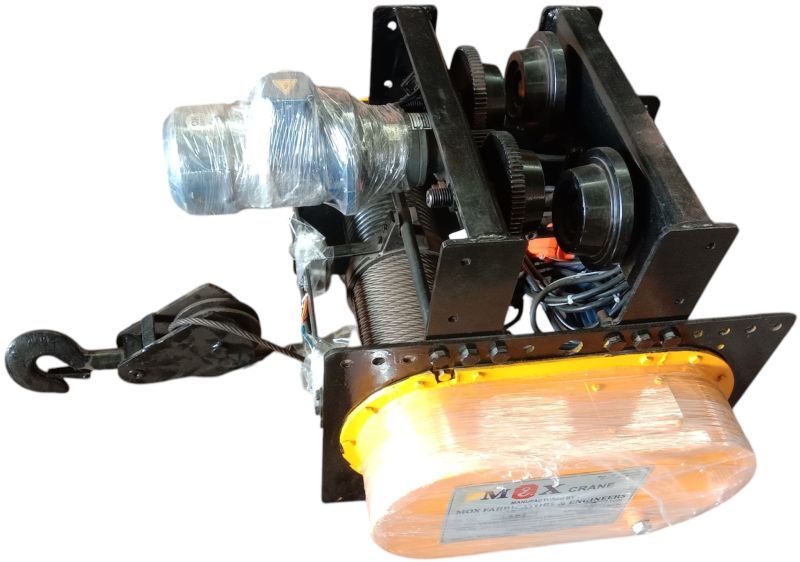
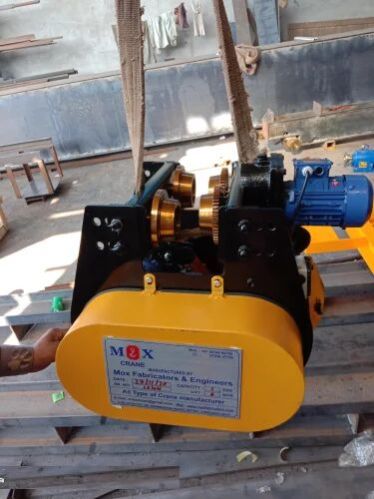
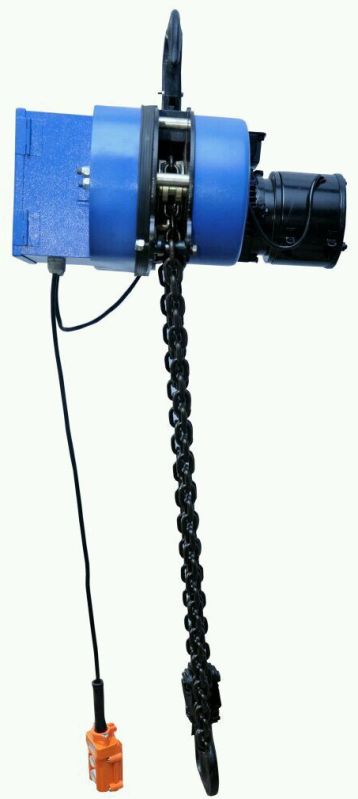
We offer the best product range of Girder Electric Wire Rope Hoist, Electric Power Chain Hoist, Flame Proof Electric Wire Rope Chain Hoist, Low Headroom Electric Wire Rope Hoist and Material Handling Electric Wire Rope Hoist.

A Girder Electric Wire Rope Hoist is a type of electric hoist mounted on a girder (or beam), which is a structural component of an overhead crane system. This type of hoist combines the power and precision of an electric wire rope hoist with the flexibility and strength of a girder system, typically used for lifting and moving heavy loads in industrial environments. Key Features of a Girder Electric Wire Rope Hoist: Girder (Beam) Structure: The girder refers to the horizontal beam or track upon which the hoist moves. The girder is typically made of steel and is a critical component in supporting the hoist and the load it carries. It can be part of a larger overhead crane system, which may also include end trucks, trolleys, and other components that allow the hoist to travel along the length of the beam. Electric Wire Rope Hoist: The electric wire rope hoist is mounted onto the girder and is used to lift and lower heavy loads. The hoist is driven by an electric motor and uses a steel wire rope wound around a drum or pulley system to perform the lifting function. These hoists are capable of handling heavy loads with precision, and they can be used for a wide variety of lifting tasks in industrial and commercial settings. Motorized Trolley: Many girder-mounted electric wire rope hoists are equipped with a motorized trolley that allows the hoist to move along the girder. This enables the hoist to transport the load horizontally across a large area. The trolley may be driven by an electric motor and could be equipped with either a pendant control or wireless remote control to operate it. Lifting Capacity: Girder-mounted wire rope hoists are designed to handle a wide range of load capacities, typically from 1 ton to over 100 tons, depending on the specific model and application. The girder and hoist combination are designed to withstand the stresses associated with lifting heavy loads safely and efficiently. Precision Control: The hoist is operated using a control system that allows for precise lifting, lowering, and horizontal movement of loads. Controls typically include pendant control, wireless remote control, or other automation systems, allowing the operator to control the hoist from a distance. Some systems may also include variable speed control to adjust lifting speeds based on the load and application needs. Safety Features: Limit Switches: To prevent over-travel, limit switches automatically stop the hoist when it reaches the upper or lower limit of its range. Overload Protection: The hoist typically includes an overload protection mechanism to prevent lifting loads that exceed the rated capacity. Emergency Stop: A built-in emergency stop function halts the hoist operation immediately in case of an emergency or malfunction. Braking System: The hoist includes automatic brakes that engage when the motor is turned off, ensuring the load is held securely in place. Girder Design Variations: Single Girder: A single girder electric wire rope hoist system consists of one main girder supporting the hoist. This type is typically used for lighter to medium-duty applications and is more cost-effective. Double Girder: In this setup, two girders are used to support the hoist, providing extra strength and stability, making it ideal for heavier loads and more demanding operations. Double girder systems allow for greater lifting heights and better load distribution. Advantages of Girder Electric Wire Rope Hoists: High Lifting Capacity: Girder-mounted electric wire rope hoists are designed for heavy-duty applications and can handle significantly larger loads than standard electric hoists. These systems are ideal for lifting heavy industrial machinery, large components, and materials. Efficient Horizontal and Vertical Movement: The combination of vertical lifting by the hoist and horizontal movement by the trolley enables quick and efficient movement of loads across large areas.
Additional Information:
Packaging Details : wooden box packing required.
Delivery Time : 5-7 days


A **low headroom wire rope hoist** is a type of hoist designed to work in areas where vertical space is limited. The key feature of a low headroom hoist is its compact design, which allows it to lift loads even in tight or constrained spaces where traditional hoists might not fit. These hoists are commonly used in factories, warehouses, and other environments with limited ceiling height.
\n\n
### Key Features of Low Headroom Wire Rope Hoists:
\n\n
1. **Compact Design**: The hoist and trolley are engineered to minimize the distance from the top of the beam to the hook, which is ideal for spaces with low ceiling heights.
\n\n
2. **Efficient Lifting**: Like other wire rope hoists, low headroom hoists use a wire rope wound on a drum or a pulley system to lift and lower heavy loads.
\n\n
3. **High Lifting Capacity**: Despite their smaller size, these hoists are still capable of handling heavy loads, depending on the model. They are typically rated for capacities ranging from 1 ton to several tons.
\n\n
4. **Space Saving**: Low headroom designs make better use of available space, allowing for more efficient use of overhead clearance.
\n\n
5. **Durability and Safety**: They come equipped with safety features like overload protection, limit switches, and emergency stop mechanisms to ensure safe operation.
\n\n
6. **Motorized or Manual Operation**: Low headroom hoists can be motorized for automatic lifting and lowering, or they can be operated manually, depending on the requirements of the application.
\n\n
### Applications:
\n\n
- **Factories**: Particularly in facilities with low ceilings or where space is limited.
\n- **Warehouses**: Useful in narrow aisles or when clearance is tight.
\n- **Construction Sites**: For lifting materials in areas where overhead space is restricted.
\n\n
### Benefits:
\n- **Maximized space efficiency**: By reducing the headroom required for installation, more space is available for movement or other operations.
\n- **Improved load handling**: Ideal for precise and controlled lifting of heavy loads in confined areas.
\n\n
If you\'re considering purchasing or using a low headroom hoist, make sure to choose one with the right specifications for your lifting needs and space constraints.
Additional Information:
Packaging Details : Wooden packing
Delivery Time : 5-7 days

Mox is a brand that manufactures industrial lifting equipment, including wire rope hoists. A **Mox wire rope hoist** is typically used in industries where heavy lifting and precise movement of loads are required. These hoists are designed to lift and lower loads using a wire rope that winds onto a drum, powered by an electric motor.
\n\n
Here are some general features and benefits of Mox wire rope hoists:
\n\n
1. **Heavy Duty Performance**: Mox hoists are built to handle heavy loads and offer high lifting capacities.
\n2. **Electric Powered**: They are usually electric-powered, offering smooth and efficient lifting operations.
\n3. **Durability**: Made from high-quality materials, Mox hoists are designed for long-lasting, reliable operation even in tough conditions.
\n4. **Safety Features**: These hoists typically include safety features like limit switches, overload protection, and emergency stop functions.
\n5. **Versatility**: Mox wire rope hoists can be used in a variety of industries, such as construction, manufacturing, warehouses, and more.
\n\n
If you\'re looking for specific details, such as capacity ranges or installation instructions, it would be best to refer to the product manual or the manufacturer\'s website for more precise specifications.
Additional Information:
Packaging Details : Wooden packing
Delivery Time : 5-7 days

A single beam wire rope hoist is a type of lifting equipment used in industrial and construction settings to move heavy loads vertically. It typically operates on a single beam or girder and uses a wire rope to lift, lower, and move the load. These hoists are commonly used in workshops, warehouses, and other locations where lifting heavy equipment or materials is necessary.
\nHere are the key features and components of a single beam wire rope hoist:
\nKey Features:
\nSingle Beam Configuration: The hoist is mounted on a single overhead beam (or girder), which supports the entire lifting mechanism. This makes it more space-efficient and cost-effective for certain applications compared to larger, more complex systems.
\nWire Rope: The hoist uses a strong wire rope for lifting the load, which is wound around a drum or a pulley system. The wire rope is designed to handle significant weight, providing durability and reliability for heavy-duty operations.
\nLoad Capacity: Single beam wire rope hoists typically have a lifting capacity ranging from a few tons up to 50 tons or more, depending on the model and application.
\nCompact and Lightweight: The design of a single beam hoist allows it to be more compact and lighter compared to other lifting equipment, making it ideal for smaller spaces or less heavy lifting tasks.
\nMotorized or Manual Operation: These hoists can be powered either manually or with an electric motor. Electric hoists are more common for heavier loads and continuous operation, while manual hoists may be used for lighter tasks.
\nComponents:
\nHoist Trolley: The hoist is mounted on a trolley that moves along the beam, allowing horizontal movement of the load.
\nWire Rope Drum: This is the component around which the wire rope winds and unwinds, controlling the vertical movement of the load.
\nHoist Motor: In powered versions, the hoist motor drives the drum to raise and lower the load. The motor typically has a gearbox for controlling speed and torque.
\nLimit Switches: These are safety devices that prevent the load from being raised or lowered beyond certain limits, ensuring safe operation.
\nControl System: Hoists are often equipped with either a pendant control or a wireless remote control to operate them from a safe distance.
\nApplications:
\nAdvantages:
\nAdditional Information:
Packaging Details : wooden box packing required.
Delivery Time : 3-5 days
An electric wire rope hoist is a type of lifting equipment commonly used in industrial and commercial settings to lift and lower heavy loads. It is powered by electricity and uses a wire rope to lift or move loads vertically. The hoist consists of several components, including:
\nElectric Motor: The motor drives the hoist mechanism, providing the necessary power for lifting and lowering loads.
\nWire Rope: This is the key lifting component of the hoist. The wire rope is wound around a drum, and as the drum rotates, the rope moves, lifting or lowering the load.
\nHoist Drum: The drum is where the wire rope is wound. The motor rotates the drum to move the rope and lift or lower the load.
\nHook or Lifting Mechanism: At the end of the wire rope is a hook or another lifting attachment that holds the load.
\nControl System: Hoists are typically controlled by a pendant control, remote control, or a fixed control panel. These systems allow the operator to easily lift or lower loads with precision.
\nBrakes: Electric wire rope hoists have built-in brakes to ensure that the load remains stationary when the motor is not engaged.
\n\n
Additional Information:
Packaging Details : Wooden box packing required.
Delivery Time : 5-7 days


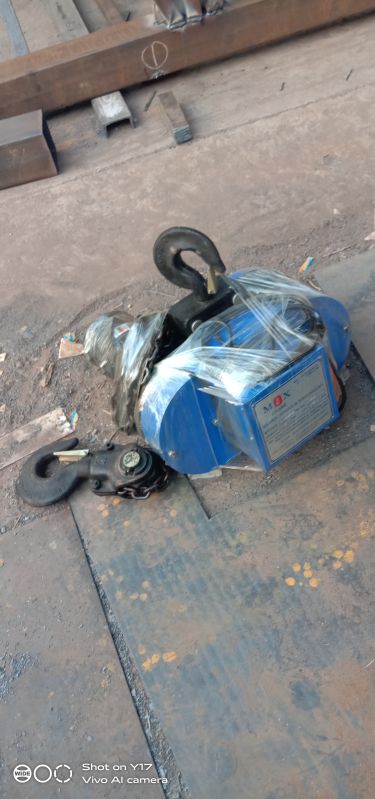
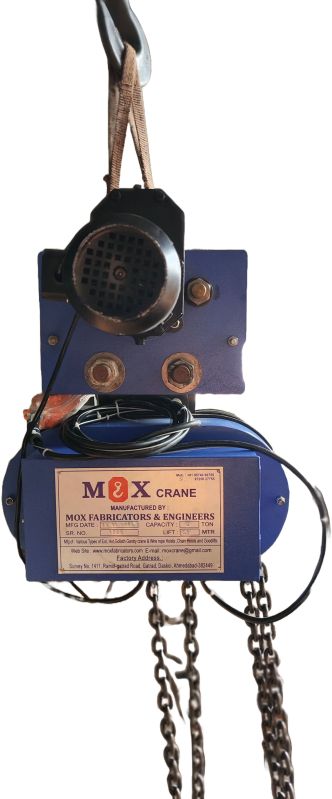
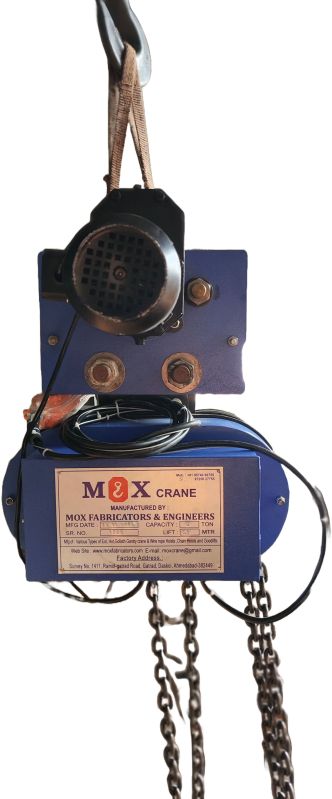
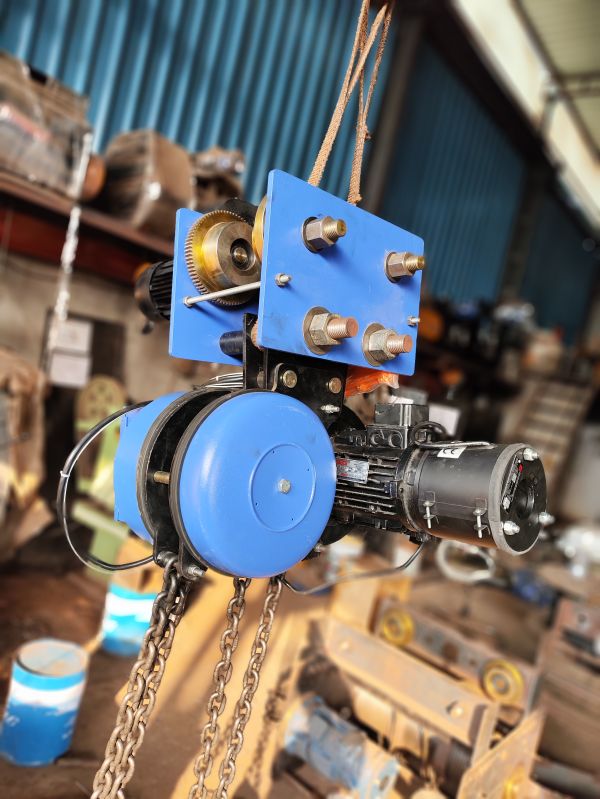
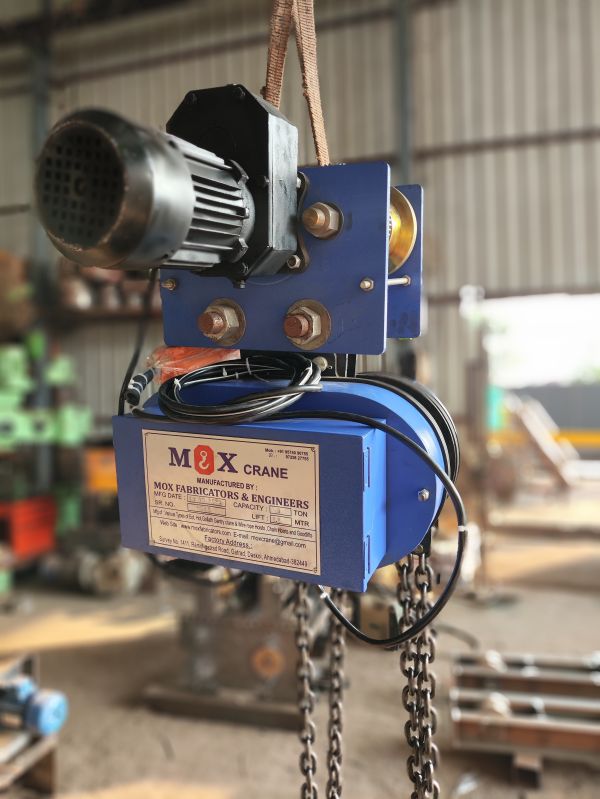
The MOX 1 Ton Chain Hoist is a type of mechanical lifting equipment designed to move heavy loads using a chain and pulley system. It is commonly used in industries such as construction, manufacturing, and warehouses for lifting or lowering heavy items. The "1 Ton" specification refers to the hoist\'s capacity, meaning it can safely lift a maximum weight of 1 ton (2, 000 pounds or 1, 000 kilograms).
\nKey features of a MOX 1 Ton Chain Hoist typically include:
\nManual or Electric Operation: Manual hoists require the user to pull on the chain to raise or lower a load, while electric hoists use an electric motor to perform the lifting operation automatically.
\nDurability: MOX chain hoists are usually built with robust materials to handle tough working environments and ensure long-term reliability.
\nSafety Features: Many hoists come with safety mechanisms, such as limit switches, overload protection, and braking systems to prevent accidents.
\nEasy Operation: The hoist typically includes a chain that users pull or a motor-driven mechanism to make lifting and lowering heavy loads smoother and more efficient.
\nAdditional Information:
Packaging Details : WOODEN BOX PACKING REQUIRED.
Delivery Time : 1-3 days

A motorized wire rope hoist is an industrial lifting device designed to lift heavy loads with the help of a wire rope and an electric motor. Unlike manual hoists, which require physical effort to operate, a motorized wire rope hoist uses an electric motor to raise and lower loads, making it more efficient for heavy-duty applications. Key Features of a Motorized Wire Rope Hoist: Electric Motor: The electric motor provides the power necessary to lift and lower the load, making the process faster and more efficient than manual operation. Motors are usually connected to a gearbox that helps in controlling the speed and torque of the hoist, allowing precise lifting and lowering. Wire Rope: A high-strength steel wire rope is used to lift the load. The wire rope is wound around a drum or a series of pulleys, allowing it to move vertically. Wire ropes are designed to handle large loads, making the hoist suitable for a variety of heavy lifting tasks. Load Capacity: Motorized wire rope hoists can typically handle a wide range of lifting capacities, from smaller hoists (around 1 ton) to heavy-duty models capable of lifting up to 100 tons or more. Trolley: The hoist is usually mounted on a trolley that runs along an overhead beam or rail system. This allows for horizontal movement of the load as well as vertical movement, enabling precise positioning of heavy objects. Trolleys can be motorized or manually operated depending on the application. Control System: Pendant control: A wired control is often used to operate the hoist from a safe distance. It allows the operator to control lifting, lowering, and trolley movement. Remote control: In some models, a wireless remote control system is available, which enables the operator to control the hoist from even further distances and reduces the risk of accidents. Limit switches: Safety limit switches are installed to prevent the load from moving beyond the safe limits of the hoist, preventing damage or accidents. Brakes: Motorized wire rope hoists typically include an automatic brake system that holds the load securely when the motor is not operating. The brakes are designed to engage quickly in case of a power failure or if the motor is turned off, ensuring the safety of the load. Speed Control: Some motorized wire rope hoists come with variable speed controls, which allow the operator to adjust the lifting speed based on the application’s requirements. This gives more precision when positioning loads. Components of a Motorized Wire Rope Hoist: Hoist Drum: The wire rope is wound around this drum as it is lifted or lowered. Motor: Powers the drum and the hoist system. Gearbox: Helps convert the motor’s rotational motion into lifting motion, controlling the speed and force applied to the load. Hook: Attached to the wire rope to lift the load. Safety Features: Including overload protection, emergency stop button, and limit switches to ensure safe operation. Types of Motorized Wire Rope Hoists: Monorail Hoists: These hoists are typically used on a single rail or beam, which limits the hoist to a specific direction of movement (usually horizontal). Double Girder Hoists: These hoists operate on a double beam system, which provides better stability and allows for higher lifting capacities and greater lifting heights. Under-slung Hoists: These are mounted underneath a beam or girder, ideal for locations where headroom is limited. Explosion-Proof Hoists: These are used in hazardous environments, such as chemical plants or oil rigs, where the potential for explosive materials or gases is high. They are designed to be safe under such conditions. Applications of Motorized Wire Rope Hoists: Manufacturing and Assembly Lines: Lifting heavy parts, machinery, or tools. Warehouses: Moving large packages or products. Construction Sites: Lifting heavy construction materials, such as steel beams, concrete panels, etc. Shipbuilding and Dockyards: Handling large sec
Additional Information:
Packaging Details : Wooden packing required
Delivery Time : 3-5 days

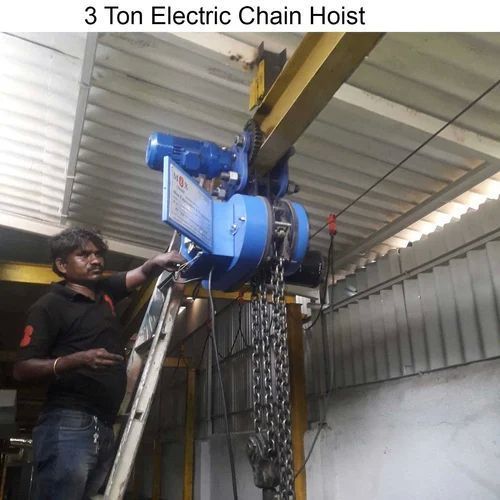
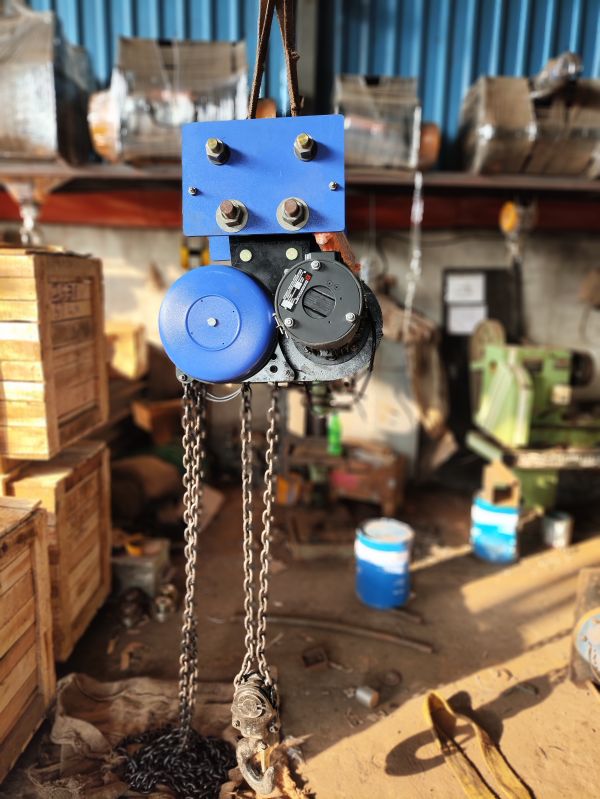
A Hook Suspension Chain Hoist is a type of hoisting equipment commonly used for lifting and lowering heavy loads in various industrial and construction settings. It operates using a chain as the lifting mechanism, with a hook used to suspend the hoist on a support structure or crane system. Chain hoists are popular due to their reliability, ease of use, and ability to lift heavy loads in tight or compact spaces.
\nKey Features of a Hook Suspension Chain Hoist:\n1. Design & Structure\nChain as the Lifting Mechanism: The hook suspension chain hoist uses a chain, which is wound around a drum or sprocket. When the motor or manual mechanism is activated, the chain is lifted or lowered, thereby raising or lowering the load attached to the hook.
\nSuspension Hook: The hoist is designed to be suspended from a fixed support structure or crane system via a hook. The hook serves as both a mounting point and a load attachment point.
\nManual or Electric Operation: Hook suspension chain hoists come in two primary forms:
\nManual Chain Hoist: This type requires manual effort to operate, usually by pulling on the chain to raise or lower the load.
\nElectric Chain Hoist: This type uses an electric motor to operate the chain, making it easier to lift heavier loads without manual effort.
\nHeavy Load Handling: Chain hoists are capable of lifting heavy loads, with capacities typically ranging from 500 kg (1 ton) to 20 tons or more, depending on the hoist model and design.
\nAdjustable Capacity: Some hook suspension chain hoists can be customized or equipped with additional chains to handle larger loads, making them versatile for different lifting needs.
\nManual Chain Hoists: In a manual chain hoist, the operator pulls on a chain to drive the lifting mechanism. The load is raised as the chain is pulled through a sprocket system. The operator then uses a brake to secure the load at the desired height.
\nElectric Chain Hoists: Electric versions are powered by an electric motor that drives the chain, allowing for more precise control over lifting and lowering. The motorized hoist includes controls to adjust the speed and direction of the lift.
\nSafety Brake System: Most modern chain hoists are equipped with an automatic braking system that ensures the load is securely held in place when the motor is turned off, preventing the load from slipping or falling.
\nIndustrial Applications: Hook suspension chain hoists are widely used in factories, warehouses, and manufacturing plants for lifting heavy equipment, materials, or products.
\nConstruction Sites: They are commonly used on construction sites to move building materials such as steel beams, cement bags, and large tools.
\nWorkshops and Repair Shops: In small workshops, garage or repair environments, manual chain hoists are often used for lifting engines, parts, and other equipment.
\nShipbuilding and Marine: In shipyards, hook suspension chain hoists are used to lift heavy components or ship parts.
\nMining: Used in mining operations to lift heavy mining equipment, tools, and materials.
\n\n
Cost-Effective: Manual chain hoists are generally more affordable than other types of hoists, making them a budget-friendly option for lifting tasks.
\nVersatile: Chain hoists can be used in a wide range of applications, from small workshops to heavy-duty industrial environments.
\nSpace Efficient: Hook suspension chain hoists are compact, and can be used in tight spaces where other lifting systems may not be feasible.
\nEase of Use: With simple mechanisms and user-friendly designs, they can be easily operated by workers with minimal training.
\nDurability: The chain and hook mechanism is known for its robustness and reliability, capable of handling tough lifting tasks.
\nAdditional Information:
Delivery Time : 5-7 days
A trolley chain hoist is a type of hoisting equipment used for lifting and lowering heavy loads, and it incorporates a chain-driven mechanism along with a trolley system for horizontal movement. This setup allows the hoist to be moved along a beam or track, providing flexibility for handling loads across a workspace, such as in industrial settings, factories, warehouses, and workshops.
\nKey Components of a Trolley Chain Hoist:\nHoist Mechanism:
\nTrolley:
\nChain Drive Mechanism:
\nMotor (for Electric Chain Hoists):
\nControl System:
\nBrakes:
\n
Additional Information:
Packaging Details : Wooden box packing required.
Delivery Time : 1-3 days


A monorail wire rope hoist is a type of lifting equipment mounted on a single rail (monorail) that moves horizontally, typically used in applications where space is limited, or a straight-line lifting path is required. These hoists utilize a wire rope to lift heavy loads vertically while being mounted on a rail system for horizontal movement. Key Features of Monorail Wire Rope Hoists: Single Rail System (Monorail): The term "monorail" refers to the fact that the hoist is mounted on a single beam or rail, which allows it to travel horizontally along a fixed path. The monorail system can be installed on either overhead beams or tracks along the ceiling of the work area, making it ideal for confined spaces or areas where a straight-line lifting solution is needed. Wire Rope Lifting Mechanism: The hoist uses a steel wire rope wound around a drum or pulley system. This wire rope is responsible for lifting and lowering heavy loads. The rope is designed for high strength and durability, capable of handling substantial loads while minimizing wear. Trolley: The hoist is mounted on a trolley that moves along the monorail, allowing the load to be transported horizontally across the work area. The trolley may be motorized or manually operated, depending on the application and load capacity. Motorized trolleys are commonly used for smoother and faster operations. Electric Motor: A powerful electric motor drives the hoist mechanism. The motor powers both the lifting and lowering of the load, as well as the horizontal movement of the trolley along the monorail. These hoists may be designed for high-duty cycles and robust enough to handle continuous operation in industrial environments. Load Capacity: Monorail wire rope hoists can handle a wide range of lifting capacities, from lighter loads (around 1 to 5 tons) to heavy-duty loads (up to 50 tons or more), depending on the model. The design and construction of the hoist and monorail rail system determine the maximum lifting capacity. Compact and Efficient Design: These hoists are designed to be compact and space-efficient, making them suitable for smaller industrial spaces where a larger, more complex system would not fit. The simplicity of the monorail system makes it cost-effective compared to other crane systems with more intricate designs. Safety Features: Overload Protection: Monorail wire rope hoists are typically equipped with overload protection to prevent lifting loads beyond the hoist’s rated capacity. Limit Switches: These prevent the load from traveling beyond its designated lifting or lowering limit, helping avoid damage to the hoist or work area. Emergency Stop: An emergency stop button allows for quick halting of the hoist in case of an emergency. Brakes: These prevent the load from falling when the motor is turned off or in case of a power failure. Components of a Monorail Wire Rope Hoist: Hoist Drum: The hoist drum is where the wire rope is wound. It is responsible for raising and lowering the load. Wire Rope: A strong, high-tensile wire rope is used for lifting the load. The rope is typically made from steel and is designed for maximum durability and strength. Motor: The electric motor drives the hoist drum and, in some cases, the trolley. The motor allows for smooth lifting and horizontal movement of the load. Trolley: The hoist is mounted on a trolley that runs along the monorail. The trolley may either be manually operated or powered, depending on the model. Brakes: The braking system holds the load securely in place when the hoist is not operating, preventing any accidental dropping of the load. Limit Switches: These are safety devices that stop the hoist at predefined positions, ensuring that the load doesn\'t travel beyond the safe range. Control Pendant: The operator controls the hoist using a pendant control system, which may be wired or wireless. This provides control over lifting, lowering, and horizontal move
Additional Information:
Packaging Details : Wooden box packing required
Delivery Time : 5-7 days


 Mr. Bhavesh Patel (Mox Fabricators & Engineers)
 Survey No 1411, Ramol - Gatrad Road, Ahmedabad, Gujarat - 382418, India
 https://www.moxfabricatorsandengineers.in
 Share us via