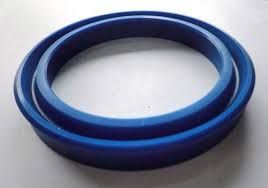
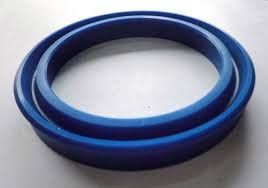
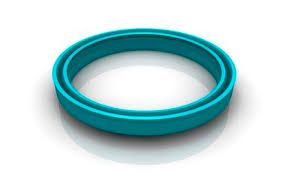
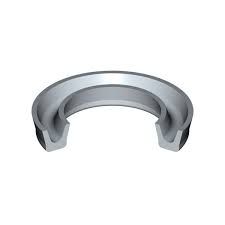
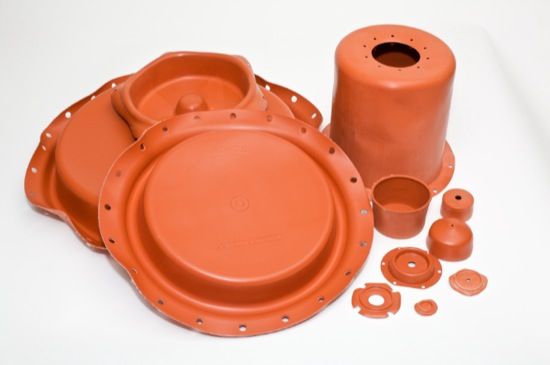
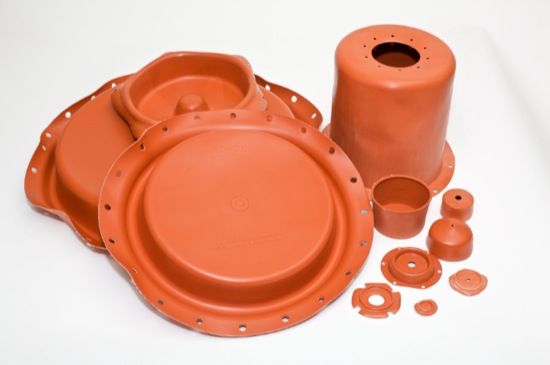
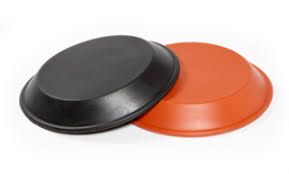
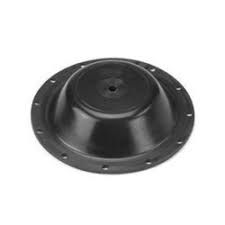
Our Seals has the following advantages :
- Excellent static and dynamic sealing
- Good back-pumping ability
- High wear resistance/operational reliability
- Good chemical resistance
- Can be used as an individual seal or as secondary seal within sealing systems
- Small cross sections possible
Silicone rubber withstands high and low temperatures far better than their organic rubber counterparts.
- Ability to be used continuously at 150°C (302° F) with virtually no change in its properties.
- Certain silicone compounds can withstand use even at 200°C (392° F) for 10, 000 hours or more.
- Some silicone rubber products can withstand heat upwards of 350°C (662° F) for short periods.
Silicone rubber also exhibits excellent resistance to cold temperatures.
- Embrittlement point for some silicone parts is between -60° to -70°C, (-76° to -94° F) (organic rubber is between -20° to -30°C, (-4 to -22° F)
- Some silicone products are able to withstand extremely low temperatures, keeping their elasticity at -100°C (-148° F) and below.
- Withstands high & low temperatures far better than organic rubber
- Good thermal stability
- Repels water & forms tight seals
- Excellent electrical insulation, no decline in insulation performance even when immersed in water, making it an ideal insulating material
- Flexible at low temperatures, stiffens up at higher temperatures
- Under ordinary pressure, contact with steam typically causes little or no deterioration
- Flame retardant, will not ignite easily. Some products received UL94 V-0 certification according to the UL94 (USA) standards for flammability classification.
- Unlike most organic elastomers such as EPDM and neoprene, the compression set of silicone rubber is consistent over a wide range of temperatures from -60° to +250°C. The selection of a proper curing agent and post-curing is particularly recommended when using silicone material to make molded products that require a low compression set.
- Customizable for specific applications by adjusting the compound recipe by selecting the proper curing agent and/or post-curing the compound to improve resistance to flames, steam & hot water (over 150C)
- Low chemical reactivity

 GST : 29BQTPS6855B1Z3
 Write a Review
 Mr. Shashidhar Prasad.S (Corel Synthetic Poly product)
 1-279, Sambrudi, Compound, Heroor Village & Post, Brahmavara, Udupi, Karnataka - 576213, India
 Share us via