 Abuja, Nigeria
 Write a Review
Our Product / Services
Our product range contains a wide range of Bitter Kola and Kola Nuts
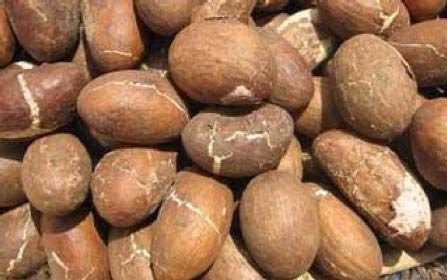
If seeking for the Bitter Kola of the pristine quality, then we are the global entity to look up to. We are ranked among the major Exporters and Suppliers of the Bitter Kola from Nigeria. Loaded with medicinal benefits, this Bitter Kola is thoroughly screened by our quality auditors to ensure complete compliance. Buy it from us at affordable prices.
Details :
Technical specification :
Applications : Garcinia kola or bitter kola is a tree that grows in the rain forests of west Africa. The fruit, seeds, nuts and bark of the plant have been used for centuries in to treat ailments from coughs to fever. According to a report from the Center For International Forestry Research, garcinia kola trade is still important to the tribes and villages in Nigeria. As with any herb, never consume garcinia kola without first discussing its use and benefits with your physician, especially if you are currently being treated for other medical conditions or are on any medications.
Special Features : Garcinia kola or bitter kola is a tree that grows in the rain forests of west Africa. The fruit, seeds, nuts and bark of the plant have been used for centuries in folk medicine to treat ailments from coughs to fever. According to a report from the Center For International Forestry Research, garcinia kola trade is still important to the tribes and villages in Nigeria. As with any herb, never consume garcinia kola without first discussing its use and benefits with your physician, especially if you are currently being treated for other medical conditions or are on any medications. Industries where this product is used - Pharmaceutical company
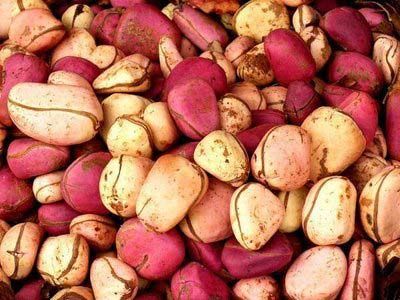
The company is a preeminent Supplier and Exporter of Kola Nuts. We source the Nuts from known vendors in the market. They are processed and packaged in hygienic conditions. To cater the diverse requirements of the buyers, we offer the Nuts in different packaging options. Buyers can obtain them at market-leading rates from us.
Technical specification : Dried mature red variety nuts of Cola nitida and Cola acuminata were purchased from three major markets noted for their wholesales with a view to a scertaining the quality of the nuts and generating a baseline data towards elaborating standards for the nuts. Dirt’s and other extraneous materials were removed from the sampled nuts and oven dried at 80° C for 16 h. The nuts were physically characterised and pulverised to powder. The proximate, chemical and mineral composition of the nuts was determined in addition to the microbal load and aflatoxin content. The shape of the two species of kola nut varied from flat to oval to spherical. In addition C. nitida had two big cotyledons while C. acuminata had on the average, 3 to 6 cotyledons. The mean length, breadth and thickness of C. nitida were 3.0, 2.0and 1.8 cm, while that of C. acuminata were 3.4, 2.73 and 2.31cm respectively . The colour of the two species of kola nuts was found to vary between white, red and pink while the proximate, chemical and mineral contents of C. nitida were higher than C. acuminata thus justifying its description as the true kola of commerce. The study further showed that kola nuts contain some active principles found in coffee and cocoa that have important pharmacological properties. The microbial load of the nuts were also within the permissible limit specified by the International Commission on Microbiological Specifications for foods and only two moulds species;Aspergillus flavus and Rhizopus arrhizus wereisolated from the kola nuts while the aflatoxin content was found to be less than 2 μg/kg.
Applications : The genus Cola belongs to the family Sterculiaceae (from which the nuts are obtained) is indigenous to tropical Africa and has its greatest diversity in West Africa (Asogwa et al., 2006). It grows into a tree form and it is cultivated to a large degree in Nigeria, Ghana, Ivory Coast, Brazil and the West Indian Islands (Ejinatten, 1973; Opeke, 2005). About fifty kola species have been described out of which only seven have edible nuts and only two have been commercially exploited: Cola acuminata (Beauvoir) Schott and Endlicher (“abata”) and Cola. nitida (Ventenat) Schott and Endlicher (“gbanja”) (Quarcoo, 1973; Daramola, 1978). In the forest areas of West Africa, kola is perhaps second in importance to the palm tree as an indigenous cash crop (Mokwunye, 2009). Kola is an important economic cash crop to a significant
 Mr. Lukman Komolafe (Lukom Integrated Services Ltd)Suite - A48, Efab Mall, Annex, Area - 11, Garki, Abuja - 23412, Nigeria
 Share us via