Our Products
Our offered Product range includes Wooden Cutting Boards, Sabai Grass Handicrafts Basket, Wooden Cutlery, Wooden Chopping Board and Burlap Aprons for Kitchen.

Locally procured, carefully crafted
Reusable, heavy duty, 100% natural jute burlap apron
Hand-crafted, durable, eco-friendly and biodegradable
Perfect for using while cooking/gardening
Hypoallergenic, breathable
Colours available on demand
Hand wash in cold water only, hang dry only
Our aprons come in two sizes
Our aprons have two chest pockets, each measuring 8.8 inches that are sewn slightly slanted so as to prevent things from falling out while you stoop to take something out of the oven or pick something up in your garden. You can use these pockets to keep condiment packs, recipe booklets, seasoning bags, sticky notes, mobile phones, pens, pencils etc. Similarly you can also keep small garden tools like gloves, hand pruners, hand trowels, etc.
Locally procured, locally crafted
Original style, attractive and unique
100% natural jute
Hand-crafted, durable, eco-friendly and biodegradable
Gusset on the sides and at the bottom
Colours made with 100% natural dyes
Hand wash only in cold water, hang dry only
SIZES: 20cmL x 10cmW x 20cmH
20cmL x 40cmW x 10cmH
10cmK x 40cmW x 10cmH
30cmK x 40cmW x 11cmH
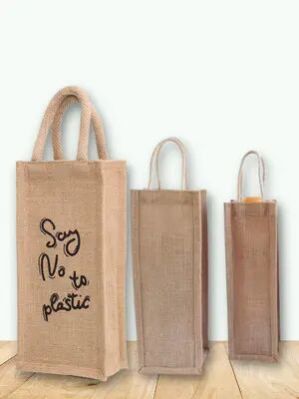
Got an occasion to celebrate? Going to your friends place for a party? Need a wine bag for poolside or beach parties, or for birthdays, picnics and weddings? A bottle of good wine is a memorable gift for any occasion, be it weddings, anniversaries, birthdays, promotions or thanksgiving. Like we need to dress for the occasion, so it is for your bottle of wine, and all you need to spruce up your gift is an eco-friendly wine bagthat would make the event worth remembering!
These hand-crafted 100% natural premium burlap (jute) bags are suitable for carrying wine bottles/water bottles. The interior has a fully vinyl lamination that gives protection against spillage or moisture. Gussets on the sides and at the bottom make them more spacious, sturdy and durable. Moreover if you keep a chilled bottle of wine in the bag, because its made of burlap, it helps retain the chillness of the bottle; so when you gift it to your friend, she or hed be able to instantly enjoy the chilled bottle of wine without having to put it in the refrigerator to cool it off before enjoying the first sip.
We also have fabric dividers in the bag that helps your wine bottles to stay upright and secure. The fabric dividers are removable which creates more room inside; you can also carry flowers, gift items, and art and craft materials, decorative items once you remove the fabric dividers. We use thick rope handles to give extra sturdiness to the product and also to ensure better gripping while you carry it in your hand. Our bags come in various sizes as per your requirement. You can gift these neatly crafted wine bags to your friends and loved ones as return gifts.
Elegant, modish and in vogue,
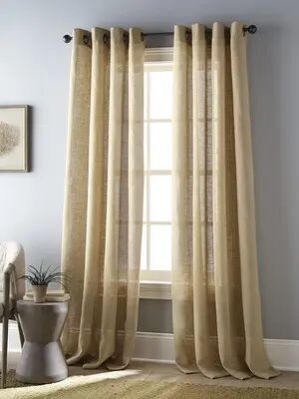
100% natural burlap curtains
Hand-crafted, durable, eco-friendly and biodegradable
Goes well with all types of finials
For 3 to 4 rod pocket
Colours made with 100% natural dyes
A variety of sizes and colours to chose from
Hand wash only in cold water, hang dry only
SIZE: 182.9cm L x 152.4cm W
A set of two curtains that would redefine the elegance and charm of your rooms; chic and fashionable, these drapes are just the right material youve been looking for to give an improved appearance to your rooms! Along with a rustic feel that they give to your rooms, they make the ambiance of your rooms very trendy. Likewise, the natural colour of jute goes very well with the furniture too.
Jute being a natural fibre, they allow fresh air to enter in the house thus keeping the rooms well ventilated and airy; additionally, once you draw them, they help dim the exterior light you can enjoy the privacy in the cosiness of your room. The rod pockets of the curtains are sewed to fit in 3 to 4 diameter rods. We usually do not provide curtain lining in our curtains unless you want to completely block the light.
You can also use them in shows on stages, in theatres, in photography studios, restaurants, conference halls, convention centres and in churches.
Burlap curtains are long-lasting and serve you for a long period of time. Suitable for all types and sizes of windows, you can specify the size and colours of your curtains and we can provide you with what you want.
We have a wide range of colours that you can choose from according to your taste and requirement. We use 100% natural dyes in our curtains which makes them truly sustainable

Locally procured, locally crafted
Original style, attractive and unique
100% natural jute
Hand-crafted, durable, eco-friendly and biodegradable
Goes well with all types of upholstery
Colours made with 100% natural dyes
A variety of designs and colours to chose from
Hand wash only in cold water, hang dry only
SIZE: 45cm x 45 cm
Our wide range of burlap cushion covers matches well with your interior and upholstery, giving your home a unique and trendy touch that would truly draw admiration from your loved ones, friends and colleagues. The characteristic of jute products is that they go well with all types of interiors, traditional and contemporary. Our jute is procured locally and is handcrafted into beautiful cushion covers by our local craftsmen who work meticulously to give your product that special feeling when you own and use them. The front portion of the cover is of 100% natural jute while the rear portion has a 100% cotton lining with 100% polyester fibre. We use premium quality zipper in our covers to make them last long and to ensure perfect fit and finish.
We also accept bulk orders.
SIZE: 45cm x 45 cm
Locally procured, locally crafted
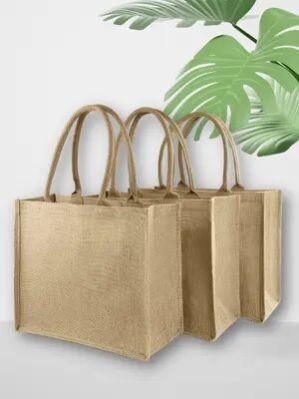
Reusable, heavy duty, 100% natural jute shopping bag
Hand-crafted, all purpose, durable, eco-friendly and biodegradable
Vinyl laminated inner section for waterproofing
Soft cotton handles
Gusset on the sides and at the bottom
Imprint area on both sides for customization
Imprints made with 100% natural dyes
A variety of colours to chose from
Hand wash in cold water only, hang dry only
This hand-crafted 100% natural burlap fabric (jute) shopping bag is your perfect companion for carrying heavy groceries; it can be truly handy while youre running errands. Sturdy, long lasting and durable are some of the major characteristics for jute tote bags and they are fit to be carried anywhere you go, be it shopping, carrying groceries, carrying bulky items from hardware stores, heavy books or for carrying stuff for your beach or poolside parties, for carrying school books, stationary, art and craft materials etc. We use good quality vinyl lamination in all our burlap bags so that you can continue using them for a long time. Due to the inner vinyl lining, you get an additional layer of protection for the stuff youre carrying; on top of that the laminated interior provide waterproofing and the gusset provide more room, more strength, and extra durability to the bags.We have used over the shoulder handles made of soft cotton in our shopping bags to ensure comfort while you use them, so as to relieve your shoulders from experiencing pain or any discomfort while carrying them.Jute being an eco-friendly product, these shopping bags are 100% biodegradable leaving minimal carbon footprint. This makes jute products an inseparable part of our daily activities. Additionally, to ensure that the entire process of fabrication stays natural, we use 100% natural dyes to print our bags.These bags are ideal giveaways and are the right choice for any promotional requirements, e.g. for advertising your company in trade shows and business events. The bags offer an area thats large enough to imprint your company logo, to highlight an event, e.g. fundraising, or any other information.
NOTE: Our company provides the options for blank bags of natural jute colour or custom printed bags in various colours as per your preference.
We also accept bulk orders.
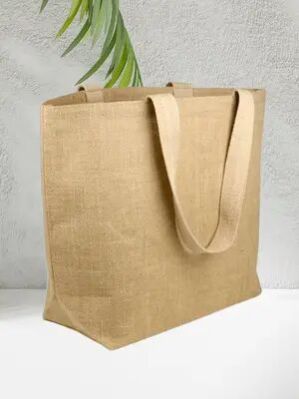
Locally procured, locally crafted
Reusable, heavy duty, 100% natural jute tote bag
Hand-crafted, all purpose, durable, eco-friendly and biodegradable
Jute strap handles
Gusset on the sides and at the bottom
Imprint area on both sides for customization
Imprints made with 100% natural dyes
A variety of colours to chose from
Hand wash in cold water only, hang dry only
SIZES: Small 46cmL x 35cmW x 14cmH
Medium 35cmL x 30 cmW x 14cmH
Large 30cmL x 25cmW x 13cmH
Ladies will truly appreciate the beauty and practicality of this hand-crafted 100% natural burlap fabric (jute) compact tote bags that are punctiliously handcrafted by our very own local artisans. This item surely steals the show, it being an artisanal model made of a fine weaving in hessian, a rustic material very popular worldwide due to its eco-friendliness. This simplistically designed tote bag stands on a wide, stable base having a square shape with topstitches. Its natural jute colour goes very well with your summer outfit. All our tote bags have a large pocket in the interior thats really convenient to store your personal belongings like cosmetics, make up kits, combs, compact mirror, hair bands and hair clips etc. Gussets on the sides and at the bottom make them more spacious, and give more strength and durability to your totes (fourre-tout).
Due to its robustness, it can be truly handy while youre running errands. It has the ability to contain all your purchases, be it shopping, carrying groceries or carrying any bulky items, documents, folders, stationary etc. Thanks to its over the shoulder double handles made of jute strap, you can comfortably carry them on your shoulders or in your hand.
Jute being an eco-friendly product, these tote bags are 100% biodegradable leaving minimal carbon footprint. This makes jute products an inseparable part of our daily activities. Furthermore to ensure that the entire process of fabrication stays natural, we use 100% natural dyes to print our bags.
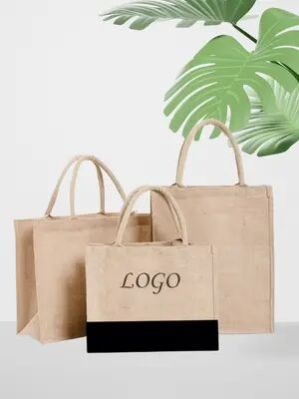
Locally procured, locally crafted
Reusable, elegant, 100% natural jute bag
Hand-crafted, all purpose, durable, eco-friendly and biodegradable
Vinyl laminated inner section for waterproofing
Soft rope handles
Imprint area on both sides for customization
Imprints made with 100% natural dyes
A variety of colours to chose from
Hand wash in cold water only, hang dry only
We also accept bulk orders.
This hand-crafted 100% natural premium burlap (jute) bag gives you a perfect opportunity to meet your customization requirements, be it advertisement for your business, event promotion, fundraising, personalized logo or message or any other similar activities. They can accompany you for fulfilling your shopping needs or for securely carrying your kids belongings like books, stationary, art and craft materials, small articles etc. Carry them along to your friends place, for poolside or beach parties, or for birthdays, picnics and weddings. These bags are ideal giveaways in business events, trade fairs, conference etc.
Jute being an eco-friendly product, these shopping bags are 100% biodegradable leaving minimal carbon footprint. This makes jute products an inseparable part of our daily activities.
We have two options for inner lining: vinyl lamination and cotton lining based on your preference. We use thick rope handles to give extra sturdiness to the product. Whats more, to further secure your belongings while you carry them, our customized bags have a strap attached on the top that can be closed for additional security. To ensure that the entire process of fabrication stays natural, we use 100% natural dyes to print our bags.
NOTE: Our company provides the options for blank bags of natural jute colour or custom printed bags in various colours as per your preference.
We also accept bulk orders.
LARGE SIZE: Large Size: 14.5 x 10.6 x 6.6
IMPRINT AREA: 11W x 8H
SMALL SIZE: 12.5 x 8.6 x 5.6
IMPRINT AREA: 11W x 6H

Locally procured, locally crafted
Reusable, elegant, 100% natural burlap drawstring bag
Hand-crafted, durable, eco-friendly and biodegradable Jute drawstring for greater durability
Imprints made with 100% natural dyes
A variety of sizes and colours to chose from
Hand wash in cold water only, hang dry only
We also accept bulk orders.
This hand-crafted 100% natural premium burlap (jute) bag gives you a perfect opportunity to meet your customization requirements, be it advertisement for your business, event promotion, fundraising, personalized logo or message or any other similar activities. They can accompany you for fulfilling your shopping needs or for securely carrying your kids belongings like books, stationary, art and craft materials, small articles etc. Carry them along to your friends place, for poolside or beach parties, or for birthdays, picnics and weddings. These bags are ideal giveaways in business events, trade fairs, conference etc.
Jute being an eco-friendly product, these shopping bags are 100% biodegradable leaving minimal carbon footprint. This makes jute products an inseparable part of our daily activities.
We have two options for inner lining: vinyl lamination and cotton lining based on your preference. We use thick rope handles to give extra sturdiness to the product. Whats more, to further secure your belongings while you carry them, our customized bags have a strap attached on the top that can be closed for additional security. To ensure that the entire process of fabrication stays natural, we use 100% natural dyes to print our bags.
NOTE: Our company provides the options for blank bags of natural jute colour or custom printed bags in various colours as per your preference.

Locally procured, locally crafted
Reusable, heavy duty, 100% natural JuCo bags
Hand-crafted, durable, eco-friendly and biodegradable
Vinyl laminated inner section for waterproofing
Soft cotton handles
Gusset on the sides and at the bottom
Imprint area on both sides for customization
Imprints made with 100% natural dyes
A variety of colours to chose from
Hand wash in cold water only, hang dry only
SIZE: 13.5 x 15 x 6
13.5 x 15 x 7
13.5 x 15 x 8
14 x 16 x 5
14 x 12 x 5
JuCo (Jute Cotton) bags are great picks for everyday use and they will never let you down in case you need to carry groceries, vegetables or bulky items from hardware stores, big books or for carrying stuff for your beach or poolside parties, for carrying school books, stationary, art and craft materials etc. Strong and resilient these bags would continue to be your constant companion for years to come. JuCo offers the best of both worlds the refinement of cotton and the sturdiness of jute. Together they make a perfect bond to offer you what you deserve versatility, reliability and strength and cost-effectiveness. Jute and cotton both being natural fibres, these shopping bags are 100% biodegradable leaving minimal carbon footprint. This makes JuCo products an inseparable part of our daily activities.
When you use JuCo bags, you get the reassurance that they wont snap or get damaged easily; our bags are 75% jute and 25% cotton; we use soft loop handles made of JuCo to ensure comfort gets the priority while you use them. Moreover to ensure that the entire process of fabrication stays natural, we use 100% natural dyes to print our bags. All our bags have cotton lamination in the interior giving them a smooth and refined feel both from outside as well as from inside.
We have two options JuCo bags with sides and bottom gussets and without gusset; also we have options of zipper on top and without zipper depending on what our clients demand from us.
These bags are ideal giveaways and are the right choice for any promotional requirements, e.g. for advertising your company in trade shows and business events. The bags offer an area thats large enough to imprint your company logo, to highlight an event, e.g. fundraising, or any other information.

Locally procured, locally crafted
Reusable, elegant, 100% natural jute bag for laptop
Hand-crafted, durable, eco-friendly and biodegradable Vinyl laminated inner section for waterproofing
Zipper on top
Jute strap and handles
Imprints made with 100% natural dyes
A variety of colours and sizes to chose from
SIZE: 17.5 x 13.2 x 2.2
Elegant and chic in appearance, our laptop bags are handcrafted assiduously giving them a truly charming and stylish look. Their fine craftsmanship is surely an eye catcher for everyone around. The bag provides you with enough space to carry your belongings. We have a padded inner compartment specially made to help carry your 15 laptop in a secured manner. We also have a provision of a small compartment inside the bag where you can securely keep your mobile phone. This compartment is lockable. We have also provided 2 slots in which you can keep your pens/pencils. Waterproof material has been used in the interior compartment to protect your belongings from getting damaged due to rain or spilling of water or any other liquid.
In the exterior, our laptop bags have 2 zipped compartments in the front and 1 zipped compartment at the rear for keeping small articles like pencils, pens, papers, documents, visiting cards etc. We use premium quality zippers in all our products for quality assurance and hassle-free user experience.
The adjustable shoulder strap is made of jute; the handles too, are made of jute having cord inserts and are sewn in a structure so as to ensure easy and comfortable gripping.
Keeping in mind the trend these days, we have the option of natural jute colour as well as various colours as per the choice of our esteemed clients. We even handcraft custom made laptop bags of different sizes based on requirement.

Locally procured, locally crafted
Reusable, elegant, 100% natural jute bag
Hand-crafted, durable, eco-friendly and biodegradable Vinyl laminated inner section for waterproofing
Zipper on top
Soft rope handles
Imprints made with 100% natural dyes
A variety of colours to chose from
Hand wash in cold water only, hang dry only
SIZE: 9 x 6 x 3
Carry your lunch to your office, school or college in style in our hand-crafted 100% natural burlap (jute) lunch bag that has been skilfully crafted to make you stand out from the rest. We offer you a range of trendy imprints or you have the option of customizing your own logo/slogan as well. To ensure that the entire process of fabrication stays natural, we use 100% natural dyes to print our bags. Jute being an eco-friendly product, these shopping bags are 100% biodegradable leaving minimal carbon footprint. This makes jute products an inseparable part of our daily activities.
The inner layer is vinyl laminated to prevent spilling. Moreover, since its made of burlap, it helps retain the warmth of your foodstuff for a longer duration; so when you open your lunchbox, you get a warmer, healthier, satiating meal before you.
We have provided 2 compartments in this bag one large section for keeping your lunch box and a smaller compartment for keeping spoon/knife/fork and hand tissues. Soft padded handles attached on both sides help in comfortable gripping. Premium quality zipper is attached on the top part of the bag for securing the articles kept inside and for giving a trendy look. You can use this bag for any other purpose you like.
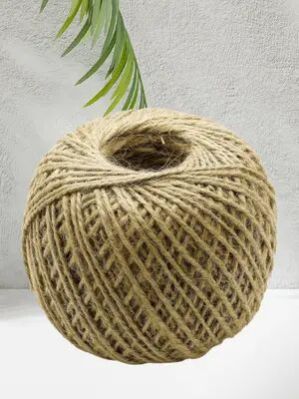
Locally procured, locally crafted
Reusable, heavy duty, 100% natural jute yarn
Durable, eco-friendly and biodegradable
Light in weight with high tensile strength
High in demand in various industries
Our jute twine comes in spool form of 50 gm., 100gms, 200 gm, 500 gm and 1000 gm per spool.
Jute is a 100% natural bast fibre thats extremely durable, light in weight and has high tensile strength due to which is has a high demand across industries including arms and ammunitions, carpet manufacturing, home decor and lifestyle products manufacturing, fashion, horticulture, packaging, shipping and logistics, textile and garments and animal care., to name a few. Our vendors from whom we procure our yarns, twines, threads and ropes are reliable and trustworthy who guarantee that you get the best in quality. In addition, jute is a fibre can be spun easily into jute yarn and twine which are manufactured by spinning natural jute fibres together.
Jute yarn plays a predominant role in the production of diversified jute products. Jute yarn and jute twine are used for weaving and knitting jute fabric that are used for making burlap bags, gunny sacks etc. Jute yarns, twines, threads, ropes are also used in the agricultural and horticultural activities for tying and binding purposes.
Jute yarns can be classified based on their application and usage fine yarns, carpet yarns, sacking yarns, hessian yarns, warp yarns, weft yarns etc. Our jute yarns come in multiple lbs. and ply 4.8 lbs., 6 lbs., 8l lbs., 9.5 lbs., 10 lbs., 11 lbs., 12 lbs., 13 lbs., 16 lbs. and 28 lbs. and in single, two or three ply. Jute fine yarns are widely used for weaving jute carpets, rugs and mats. They are also used for sewing, tying, packing etc. Packaging jute yarns are used in manufacturing sewing threads. Our jute yarns, twines and threads come in various colours too depending on the requirement of our clients.
Jute twines are used in repairing and sewing hessian sacks, for household activities, in art and crafts etc.; we offer twines in different lengths, sizes and dimensions. Our jute twine comes in spool form of 50 gm., 100gms, 200 gm, 500 gm and 1000 gm per spool.
Our jute ropes are strong and have high load-bearing capability; they suitable for binding and packing commodities and parcels, for household requirements etc.

Locally procured, locally crafted
Reusable, heavy duty, 100% natural jute lampshade
Hand-crafted, durable, eco-friendly and biodegradable
Perfect for home decor
Can be fitted to tall floor lamps or bedside table lamps
Colours available on demand
Hand wash in cold water only, vacuum or dry clean
SIZE: 41 cm L x 41cm B x 25 cm H
22.8 cm L x 20.32 x 10 cm H
The jute we used in our lampshades is 100% natural that are procured locally. Our jute lampshades define the taste and sophistication that you want to add to your home decor and they enhance the trendiness of your interiors; choose our range of lampshades which are available in various shades and shapes that complement your mood. Jute lampshades are a perfect blend of rusticity and royalty that contributes uniqueness to the overall ambience to your rooms. They go exceptionally well with our range of our burlap cushion covers; theres no denying the fact that your friends and relatives would go gaga over your keen eye for unparalleled elegance when you add them to your home decor!
Being a natural fibre, jute is easy to maintain. It stays unaffected year after year and continues providing your interiors that distinguished look which is admired by all you friends and relatives calling on you. Occasionally jute might have random blemishes which are quite natural; these blemishes add on to their unique embellishment on the whole.
We offer a variety of shapes and sizes of lampshades to choose from conical, oval, cylindrical and rectangular.
We use steel frames with epoxy coating on them that ensures higher durability and environment friendly. Also these frames are easy to clean and have a higher resistance to corrosion and degradation that make them last longer.

Locally procured, locally crafted
Reusable, heavy duty, 100% natural
Hand-crafted, durable, eco-friendly and biodegradable
Stylish design with two handles for easy mobility
Available in round and rectangular shapes
Imprints made with 100% natural dyes
Colours and designs available on demand
Hand wash in cold water only, vacuum or dry clean
SIZE: 40cmH x 40cmD. Volume: 54 Litres
36cmL x 36cmW x 44cmH. Volume: 45 Litres
Our laundry baskets are made of 100% jute thats handcrafted with utmost care by our skilled craftsman. These laundry baskets are great not only in storing your everyday used laundry, but it also gives that bohemian touch to your home as jute as a product has a rustic appeal, that merges perfectly with all kinds of interiors. Due to the natural colour of jute which is an earthy tone, it has its own charm and appeal.
Jute being an eco-friendly product, these baskets are 100% biodegradable leaving minimal carbon footprint. This makes jute products an inseparable part of our daily activities.
The handles on both sides are also made of jute and theyre strong enough to help you effortlessly move the basket from one place to another. The basket has sufficient space for your used and dirty laundry which can be stored inside. The inner surface of our laundry baskets is moisture resistant fitted with a waterproof PE coating lining so that you can store dry as well as wet laundry in them. Being moisture resistant, they are more durable and last longer too.
If you want to use your laundry basket for some other purpose e.g. storing and organizing clothes, childrens toys, pet grooming accessories, art and craft materials, baby clothing, diapers, etc. in them then you can do so as well. In addition, it has a cover that can be put on top to prevent dust from entering your basket.
They can be washed easily by hand with cold water and mild detergent; otherwise they can be vacuumed or dry-cleaned.
Our baskets are foldable and fully collapsible and you can stow them when not in use.

Locally procured, locally crafted
Reusable, heavy duty, 100% natural wooden/bamboo fan
Hand-crafted, durable, eco-friendly and biodegradable
Hand-held, portable and foldable
Imprints on jute covers made with 100% natural dyes
Jute covers to be hand washed in cold water and hang dry only
SIZE: 50 cm x 25 cm x 37 cm
38.1 cm x 3.8 cm x 22.9 cm
10 cm x 7 cm x 5 cm
Our handheld fans are made with natural wood; we use no varnish, paint of any sort or treat them with chemicals so as to ensure that they retain their natural rustic feel. Other than natural wood, we also make handheld fans made of good quality locally procured bamboo.Handmade with care and warmth by our artisans, whose adeptness give that exceptional feel to their creations, these fans are crafted specially for you and are perfect to carry during warm summer days or in parties, weddings and stage shows. Along with elegance and royalty, compactness and portability are two major highlights of this product. They fold easily and can be tucked away easily into your handbags. To store them in a proper manner, we recommend that you keep them inside our simple and classically designed drawstring jute covers that come with them. These jute bags are made of 100% natural premium quality burlap fitted with jute drawstrings. The drawstrings we used in these bags are durable and are well stitched so as to ensure easy opening and closing.
NOTE: Our company provides the options for handheld natural wooden as well as bamboo fans; similarly we have the option of jute covers in natural jute colour or custom printed in various colours as per your preference.
SIZE: 50 cm x 25 cm x 37 cm38.1 cm x 3.8 cm x 22.9 cm10 cm x 7 cm x 5 cm

Locally procured, locally crafted
Exquisite, superior quality stone selection
Carefully hand-crafted with dedication
An unmatched variety of stone artwork products to chose from
100% satisfaction or our valued clients
Our handcrafted sculptures are made of white marble, black marble, sandstone, jade, kadappa stone, pink stone, red stone; they are used for making figurines of gods and goddesses, small bowls used for keeping sandalwood paste, and other articles used for religious purposes during pujas; additionally, its used in the construction of temples where even deities are made of marble. Stone figurines and sculptures are quite popular for home dcor; there are innumerable varieties of stone art items to choose from. When you decorate your interior with these sculptures, they transform the entire ambience of your rooms, creating an elegant, graceful, refined and holistic atmosphere.
Stones are even used in curving cookware and kitchenware like cooking vessels (Kalchatti) and containers made of soapstone, utensils made of habur stone, marble rolling board and rolling pin, mortar and pestle, chopper board, stone pots and pans to name a few. All our stone handicraft products are made of stones that are meticulously selected and our artisans work on them to give them the desired shape and finish they deserve. The craftsmanship of our stone handicrafts is unparallel and owning them is truly a matter of pride and a feeling of satisfaction. They can be a These intricately crafted artworks are a classic example of the refinement and finesse of Indian stone handicrafts.

Locally procured, locally crafted
Hand-crafted using good quality hardwood
Long-lasting, reusable, durable and bio-degradable
Bad conductors of heat, so easy to hold
Easy to cook, easy to clean and care for
Safe for human health as wood is naturally antimicrobial
An assortment of wooden cutlery to chose from
Wood: Neem wood, Mango wood, Acacia wood, Rosewood
Our entire ranges of wooden cutlery items are light in weight with thick handles for easy grip. We have wooden spoons of different sizes, forks, salad forks, slotted spatula, flipping spatula, single hole mixing spoon, slotted spoon, non-slotted spoon, ladles that are made of 100% natural hardwood. They are all made from a single block of wood so that there are no joint or cut marks. Our craftsmen smooth them conscientiously with sandpaper, giving them that refined, elegant look. Frankly speaking, youd lovingly allow them entry into your kitchen and use them for your everyday cooking. They are totally safe to use and works great with non-stick, stainless steel, cast iron or ceramic cookware.
To prolong their lifespan, use warm water and mild dishwashing soap to clean them, and then let them out to air dry. Do not leave your wooden utensils soaked in water for long duration as that would adversely affect them, causing them to soften and rot. Do not put them in dishwashers. After they dry out, apply some natural oil on them, and theyd continue serving you for years to come.
Wood: Neem wood, Mango wood, Acacia wood, Rosewood

Locally procured, locally craftedHand-crafted using good quality food grade hardwoodLong-lasting, reusable, durable and bio-degradableEasy to use, easy to clean and care forSafe for human health as wood is naturally antimicrobialAn assortment of wooden cutting boards to chose from
Wooden: North Indian Rosewood, Mango wood, Acacia, Teakwood
NOTE: We also manufacture cutting boards of customized sizes as per your requirement.DIMENSION: 17 Inches L x 12 Inches W x 1.2Thick (standard size)
Cutting boards are quintessential for every kitchen, be it for domestic or commercial purpose. They are ideal for chopping or julienning vegetables, or for cutting fruits cheese and breads. These handcrafted cutting boards made with precision have a unique texture and colour that add to their elegance and charm. Wood is far and away the best material for making cutting boards. Durable, yet easy on knives, our boards are resistant to deep gouging. They have a smooth texture yet they arent slippery. They are sturdy and have the ability to withstand shocks.
Our craftsmen prefer acacia and teakwood for fabricating cutting boards as these woods are durable and naturally resistant to moisture. Their other two choices are either mango wood or north Indian rosewood which are equally in demand by our esteemed clients. They make sure that the wood used is dried for at least 90 days and is sterilized to provide you the protection you and your family deserve. These boards are easy to use and can be cleaned easily as well. They are reversible, meaning both sides of these boards can be used. Both the surfaces have a wide and smooth texture having handles on both sides to help you lift and move them effortlessly. Our cutting boards are free from any sort of glue and harmful or toxic finish; hence they are 100% safe for you and for your loved ones. They are useful products to gift to someone you love and care for. Your hostess would appreciate this gift of yours throughout her lifetime!
To prolong their lifespan, use warm water and mild dishwashing soap to clean them, and then let them out to air dry. Do not leave your wooden cutting board soaked in water for long duration as that would adversely affect them, causing them to soften and rot. Do not put them in dishwashers. After they dry out, apply some natural oil on them and store them in an upright position. We hope youd enjoy using our product as much as we enjoy creating them.
Wooden: North Indian Rosewood, Mango wood, Acacia, Teakwood
NOTE: We also manufacture cutting boards of customized sizes as per your requirement.
DIMENSION: 17 Inches L x 12 Inches W x 1.2Thick (standard size)
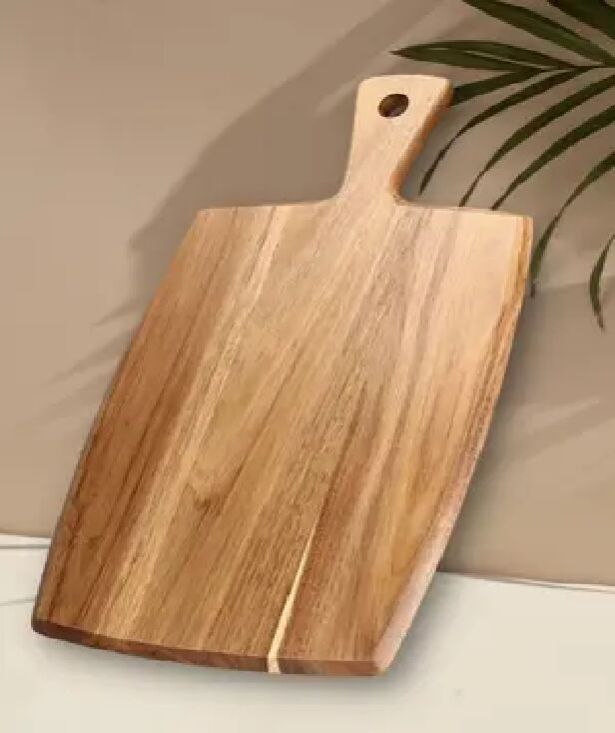
Locally procured, locally craftedHand-crafted using good quality food grade hardwoodLong-lasting, reusable, durable and bio-degradableEasy to use, easy to clean and care forSafe for human health as wood is naturally antimicrobialAn assortment of wooden serving boards to chose from
Wooden: North Indian Rosewood & Mango wood
SIZES: 16 Inches L x 12 Inches W x 0.5 Inches Thick17 Inches L x 7 Inches W x 0.5 Inches Thick17 Inches L x 6 Inches W x 0.5 Inches Thick17 Inches L x 5 Inches W x 0.5 Inches Thick
Like our cutting boards, we have different varieties of serving boards, that too of different colours, sizes and shapes. They can be put to use for serving as well as for cutting, chopping and julienning. These serving boards are known for their sturdiness and durability and are ideal for serving fruits, olives, nuts, sushi, pizza, rolls, breads, jams and jellies, sandwiches, cheese, appetizers and meat preparations to your guests. Our boards are modern looking and offer that touch of finesse to your kitchen. These serving boards have a fine texture and have a premium look. So when you serve your special delicatessen on these serving boards, they become all the more presentable and palatable for your friends and family.
Along with north Indian rosewood and acacia, we also use mango wood for making our serving boards. All serving boards we make are hand curved from a single piece of wood so that they have no joint or cut marks; this gives uniformity in their texture. Our skilled craftsmen smooth them using sandpaper, giving them that touch of elegance and refinement. All cutting boards are fitted with easy-grip handles with a hole on the top for easy hanging on the wall.
Durable, yet easy on knives, our boards are resistant to deep gouging. They are sturdy, easy to use and can be cleaned easily as well. They are reversible meaning both sides of these boards can be used. Both the surfaces have a wide and smooth texture. Our serving boards are free from any sort of glue and harmful or toxic finish; hence they are 100% safe for you and for your loved ones.
With proper usage and care, theyd last a lifetime. You can even gift them to your friends and family members on birthdays, weddings, housewarming parties, Mothers Day and theyd cherish the gift
To clean them use warm water and mild dishwashing soap, and then let them out to air dry. Do not leave your wooden serving board soaked in water for long duration as that would adversely affect them, causing them to soften and rot. Do not put them in dishwashers. After they dry out, apply some natural oil, like coconut oil on them and store them in an upright position.
Wooden: North Indian Rosewood & Mango wood
SIZES: 16 Inches L x 12 Inches W x 0.5 Inches Thick17 Inches L x 7 Inches W x 0.5 Inches Thick17 Inches L x 6 Inches W x 0.5 Inches Thick17 Inches L x 5 Inches W x 0.5 Inches Thick

Locally procured, locally crafted
Hand-crafted using good quality food grade hardwood
Long-lasting, reusable, durable and bio-degradable
Easy to use and easy to clean
Safe for human health as wood is naturally antimicrobial
An assortment of wooden serving trays to chose from
Our handcrafted wooden serving trays can not only be used for serving purpose but they are also considered as items of home dcor because of their unique and superior craftsmanship. Their mlange of rusticity and modernity is the main reason for their popularity among our esteemed clients.We use wood of varied types for crafting our serving trays, like mango wood, north Indian rosewood, teakwood, acacia and hard maple. The woods we source are seasoned and all are grown in India. Their quality is unquestionable and we ensure that they continue serving you for years and dont become a liability for you. We care for our creations and our craftsmen handcraft them with utmost diligence. The trays are carefully hand polished with sandpaper to give them a smooth and even texture; during their fabrication special care is taken so that they dont have any sharp edges, so when you hold them, you get the feel of that dedication with which theyre created. These elegant looking trays are fitted with sleek and stylish wooden or rope handles on both side that are ergonomic and easy to hold, so the question of discomfort while you carry food or drinks in them is beyond question.These serving trays are a good investment and would last you a lifetime if handled and cared for properly. You can put them to use for carrying food, beverages and other things around your home, and even use them as a graceful base for displaying your home dcor items like brass or bronze statuettes and showpieces, terracotta figurines, stone statues etc. They look wonderful anywhere you keep them at home, be it in your bedroom or in you drawing room, your dining area or kitchen, these wooden trays add to your style statement and enhance the aesthetics of your interiors. They are able to withstand all heavy-duty activities and are equally suitable in commercial environments that demand sturdiness and durability. Furthermore, we also ensure that the wood on the sides of our trays are high enough to accommodate anything thats slightly bulky which prevent them from slipping and falling off.These trays are not to put in ovens, or exposed too much in direct sunlight or else the wood might fade and lose its lustre. Similarly soaking in detergent water or cleaning with bleach is absolutely not advisable. We are not in favour of polishing these serving trays as synthetic wood polishes are not safe for humans, rather we encourage you to wipe them with soft, clean cloth and then apply some natural oil to nourish the wood.Our trays come in a variety of shapes and sizes so theres one for everyone! We have rectangular, square, oval, round, boat shaped, cinnamon shaped serving trays that can be used for various purposes and on different occasions. Youll need them during breakfast, during visits by guests and loved ones, during kitty parties and even during your kids birthday parties. Their appeal is due to their premium yet natural look and smooth texture; for everyday use like serving all kinds of beverages and snacks, these trays are just awesome. Serve freshly baked cakes, breads, pastries, cup cakes in these trays and your little ones would love them all the more. They can be perfect gifts for anniversaries, marriages, housewarming and birthdays, Christmas, Thanksgiving, Valentines Day, or Easter.
SIZE: 16 inch L x 12 inch W x 2 inch H15.7 inch L x 11.8 inch W x 2 inch H13 inch L x 10 inch W x 2 inch H12 inch L x 12 inch W x 2 inch H9 inch L x 9 inch W x 2.5 inch H7 inch L x 7 inch W Lx 2.5 inch H5 inch L x 5 inch W x 2.5 inch H


Locally procured, locally crafted
Reusable, heavy duty, 100% copper bottles
Fondly and carefully hand-crafted
Beneficial for overall well-being
Helps in getting rid of toxicities in human body
A variety of colours to chose from
Wash with cold water only
NOTE: Our copper bottles are available in 300ml, 600ml, 750ml and 1 litre quantities.We manufacture copper bottles of original copper colour as well as customizedbottles in various colours, designs and shapes as per your preference.
Bharat or India, the name shes known worldwide, has the oldest system of natural medicine in the world, called AYURVEDA The termAYURVEDA is derived from the Sanskrit wordsayur(life) andveda(science or knowledge). In other words, its the knowledge of life. According to AYURVEDA, all diseases that we suffer from are the direct outcome of certain imbalance or stress in a persons consciousness. Thus AYURVEDA lays stress on certain therapies and bringing about certain changes in our lifestyle to maintain a balance between the body, mind, spirit, and the environment. According to AYURVEDA, in order to strike a perfect balance one needs to begin with the internal purification process first. AUYRVEDA states that there are three types of energies /forces calleddoshasand eachdosharegulates and controls a part of our physical functions related to the body, mind and spirit (trinity). The threedoshasareVata, PittaandKaphaand the three deternine a persons physical, mental and emotional health.
Saints in ancient India stressed on drinking water stored in copper vessels to balance the threedoshasin our body. Water stored in copper vessels orTamra Jalhas innumerable health benefits. The properties of copper get infused into the water thats stored in it and it becomes natural alkaline water that helps in balancing the pH level of our body. Copper acts as a natural disinfectant and the water stored in it become free of germs and bacteria. Not only does copper water fortify the immune system, it also helps in improving the cognitive abilities by stimulating the brain and supports growth and neurodevelopment. Copper water acts as a preventer of osteoporosis, supports formation of red blood cells; copper water is antioxidant which wards off free radicals and eliminates its harmful effects. Its noteworthy to mention here that free radicals, in spite of their very less lifespan, can damage the DNA; this can trigger mutations that increase the risk of having heart disease and cancer.
In her attempt to revive the ancient knowledge of AYURVEDA, we want to make the world aware of the benefits of consuming water stored in copper vessels. To get maximum benefit, one should store plain water in the copper bottle for at least eight hours before drinking it in empty stomach being in a seated position. Before using it for the first time, please ensure to wash it with warm water to wash away any residue/ dust.
The bottles we manufacture are made of 100% recycled copper thats cut from a single copper sheet and then given the desired shape by our experienced artisans who use traditional methods for nurturing their creation. The bottle caps are of pure copper that are leak proof; weve fitted the caps with silicon washers for making them watertight. These bottles are aesthetically attractive and are available in various shapes, sizes, designs and colours. We also manufacture copper jugs, copper tumblers and copper goblets.
Theres a bottle for everyone to choose from! So make copper bottles a part of your quotidian life and experience the health benefits for yourself!
Warning: ONLY STORE PLAIN WATER IN COPPER BOTTLES; NEVER POUR TEA, COFFEE, FRUIT JUICE, MINERAL WATER OR CARBONATED WATER IN THESE BOTTLES.
DO NOT PUT YOUR COPPER BOTTLE INSIDE THE DISHWASHER.Cleaning the exterior: Take a slice of lemon, put a pinch of salt, some white vinegar and a bit of sodium bicarbonate on it and use it to clean the outer surface of the bottle.Cleaning the interior: Take lukewarm water and pour some liquid soap in it, then pour it in your bottle and shake it well; next drain the soapy water and pour clean water to rinse it thoroughly again. Please note that copper bottles do not require as much cleaning as plastic bottles as copper has the quality self-sterilization.
NOTE: Our copper bottles are available in 300ml, 600ml, 750ml and 1 litre quantities. We manufacture copper bottles of original copper colour as well as customized bottles in various colours, designs and shapes as per your preference.

Locally procured, locally crafted
Reusable, heavy duty, 100% copper bottles
Fondly and carefully hand-crafted
Beneficial for overall well-being
Helps in getting rid of toxicities in human body
A variety of colours to chose from
Wash with cold water only
Bharat or India, the name shes known worldwide, has the oldest system of natural medicine in the world, called AYURVEDA The termAYURVEDA is derived from the Sanskrit wordsayur(life) andveda(science or knowledge). In other words, its the knowledge of life. According to AYURVEDA, all diseases that we suffer from are the direct outcome of certain imbalance or stress in a persons consciousness. Thus AYURVEDA lays stress on certain therapies and bringing about certain changes in our lifestyle to maintain a balance between the body, mind, spirit, and the environment. According to AYURVEDA, in order to strike a perfect balance one needs to begin with the internal purification process first. AUYRVEDA states that there are three types of energies /forces calleddoshasand eachdosharegulates and controls a part of our physical functions related to the body, mind and spirit (trinity). The threedoshasareVata, PittaandKaphaand the three deternine a persons physical, mental and emotional health.
Saints in ancient India stressed on drinking water stored in copper vessels to balance the threedoshasin our body. Water stored in copper vessels orTamra Jalhas innumerable health benefits. The properties of copper get infused into the water thats stored in it and it becomes natural alkaline water that helps in balancing the pH level of our body. Copper acts as a natural disinfectant and the water stored in it become free of germs and bacteria. Not only does copper water fortify the immune system, it also helps in improving the cognitive abilities by stimulating the brain and supports growth and neurodevelopment. Copper water acts as a preventer of osteoporosis, supports formation of red blood cells; copper water is antioxidant which wards off free radicals and eliminates its harmful effects. Its noteworthy to mention here that free radicals, in spite of their very less lifespan, can damage the DNA; this can trigger mutations that increase the risk of having heart disease and cancer.
In her attempt to revive the ancient knowledge of AYURVEDA, we want to make the world aware of the benefits of consuming water stored in copper vessels. To get maximum benefit, one should store plain water in the copper bottle for at least eight hours before drinking it in empty stomach being in a seated position. Before using it for the first time, please ensure to wash it with warm water to wash away any residue/ dust.
The bottles we manufacture are made of 100% recycled copper thats cut from a single copper sheet and then given the desired shape by our experienced artisans who use traditional methods for nurturing their creation. The bottle caps are of pure copper that are leak proof; weve fitted the caps with silicon washers for making them watertight. These bottles are aesthetically attractive and are available in various shapes, sizes, designs and colours. We also manufacture copper jugs, copper tumblers and copper goblets.
Theres a bottle for everyone to choose from! So make copper bottles a part of your quotidian life and experience the health benefits for yourself!
Warning: ONLY STORE PLAIN WATER IN COPPER BOTTLES; NEVER POUR TEA, COFFEE, FRUIT JUICE, MINERAL WATER OR CARBONATED WATER IN THESE BOTTLES.
DO NOT PUT YOUR COPPER BOTTLE INSIDE THE DISHWASHER.Cleaning the exterior: Take a slice of lemon, put a pinch of salt, some white vinegar and a bit of sodium bicarbonate on it and use it to clean the outer surface of the bottle.Cleaning the interior: Take lukewarm water and pour some liquid soap in it, then pour it in your bottle and shake it well; next drain the soapy water and pour clean water to rinse it thoroughly again. Please note that copper bottles do not require as much cleaning as plastic bottles as copper has the quality self-sterilization.
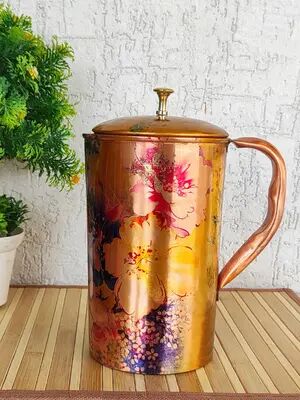
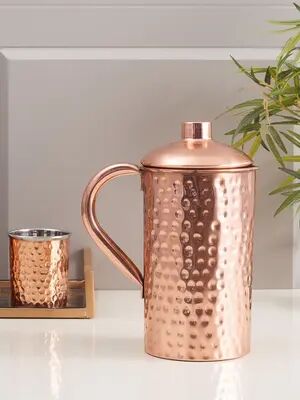
Locally procured, locally crafted
Reusable, heavy duty, 100% copper bottles
Fondly and carefully hand-crafted
Beneficial for overall well-being
Helps in getting rid of toxicities in human body
A variety of colours to chose from
Wash with cold water only
Bharat or India, the name shes known worldwide, has the oldest system of natural medicine in the world, called AYURVEDA The termAYURVEDA is derived from the Sanskrit wordsayur(life) andveda(science or knowledge). In other words, its the knowledge of life. According to AYURVEDA, all diseases that we suffer from are the direct outcome of certain imbalance or stress in a persons consciousness. Thus AYURVEDA lays stress on certain therapies and bringing about certain changes in our lifestyle to maintain a balance between the body, mind, spirit, and the environment. According to AYURVEDA, in order to strike a perfect balance one needs to begin with the internal purification process first. AUYRVEDA states that there are three types of energies /forces calleddoshasand eachdosharegulates and controls a part of our physical functions related to the body, mind and spirit (trinity). The threedoshasareVata, PittaandKaphaand the three deternine a persons physical, mental and emotional health.
Saints in ancient India stressed on drinking water stored in copper vessels to balance the threedoshasin our body. Water stored in copper vessels orTamra Jalhas innumerable health benefits. The properties of copper get infused into the water thats stored in it and it becomes natural alkaline water that helps in balancing the pH level of our body. Copper acts as a natural disinfectant and the water stored in it become free of germs and bacteria. Not only does copper water fortify the immune system, it also helps in improving the cognitive abilities by stimulating the brain and supports growth and neurodevelopment. Copper water acts as a preventer of osteoporosis, supports formation of red blood cells; copper water is antioxidant which wards off free radicals and eliminates its harmful effects. Its noteworthy to mention here that free radicals, in spite of their very less lifespan, can damage the DNA; this can trigger mutations that increase the risk of having heart disease and cancer.
In her attempt to revive the ancient knowledge of AYURVEDA, we want to make the world aware of the benefits of consuming water stored in copper vessels. To get maximum benefit, one should store plain water in the copper bottle for at least eight hours before drinking it in empty stomach being in a seated position. Before using it for the first time, please ensure to wash it with warm water to wash away any residue/ dust.
The bottles we manufacture are made of 100% recycled copper thats cut from a single copper sheet and then given the desired shape by our experienced artisans who use traditional methods for nurturing their creation. The bottle caps are of pure copper that are leak proof; weve fitted the caps with silicon washers for making them watertight. These bottles are aesthetically attractive and are available in various shapes, sizes, designs and colours. We also manufacture copper jugs, copper tumblers and copper goblets.
Theres a bottle for everyone to choose from! So make copper bottles a part of your quotidian life and experience the health benefits for yourself!
Warning: ONLY STORE PLAIN WATER IN COPPER BOTTLES; NEVER POUR TEA, COFFEE, FRUIT JUICE, MINERAL WATER OR CARBONATED WATER IN THESE BOTTLES.
DO NOT PUT YOUR COPPER BOTTLE INSIDE THE DISHWASHER.Cleaning the exterior: Take a slice of lemon, put a pinch of salt, some white vinegar and a bit of sodium bicarbonate on it and use it to clean the outer surface of the bottle.Cleaning the interior: Take lukewarm water and pour some liquid soap in it, then pour it in your bottle and shake it well; next drain the soapy water and pour clean water to rinse it thoroughly again. Please note that copper bottles do not require as much cleaning as plastic bottles as copper has the quality self-sterilization.
NOTE: Our copper bottles are available in 300ml, 600ml, 750ml and 1 litre quantities. We manufacture copper bottles of original copper colour as well as customized bottles in various colours, designs and shapes as per your preference.

Locally procured, locally crafted
Reusable, heavy duty, 100% copper bottles
Fondly and carefully hand-crafted
Beneficial for overall well-being
Helps in getting rid of toxicities in human body
A variety of colours to chose from
Wash with cold water only
Bharat or India, the name shes known worldwide, has the oldest system of natural medicine in the world, called AYURVEDA The termAYURVEDA is derived from the Sanskrit wordsayur(life) andveda(science or knowledge). In other words, its the knowledge of life. According to AYURVEDA, all diseases that we suffer from are the direct outcome of certain imbalance or stress in a persons consciousness. Thus AYURVEDA lays stress on certain therapies and bringing about certain changes in our lifestyle to maintain a balance between the body, mind, spirit, and the environment. According to AYURVEDA, in order to strike a perfect balance one needs to begin with the internal purification process first. AUYRVEDA states that there are three types of energies /forces calleddoshasand eachdosharegulates and controls a part of our physical functions related to the body, mind and spirit (trinity). The threedoshasareVata, PittaandKaphaand the three deternine a persons physical, mental and emotional health.
Saints in ancient India stressed on drinking water stored in copper vessels to balance the threedoshasin our body. Water stored in copper vessels orTamra Jalhas innumerable health benefits. The properties of copper get infused into the water thats stored in it and it becomes natural alkaline water that helps in balancing the pH level of our body. Copper acts as a natural disinfectant and the water stored in it become free of germs and bacteria. Not only does copper water fortify the immune system, it also helps in improving the cognitive abilities by stimulating the brain and supports growth and neurodevelopment. Copper water acts as a preventer of osteoporosis, supports formation of red blood cells; copper water is antioxidant which wards off free radicals and eliminates its harmful effects. Its noteworthy to mention here that free radicals, in spite of their very less lifespan, can damage the DNA; this can trigger mutations that increase the risk of having heart disease and cancer.
In her attempt to revive the ancient knowledge of AYURVEDA, we want to make the world aware of the benefits of consuming water stored in copper vessels. To get maximum benefit, one should store plain water in the copper bottle for at least eight hours before drinking it in empty stomach being in a seated position. Before using it for the first time, please ensure to wash it with warm water to wash away any residue/ dust.
The bottles we manufacture are made of 100% recycled copper thats cut from a single copper sheet and then given the desired shape by our experienced artisans who use traditional methods for nurturing their creation. The bottle caps are of pure copper that are leak proof; weve fitted the caps with silicon washers for making them watertight. These bottles are aesthetically attractive and are available in various shapes, sizes, designs and colours. We also manufacture copper jugs, copper tumblers and copper goblets.
Theres a bottle for everyone to choose from! So make copper bottles a part of your quotidian life and experience the health benefits for yourself!
Warning: ONLY STORE PLAIN WATER IN COPPER BOTTLES; NEVER POUR TEA, COFFEE, FRUIT JUICE, MINERAL WATER OR CARBONATED WATER IN THESE BOTTLES.
DO NOT PUT YOUR COPPER BOTTLE INSIDE THE DISHWASHER.Cleaning the exterior: Take a slice of lemon, put a pinch of salt, some white vinegar and a bit of sodium bicarbonate on it and use it to clean the outer surface of the bottle.Cleaning the interior: Take lukewarm water and pour some liquid soap in it, then pour it in your bottle and shake it well; next drain the soapy water and pour clean water to rinse it thoroughly again. Please note that copper bottles do not require as much cleaning as plastic bottles as copper has the quality self-sterilization.

India has the reputation of manufacturing some of the finest, unique and exclusive handicrafts in the world. Art and metal craft has been a significant and inseparable part of the Indian culture. For thousands of years, our Indian craftsmen and artisans, through their creative acumen, perseverance and devotion have been producing some of the finest quality of hand-crafted items; our highly talented craftsmen carry a rich and diverse heritage of skilled craftsmanship that gets passed on from one generation to another. This age-old traditional techniques of theirs offer uniqueness to their prized creations that are truly exclusive in themselves. Due to their undaunted efforts and the initiatives of the Government of India, the popularity of the Indian handicrafts are constantly on the rise not only at the domestic level but also at the international level, and connoisseurs worldwide hold our artwork in high esteem.
The brass art of India, like several other art forms of our Nation, holds a predominant place in the world arena. Indian produces a wide range of brass artworks ranging from decorative items like statuettes, statues, figures of deities, wall hangings, different types of figurines, jewellery and showpieces. Additionally, our artisans manufacture articles for worship (puja items) like vases, lamps, bells, incense stick holders as well as different types of utensils like plates, bowls, pots, jugs, tumblers, spice boxes, containers, woks, pans, turners, tongs or pincers, spoons, and many more. They exemplify gorgeousness, excellence and intricacy. Sculpting and engraving on brassware is a highly specialized job that requires years of patience and experience. Brass artwork including decorative items, articles of worship as well as brass utensils for everyday use in common households are also in huge demand in temples and other places of worship, in religious gatherings, in palaces and royal households which shows that brass has an universal acceptability in all strata of the society.
Brass being an alloy of copper and zinc, it has a truly long life and doesnt get degraded over time. If proper care is taken to keep them in perfect condition, brass handicraft items continue to maintain its lustre and even with prolonged usage, they tend to if have the same brilliance as they had when they were purchased years ago. Brass is anti-corrosive, but due to oxidation that takes place due to it contact with oxygen in the air, it tends to develop a protective coating called patina. This patina can be cleaned with lemon juice or white vinegar mixed with half a spoon of baking soda; mix them well and until it becomes a paste. Apply the paste with a soft cloth and wait for 10 to 15 minutes, after tat clan it with warm water and immediately wipe it dry. Once cleaned and polished, brassware regain its lustre and shine.
NOTE: Our copper bottles are available in 300ml, 600ml, 750ml and 1 litre quantities.We manufacture copper bottles of original copper colour as well as customized bottles in various colours, designs and shapes as per your preference.

India has the reputation of manufacturing some of the finest, unique and exclusive handicrafts in the world. Art and metal craft has been a significant and inseparable part of the Indian culture. For thousands of years, our Indian craftsmen and artisans, through their creative acumen, perseverance and devotion have been producing some of the finest quality of hand-crafted items; our highly talented craftsmen carry a rich and diverse heritage of skilled craftsmanship that gets passed on from one generation to another. This age-old traditional techniques of theirs offer uniqueness to their prized creations that are truly exclusive in themselves. Due to their undaunted efforts and the initiatives of the Government of India, the popularity of the Indian handicrafts are constantly on the rise not only at the domestic level but also at the international level, and connoisseurs worldwide hold our artwork in high esteem.
The brass art of India, like several other art forms of our Nation, holds a predominant place in the world arena. Indian produces a wide range of brass artworks ranging from decorative items like statuettes, statues, figures of deities, wall hangings, different types of figurines, jewellery and showpieces. Additionally, our artisans manufacture articles for worship (puja items) like vases, lamps, bells, incense stick holders as well as different types of utensils like plates, bowls, pots, jugs, tumblers, spice boxes, containers, woks, pans, turners, tongs or pincers, spoons, and many more. They exemplify gorgeousness, excellence and intricacy. Sculpting and engraving on brassware is a highly specialized job that requires years of patience and experience. Brass artwork including decorative items, articles of worship as well as brass utensils for everyday use in common households are also in huge demand in temples and other places of worship, in religious gatherings, in palaces and royal households which shows that brass has an universal acceptability in all strata of the society.
Brass being an alloy of copper and zinc, it has a truly long life and doesnt get degraded over time. If proper care is taken to keep them in perfect condition, brass handicraft items continue to maintain its lustre and even with prolonged usage, they tend to if have the same brilliance as they had when they were purchased years ago. Brass is anti-corrosive, but due to oxidation that takes place due to it contact with oxygen in the air, it tends to develop a protective coating called patina. This patina can be cleaned with lemon juice or white vinegar mixed with half a spoon of baking soda; mix them well and until it becomes a paste. Apply the paste with a soft cloth and wait for 10 to 15 minutes, after tat clan it with warm water and immediately wipe it dry. Once cleaned and polished, brassware regain its lustre and shine.
NOTE: Our copper bottles are available in 300ml, 600ml, 750ml and 1 litre quantities.We manufacture copper bottles of original copper colour as well as customized bottles in various colours, designs and shapes as per your preference.

India has the reputation of manufacturing some of the finest, unique and exclusive handicrafts in the world. Art and metal craft has been a significant and inseparable part of the Indian culture. For thousands of years, our Indian craftsmen and artisans, through their creative acumen, perseverance and devotion have been producing some of the finest quality of hand-crafted items; our highly talented craftsmen carry a rich and diverse heritage of skilled craftsmanship that gets passed on from one generation to another. This age-old traditional techniques of theirs offer uniqueness to their prized creations that are truly exclusive in themselves. Due to their undaunted efforts and the initiatives of the Government of India, the popularity of the Indian handicrafts are constantly on the rise not only at the domestic level but also at the international level, and connoisseurs worldwide hold our artwork in high esteem.
The brass art of India, like several other art forms of our Nation, holds a predominant place in the world arena. Indian produces a wide range of brass artworks ranging from decorative items like statuettes, statues, figures of deities, wall hangings, different types of figurines, jewellery and showpieces. Additionally, our artisans manufacture articles for worship (puja items) like vases, lamps, bells, incense stick holders as well as different types of utensils like plates, bowls, pots, jugs, tumblers, spice boxes, containers, woks, pans, turners, tongs or pincers, spoons, and many more. They exemplify gorgeousness, excellence and intricacy. Sculpting and engraving on brassware is a highly specialized job that requires years of patience and experience. Brass artwork including decorative items, articles of worship as well as brass utensils for everyday use in common households are also in huge demand in temples and other places of worship, in religious gatherings, in palaces and royal households which shows that brass has an universal acceptability in all strata of the society.
Brass being an alloy of copper and zinc, it has a truly long life and doesnt get degraded over time. If proper care is taken to keep them in perfect condition, brass handicraft items continue to maintain its lustre and even with prolonged usage, they tend to if have the same brilliance as they had when they were purchased years ago. Brass is anti-corrosive, but due to oxidation that takes place due to it contact with oxygen in the air, it tends to develop a protective coating called patina. This patina can be cleaned with lemon juice or white vinegar mixed with half a spoon of baking soda; mix them well and until it becomes a paste. Apply the paste with a soft cloth and wait for 10 to 15 minutes, after tat clan it with warm water and immediately wipe it dry. Once cleaned and polished, brassware regain its lustre and shine.
NOTE: Our copper bottles are available in 300ml, 600ml, 750ml and 1 litre quantities.We manufacture copper bottles of original copper colour as well as customized bottles in various colours, designs and shapes as per your preference.

India has the reputation of manufacturing some of the finest, unique and exclusive handicrafts in the world. Art and metal craft has been a significant and inseparable part of the Indian culture. For thousands of years, our Indian craftsmen and artisans, through their creative acumen, perseverance and devotion have been producing some of the finest quality of hand-crafted items; our highly talented craftsmen carry a rich and diverse heritage of skilled craftsmanship that gets passed on from one generation to another. This age-old traditional techniques of theirs offer uniqueness to their prized creations that are truly exclusive in themselves. Due to their undaunted efforts and the initiatives of the Government of India, the popularity of the Indian handicrafts are constantly on the rise not only at the domestic level but also at the international level, and connoisseurs worldwide hold our artwork in high esteem.
The brass art of India, like several other art forms of our Nation, holds a predominant place in the world arena. Indian produces a wide range of brass artworks ranging from decorative items like statuettes, statues, figures of deities, wall hangings, different types of figurines, jewellery and showpieces. Additionally, our artisans manufacture articles for worship (puja items) like vases, lamps, bells, incense stick holders as well as different types of utensils like plates, bowls, pots, jugs, tumblers, spice boxes, containers, woks, pans, turners, tongs or pincers, spoons, and many more. They exemplify gorgeousness, excellence and intricacy. Sculpting and engraving on brassware is a highly specialized job that requires years of patience and experience. Brass artwork including decorative items, articles of worship as well as brass utensils for everyday use in common households are also in huge demand in temples and other places of worship, in religious gatherings, in palaces and royal households which shows that brass has an universal acceptability in all strata of the society.
Brass being an alloy of copper and zinc, it has a truly long life and doesnt get degraded over time. If proper care is taken to keep them in perfect condition, brass handicraft items continue to maintain its lustre and even with prolonged usage, they tend to if have the same brilliance as they had when they were purchased years ago. Brass is anti-corrosive, but due to oxidation that takes place due to it contact with oxygen in the air, it tends to develop a protective coating called patina. This patina can be cleaned with lemon juice or white vinegar mixed with half a spoon of baking soda; mix them well and until it becomes a paste. Apply the paste with a soft cloth and wait for 10 to 15 minutes, after tat clan it with warm water and immediately wipe it dry. Once cleaned and polished, brassware regain its lustre and shine.

India has the reputation of manufacturing some of the finest, unique and exclusive handicrafts in the world. Art and metal craft has been a significant and inseparable part of the Indian culture. For thousands of years, our Indian craftsmen and artisans, through their creative acumen, perseverance and devotion have been producing some of the finest quality of hand-crafted items; our highly talented craftsmen carry a rich and diverse heritage of skilled craftsmanship that gets passed on from one generation to another. This age-old traditional techniques of theirs offer uniqueness to their prized creations that are truly exclusive in themselves. Due to their undaunted efforts and the initiatives of the Government of India, the popularity of the Indian handicrafts are constantly on the rise not only at the domestic level but also at the international level, and connoisseurs worldwide hold our artwork in high esteem.
The brass art of India, like several other art forms of our Nation, holds a predominant place in the world arena. Indian produces a wide range of brass artworks ranging from decorative items like statuettes, statues, figures of deities, wall hangings, different types of figurines, jewellery and showpieces. Additionally, our artisans manufacture articles for worship (puja items) like vases, lamps, bells, incense stick holders as well as different types of utensils like plates, bowls, pots, jugs, tumblers, spice boxes, containers, woks, pans, turners, tongs or pincers, spoons, and many more. They exemplify gorgeousness, excellence and intricacy. Sculpting and engraving on brassware is a highly specialized job that requires years of patience and experience. Brass artwork including decorative items, articles of worship as well as brass utensils for everyday use in common households are also in huge demand in temples and other places of worship, in religious gatherings, in palaces and royal households which shows that brass has an universal acceptability in all strata of the society.
Brass being an alloy of copper and zinc, it has a truly long life and doesnt get degraded over time. If proper care is taken to keep them in perfect condition, brass handicraft items continue to maintain its lustre and even with prolonged usage, they tend to if have the same brilliance as they had when they were purchased years ago. Brass is anti-corrosive, but due to oxidation that takes place due to it contact with oxygen in the air, it tends to develop a protective coating called patina. This patina can be cleaned with lemon juice or white vinegar mixed with half a spoon of baking soda; mix them well and until it becomes a paste. Apply the paste with a soft cloth and wait for 10 to 15 minutes, after tat clan it with warm water and immediately wipe it dry. Once cleaned and polished, brassware regain its lustre and shine.

India has the reputation of manufacturing some of the finest, unique and exclusive handicrafts in the world. Art and metal craft has been a significant and inseparable part of the Indian culture. For thousands of years, our Indian craftsmen and artisans, through their creative acumen, perseverance and devotion have been producing some of the finest quality of hand-crafted items; our highly talented craftsmen carry a rich and diverse heritage of skilled craftsmanship that gets passed on from one generation to another. This age-old traditional techniques of theirs offer uniqueness to their prized creations that are truly exclusive in themselves. Due to their undaunted efforts and the initiatives of the Government of India, the popularity of the Indian handicrafts are constantly on the rise not only at the domestic level but also at the international level, and connoisseurs worldwide hold our artwork in high esteem.
The brass art of India, like several other art forms of our Nation, holds a predominant place in the world arena. Indian produces a wide range of brass artworks ranging from decorative items like statuettes, statues, figures of deities, wall hangings, different types of figurines, jewellery and showpieces. Additionally, our artisans manufacture articles for worship (puja items) like vases, lamps, bells, incense stick holders as well as different types of utensils like plates, bowls, pots, jugs, tumblers, spice boxes, containers, woks, pans, turners, tongs or pincers, spoons, and many more. They exemplify gorgeousness, excellence and intricacy. Sculpting and engraving on brassware is a highly specialized job that requires years of patience and experience. Brass artwork including decorative items, articles of worship as well as brass utensils for everyday use in common households are also in huge demand in temples and other places of worship, in religious gatherings, in palaces and royal households which shows that brass has an universal acceptability in all strata of the society.
Brass being an alloy of copper and zinc, it has a truly long life and doesnt get degraded over time. If proper care is taken to keep them in perfect condition, brass handicraft items continue to maintain its lustre and even with prolonged usage, they tend to if have the same brilliance as they had when they were purchased years ago. Brass is anti-corrosive, but due to oxidation that takes place due to it contact with oxygen in the air, it tends to develop a protective coating called patina. This patina can be cleaned with lemon juice or white vinegar mixed with half a spoon of baking soda; mix them well and until it becomes a paste. Apply the paste with a soft cloth and wait for 10 to 15 minutes, after tat clan it with warm water and immediately wipe it dry. Once cleaned and polished, brassware regain its lustre and shine.

Our seashell artist is a state award winner whos earned his reputation for his impressive craftsmanship on seashells. Hes held in high esteem for his impeccable creations of seashell artwork the art of which hes inherited from his father. The spoons, forks including various other showpiece items are all crafted by our master artist. These cutleries are a valuable addition to your existing cutlery sets. Use them while serving eatables during ceremonies, parties or gatherings and your guests would reciprocate your superior choice with praise and admiration.
Below is our diverse selection of seashell cutlery items for you.

Seashell jewellery is in vogue and is one of the major varieties of non-precious jewellery. Our seashell artisans are village dwellers for whom this art is an heirloom; their constant endeavour is to keep this declining traditional art alive. The magical and mystical touch of our artisans gives birth to our superlatively enthralling creations of seashell ornaments and jewellery. Our array of different varieties of seashell jewellery has a touch of the Orient in them and would fascinate you due to their intricate designs and patters that are unique to India. Every piece of jewellery you buy is handcrafted so each of them is unique in itself. The seashells procured and used by our artisans to produce every piece of jewellery are 100% genuine so you know that what you purchase is worth every penny that you spend.Adorn yourself with our range of seashell jewellery on occasions like weddings, parties, marriages, during festivals as well as religious celebrations. This type of jewellery goes equally well as casual wears while youre going to your workplace, or when going for soire, kitty party and so on. Our assortment of unique and adorable seashell jewellery is a wonderful item that you can gift to your friends and family. Apart from jewellery, our artisans craft different types of showpieces that you can purchase to decorate your home with, be it in your study, living room, bedroom or your office, these showpieces complement to the overall aesthetics of the surrounding.Every time you buy our pieces of seashell artwork, youre contributing towards the financial and social betterment of our artisans. This social contribution of yours would help them keep this ancient art alive.
Take a look at our entire spectrum of jewellery and showpiece items

These conch shell table lamps are for the sophistiqu who appreciates the finer things in life. Placing them on your desired location, e.g. home, office, restaurant can help create an avant-garde ambience; they would unquestionably catch the eye of anyone visiting you. Our seashell table lamps are made of 100% natural seashells that come in different varieties, shapes and sizes. Choose the one that you prefer for giving your surroundings that subtle feel of elegance, grace and sublimity. These lamps are the best gifts that you can give to anyone whom you love and admire. Theres no denying the fact that your exquisite gift would surely make any special occasion even more special.
Please go through our assortment of seashell table lamps to pick the right one for you and your loved ones.

Our seed pens and pencils are made with 100% handmade paper thats produced naturally. We believe in giving back to Mother Earth and its our humble initiative to make our planet habitable and green for the future generations. Its with this thought in our mind that we envisaged the idea of crafting our pens and pencils with 100 % handmade paper. These pens and pencils are a perfect alternative to plastic ball-point pens that not only detrimental to the environment but they also increase the amount of plastic waste on the planet. The body of these pens and pencils are made of handmade paper and only the refill is the only plastic material thats used in them. These pens and pencils write well as theyre fitted with free-flowing, smooth refills, so that your writing experience is flawless. At the top of every pen and pencil weve put a seed of a vegetable or a fruit which you can plant in your planter or in your garden after theyre used. Water them and theyd grow into a sapling. Ensure that they get proper sunlight from time to time. You have a wide range of colours to choose from and we even use fluorescent coloured papers to make them look more attractive and appealing. To make your writing experience memorable, we used 3 different types of refills in our pens gel refills, pinpoint refills and round tip refills. You can choose whichever you like. As for our pencils, we use bonded leads in our handmade paper pencils. These leads are glued from the top to the bottom so that they dont get broken easily. This would give you hassle-free writing experience when you or your kids use during their daily activities. To match them, we even have a wide range of paper binders and folders that you can carry along.
Our pens and pencils are customizable and in case you want some photo, company logo or a message on them, we can do that for you as well. We even make pens with steel clips so that you can keep them clipped to your pocket while you go to your workplace. Our handmade paper pens and pencils are a veritable way for inculcating the habit of planting trees and creating awareness on the environment in our little ones.

Locally procured, locally crafted
100% environment-friendly hand-made paper
Exquisite, innovative and bio-degradable
Pens/pencils with organic seeds inside
Crafted with affection by our differently-abled artists
A wide variety of hand-made paper products to chose from
Our seed pens and pencils are made with 100% handmade paper thats produced naturally. We believe in giving back to Mother Earth and its our humble initiative to make our planet habitable and green for the future generations. Its with this thought in our mind that we envisaged the idea of crafting our pens and pencils with 100 % handmade paper. These pens and pencils are a perfect alternative to plastic ball-point pens that not only detrimental to the environment but they also increase the amount of plastic waste on the planet. The body of these pens and pencils are made of handmade paper and only the refill is the only plastic material thats used in them. These pens and pencils write well as theyre fitted with free-flowing, smooth refills, so that your writing experience is flawless. At the top of every pen and pencil weve put a seed of a vegetable or a fruit which you can plant in your planter or in your garden after theyre used. Water them and theyd grow into a sapling. Ensure that they get proper sunlight from time to time. You have a wide range of colours to choose from and we even use fluorescent coloured papers to make them look more attractive and appealing. To make your writing experience memorable, we used 3 different types of refills in our pens gel refills, pinpoint refills and round tip refills. You can choose whichever you like. As for our pencils, we use bonded leads in our handmade paper pencils. These leads are glued from the top to the bottom so that they dont get broken easily. This would give you hassle-free writing experience when you or your kids use during their daily activities. To match them, we even have a wide range of paper binders and folders that you can carry along.
Our pens and pencils are customizable and in case you want some photo, company logo or a message on them, we can do that for you as well. We even make pens with steel clips so that you can keep them clipped to your pocket while you go to your workplace. Our handmade paper pens and pencils are a veritable way for inculcating the habit of planting trees and creating awareness on the environment in our little ones.
Our binders/folders are made with 100% handmade paper thats produced naturally. We believe in giving back to Mother Earth and its our humble initiative to make our planet habitable and green for the future generations. Its with this thought in our mind that we envisaged the idea of crafting our binders and folders with 100 % handmade paper. Our handmade folders and binders are a perfect alternative to plastic ball-point pens that not only detrimental to the environment but they also increase the amount of plastic waste on the planet. These folders and binders are made of papers that are recyclable unlike their plastic counterparts that pollute and degrade the soil. We have folders and binders in all the colours that you can think of so you have a folder/ binder that matches your outfit. Its not only a marvellous way to show your commitment towards creating a pollution free environment and making our Earth a more habitable place for dwelling but it also reflects your style and finesse. Your friends and colleagues would surely appreciate your taste and refinement when you make them a part of your daily life. Keep all your papers and documents safe and secured in these binders/ folders that can be used as long as you want. To match them, we even have paper pens and pencils of various kinds that you can carry along.
We can even print the name of your company, your company logo or any message that you want on them.
Our notebooks are made with 100% handmade paper thats produced naturally. We believe in giving back to Mother Earth and its our humble initiative to make our planet habitable and green for the future generations. Its with this thought in our mind that we envisaged the idea of crafting notebooks with 100 % handmade and naturally produced paper and are hard bound with jute cover on them to give them that rustic feel and look. Moreover, the jute cover provides that extra layer protection to the notebooks and acts as a barrier in case any liquid gets spilled and falls on it. These notebooks can be carried anywhere, to schools, colleges and universities and even to your workplace.
The paper that we use in our notebooks are of good quality; they are stiff and thick so that they last long, dont get folded unintentionally and give you a smooth writing experience. These notebooks are remarkable memorabilia for keeping notes, your favourite quotes, phone numbers and emails of your near and dear ones, thoughts of the day, or any word or sentence that catches your eye. They are the ultimate souvenirs that you can give to your friends and theyd appreciate this charming piece of work of art that is crafted with admiring flawlessness by our specially-abled artists. Our artists are our invaluable assets and due to their of their unquestionable resolve that were able to present you such meticulously created products.


Locally procured, locally crafted
Exquisite, superior quality stone selection
Fondly hand-crafted with care
Gives a primitive and exclusive touch to your home dcor
An unmatched variety of Dokra artwork to chose from
100% satisfaction or our valued clients
A have an assortment of Dokra artwork products that are produced with meticulousness and sincerity by or local artists whose divine hands craft these wonderful pieces of art. These figurines are enough to create a special ambience in your interior and take us back to those ancient times when our ancestors first created them. Give them a place in your interiors and see the difference they make in terms of aesthetics and authenticity. Your friends would definitely show fondness towards these creations and would admire your penchant for art.
Our products include statuettes of Hindu Gods, Goddesses, figurines of animals, caskets, ashtrays, wall hangings, lamps and traditional tribal jewellery. Since ancient times, the people of India consider these art forms as auspicious. It is believed that keeping them at home or gifting them to someone brings good fortune to the families. Care should be taken with the statuettes of Hindu Gods and Goddesses who should be placed with reverence on a clean place; according to eastern beliefs, keeping statuettes of Gods and Goddesses is auspicious that bring peace and harmony in your family. We have various statuettes of Lord Krishna, Lord Ganesha, Goddess Parvati and Goddess Lakshmi whom you can place at home for inner peace and tranquillity.
Dokra artefacts have immense value for aesthetes of handicrafts and for all those who hold handcrafted items in high esteem. Give a touch of uniqueness to your gifts, gift Dokra Art figurines to your loved ones and friends and see their faces shine up with glee!
Our entire spectrum of Dokra artwork items are at your disposition.

A have an assortment of Dokra artwork products that are produced with meticulousness and sincerity by or local artists whose divine hands craft these wonderful pieces of art. These figurines are enough to create a special ambience in your interior and take us back to those ancient times when our ancestors first created them. Give them a place in your interiors and see the difference they make in terms of aesthetics and authenticity. Your friends would definitely show fondness towards these creations and would admire your penchant for art.
Our products include statuettes of Hindu Gods, Goddesses, figurines of animals, caskets, ashtrays, wall hangings, lamps and traditional tribal jewellery. Since ancient times, the people of India consider these art forms as auspicious. It is believed that keeping them at home or gifting them to someone brings good fortune to the families. Care should be taken with the statuettes of Hindu Gods and Goddesses who should be placed with reverence on a clean place; according to eastern beliefs, keeping statuettes of Gods and Goddesses is auspicious that bring peace and harmony in your family. We have various statuettes of Lord Krishna, Lord Ganesha, Goddess Parvati and Goddess Lakshmi whom you can place at home for inner peace and tranquillity.
Dokra artefacts have immense value for aesthetes of handicrafts and for all those who hold handcrafted items in high esteem. Give a touch of uniqueness to your gifts, gift Dokra Art figurines to your loved ones and friends and see their faces shine up with glee!
Our entire spectrum of Dokra artwork items are at your disposition.

A have an assortment of Dokra artwork products that are produced with meticulousness and sincerity by or local artists whose divine hands craft these wonderful pieces of art. These figurines are enough to create a special ambience in your interior and take us back to those ancient times when our ancestors first created them. Give them a place in your interiors and see the difference they make in terms of aesthetics and authenticity. Your friends would definitely show fondness towards these creations and would admire your penchant for art.
Our products include statuettes of Hindu Gods, Goddesses, figurines of animals, caskets, ashtrays, wall hangings, lamps and traditional tribal jewellery. Since ancient times, the people of India consider these art forms as auspicious. It is believed that keeping them at home or gifting them to someone brings good fortune to the families. Care should be taken with the statuettes of Hindu Gods and Goddesses who should be placed with reverence on a clean place; according to eastern beliefs, keeping statuettes of Gods and Goddesses is auspicious that bring peace and harmony in your family. We have various statuettes of Lord Krishna, Lord Ganesha, Goddess Parvati and Goddess Lakshmi whom you can place at home for inner peace and tranquillity.
Dokra artefacts have immense value for aesthetes of handicrafts and for all those who hold handcrafted items in high esteem. Give a touch of uniqueness to your gifts, gift Dokra Art figurines to your loved ones and friends and see their faces shine up with glee!
Our entire spectrum of Dokra artwork items are at your disposition.
Locally procured, locally crafted
Exquisite, superior quality Dokra jewellery collection
Fondly hand-crafted with fondness
Gives a primitive and exclusive touch to your home dcor
An unmatched variety of Dokra artwork to chose from
100% satisfaction or our valued clients
Our ethnic jewellery range is handmade by local village artisans; every piece of jewellery has a touch of uniqueness in it and not one is similar to the other, so what you wear is the only one ever created! Due to their distinctive designs and patterns, our range of tribal jewellery are extremely popular worldwide and can be worn with all kinds of outfits that contributes to a look thats a class of its own. A variety of jewellery to choose from, you have one for every occasion, made especially for you by our talented village artists in India. They are marvellous presents and everyone who loves jewellery of traditional and authentic designs would simply fall in love with our assortment of authentic handcrafted Dokra tribal jewellery.
Check out our entire range of handcrafted Dokra artwork jewellery.

Locally procured, locally crafted Impeccable quality coconut shell handicraft items for home dcor
100% Hand-crafted with care and precision for daily use
Exquisite, durable, eco-friendly and bio-degradable
100% satisfaction for our valued clients
An art that the province of West Bengal, India can vaunt is its coconut shell handicraft items. The place where this outstanding art thrived is in the district of Bankura and gained popularity not only within the province but also at the national and international levels. The coconut shell handicraft came to fruition due to the sudden scarcity of the conch shells during the 80s. The artists who were engaged in the profession conch shell curving started facing the heat and started looking for alternative ways for sustenance. They saw earning potential in coconut shell handicraft and gradually diverted their attention towards furthering this art form. Their promotion and involvement for developing this handicraft gave this art form a considerable impetus that has a reflection of finely crafted coconut shell items of impeccable quality. The artists make exquisite handicraft items using similar tools that they use for crafting conch shell artworks. The unique art has drawn the attention of many aesthetes nationally as well as internationally whove taken quite an interest in this art form. Our artists get training from their elders whore the exponents of coconut shell handicrafts. Like other traditional art forms of India, in this art too the aspiring artists receive guidance and practical knowledge from the experts who in turn had learnt it from their forefather and this is how this heirloom passes on from one generation to the other.
For crafting articles out of coconut shells, the craft persons use different types of tools and adhesives to give these shells the desired appearance. Hacksaw blades, hammers, bastard files, are used for cutting, shaping and filing; emery papers are used for buffing the shells and smoothening the surface, fast drying adhesive is used for effortless joining and to ensure a strong bonding of the pieces. Finally wood polish and a glossy top coat are used for giving them that silky smooth finish. Some artists also admire the beauty of the coconut shells in their natural state of condition and abstain from using any polish or glossy top coat and they look equally aesthetic as their glossy counterparts. Our artists are adept in crafting some of the finest coconut shell products from busts of Hindu Gods and Goddesses, the artists make varieties of dolls and various animal and bird forms. They also make decorative wall hangings and beautifully crafted replicas of Hindu temples. Various articles of utility for everyday use are also manufactured by our artists like cups, teapots, bowls and goblets of various sizes, cutlery sets, spice trays, containers and pickle jars, incense stick stands, ashtrays to name a few. In fact the coconut shell artisans have even introduced their spellbinding art to the world of fashion; now they have started manufacturing bangles and ornaments that are gaining popularity the world over for their artistic charm. These products are handmade by our village artists with utmost care and dedication and due to their durability and environment friendly nature, these exclusive coconut shell articles are gaining popularity which has also attracted the attention of the Government of India. The Centre in collaboration with the provincial government is working towards bettering the working condition of our artists and creating more opportunities for them.
These coconut shell items are remarkable gifts for all occasions and since they have an unique and distinctive look, they are appreciated by everyone. Get handcrafted authentic coconut shell products for your home and use them as utility products or decorative showpieces. Its our firm belief that these products would bring a whiff of fresh air to your interiors that would be cherished and admired by your loved ones.

An art that the province of West Bengal, India can vaunt is its coconut shell handicraft items. The place where this outstanding art thrived is in the district of Bankura and gained popularity not only within the province but also at the national and international levels. The coconut shell handicraft came to fruition due to the sudden scarcity of the conch shells during the 80s. The artists who were engaged in the profession conch shell curving started facing the heat and started looking for alternative ways for sustenance. They saw earning potential in coconut shell handicraft and gradually diverted their attention towards furthering this art form. Their promotion and involvement for developing this handicraft gave this art form a considerable impetus that has a reflection of finely crafted coconut shell items of impeccable quality. The artists make exquisite handicraft items using similar tools that they use for crafting conch shell artworks. The unique art has drawn the attention of many aesthetes nationally as well as internationally whove taken quite an interest in this art form. Our artists get training from their elders whore the exponents of coconut shell handicrafts. Like other traditional art forms of India, in this art too the aspiring artists receive guidance and practical knowledge from the experts who in turn had learnt it from their forefather and this is how this heirloom passes on from one generation to the other.
For crafting articles out of coconut shells, the craft persons use different types of tools and adhesives to give these shells the desired appearance. Hacksaw blades, hammers, bastard files, are used for cutting, shaping and filing; emery papers are used for buffing the shells and smoothening the surface, fast drying adhesive is used for effortless joining and to ensure a strong bonding of the pieces. Finally wood polish and a glossy top coat are used for giving them that silky smooth finish. Some artists also admire the beauty of the coconut shells in their natural state of condition and abstain from using any polish or glossy top coat and they look equally aesthetic as their glossy counterparts. Our artists are adept in crafting some of the finest coconut shell products from busts of Hindu Gods and Goddesses, the artists make varieties of dolls and various animal and bird forms. They also make decorative wall hangings and beautifully crafted replicas of Hindu temples. Various articles of utility for everyday use are also manufactured by our artists like cups, teapots, bowls and goblets of various sizes, cutlery sets, spice trays, containers and pickle jars, incense stick stands, ashtrays to name a few. In fact the coconut shell artisans have even introduced their spellbinding art to the world of fashion; now they have started manufacturing bangles and ornaments that are gaining popularity the world over for their artistic charm. These products are handmade by our village artists with utmost care and dedication and due to their durability and environment friendly nature, these exclusive coconut shell articles are gaining popularity which has also attracted the attention of the Government of India. The Centre in collaboration with the provincial government is working towards bettering the working condition of our artists and creating more opportunities for them.
These coconut shell items are remarkable gifts for all occasions and since they have an unique and distinctive look, they are appreciated by everyone. Get handcrafted authentic coconut shell products for your home and use them as utility products or decorative showpieces. Its our firm belief that these products would bring a whiff of fresh air to your interiors that would be cherished and admired by your loved ones.

An art that the province of West Bengal, India can vaunt is its coconut shell handicraft items. The place where this outstanding art thrived is in the district of Bankura and gained popularity not only within the province but also at the national and international levels. The coconut shell handicraft came to fruition due to the sudden scarcity of the conch shells during the 80s. The artists who were engaged in the profession conch shell curving started facing the heat and started looking for alternative ways for sustenance. They saw earning potential in coconut shell handicraft and gradually diverted their attention towards furthering this art form. Their promotion and involvement for developing this handicraft gave this art form a considerable impetus that has a reflection of finely crafted coconut shell items of impeccable quality. The artists make exquisite handicraft items using similar tools that they use for crafting conch shell artworks. The unique art has drawn the attention of many aesthetes nationally as well as internationally whove taken quite an interest in this art form. Our artists get training from their elders whore the exponents of coconut shell handicrafts. Like other traditional art forms of India, in this art too the aspiring artists receive guidance and practical knowledge from the experts who in turn had learnt it from their forefather and this is how this heirloom passes on from one generation to the other.
For crafting articles out of coconut shells, the craft persons use different types of tools and adhesives to give these shells the desired appearance. Hacksaw blades, hammers, bastard files, are used for cutting, shaping and filing; emery papers are used for buffing the shells and smoothening the surface, fast drying adhesive is used for effortless joining and to ensure a strong bonding of the pieces. Finally wood polish and a glossy top coat are used for giving them that silky smooth finish. Some artists also admire the beauty of the coconut shells in their natural state of condition and abstain from using any polish or glossy top coat and they look equally aesthetic as their glossy counterparts. Our artists are adept in crafting some of the finest coconut shell products from busts of Hindu Gods and Goddesses, the artists make varieties of dolls and various animal and bird forms. They also make decorative wall hangings and beautifully crafted replicas of Hindu temples. Various articles of utility for everyday use are also manufactured by our artists like cups, teapots, bowls and goblets of various sizes, cutlery sets, spice trays, containers and pickle jars, incense stick stands, ashtrays to name a few. In fact the coconut shell artisans have even introduced their spellbinding art to the world of fashion; now they have started manufacturing bangles and ornaments that are gaining popularity the world over for their artistic charm. These products are handmade by our village artists with utmost care and dedication and due to their durability and environment friendly nature, these exclusive coconut shell articles are gaining popularity which has also attracted the attention of the Government of India. The Centre in collaboration with the provincial government is working towards bettering the working condition of our artists and creating more opportunities for them.
These coconut shell items are remarkable gifts for all occasions and since they have an unique and distinctive look, they are appreciated by everyone. Get handcrafted authentic coconut shell products for your home and use them as utility products or decorative showpieces. Its our firm belief that these products would bring a whiff of fresh air to your interiors that would be cherished and admired by your loved ones.

An art that the province of West Bengal, India can vaunt is its coconut shell handicraft items. The place where this outstanding art thrived is in the district of Bankura and gained popularity not only within the province but also at the national and international levels. The coconut shell handicraft came to fruition due to the sudden scarcity of the conch shells during the 80s. The artists who were engaged in the profession conch shell curving started facing the heat and started looking for alternative ways for sustenance. They saw earning potential in coconut shell handicraft and gradually diverted their attention towards furthering this art form. Their promotion and involvement for developing this handicraft gave this art form a considerable impetus that has a reflection of finely crafted coconut shell items of impeccable quality. The artists make exquisite handicraft items using similar tools that they use for crafting conch shell artworks. The unique art has drawn the attention of many aesthetes nationally as well as internationally whove taken quite an interest in this art form. Our artists get training from their elders whore the exponents of coconut shell handicrafts. Like other traditional art forms of India, in this art too the aspiring artists receive guidance and practical knowledge from the experts who in turn had learnt it from their forefather and this is how this heirloom passes on from one generation to the other.
For crafting articles out of coconut shells, the craft persons use different types of tools and adhesives to give these shells the desired appearance. Hacksaw blades, hammers, bastard files, are used for cutting, shaping and filing; emery papers are used for buffing the shells and smoothening the surface, fast drying adhesive is used for effortless joining and to ensure a strong bonding of the pieces. Finally wood polish and a glossy top coat are used for giving them that silky smooth finish. Some artists also admire the beauty of the coconut shells in their natural state of condition and abstain from using any polish or glossy top coat and they look equally aesthetic as their glossy counterparts. Our artists are adept in crafting some of the finest coconut shell products from busts of Hindu Gods and Goddesses, the artists make varieties of dolls and various animal and bird forms. They also make decorative wall hangings and beautifully crafted replicas of Hindu temples. Various articles of utility for everyday use are also manufactured by our artists like cups, teapots, bowls and goblets of various sizes, cutlery sets, spice trays, containers and pickle jars, incense stick stands, ashtrays to name a few. In fact the coconut shell artisans have even introduced their spellbinding art to the world of fashion; now they have started manufacturing bangles and ornaments that are gaining popularity the world over for their artistic charm. These products are handmade by our village artists with utmost care and dedication and due to their durability and environment friendly nature, these exclusive coconut shell articles are gaining popularity which has also attracted the attention of the Government of India. The Centre in collaboration with the provincial government is working towards bettering the working condition of our artists and creating more opportunities for them.
These coconut shell items are remarkable gifts for all occasions and since they have an unique and distinctive look, they are appreciated by everyone. Get handcrafted authentic coconut shell products for your home and use them as utility products or decorative showpieces. Its our firm belief that these products would bring a whiff of fresh air to your interiors that would be cherished and admired by your loved ones.

An art that the province of West Bengal, India can vaunt is its coconut shell handicraft items. The place where this outstanding art thrived is in the district of Bankura and gained popularity not only within the province but also at the national and international levels. The coconut shell handicraft came to fruition due to the sudden scarcity of the conch shells during the 80s. The artists who were engaged in the profession conch shell curving started facing the heat and started looking for alternative ways for sustenance. They saw earning potential in coconut shell handicraft and gradually diverted their attention towards furthering this art form. Their promotion and involvement for developing this handicraft gave this art form a considerable impetus that has a reflection of finely crafted coconut shell items of impeccable quality. The artists make exquisite handicraft items using similar tools that they use for crafting conch shell artworks. The unique art has drawn the attention of many aesthetes nationally as well as internationally whove taken quite an interest in this art form. Our artists get training from their elders whore the exponents of coconut shell handicrafts. Like other traditional art forms of India, in this art too the aspiring artists receive guidance and practical knowledge from the experts who in turn had learnt it from their forefather and this is how this heirloom passes on from one generation to the other.
For crafting articles out of coconut shells, the craft persons use different types of tools and adhesives to give these shells the desired appearance. Hacksaw blades, hammers, bastard files, are used for cutting, shaping and filing; emery papers are used for buffing the shells and smoothening the surface, fast drying adhesive is used for effortless joining and to ensure a strong bonding of the pieces. Finally wood polish and a glossy top coat are used for giving them that silky smooth finish. Some artists also admire the beauty of the coconut shells in their natural state of condition and abstain from using any polish or glossy top coat and they look equally aesthetic as their glossy counterparts. Our artists are adept in crafting some of the finest coconut shell products from busts of Hindu Gods and Goddesses, the artists make varieties of dolls and various animal and bird forms. They also make decorative wall hangings and beautifully crafted replicas of Hindu temples. Various articles of utility for everyday use are also manufactured by our artists like cups, teapots, bowls and goblets of various sizes, cutlery sets, spice trays, containers and pickle jars, incense stick stands, ashtrays to name a few. In fact the coconut shell artisans have even introduced their spellbinding art to the world of fashion; now they have started manufacturing bangles and ornaments that are gaining popularity the world over for their artistic charm. These products are handmade by our village artists with utmost care and dedication and due to their durability and environment friendly nature, these exclusive coconut shell articles are gaining popularity which has also attracted the attention of the Government of India. The Centre in collaboration with the provincial government is working towards bettering the working condition of our artists and creating more opportunities for them.
These coconut shell items are remarkable gifts for all occasions and since they have an unique and distinctive look, they are appreciated by everyone. Get handcrafted authentic coconut shell products for your home and use them as utility products or decorative showpieces. Its our firm belief that these products would bring a whiff of fresh air to your interiors that would be cherished and admired by your loved ones.

An art that the province of West Bengal, India can vaunt is its coconut shell handicraft items. The place where this outstanding art thrived is in the district of Bankura and gained popularity not only within the province but also at the national and international levels. The coconut shell handicraft came to fruition due to the sudden scarcity of the conch shells during the 80s. The artists who were engaged in the profession conch shell curving started facing the heat and started looking for alternative ways for sustenance. They saw earning potential in coconut shell handicraft and gradually diverted their attention towards furthering this art form. Their promotion and involvement for developing this handicraft gave this art form a considerable impetus that has a reflection of finely crafted coconut shell items of impeccable quality. The artists make exquisite handicraft items using similar tools that they use for crafting conch shell artworks. The unique art has drawn the attention of many aesthetes nationally as well as internationally whove taken quite an interest in this art form. Our artists get training from their elders whore the exponents of coconut shell handicrafts. Like other traditional art forms of India, in this art too the aspiring artists receive guidance and practical knowledge from the experts who in turn had learnt it from their forefather and this is how this heirloom passes on from one generation to the other.
For crafting articles out of coconut shells, the craft persons use different types of tools and adhesives to give these shells the desired appearance. Hacksaw blades, hammers, bastard files, are used for cutting, shaping and filing; emery papers are used for buffing the shells and smoothening the surface, fast drying adhesive is used for effortless joining and to ensure a strong bonding of the pieces. Finally wood polish and a glossy top coat are used for giving them that silky smooth finish. Some artists also admire the beauty of the coconut shells in their natural state of condition and abstain from using any polish or glossy top coat and they look equally aesthetic as their glossy counterparts. Our artists are adept in crafting some of the finest coconut shell products from busts of Hindu Gods and Goddesses, the artists make varieties of dolls and various animal and bird forms. They also make decorative wall hangings and beautifully crafted replicas of Hindu temples. Various articles of utility for everyday use are also manufactured by our artists like cups, teapots, bowls and goblets of various sizes, cutlery sets, spice trays, containers and pickle jars, incense stick stands, ashtrays to name a few. In fact the coconut shell artisans have even introduced their spellbinding art to the world of fashion; now they have started manufacturing bangles and ornaments that are gaining popularity the world over for their artistic charm. These products are handmade by our village artists with utmost care and dedication and due to their durability and environment friendly nature, these exclusive coconut shell articles are gaining popularity which has also attracted the attention of the Government of India. The Centre in collaboration with the provincial government is working towards bettering the working condition of our artists and creating more opportunities for them.
These coconut shell items are remarkable gifts for all occasions and since they have an unique and distinctive look, they are appreciated by everyone. Get handcrafted authentic coconut shell products for your home and use them as utility products or decorative showpieces. Its our firm belief that these products would bring a whiff of fresh air to your interiors that would be cherished and admired by your loved ones.

Patachitra art form is believed to have originated as early as the 10th or 11th century and is one of the oldest and most famous living art forms. This style of painting is practiced majorly in the province of West Bengal. Other than West Bengali, Odisha is another province where this art is widely practiced. In West Bengal the districts of Purulia, Birbhum, Bankura, and Paschim Mednipur are the main centres of this enthralling art form.
The name Patachitra or Pattachitra has evolved from the Sanskrit word Patta meaning cloth, and Chitra meaning picture. This folk style of painting that is traditionally done on cloth scrolls is practiced by the artists who call themselves Patua or Chitrakar in West Bengal. Pattua is a community of artisans who are raconteurs who had been practicing a unique art of storytelling thats accompanied by showing beautiful paintings and songs. The Chitrakar or the painter while narrating the stories gradually unfurls the paintings to make the entire performance more enticing. Many connoisseurs, artists and researchers have been fascinated by the Patachitra art and it has been considered as an acclaimed style of painting both nationally and internationally. Some compare this age old approach of storytelling with modern day comic strips. The songs sung during the storytelling are called Pater Gaan. The Patua or Patachitra artists travel from one village to another showing their Patta and narrating its tales to the audience with the help of songs in a very lucid manner so that their message has a wider reach in the rural society. Stories from the past including religious like the Ramayana, the Mahabharata, Mangalkabya, Krishna Leela, Behula Manashamangal or mythological, and those of valour and sacrifice are narrated by the Patachitra artists. They also enlighten the rural communities by taking up burning social issues like intoxication and other social evils and narrating them with the help of their Patta. Like most of the other art forms, this art form too is a traditional one and the knowhow gets communicated orally from one generation to the next.
The major characteristics of the Patachitra art of West Bengal are the usage of bold colours and strokes while painting them; for the environmentalist in you, its worth noting that Patachitra artists use natural colours sourced from local sources different types of fruits, flowers and stones to paint their Patta. Patua and Chitrakar (Patachitra artists) are highly skilled and spend a lot of time in drawing and painting their Patta since such attractive masterpieces require a lot of perseverance and meticulousness to create. The creativity of a Chitrakar is not confined to cloth and canvas but they also express their talents by painting beautiful murals on the outer walls of their abodes.Their exclusive use of naturally sourced vibrant colours make their art form look unique and more appealing.
Patachitra can be categorized in two different types Ekachitra or Choukapatta and Dighal Patta. In Ekachitra, the Chitrakar narrates one continuous story thats in the Patta which comprises of many small squares or Chouka. In Dighal Patta, the Chitrakar or the Patua narrates stories that are intricately interwoven having many sections or episodes. In Dighal Patta unlike Ekachitra there are several paintings for which its also called Jorano Patta due to their long length having a close resemblance with scrolls. The Patta scrolls come in varied sizes they can be from 1 to 1.5 feet in width and 3 to 25 feet in length. The longer the story, the longer is the Patta. Dighal Patta has two bamboo sticks attacked at both ends so that they can be easily rolled up for easy carrying and storage. The rolling of the Patta is done from the bottom stick. Some historical sources reveal the Patua community playing the role of secret agents; its believed that during the rule of the mighty Maurya dynasty, the Patua or the Chitrakar served as informers for the military; they played the role of secret emissaries apart from being edutainers transmitting secret information through their storytelling.
At present the central and the state governments are patronizing our ancient art forms and encouraging our artists to reach out to the outside world by fostering awareness about their artistic genius.
Bring home Pattachitra paintings and add a flavour of India to your interiors. They would surely liven up your drawing room or your bedrooms with their intricate designs and radiant colours.

Patachitra art form is believed to have originated as early as the 10th or 11th century and is one of the oldest and most famous living art forms. This style of painting is practiced majorly in the province of West Bengal. Other than West Bengali, Odisha is another province where this art is widely practiced. In West Bengal the districts of Purulia, Birbhum, Bankura, and Paschim Mednipur are the main centres of this enthralling art form.
The name Patachitra or Pattachitra has evolved from the Sanskrit word Patta meaning cloth, and Chitra meaning picture. This folk style of painting that is traditionally done on cloth scrolls is practiced by the artists who call themselves Patua or Chitrakar in West Bengal. Pattua is a community of artisans who are raconteurs who had been practicing a unique art of storytelling thats accompanied by showing beautiful paintings and songs. The Chitrakar or the painter while narrating the stories gradually unfurls the paintings to make the entire performance more enticing. Many connoisseurs, artists and researchers have been fascinated by the Patachitra art and it has been considered as an acclaimed style of painting both nationally and internationally. Some compare this age old approach of storytelling with modern day comic strips. The songs sung during the storytelling are called Pater Gaan. The Patua or Patachitra artists travel from one village to another showing their Patta and narrating its tales to the audience with the help of songs in a very lucid manner so that their message has a wider reach in the rural society. Stories from the past including religious like the Ramayana, the Mahabharata, Mangalkabya, Krishna Leela, Behula Manashamangal or mythological, and those of valour and sacrifice are narrated by the Patachitra artists. They also enlighten the rural communities by taking up burning social issues like intoxication and other social evils and narrating them with the help of their Patta. Like most of the other art forms, this art form too is a traditional one and the knowhow gets communicated orally from one generation to the next.
The major characteristics of the Patachitra art of West Bengal are the usage of bold colours and strokes while painting them; for the environmentalist in you, its worth noting that Patachitra artists use natural colours sourced from local sources different types of fruits, flowers and stones to paint their Patta. Patua and Chitrakar (Patachitra artists) are highly skilled and spend a lot of time in drawing and painting their Patta since such attractive masterpieces require a lot of perseverance and meticulousness to create. The creativity of a Chitrakar is not confined to cloth and canvas but they also express their talents by painting beautiful murals on the outer walls of their abodes.Their exclusive use of naturally sourced vibrant colours make their art form look unique and more appealing.
Patachitra can be categorized in two different types Ekachitra or Choukapatta and Dighal Patta. In Ekachitra, the Chitrakar narrates one continuous story thats in the Patta which comprises of many small squares or Chouka. In Dighal Patta, the Chitrakar or the Patua narrates stories that are intricately interwoven having many sections or episodes. In Dighal Patta unlike Ekachitra there are several paintings for which its also called Jorano Patta due to their long length having a close resemblance with scrolls. The Patta scrolls come in varied sizes they can be from 1 to 1.5 feet in width and 3 to 25 feet in length. The longer the story, the longer is the Patta. Dighal Patta has two bamboo sticks attacked at both ends so that they can be easily rolled up for easy carrying and storage. The rolling of the Patta is done from the bottom stick. Some historical sources reveal the Patua community playing the role of secret agents; its believed that during the rule of the mighty Maurya dynasty, the Patua or the Chitrakar served as informers for the military; they played the role of secret emissaries apart from being edutainers transmitting secret information through their storytelling.
At present the central and the state governments are patronizing our ancient art forms and encouraging our artists to reach out to the outside world by fostering awareness about their artistic genius.
Bring home Pattachitra paintings and add a flavour of India to your interiors. They would surely liven up your drawing room or your bedrooms with their intricate designs and radiant colours.

Patachitra art form is believed to have originated as early as the 10th or 11th century and is one of the oldest and most famous living art forms. This style of painting is practiced majorly in the province of West Bengal. Other than West Bengali, Odisha is another province where this art is widely practiced. In West Bengal the districts of Purulia, Birbhum, Bankura, and Paschim Mednipur are the main centres of this enthralling art form.
The name Patachitra or Pattachitra has evolved from the Sanskrit word Patta meaning cloth, and Chitra meaning picture. This folk style of painting that is traditionally done on cloth scrolls is practiced by the artists who call themselves Patua or Chitrakar in West Bengal. Pattua is a community of artisans who are raconteurs who had been practicing a unique art of storytelling thats accompanied by showing beautiful paintings and songs. The Chitrakar or the painter while narrating the stories gradually unfurls the paintings to make the entire performance more enticing. Many connoisseurs, artists and researchers have been fascinated by the Patachitra art and it has been considered as an acclaimed style of painting both nationally and internationally. Some compare this age old approach of storytelling with modern day comic strips. The songs sung during the storytelling are called Pater Gaan. The Patua or Patachitra artists travel from one village to another showing their Patta and narrating its tales to the audience with the help of songs in a very lucid manner so that their message has a wider reach in the rural society. Stories from the past including religious like the Ramayana, the Mahabharata, Mangalkabya, Krishna Leela, Behula Manashamangal or mythological, and those of valour and sacrifice are narrated by the Patachitra artists. They also enlighten the rural communities by taking up burning social issues like intoxication and other social evils and narrating them with the help of their Patta. Like most of the other art forms, this art form too is a traditional one and the knowhow gets communicated orally from one generation to the next.
The major characteristics of the Patachitra art of West Bengal are the usage of bold colours and strokes while painting them; for the environmentalist in you, its worth noting that Patachitra artists use natural colours sourced from local sources different types of fruits, flowers and stones to paint their Patta. Patua and Chitrakar (Patachitra artists) are highly skilled and spend a lot of time in drawing and painting their Patta since such attractive masterpieces require a lot of perseverance and meticulousness to create. The creativity of a Chitrakar is not confined to cloth and canvas but they also express their talents by painting beautiful murals on the outer walls of their abodes.Their exclusive use of naturally sourced vibrant colours make their art form look unique and more appealing.
Patachitra can be categorized in two different types Ekachitra or Choukapatta and Dighal Patta. In Ekachitra, the Chitrakar narrates one continuous story thats in the Patta which comprises of many small squares or Chouka. In Dighal Patta, the Chitrakar or the Patua narrates stories that are intricately interwoven having many sections or episodes. In Dighal Patta unlike Ekachitra there are several paintings for which its also called Jorano Patta due to their long length having a close resemblance with scrolls. The Patta scrolls come in varied sizes they can be from 1 to 1.5 feet in width and 3 to 25 feet in length. The longer the story, the longer is the Patta. Dighal Patta has two bamboo sticks attacked at both ends so that they can be easily rolled up for easy carrying and storage. The rolling of the Patta is done from the bottom stick. Some historical sources reveal the Patua community playing the role of secret agents; its believed that during the rule of the mighty Maurya dynasty, the Patua or the Chitrakar served as informers for the military; they played the role of secret emissaries apart from being edutainers transmitting secret information through their storytelling.
At present the central and the state governments are patronizing our ancient art forms and encouraging our artists to reach out to the outside world by fostering awareness about their artistic genius.
Bring home Pattachitra paintings and add a flavour of India to your interiors. They would surely liven up your drawing room or your bedrooms with their intricate designs and radiant colours.

Patachitra art form is believed to have originated as early as the 10th or 11th century and is one of the oldest and most famous living art forms. This style of painting is practiced majorly in the province of West Bengal. Other than West Bengali, Odisha is another province where this art is widely practiced. In West Bengal the districts of Purulia, Birbhum, Bankura, and Paschim Mednipur are the main centres of this enthralling art form.
The name Patachitra or Pattachitra has evolved from the Sanskrit word Patta meaning cloth, and Chitra meaning picture. This folk style of painting that is traditionally done on cloth scrolls is practiced by the artists who call themselves Patua or Chitrakar in West Bengal. Pattua is a community of artisans who are raconteurs who had been practicing a unique art of storytelling thats accompanied by showing beautiful paintings and songs. The Chitrakar or the painter while narrating the stories gradually unfurls the paintings to make the entire performance more enticing. Many connoisseurs, artists and researchers have been fascinated by the Patachitra art and it has been considered as an acclaimed style of painting both nationally and internationally. Some compare this age old approach of storytelling with modern day comic strips. The songs sung during the storytelling are called Pater Gaan. The Patua or Patachitra artists travel from one village to another showing their Patta and narrating its tales to the audience with the help of songs in a very lucid manner so that their message has a wider reach in the rural society. Stories from the past including religious like the Ramayana, the Mahabharata, Mangalkabya, Krishna Leela, Behula Manashamangal or mythological, and those of valour and sacrifice are narrated by the Patachitra artists. They also enlighten the rural communities by taking up burning social issues like intoxication and other social evils and narrating them with the help of their Patta. Like most of the other art forms, this art form too is a traditional one and the knowhow gets communicated orally from one generation to the next.
The major characteristics of the Patachitra art of West Bengal are the usage of bold colours and strokes while painting them; for the environmentalist in you, its worth noting that Patachitra artists use natural colours sourced from local sources different types of fruits, flowers and stones to paint their Patta. Patua and Chitrakar (Patachitra artists) are highly skilled and spend a lot of time in drawing and painting their Patta since such attractive masterpieces require a lot of perseverance and meticulousness to create. The creativity of a Chitrakar is not confined to cloth and canvas but they also express their talents by painting beautiful murals on the outer walls of their abodes.Their exclusive use of naturally sourced vibrant colours make their art form look unique and more appealing.
Patachitra can be categorized in two different types Ekachitra or Choukapatta and Dighal Patta. In Ekachitra, the Chitrakar narrates one continuous story thats in the Patta which comprises of many small squares or Chouka. In Dighal Patta, the Chitrakar or the Patua narrates stories that are intricately interwoven having many sections or episodes. In Dighal Patta unlike Ekachitra there are several paintings for which its also called Jorano Patta due to their long length having a close resemblance with scrolls. The Patta scrolls come in varied sizes they can be from 1 to 1.5 feet in width and 3 to 25 feet in length. The longer the story, the longer is the Patta. Dighal Patta has two bamboo sticks attacked at both ends so that they can be easily rolled up for easy carrying and storage. The rolling of the Patta is done from the bottom stick. Some historical sources reveal the Patua community playing the role of secret agents; its believed that during the rule of the mighty Maurya dynasty, the Patua or the Chitrakar served as informers for the military; they played the role of secret emissaries apart from being edutainers transmitting secret information through their storytelling.
At present the central and the state governments are patronizing our ancient art forms and encouraging our artists to reach out to the outside world by fostering awareness about their artistic genius.
Bring home Pattachitra paintings and add a flavour of India to your interiors. They would surely liven up your drawing room or your bedrooms with their intricate designs and radiant colours.


Kushmandi in Dakshin Dinajpur district, located in the province of West Bengal, India is the main centre of exquisite wooden masks which are known as Kushmandi masks or Gomira masks. The tradition of these brilliant looking Gomira masks is believed to be 300 years old; some craftsmen believe that the dance form is as old as the beginning of the KaliYuga. Its believed to have originated from the Mahayana Buddhism. Ceremonial dance wearing masks is common in Buddhism. Some also believe that the Gomira dance form, also called as Mukha Naach or Mukha Khel draws inspiration from local animist cults of the tribal communities residing in this region for centuries. These flamboyant wooden masks are fully handcrafted by our local artisans that hold a dominant place in Gomira dance which are worn by the dancers during their performance. Gomira is a divine dance style that has two forms Gomira and RamBanabas. These masks have big mouths that are hollow to allow the dancers to see through them while others have holes in the eyeballs or narrow openings below the eye area. The dancers who perform the Gomira dance are all males and they wear masks of characters they portray; the characters can be both male and female. In most of the cases the artists who make masks are the dancers themselves; our artists are the true virtuosi whose multifaceted talents get an expression thorough their transcendental Gomira dance performances.
For our artists, Gomira masks are not just a work of art but they consider that the masks are a way of expressing their devotion and veneration towards Divinity; for them these masks are a source of luck and prosperity to their families. Unlike Chhau masks of Purulia district of West Bengal that are made of paper pulp and are light in weight, the Gomira or Kushmandi masks are quite weighty as they are made entirely of wood. Our artists favourite wood is gamhar or Gmelina arborea and they also use neem or Azadirachta indica for crafting the Gomira masks. Mahogany and mango woods are also used depending on the availability. The wood to be used for making the masks is first soaked and then they are dried in the sun. The artists always ensure that they season the wood beforehand as this would make the wood crack resistant and would also prevent any sort of infestation thus making the masks last for a longer duration of time. To make the wood to termites and bugs, the artisans treat it with boric acid, borax and copper sulphate in a proportion of 3:4:5. After seasoning and chemical treatment, the artists cut it and curve motifs and designs on the block of wood. For painting the masks the artists generally use natural dyes from teak red dye is obtained, beans gave green dye, violet is obtained from blackberry, for black colour the artists took help from neem tree. Nowadays the artisans also rely on chemical based paints and dyes. The artists use hammer and chisel to curve motifs on the wooden block to give it the required shape. For finer details, different types of hammers and chisels are used to provide the desired look and shape to the mask. The back of the mask is curved out scrupulously by the artists and then its sanded by hand. Finally the artists paint it with their desired colours. On an average, our artists take 3 to 4 days to complete a mask however much depends on the size and the complex motifs of the mask which might increase the production time. The responsibility of mask making is shared by the all the family members who whole-heartedly participate to make them although the primary responsibility of cutting and curving are done by the male artists. The entire credit goes to our artists whose commitment and devotion towards the art has kept it alive. Currently around 250 to 300 artists are engaged with this art.
The word Gomira has been derived from the village deity named Gram Chandi. The deity is considered to protect the village from ominous forces. The craftsmen making the Gomira masks are the ardent worshippers of Adi Sharkti who is considered the Supreme Goddess according to the Shakti sect of the Sanatana Dharma. Each village has a dedicated temple devoted to a Goddess. The masks are kept before the Goddess during Nishi Puja that takes place during midnight before the dance is performed the next day. Before commencing with the performance, the dancers worship the masks to show their reverence and dedication towards the art. In a Gomira dance performance there is no vocal involvement in the form of dialogues or renditions of any sort. Hence the Gomira masks play an indispensable role during the performance and through the masks the dancers express themselves. The only musical instruments that are played during their performance are dhaak, an indigenous percussion instrument and Kashor or a bell metal plate played with a wooden stick thats held in the right hand; instruments like Shehnai, a reed instrument of India.
For the promotion of this precious art, the provincial and the central government of India have taken various initiatives for promoting the art and the artists in various ways. The artists are provided with various platforms like local, national and international exhibitions and fairs to showcase their artistic acumen; various workshops and awareness camps are organized at various levels to create more awareness among people.
These beautiful wooden masks are the showpieces that would take you back in time and open up a world of imagination for you. Ideal for all locations, our wooden masks are exotic and exquisite which would draw the attention of everyone visiting you.

Sholapith artwork, another long-established handicraft of West Bengal and is intrinsically associated with the Bengali culture, festivals and religious celebrations of the province. Sholapith art consist of crafting spongy, delicate and sophisticated objects of decoration that are made of Shola stem. Sholapith is plant matter which is milky-white in colour and is soft and spongy in nature. It is also called the Indian cork and is considered as the Herbal Ivory due to its white colour. The biological name of Shola is Aeschynomene aspera, a plant that belongs to the bean family that is non-woody in nature. Shola plants thrive in wet and marshy areas. The districts where Sholapith is found in West Bengal are Hoogly, Birbhum, Malda, Murshidabad, Nadia and Bardhaman while in Odisha they grow in Puri which is located in the eastern part of the province. The province of Assam and the Deccan also has some areas where this plant grows. In the south, the province of Karnataka and in the west the province of Maharashtra also crafts Sholapith products. Each of the production centres have their speciality and signature designs that theyre known for.
Sholapith resembles the thermocol, however unlike thermocol which is artificially produced from polystyrene, Sholapith is a 100% natural product. In addition, comparing Sholapith with thermocol would be an injustice as the former is plant based and surpassed the latter in terms of texture, lustre, sponginess and pliancy. Sholapith craft being 100% handcrafted, it takes several months for our artisans to finalize a particular creation as it requires a lot of patience and devotion on their part to curve out the details on them. Sholapith works are extremely delicate and the artisan needs to be extra cautious to work with them.
As stated earlier, the stem of the Shola plant is the primary material for making Sholapith handicrafts. The process of obtaining Sholapith is to first collect the stems and then submerge them in the water and then let them dry out completely. Afterwards the bark which is dark brown in colour is peeled off from the stem to take out the core. The core is then cut into strips called Shola Chorki. These strips are soft, supple and as light as papers that are joined together which help artisans to give the required shape and design to their handicrafts. Due to their flexible nature, Sholapith is a favoured material for the artists as it is extremely light in weight and allows them to experiment and devise different designs. Two methods that are popular among the artists for making Sholapith handicrafts are the painting method and the engraving method.Engraving method is very tedious and the artisans have to be very attentive while working on the Sholapith. Through their skill and talent our artisans express their originality and uniqueness of their creations. The aspect that Sholapith handicraft items might experience slight contraction and expansion with humidity and temperature variations needs special mention.
The Sholapith craft is a hereditary art and is passed on from one generation to the next; the bidding artists receive training from the elder artisans; the knowledge is passed on orally, sometimes with the help of songs; this practice makes the entire learning process more mirthful and instils a sense of solidarity among the artists.
In India, Sholapith as a raw material has always enjoyed a position of auspiciousness and reverence due to their extensive usage in making idols and for rituals and religious festivals. The white colour of Sholapith) is associated with purity, prosperity, peace and divineness in the Sanatana Dharma (Hinduism) and since its an entirely plant based product, its usage on sacred occasions is allowable. Sholapith is used widely during Durga Puja, Kali Puja, Jagadhatri Puja and many other festivals and its usage in decorating the idols is immeasurable. Moreover the usage is not confined to the idols but also to make embellishments like garlands and other ornaments for the deities. Even during any auspicious celebrations like weddings or annaprasana (an occasion to feed a child with solid food for the first time). Sholapith headgear is worn by the dancers of the Odishi style; in the province of Odisha too Sholapith is immensely popular as its widely used for decorating the Lord Jagannath, Balabhadra and Subhadra in Puri and also to make other handicraft articles like boats during the celebrated festival of Ratha Yatra.
Our artists are extremely versatile and craft various items out of Sholapith like dolls, toys, puppets, figures of eminent personalities, figures of Hindu deities, different varieties of flowers, models of Hindu temples and artistic wall-hangings and varied items of home dcor like appealing models of boats called Bajra and Mayurpankhi, palanquin models, varieties of crowns, garlands, exquisitely crafted fans and many more.
A totally bio-degradable product, Sholapith is eco-friendly and causes no pollution or harm to the environment or humans in any way.
At the government level various initiatives are being taken by the provincial and the central governments for improving and uplifting the working and financial conditions of the Sholapith artists. The government agencies are doing the necessary in patronizing and encouraging this aesthetically appealing handicraft through trade fairs, exhibitions and organizing training facilities for artists. More stress is being laid on the betterment of the financial and working conditions of the artists so that they feel better equipped to take this exceptional Sholapith art forward.
Give your undivided attention to our Sholapith products that are crafted with commitment and adoration by our accomplished artists and bring them to your home to embrace their uniqueness and sublimity. Gift them to your loved ones and enjoy their sparkle in their eyes.

Sholapith artwork, another long-established handicraft of West Bengal and is intrinsically associated with the Bengali culture, festivals and religious celebrations of the province. Sholapith art consist of crafting spongy, delicate and sophisticated objects of decoration that are made of Shola stem. Sholapith is plant matter which is milky-white in colour and is soft and spongy in nature. It is also called the Indian cork and is considered as the Herbal Ivory due to its white colour. The biological name of Shola is Aeschynomene aspera, a plant that belongs to the bean family that is non-woody in nature. Shola plants thrive in wet and marshy areas. The districts where Sholapith is found in West Bengal are Hoogly, Birbhum, Malda, Murshidabad, Nadia and Bardhaman while in Odisha they grow in Puri which is located in the eastern part of the province. The province of Assam and the Deccan also has some areas where this plant grows. In the south, the province of Karnataka and in the west the province of Maharashtra also crafts Sholapith products. Each of the production centres have their speciality and signature designs that theyre known for.
Sholapith resembles the thermocol, however unlike thermocol which is artificially produced from polystyrene, Sholapith is a 100% natural product. In addition, comparing Sholapith with thermocol would be an injustice as the former is plant based and surpassed the latter in terms of texture, lustre, sponginess and pliancy. Sholapith craft being 100% handcrafted, it takes several months for our artisans to finalize a particular creation as it requires a lot of patience and devotion on their part to curve out the details on them. Sholapith works are extremely delicate and the artisan needs to be extra cautious to work with them.
As stated earlier, the stem of the Shola plant is the primary material for making Sholapith handicrafts. The process of obtaining Sholapith is to first collect the stems and then submerge them in the water and then let them dry out completely. Afterwards the bark which is dark brown in colour is peeled off from the stem to take out the core. The core is then cut into strips called Shola Chorki. These strips are soft, supple and as light as papers that are joined together which help artisans to give the required shape and design to their handicrafts. Due to their flexible nature, Sholapith is a favoured material for the artists as it is extremely light in weight and allows them to experiment and devise different designs. Two methods that are popular among the artists for making Sholapith handicrafts are the painting method and the engraving method.Engraving method is very tedious and the artisans have to be very attentive while working on the Sholapith. Through their skill and talent our artisans express their originality and uniqueness of their creations. The aspect that Sholapith handicraft items might experience slight contraction and expansion with humidity and temperature variations needs special mention.
The Sholapith craft is a hereditary art and is passed on from one generation to the next; the bidding artists receive training from the elder artisans; the knowledge is passed on orally, sometimes with the help of songs; this practice makes the entire learning process more mirthful and instils a sense of solidarity among the artists.
In India, Sholapith as a raw material has always enjoyed a position of auspiciousness and reverence due to their extensive usage in making idols and for rituals and religious festivals. The white colour of Sholapith) is associated with purity, prosperity, peace and divineness in the Sanatana Dharma (Hinduism) and since its an entirely plant based product, its usage on sacred occasions is allowable. Sholapith is used widely during Durga Puja, Kali Puja, Jagadhatri Puja and many other festivals and its usage in decorating the idols is immeasurable. Moreover the usage is not confined to the idols but also to make embellishments like garlands and other ornaments for the deities. Even during any auspicious celebrations like weddings or annaprasana (an occasion to feed a child with solid food for the first time). Sholapith headgear is worn by the dancers of the Odishi style; in the province of Odisha too Sholapith is immensely popular as its widely used for decorating the Lord Jagannath, Balabhadra and Subhadra in Puri and also to make other handicraft articles like boats during the celebrated festival of Ratha Yatra.
Our artists are extremely versatile and craft various items out of Sholapith like dolls, toys, puppets, figures of eminent personalities, figures of Hindu deities, different varieties of flowers, models of Hindu temples and artistic wall-hangings and varied items of home dcor like appealing models of boats called Bajra and Mayurpankhi, palanquin models, varieties of crowns, garlands, exquisitely crafted fans and many more.
A totally bio-degradable product, Sholapith is eco-friendly and causes no pollution or harm to the environment or humans in any way.
At the government level various initiatives are being taken by the provincial and the central governments for improving and uplifting the working and financial conditions of the Sholapith artists. The government agencies are doing the necessary in patronizing and encouraging this aesthetically appealing handicraft through trade fairs, exhibitions and organizing training facilities for artists. More stress is being laid on the betterment of the financial and working conditions of the artists so that they feel better equipped to take this exceptional Sholapith art forward.
Give your undivided attention to our Sholapith products that are crafted with commitment and adoration by our accomplished artists and bring them to your home to embrace their uniqueness and sublimity. Gift them to your loved ones and enjoy their sparkle in their eyes.

Sholapith artwork, another long-established handicraft of West Bengal and is intrinsically associated with the Bengali culture, festivals and religious celebrations of the province. Sholapith art consist of crafting spongy, delicate and sophisticated objects of decoration that are made of Shola stem. Sholapith is plant matter which is milky-white in colour and is soft and spongy in nature. It is also called the Indian cork and is considered as the Herbal Ivory due to its white colour. The biological name of Shola is Aeschynomene aspera, a plant that belongs to the bean family that is non-woody in nature. Shola plants thrive in wet and marshy areas. The districts where Sholapith is found in West Bengal are Hoogly, Birbhum, Malda, Murshidabad, Nadia and Bardhaman while in Odisha they grow in Puri which is located in the eastern part of the province. The province of Assam and the Deccan also has some areas where this plant grows. In the south, the province of Karnataka and in the west the province of Maharashtra also crafts Sholapith products. Each of the production centres have their speciality and signature designs that theyre known for.
Sholapith resembles the thermocol, however unlike thermocol which is artificially produced from polystyrene, Sholapith is a 100% natural product. In addition, comparing Sholapith with thermocol would be an injustice as the former is plant based and surpassed the latter in terms of texture, lustre, sponginess and pliancy. Sholapith craft being 100% handcrafted, it takes several months for our artisans to finalize a particular creation as it requires a lot of patience and devotion on their part to curve out the details on them. Sholapith works are extremely delicate and the artisan needs to be extra cautious to work with them.
As stated earlier, the stem of the Shola plant is the primary material for making Sholapith handicrafts. The process of obtaining Sholapith is to first collect the stems and then submerge them in the water and then let them dry out completely. Afterwards the bark which is dark brown in colour is peeled off from the stem to take out the core. The core is then cut into strips called Shola Chorki. These strips are soft, supple and as light as papers that are joined together which help artisans to give the required shape and design to their handicrafts. Due to their flexible nature, Sholapith is a favoured material for the artists as it is extremely light in weight and allows them to experiment and devise different designs. Two methods that are popular among the artists for making Sholapith handicrafts are the painting method and the engraving method.Engraving method is very tedious and the artisans have to be very attentive while working on the Sholapith. Through their skill and talent our artisans express their originality and uniqueness of their creations. The aspect that Sholapith handicraft items might experience slight contraction and expansion with humidity and temperature variations needs special mention.
The Sholapith craft is a hereditary art and is passed on from one generation to the next; the bidding artists receive training from the elder artisans; the knowledge is passed on orally, sometimes with the help of songs; this practice makes the entire learning process more mirthful and instils a sense of solidarity among the artists.
In India, Sholapith as a raw material has always enjoyed a position of auspiciousness and reverence due to their extensive usage in making idols and for rituals and religious festivals. The white colour of Sholapith) is associated with purity, prosperity, peace and divineness in the Sanatana Dharma (Hinduism) and since its an entirely plant based product, its usage on sacred occasions is allowable. Sholapith is used widely during Durga Puja, Kali Puja, Jagadhatri Puja and many other festivals and its usage in decorating the idols is immeasurable. Moreover the usage is not confined to the idols but also to make embellishments like garlands and other ornaments for the deities. Even during any auspicious celebrations like weddings or annaprasana (an occasion to feed a child with solid food for the first time). Sholapith headgear is worn by the dancers of the Odishi style; in the province of Odisha too Sholapith is immensely popular as its widely used for decorating the Lord Jagannath, Balabhadra and Subhadra in Puri and also to make other handicraft articles like boats during the celebrated festival of Ratha Yatra.
Our artists are extremely versatile and craft various items out of Sholapith like dolls, toys, puppets, figures of eminent personalities, figures of Hindu deities, different varieties of flowers, models of Hindu temples and artistic wall-hangings and varied items of home dcor like appealing models of boats called Bajra and Mayurpankhi, palanquin models, varieties of crowns, garlands, exquisitely crafted fans and many more.
A totally bio-degradable product, Sholapith is eco-friendly and causes no pollution or harm to the environment or humans in any way.
At the government level various initiatives are being taken by the provincial and the central governments for improving and uplifting the working and financial conditions of the Sholapith artists. The government agencies are doing the necessary in patronizing and encouraging this aesthetically appealing handicraft through trade fairs, exhibitions and organizing training facilities for artists. More stress is being laid on the betterment of the financial and working conditions of the artists so that they feel better equipped to take this exceptional Sholapith art forward.
Give your undivided attention to our Sholapith products that are crafted with commitment and adoration by our accomplished artists and bring them to your home to embrace their uniqueness and sublimity. Gift them to your loved ones and enjoy their sparkle in their eyes.

In India, mat weaving is an art that has been in practice for centuries. Our traditional texts like the Vedas and Upanishads have the mention of Rishi or sages who used Kushasana or a mat thats woven with a type of grass. Sital Pati is one of the finest and unique handicraft products of Rural Bengal. It is an integral part of the handicrafts that are produced in the eastern provinces of West Bengal, Assam and Tripura and exhibits the artistic acumen and craftsmanship of the artists of this region. It is woven from green cane slips that are locally known as mutra (Maranta Dichotoma); this type of cane is produced in abundance in this part of the world. There might be a possibility that the word mutra is derived from the Bengali word mukta meaning pearl due to the resemblance of its seed with pearls. The stems of these canes are used to make Sital Pati mats. After harvest, these cane slips are soaked in water and then theyre sliced lengthwise into very fine strips. This process of slicing them is called holui. Sital Pati making process requires the cane slips to be soaked in rice water for a day and then the same rice water is used to boil them. They are then washed in water and laid out in the sun for drying. After they dry, they are left outside in the open throughout the night. The dew that forms on them overnight helps in improving their quality and makes them even smoother in texture. Another process of preparing the cane slips is to soak them in water for 6 to 7 hours only and the process of boiling them is not carried out. Next comes weaving which is done mainly by the womenfolk, and the technique they use for weaving is called Muri Bandha. The artists use both straight and diagonal patterns and create beautiful geometric patterns with the help of white slips (sada sital) and red slips (lal sital). The diagonal weaving pattern is considered more complicated compared to the straight ones; the craftsmen come up with intricate motifs of animals, birds, fishes as well as religious symbols, e.g. Pitcher of Goddess Lakshmi. Nowadays Sital Pati with intricate designs or Bhushnai are getting rarer and rarer day by day as exceptionally fine cane slips are needed to conceive them. In general the artists use natural and vegetable dyes for dyeing their creations. During the present times they have also started using Azo-free dyes that adding a touch of vivacity to their masterworks. The pice de rsistance is undoubtedly their genius to create such phenomenal heirloom chef-duvre that has earned the admiration of connoisseurs the world over!
This handicraft product involves the entire family and is meant for everyday use. Our country always had a tradition of making utilitarian articles with raw materials that can be procured naturally and are readily available locally. This shows that for centuries the Indian society has habitually been nature-centric and has an intimate bond with Mother Nature.
The word Sital in the Bengali language means cool and Pati means mat. Sital Pati is mainly used for sitting, resting or sleeping. When sat or slept on it an authentic Sital Pati would make a person feel cool and relaxed. The quality of the Pati can be determined by its smoothness, glossiness and its thickness. Due to their cool nature they are also used as decoration for hanging on doors and windows during summers.
Its worth mentioning that Sital Pati come in various types based on their quality. These are Chotar Pati, Mota Pati, Shital Pati and Seddo Pati. Apart from quality, quantity, textures, weaving patterns etc are the reasons behind the differences among the Sital Pati. Among all types of Pati, the most valuable is the Sital Pati and the cheapest one is called Buka Pati. Shital Pati is is considered the best of all varieties because of its supreme quality and the thickness of bark which is used to weave it. It is much more flexible than the other varieties. It is the most sought-after variety due to its smoothness and glossy texture. Shital Pati is whitish in colour and thinnest among all its peers.
Cooch Behar, located in northern part of the province of West Bengal is the most renowned centre for the production of Sital Pati mats other than Tripura and Assam. Around 14000 families are engaged in the art of weaving Sital Pati in Cooch Behar district where a museum exhibiting different types of Sital Pati mats has been set up in a place called Ghughumari. In addition, the Rural Craft Hub project sponsored by UNESCO has recognized Sital Pati art as an Intangible Cultural Heritage.
This art has dramatically changed the livelihood of the artists and now a substantial improvement can be seen in their living standard. The government of West Bengal along with the Government of India are encouraging more and more villagers to take up this art through training programmes. Diverse schemes for providing financial assistance to the artists have been introduced to inspire our craftswomen and craftsmen. Handicraft fairs and exhibitions are organized both nationally and internationally in which our artists participate to have a better understanding of the market requirements as also to showcase their creations. These exhibitions offer an excellent opportunity for establishing new contacts and give them a true exposure to the outside world.
Sital Pati mats are perfect to be carried to your beach parties or for relaxing in your garden or terrace with friends and family members. Hang them to your walls and windows and enjoy their natural beauty. Due to their naturally cool nature, these mats are 100% natural products which make them unique and exclusive. Resting on them would be an entirely different experience for you.

The distinguished art of Kantha stitch has its roots in the pre-Vedic period (before 1500 BCE) and over centuries have flourished in West Bengal and Odisha. This is one of the traditional arts of West Bengal, Bihar and Odisha and is a manner of self-expression of the womenfolk of these regions. This heirloom is passed on from mothers to their daughters. Motifs and symbols of the art of the primitive times have made their way in the Kantha stitch artworks like trees, animals, fishes, folk scenes, tales of heroism, imageries of rural life, the cosmos, the sun and many more. In West Bengal this art is practiced by our women artists living mainly in the districts of Birbhum, North 24 Parganas, South 24 Parganas, Bardhaman, Hoogly and Murshidabad.
Kantha as an art form was practiced only by the womenfolk who were mainly from the rural background. It was as popular among well-to-do families of the villages as it was among the necessitous ones. Kantha stitch art is a veritable example of imagination, ingenuity, assiduity and artistry of our women artisans. Concomitantly it also shows their inclination towards frugality and leading a sustainable way of livelihood. Kantha refers to the technique of embroidering or stitching as well as the final piece of work. Its believed that the word Kantha has its roots in the Sanskrit word Kontha which means rug or patched cloth. It all started in the province of West Bengal, India where womenfolk took the initiative reusing old and worn-out pieces of fabric and threads instead of discarding them. They would take some of their used sarees, place one on top of another and create different running stitches on them. The idea was to use old fabric materials and give them a new life. They were usually used as blankets to cover themselves and swaddle their children with. Old pieces of clothes were cut into square and rectangle forms on which the womenfolk embroidered using threads that were naturally dyed for dyeing madder and indigo were their first preference. These pieces of fabric were used to stitch quilts and wrappings. Each piece of Kantha has its own memories and tales to narrate as these pieces of heirloom art are created, used, shared, repaired and then reused. Kantha stitch artworks are gifted during wedding ceremonies, during Shasti Puja (a puja performed for conceiving), and also during Annaprasana (a ritual of feeding solid food to a child for the first time). Numerous varieties of stitching patterns are used by our women artists to stitch the Kantha, however the most common of them all is the running stitch that gives a dotted effect on both the sides throughout the entire layer of the fabric, renering the fabric a slightly wrinkled effect. Some other kinds of stitches are Shujni Kantha (for bedcovers), Baiton Kantha (used for covering books and valuable articles, Ooar Kantha (used on pillow covers), Lep Kantha (used for making warm, soft quilts), Durjani Kantha (a square piece of Kantha with a central lotus motif, used for covering inside of wallets), Arshilata Kantha (narrow embroidered Kantha used to store combs, small mirrors and other toiletries and Rumal Kantha (used as absorbent wipes or plate covering). Applique works and cross stitchs are also quite common on Kantha. Mandala (a circular figure representing the universe in Hindu and Buddhist symbolism) and Kalasha (metal pitcher with a wide belly and a narrow mouth used in Hindu rituals) are two widely use traditional patterns used by the artists on Kantha.
The Kantha stitch art is a 100% sustainable form of art as its made entirely with human effort with the least possible raw materials; in fact its a novel way of reusing materials and exerts the least possible burden on our planet. The only devices that are required are a pair of scissors, used threads, old fabric material, needles and thimbles and proper lighting.
With local assistance as well as with patronage from the state and the central government, the women artists of West Bengal have taken this art form to an altogether different dimension by introducing newer styles and designs and made this art even more presentable to acceptable to the world. They have ensured the entry of Kantha stitch in the world of fashion and today Kantha stitch is used widely on sarees, stoles, jackets, various Indian ethnic wears as also other home dcor items like purses, cushion covers, wall hangings etc. that has become a style statement for many Indians and foreigners. Nowadays our artists experiment with motifs and patterns from all around the world like pop art, Egyptian mural art and varied types of designer patterns. The art has been successful in curving a niche for itself in the international market and designers from different part of the globe have incorporated the designs and patterns of our artisans in their works.
Express your solidarity towards our women artists, use our Kantha stitch materials and help them fulfil their dreams. Their hard work would pay off when you use their handmade works of art.

The distinguished art of Kantha stitch has its roots in the pre-Vedic period (before 1500 BCE) and over centuries have flourished in West Bengal and Odisha. This is one of the traditional arts of West Bengal, Bihar and Odisha and is a manner of self-expression of the womenfolk of these regions. This heirloom is passed on from mothers to their daughters. Motifs and symbols of the art of the primitive times have made their way in the Kantha stitch artworks like trees, animals, fishes, folk scenes, tales of heroism, imageries of rural life, the cosmos, the sun and many more. In West Bengal this art is practiced by our women artists living mainly in the districts of Birbhum, North 24 Parganas, South 24 Parganas, Bardhaman, Hoogly and Murshidabad.
Kantha as an art form was practiced only by the womenfolk who were mainly from the rural background. It was as popular among well-to-do families of the villages as it was among the necessitous ones. Kantha stitch art is a veritable example of imagination, ingenuity, assiduity and artistry of our women artisans. Concomitantly it also shows their inclination towards frugality and leading a sustainable way of livelihood. Kantha refers to the technique of embroidering or stitching as well as the final piece of work. Its believed that the word Kantha has its roots in the Sanskrit word Kontha which means rug or patched cloth. It all started in the province of West Bengal, India where womenfolk took the initiative reusing old and worn-out pieces of fabric and threads instead of discarding them. They would take some of their used sarees, place one on top of another and create different running stitches on them. The idea was to use old fabric materials and give them a new life. They were usually used as blankets to cover themselves and swaddle their children with. Old pieces of clothes were cut into square and rectangle forms on which the womenfolk embroidered using threads that were naturally dyed for dyeing madder and indigo were their first preference. These pieces of fabric were used to stitch quilts and wrappings. Each piece of Kantha has its own memories and tales to narrate as these pieces of heirloom art are created, used, shared, repaired and then reused. Kantha stitch artworks are gifted during wedding ceremonies, during Shasti Puja (a puja performed for conceiving), and also during Annaprasana (a ritual of feeding solid food to a child for the first time). Numerous varieties of stitching patterns are used by our women artists to stitch the Kantha, however the most common of them all is the running stitch that gives a dotted effect on both the sides throughout the entire layer of the fabric, renering the fabric a slightly wrinkled effect. Some other kinds of stitches are Shujni Kantha (for bedcovers), Baiton Kantha (used for covering books and valuable articles, Ooar Kantha (used on pillow covers), Lep Kantha (used for making warm, soft quilts), Durjani Kantha (a square piece of Kantha with a central lotus motif, used for covering inside of wallets), Arshilata Kantha (narrow embroidered Kantha used to store combs, small mirrors and other toiletries and Rumal Kantha (used as absorbent wipes or plate covering). Applique works and cross stitchs are also quite common on Kantha. Mandala (a circular figure representing the universe in Hindu and Buddhist symbolism) and Kalasha (metal pitcher with a wide belly and a narrow mouth used in Hindu rituals) are two widely use traditional patterns used by the artists on Kantha.
The Kantha stitch art is a 100% sustainable form of art as its made entirely with human effort with the least possible raw materials; in fact its a novel way of reusing materials and exerts the least possible burden on our planet. The only devices that are required are a pair of scissors, used threads, old fabric material, needles and thimbles and proper lighting.
With local assistance as well as with patronage from the state and the central government, the women artists of West Bengal have taken this art form to an altogether different dimension by introducing newer styles and designs and made this art even more presentable to acceptable to the world. They have ensured the entry of Kantha stitch in the world of fashion and today Kantha stitch is used widely on sarees, stoles, jackets, various Indian ethnic wears as also other home dcor items like purses, cushion covers, wall hangings etc. that has become a style statement for many Indians and foreigners. Nowadays our artists experiment with motifs and patterns from all around the world like pop art, Egyptian mural art and varied types of designer patterns. The art has been successful in curving a niche for itself in the international market and designers from different part of the globe have incorporated the designs and patterns of our artisans in their works.
Express your solidarity towards our women artists, use our Kantha stitch materials and help them fulfil their dreams. Their hard work would pay off when you use their handmade works of art.

The distinguished art of Kantha stitch has its roots in the pre-Vedic period (before 1500 BCE) and over centuries have flourished in West Bengal and Odisha. This is one of the traditional arts of West Bengal, Bihar and Odisha and is a manner of self-expression of the womenfolk of these regions. This heirloom is passed on from mothers to their daughters. Motifs and symbols of the art of the primitive times have made their way in the Kantha stitch artworks like trees, animals, fishes, folk scenes, tales of heroism, imageries of rural life, the cosmos, the sun and many more. In West Bengal this art is practiced by our women artists living mainly in the districts of Birbhum, North 24 Parganas, South 24 Parganas, Bardhaman, Hoogly and Murshidabad.
Kantha as an art form was practiced only by the womenfolk who were mainly from the rural background. It was as popular among well-to-do families of the villages as it was among the necessitous ones. Kantha stitch art is a veritable example of imagination, ingenuity, assiduity and artistry of our women artisans. Concomitantly it also shows their inclination towards frugality and leading a sustainable way of livelihood. Kantha refers to the technique of embroidering or stitching as well as the final piece of work. Its believed that the word Kantha has its roots in the Sanskrit word Kontha which means rug or patched cloth. It all started in the province of West Bengal, India where womenfolk took the initiative reusing old and worn-out pieces of fabric and threads instead of discarding them. They would take some of their used sarees, place one on top of another and create different running stitches on them. The idea was to use old fabric materials and give them a new life. They were usually used as blankets to cover themselves and swaddle their children with. Old pieces of clothes were cut into square and rectangle forms on which the womenfolk embroidered using threads that were naturally dyed for dyeing madder and indigo were their first preference. These pieces of fabric were used to stitch quilts and wrappings. Each piece of Kantha has its own memories and tales to narrate as these pieces of heirloom art are created, used, shared, repaired and then reused. Kantha stitch artworks are gifted during wedding ceremonies, during Shasti Puja (a puja performed for conceiving), and also during Annaprasana (a ritual of feeding solid food to a child for the first time). Numerous varieties of stitching patterns are used by our women artists to stitch the Kantha, however the most common of them all is the running stitch that gives a dotted effect on both the sides throughout the entire layer of the fabric, renering the fabric a slightly wrinkled effect. Some other kinds of stitches are Shujni Kantha (for bedcovers), Baiton Kantha (used for covering books and valuable articles, Ooar Kantha (used on pillow covers), Lep Kantha (used for making warm, soft quilts), Durjani Kantha (a square piece of Kantha with a central lotus motif, used for covering inside of wallets), Arshilata Kantha (narrow embroidered Kantha used to store combs, small mirrors and other toiletries and Rumal Kantha (used as absorbent wipes or plate covering). Applique works and cross stitchs are also quite common on Kantha. Mandala (a circular figure representing the universe in Hindu and Buddhist symbolism) and Kalasha (metal pitcher with a wide belly and a narrow mouth used in Hindu rituals) are two widely use traditional patterns used by the artists on Kantha.
The Kantha stitch art is a 100% sustainable form of art as its made entirely with human effort with the least possible raw materials; in fact its a novel way of reusing materials and exerts the least possible burden on our planet. The only devices that are required are a pair of scissors, used threads, old fabric material, needles and thimbles and proper lighting.
With local assistance as well as with patronage from the state and the central government, the women artists of West Bengal have taken this art form to an altogether different dimension by introducing newer styles and designs and made this art even more presentable to acceptable to the world. They have ensured the entry of Kantha stitch in the world of fashion and today Kantha stitch is used widely on sarees, stoles, jackets, various Indian ethnic wears as also other home dcor items like purses, cushion covers, wall hangings etc. that has become a style statement for many Indians and foreigners. Nowadays our artists experiment with motifs and patterns from all around the world like pop art, Egyptian mural art and varied types of designer patterns. The art has been successful in curving a niche for itself in the international market and designers from different part of the globe have incorporated the designs and patterns of our artisans in their works.
Express your solidarity towards our women artists, use our Kantha stitch materials and help them fulfil their dreams. Their hard work would pay off when you use their handmade works of art.

The distinguished art of Kantha stitch has its roots in the pre-Vedic period (before 1500 BCE) and over centuries have flourished in West Bengal and Odisha. This is one of the traditional arts of West Bengal, Bihar and Odisha and is a manner of self-expression of the womenfolk of these regions. This heirloom is passed on from mothers to their daughters. Motifs and symbols of the art of the primitive times have made their way in the Kantha stitch artworks like trees, animals, fishes, folk scenes, tales of heroism, imageries of rural life, the cosmos, the sun and many more. In West Bengal this art is practiced by our women artists living mainly in the districts of Birbhum, North 24 Parganas, South 24 Parganas, Bardhaman, Hoogly and Murshidabad.
Kantha as an art form was practiced only by the womenfolk who were mainly from the rural background. It was as popular among well-to-do families of the villages as it was among the necessitous ones. Kantha stitch art is a veritable example of imagination, ingenuity, assiduity and artistry of our women artisans. Concomitantly it also shows their inclination towards frugality and leading a sustainable way of livelihood. Kantha refers to the technique of embroidering or stitching as well as the final piece of work. Its believed that the word Kantha has its roots in the Sanskrit word Kontha which means rug or patched cloth. It all started in the province of West Bengal, India where womenfolk took the initiative reusing old and worn-out pieces of fabric and threads instead of discarding them. They would take some of their used sarees, place one on top of another and create different running stitches on them. The idea was to use old fabric materials and give them a new life. They were usually used as blankets to cover themselves and swaddle their children with. Old pieces of clothes were cut into square and rectangle forms on which the womenfolk embroidered using threads that were naturally dyed for dyeing madder and indigo were their first preference. These pieces of fabric were used to stitch quilts and wrappings. Each piece of Kantha has its own memories and tales to narrate as these pieces of heirloom art are created, used, shared, repaired and then reused. Kantha stitch artworks are gifted during wedding ceremonies, during Shasti Puja (a puja performed for conceiving), and also during Annaprasana (a ritual of feeding solid food to a child for the first time). Numerous varieties of stitching patterns are used by our women artists to stitch the Kantha, however the most common of them all is the running stitch that gives a dotted effect on both the sides throughout the entire layer of the fabric, renering the fabric a slightly wrinkled effect. Some other kinds of stitches are Shujni Kantha (for bedcovers), Baiton Kantha (used for covering books and valuable articles, Ooar Kantha (used on pillow covers), Lep Kantha (used for making warm, soft quilts), Durjani Kantha (a square piece of Kantha with a central lotus motif, used for covering inside of wallets), Arshilata Kantha (narrow embroidered Kantha used to store combs, small mirrors and other toiletries and Rumal Kantha (used as absorbent wipes or plate covering). Applique works and cross stitchs are also quite common on Kantha. Mandala (a circular figure representing the universe in Hindu and Buddhist symbolism) and Kalasha (metal pitcher with a wide belly and a narrow mouth used in Hindu rituals) are two widely use traditional patterns used by the artists on Kantha.
The Kantha stitch art is a 100% sustainable form of art as its made entirely with human effort with the least possible raw materials; in fact its a novel way of reusing materials and exerts the least possible burden on our planet. The only devices that are required are a pair of scissors, used threads, old fabric material, needles and thimbles and proper lighting.
With local assistance as well as with patronage from the state and the central government, the women artists of West Bengal have taken this art form to an altogether different dimension by introducing newer styles and designs and made this art even more presentable to acceptable to the world. They have ensured the entry of Kantha stitch in the world of fashion and today Kantha stitch is used widely on sarees, stoles, jackets, various Indian ethnic wears as also other home dcor items like purses, cushion covers, wall hangings etc. that has become a style statement for many Indians and foreigners. Nowadays our artists experiment with motifs and patterns from all around the world like pop art, Egyptian mural art and varied types of designer patterns. The art has been successful in curving a niche for itself in the international market and designers from different part of the globe have incorporated the designs and patterns of our artisans in their works.
Express your solidarity towards our women artists, use our Kantha stitch materials and help them fulfil their dreams. Their hard work would pay off when you use their handmade works of art.

The Sabai Grass art is as old as time itself and has been an integral part of the culture of the provinces of West Bengal and Odisha. In West Bengal this type of grass can be found in abundance in forest areas of Paschim Medinipur, Purulia amd Bankura districts. In Odisha, Mayurbhanj district is known for its exquisite Sabai Grass handicraft products.The botanical name of Sabai Grass is Eulaliopsis banana is a type of tufted perennial grass in which the leaves are basal in general; locally known as Babui Ghash or Bhabar Ghas in Hindi, they grow in the wild and are quite erect and rigid in nature. They are effortless to work with and can be dyed easily too. For those whore unaware, Sabai Grass is used as a major raw material and comes 2nd after bamboo for making paper pulp in India. They are widely used in making ropes and in the present times are also used to manufacture home dcor and utility products.This art has a tremendous involvement of the womenfolk of these regions and who are the key contributors in the cultivation and production of Sabai Grass products. A sizeable population of womenfolk in villages of these provinces are engaged in the cultivation, processing and manufacturing of products made of Sabai Grass. The women artisans collect this grass and thrash them on the ground; this process renders the grass soft and flexible making them more manageable for twisting and twining. Afterwards they soak the grass and wash them. Then they let the grass dry in the sun. Once the grass gets completely dried, they are twisted in bundles to make ropes. These ropes are sold in the local village markets. The craftswomen also make diversified products with Sabai Grass and sell them to earn a living. They twist the Sabai Grass to use leaves of dry palm leaves for binding; our craftswomen also take the help of frames to give a proper shape to their products. Beautiful and elegant mats, coasters, trays, flower vase, planters, laundry baskets, storage baskets with lid, lamp shades, small bags, wall hangings, multicoloured storage boxes are crafted by our local artists that has a feel of ethnicity and showcase their adroitness. They have even gone to the extent of handcrafting cots and sofa sets out of Sabai Grass that are truly astounding! Since Sabai Grass can be dyed easily, our artists dye them using natural dyes to give a flamboyant look to their creations; at times Azo-free dyes are also used that are eco-friendly and are not harmful for humans as they dont contain harmful compounds like nitrogen or bleach. For dyeing, firstly colour is mixed in the required quantity in boiling water, once the colour dissolves completely in water, the bunches of grass are soaked in it and later dried in the sun. Around 4000 of such artists are associated with the manufacturing of Sabai Grass handicrafts.
This has created new opportunities for income for them and has helped them become self-sufficient and self-reliant. Our women artists now feel more empowered and their families acknowledge their valuable contribution towards the betterment of their financial conditions. A lot of involvement, hard work and dedication are required in producing these beautiful artistic products which are gaining in popularity day by day at home as well as overseas. Our women artists take active initiative in attending various training programmes organized by the state and the central government agencies and also display their incredible artworks in various fairs and festivals held at the local, national and global levels.Being a natural fibre, Sabai Grass is environmentally sustainable and is a bio-degradable making them an ideal choice for those who care for the well being of our beloved planet and prefer leading a green way of living. These handcrafted products are time tested and are known for their endurance. They can be used in whichever way you feel like, at home, in your home office, in eateries, boulangeries or restaurants, they feel at home in any ambience. Make an entry in the world of naturally made products and make them a part of your daily life; decorate your interiors with Sabai Grass decorative items or gift them to your loved ones for creating more awareness about these sublime gifts that Mother Earth has endowed us with.

Since the dawn of history mankind has been involved in making baskets which comes in the category of some of the oldest at forms in the world. In India, bamboo has been used since time immortal for weaving baskets and for crafting allied products. Bamboo, which is known also as bambusa vulgaris is a variety of grass which plays a significantly amazing role in the service of mankind. Bamboo is all around us in various forms in households and well as in the outside world; be it home dcor and utility items like baskets, serving trays, storing containers, lampshades, ornaments, musicals instruments like flutes and furniture as well fencing and constructing structures. Bamboo craft has managed evolved successfully over the years and has earned its reputation all over the world for their sheer elegance and beauty.
In India bamboo is grown in many areas and is extensively used by our tribal population for crafting diversified products. Bamboo baskets are one of the most widely made products and are made in different patterns and shapes. Their shapes and patterns depend on the local techniques, usage, location and the tradition of the artisans who weave them. The major centres of bamboo basket production lies in Bankura, Bardhaman, Malda, Murshidabad, Dakshin Dinajpur, Uttar Dinajpur and Cooch Behar in West Bengal. Products made of bamboo have a good market at home and abroad because they are light in weight, elegant, eco-friendly and durable and at the same time cost-efficient. The art of basketry is practiced by our craftsmen who are village dwellers; both men and women are involved in this craftwork.
For crafting these bonny looking baskets, the craftsmen cut the pieces of bamboo in desired sizes, and then these pieces are soaked in water for almost 3 days. After that comes the drying part and these pieces of bamboo are sun dried for around 3 to 4 days. Care is taken while cutting the bamboo in thin strips in a longitudinal manner with a saw; otherwise they would not be pliable which would pose difficulty for the craftsmen during the process of twining and weaving. For slicing, the craftsmen use sharp knives and for cutting the end of the slices, they take the help of scissors to ensure an even cut. At times they also use small hammers to give shape to their products. The weavers are able to modify the patterns of their bamboo baskets by bringing about changes in the colours, size and the style of weaving. To give final touch to their creations, the craftsmen use fine grade sand papers to smoothen the surface of the artworks. A coat of varnish may be applied to give them a glossy look.
By blending different colours and different widths of bamboo strips, theyre able to produce something thats intricate and unmatched. For making baskets, the bamboo artists first make the base, then the side walls and finally the rim. Baskets come in various sizes and shapes and may have lids and handles depending on the purpose for which theyd be used. This art is an heirloom and is the only source of substance for our craftsmen. Our artists have developed their own designs and create products that are an amalgamation of tradition and modernity. Our range of bamboo and cane products include baskets of all sizes and shapes, serving trays and fruit baskets, wall hangings, decorative showpieces, mats and coasters and not to forget hair clips, earrings, necklaces. Some of the artistic wooden handles for umbrellas are also crafted by our artists; they etch on them motifs of plants, animal faces, leaves and various astounding designs and patterns. All our bamboo and cane products are 100% handcrafted and we guarantee that every product that you buy, involves a lot of hard work and tenacity of our artists and their family members. Ideal as gift items for your friends and family members, bamboo and can products help them blend with the bucolic lifestyle, thus infusing a mood of rusticity in them.
Its noteworthy that the Government of West Bengal and the Government of India are working together in close cooperation for the development and promotion of this cottage industry; the National Bamboo Mission (NBM) is one such endeavour that promotes and encourages bamboo planters to plant more and increase the production of bamboo and cane products. The artists and craftsmen are recognized and awarded for their valuable contributions. Further, the government agencies are working towards improving the packaging facilities, providing better support marketing opportunities and distribution channels.

Since the dawn of history mankind has been involved in making baskets which comes in the category of some of the oldest at forms in the world. In India, bamboo has been used since time immortal for weaving baskets and for crafting allied products. Bamboo, which is known also as bambusa vulgaris is a variety of grass which plays a significantly amazing role in the service of mankind. Bamboo is all around us in various forms in households and well as in the outside world; be it home dcor and utility items like baskets, serving trays, storing containers, lampshades, ornaments, musicals instruments like flutes and furniture as well fencing and constructing structures. Bamboo craft has managed evolved successfully over the years and has earned its reputation all over the world for their sheer elegance and beauty.
In India bamboo is grown in many areas and is extensively used by our tribal population for crafting diversified products. Bamboo baskets are one of the most widely made products and are made in different patterns and shapes. Their shapes and patterns depend on the local techniques, usage, location and the tradition of the artisans who weave them. The major centres of bamboo basket production lies in Bankura, Bardhaman, Malda, Murshidabad, Dakshin Dinajpur, Uttar Dinajpur and Cooch Behar in West Bengal. Products made of bamboo have a good market at home and abroad because they are light in weight, elegant, eco-friendly and durable and at the same time cost-efficient. The art of basketry is practiced by our craftsmen who are village dwellers; both men and women are involved in this craftwork.
For crafting these bonny looking baskets, the craftsmen cut the pieces of bamboo in desired sizes, and then these pieces are soaked in water for almost 3 days. After that comes the drying part and these pieces of bamboo are sun dried for around 3 to 4 days. Care is taken while cutting the bamboo in thin strips in a longitudinal manner with a saw; otherwise they would not be pliable which would pose difficulty for the craftsmen during the process of twining and weaving. For slicing, the craftsmen use sharp knives and for cutting the end of the slices, they take the help of scissors to ensure an even cut. At times they also use small hammers to give shape to their products. The weavers are able to modify the patterns of their bamboo baskets by bringing about changes in the colours, size and the style of weaving. To give final touch to their creations, the craftsmen use fine grade sand papers to smoothen the surface of the artworks. A coat of varnish may be applied to give them a glossy look.
By blending different colours and different widths of bamboo strips, theyre able to produce something thats intricate and unmatched. For making baskets, the bamboo artists first make the base, then the side walls and finally the rim. Baskets come in various sizes and shapes and may have lids and handles depending on the purpose for which theyd be used. This art is an heirloom and is the only source of substance for our craftsmen. Our artists have developed their own designs and create products that are an amalgamation of tradition and modernity. Our range of bamboo and cane products include baskets of all sizes and shapes, serving trays and fruit baskets, wall hangings, decorative showpieces, mats and coasters and not to forget hair clips, earrings, necklaces. Some of the artistic wooden handles for umbrellas are also crafted by our artists; they etch on them motifs of plants, animal faces, leaves and various astounding designs and patterns. All our bamboo and cane products are 100% handcrafted and we guarantee that every product that you buy, involves a lot of hard work and tenacity of our artists and their family members. Ideal as gift items for your friends and family members, bamboo and can products help them blend with the bucolic lifestyle, thus infusing a mood of rusticity in them.
Its noteworthy that the Government of West Bengal and the Government of India are working together in close cooperation for the development and promotion of this cottage industry; the National Bamboo Mission (NBM) is one such endeavour that promotes and encourages bamboo planters to plant more and increase the production of bamboo and cane products. The artists and craftsmen are recognized and awarded for their valuable contributions. Further, the government agencies are working towards improving the packaging facilities, providing better support marketing opportunities and distribution channels.

Since the dawn of history mankind has been involved in making baskets which comes in the category of some of the oldest at forms in the world. In India, bamboo has been used since time immortal for weaving baskets and for crafting allied products. Bamboo, which is known also as bambusa vulgaris is a variety of grass which plays a significantly amazing role in the service of mankind. Bamboo is all around us in various forms in households and well as in the outside world; be it home dcor and utility items like baskets, serving trays, storing containers, lampshades, ornaments, musicals instruments like flutes and furniture as well fencing and constructing structures. Bamboo craft has managed evolved successfully over the years and has earned its reputation all over the world for their sheer elegance and beauty.
In India bamboo is grown in many areas and is extensively used by our tribal population for crafting diversified products. Bamboo baskets are one of the most widely made products and are made in different patterns and shapes. Their shapes and patterns depend on the local techniques, usage, location and the tradition of the artisans who weave them. The major centres of bamboo basket production lies in Bankura, Bardhaman, Malda, Murshidabad, Dakshin Dinajpur, Uttar Dinajpur and Cooch Behar in West Bengal. Products made of bamboo have a good market at home and abroad because they are light in weight, elegant, eco-friendly and durable and at the same time cost-efficient. The art of basketry is practiced by our craftsmen who are village dwellers; both men and women are involved in this craftwork.
For crafting these bonny looking baskets, the craftsmen cut the pieces of bamboo in desired sizes, and then these pieces are soaked in water for almost 3 days. After that comes the drying part and these pieces of bamboo are sun dried for around 3 to 4 days. Care is taken while cutting the bamboo in thin strips in a longitudinal manner with a saw; otherwise they would not be pliable which would pose difficulty for the craftsmen during the process of twining and weaving. For slicing, the craftsmen use sharp knives and for cutting the end of the slices, they take the help of scissors to ensure an even cut. At times they also use small hammers to give shape to their products. The weavers are able to modify the patterns of their bamboo baskets by bringing about changes in the colours, size and the style of weaving. To give final touch to their creations, the craftsmen use fine grade sand papers to smoothen the surface of the artworks. A coat of varnish may be applied to give them a glossy look.
By blending different colours and different widths of bamboo strips, theyre able to produce something thats intricate and unmatched. For making baskets, the bamboo artists first make the base, then the side walls and finally the rim. Baskets come in various sizes and shapes and may have lids and handles depending on the purpose for which theyd be used. This art is an heirloom and is the only source of substance for our craftsmen. Our artists have developed their own designs and create products that are an amalgamation of tradition and modernity. Our range of bamboo and cane products include baskets of all sizes and shapes, serving trays and fruit baskets, wall hangings, decorative showpieces, mats and coasters and not to forget hair clips, earrings, necklaces. Some of the artistic wooden handles for umbrellas are also crafted by our artists; they etch on them motifs of plants, animal faces, leaves and various astounding designs and patterns. All our bamboo and cane products are 100% handcrafted and we guarantee that every product that you buy, involves a lot of hard work and tenacity of our artists and their family members. Ideal as gift items for your friends and family members, bamboo and can products help them blend with the bucolic lifestyle, thus infusing a mood of rusticity in them.
Its noteworthy that the Government of West Bengal and the Government of India are working together in close cooperation for the development and promotion of this cottage industry; the National Bamboo Mission (NBM) is one such endeavour that promotes and encourages bamboo planters to plant more and increase the production of bamboo and cane products. The artists and craftsmen are recognized and awarded for their valuable contributions. Further, the government agencies are working towards improving the packaging facilities, providing better support marketing opportunities and distribution channels.

Since the dawn of history mankind has been involved in making baskets which comes in the category of some of the oldest at forms in the world. In India, bamboo has been used since time immortal for weaving baskets and for crafting allied products. Bamboo, which is known also as bambusa vulgaris is a variety of grass which plays a significantly amazing role in the service of mankind. Bamboo is all around us in various forms in households and well as in the outside world; be it home dcor and utility items like baskets, serving trays, storing containers, lampshades, ornaments, musicals instruments like flutes and furniture as well fencing and constructing structures. Bamboo craft has managed evolved successfully over the years and has earned its reputation all over the world for their sheer elegance and beauty.
In India bamboo is grown in many areas and is extensively used by our tribal population for crafting diversified products. Bamboo baskets are one of the most widely made products and are made in different patterns and shapes. Their shapes and patterns depend on the local techniques, usage, location and the tradition of the artisans who weave them. The major centres of bamboo basket production lies in Bankura, Bardhaman, Malda, Murshidabad, Dakshin Dinajpur, Uttar Dinajpur and Cooch Behar in West Bengal. Products made of bamboo have a good market at home and abroad because they are light in weight, elegant, eco-friendly and durable and at the same time cost-efficient. The art of basketry is practiced by our craftsmen who are village dwellers; both men and women are involved in this craftwork.
For crafting these bonny looking baskets, the craftsmen cut the pieces of bamboo in desired sizes, and then these pieces are soaked in water for almost 3 days. After that comes the drying part and these pieces of bamboo are sun dried for around 3 to 4 days. Care is taken while cutting the bamboo in thin strips in a longitudinal manner with a saw; otherwise they would not be pliable which would pose difficulty for the craftsmen during the process of twining and weaving. For slicing, the craftsmen use sharp knives and for cutting the end of the slices, they take the help of scissors to ensure an even cut. At times they also use small hammers to give shape to their products. The weavers are able to modify the patterns of their bamboo baskets by bringing about changes in the colours, size and the style of weaving. To give final touch to their creations, the craftsmen use fine grade sand papers to smoothen the surface of the artworks. A coat of varnish may be applied to give them a glossy look.
By blending different colours and different widths of bamboo strips, theyre able to produce something thats intricate and unmatched. For making baskets, the bamboo artists first make the base, then the side walls and finally the rim. Baskets come in various sizes and shapes and may have lids and handles depending on the purpose for which theyd be used. This art is an heirloom and is the only source of substance for our craftsmen. Our artists have developed their own designs and create products that are an amalgamation of tradition and modernity. Our range of bamboo and cane products include baskets of all sizes and shapes, serving trays and fruit baskets, wall hangings, decorative showpieces, mats and coasters and not to forget hair clips, earrings, necklaces. Some of the artistic wooden handles for umbrellas are also crafted by our artists; they etch on them motifs of plants, animal faces, leaves and various astounding designs and patterns. All our bamboo and cane products are 100% handcrafted and we guarantee that every product that you buy, involves a lot of hard work and tenacity of our artists and their family members. Ideal as gift items for your friends and family members, bamboo and can products help them blend with the bucolic lifestyle, thus infusing a mood of rusticity in them.
Its noteworthy that the Government of West Bengal and the Government of India are working together in close cooperation for the development and promotion of this cottage industry; the National Bamboo Mission (NBM) is one such endeavour that promotes and encourages bamboo planters to plant more and increase the production of bamboo and cane products. The artists and craftsmen are recognized and awarded for their valuable contributions. Further, the government agencies are working towards improving the packaging facilities, providing better support marketing opportunities and distribution channels.

Since the dawn of history mankind has been involved in making baskets which comes in the category of some of the oldest at forms in the world. In India, bamboo has been used since time immortal for weaving baskets and for crafting allied products. Bamboo, which is known also as bambusa vulgaris is a variety of grass which plays a significantly amazing role in the service of mankind. Bamboo is all around us in various forms in households and well as in the outside world; be it home dcor and utility items like baskets, serving trays, storing containers, lampshades, ornaments, musicals instruments like flutes and furniture as well fencing and constructing structures. Bamboo craft has managed evolved successfully over the years and has earned its reputation all over the world for their sheer elegance and beauty.
In India bamboo is grown in many areas and is extensively used by our tribal population for crafting diversified products. Bamboo baskets are one of the most widely made products and are made in different patterns and shapes. Their shapes and patterns depend on the local techniques, usage, location and the tradition of the artisans who weave them. The major centres of bamboo basket production lies in Bankura, Bardhaman, Malda, Murshidabad, Dakshin Dinajpur, Uttar Dinajpur and Cooch Behar in West Bengal. Products made of bamboo have a good market at home and abroad because they are light in weight, elegant, eco-friendly and durable and at the same time cost-efficient. The art of basketry is practiced by our craftsmen who are village dwellers; both men and women are involved in this craftwork.
For crafting these bonny looking baskets, the craftsmen cut the pieces of bamboo in desired sizes, and then these pieces are soaked in water for almost 3 days. After that comes the drying part and these pieces of bamboo are sun dried for around 3 to 4 days. Care is taken while cutting the bamboo in thin strips in a longitudinal manner with a saw; otherwise they would not be pliable which would pose difficulty for the craftsmen during the process of twining and weaving. For slicing, the craftsmen use sharp knives and for cutting the end of the slices, they take the help of scissors to ensure an even cut. At times they also use small hammers to give shape to their products. The weavers are able to modify the patterns of their bamboo baskets by bringing about changes in the colours, size and the style of weaving. To give final touch to their creations, the craftsmen use fine grade sand papers to smoothen the surface of the artworks. A coat of varnish may be applied to give them a glossy look.
By blending different colours and different widths of bamboo strips, theyre able to produce something thats intricate and unmatched. For making baskets, the bamboo artists first make the base, then the side walls and finally the rim. Baskets come in various sizes and shapes and may have lids and handles depending on the purpose for which theyd be used. This art is an heirloom and is the only source of substance for our craftsmen. Our artists have developed their own designs and create products that are an amalgamation of tradition and modernity. Our range of bamboo and cane products include baskets of all sizes and shapes, serving trays and fruit baskets, wall hangings, decorative showpieces, mats and coasters and not to forget hair clips, earrings, necklaces. Some of the artistic wooden handles for umbrellas are also crafted by our artists; they etch on them motifs of plants, animal faces, leaves and various astounding designs and patterns. All our bamboo and cane products are 100% handcrafted and we guarantee that every product that you buy, involves a lot of hard work and tenacity of our artists and their family members. Ideal as gift items for your friends and family members, bamboo and can products help them blend with the bucolic lifestyle, thus infusing a mood of rusticity in them.
Its noteworthy that the Government of West Bengal and the Government of India are working together in close cooperation for the development and promotion of this cottage industry; the National Bamboo Mission (NBM) is one such endeavour that promotes and encourages bamboo planters to plant more and increase the production of bamboo and cane products. The artists and craftsmen are recognized and awarded for their valuable contributions. Further, the government agencies are working towards improving the packaging facilities, providing better support marketing opportunities and distribution channels.

Our wooden dolls are 100% handcrafted by our local artists of Nutangram, located in Bardhaman district of West Bengal which is one of the prominent locations where wooden dolls and wooden figurines are made. Bardhaman has a legacy of rich heritage and the artists, known as Bhaskar (sculptor) and Sutradhar (narrator or story teller) express themselves through their traditional art of wooden doll making. This place has resurrected the age old art of wooden doll making for which West Bengal is known for. The artist takes a single piece of seasoned wood which is then chiselled by hand and cut in a specific length. The artisan uses mango wood, bombax ceiba, goomar teak, sugar-apple wood, Alstonia scholaris wood for making these dolls.
Then comes the final work of painting which the artist does with utmost meticulousness; care is taken to paint them in bright colours. These dolls have a distinctive ethnic feel which is particular to this region. Its noteworthy that the duties are earmarked for each artisan the men folk are assigned with the task of wood curving and chiselling which the duties for giving the final touch to the dolls like colouring are taken care of by the womenfolk of the families. They use intricate motifs and spellbinding designs to decorate their creations. Colours used are fabric colours and oil paints. The popular of the dolls that are made are a pair of owlets that has its roots in the Hindu religion. According to the Sanatana Dharma, owl is the Vahana or carrier of Mata Lakshmi, the Goddess of Wealth and Fortune. Hence the owl is revered and worshipped and the artists of Nutangram continue crafting them till this day, painting them in traditional yellow, red and green colours; black colour is used to paint the eyes and the outlines. Wooden figurines of Lord Krishna and Sri Radhika and various other Hindu Gods and Goddesses are another favourite subject of the artists. They also make wooden soldier dolls that are thought to have been introduced by the kings who ruled the Kingdom of Burdwan (1657 to 1995). Since every piece of art is handcrafted, they are genuinely matchless with an unsophisticated beauty and charm. Our aim is to be by our artists in every possible way so that they can continue their traditional art of wooden doll making for generations to come. We also request you to buy products crafted by our artists and show your patronage towards their art.

The eastern province of West Bengal, India has a tradition of handicraft making. Almost all the districts have something or the other to offer that are known for their uniqueness and rarity. Ghurni in the Nadia district, Jainagar, Rajgarh and Kanthalia are some of the places where the art of making clay doll is practiced till this day. Todays Bengal was previously known as kingdom of Gauda which was ruled by Gaudeshwar Maharajadhiraj Shashanka Deva in the 7th century AD, i.e. between 600 CE and 636 CE. Thr present day Kanthalia village is very close to King Sashankas capital, Karna Suvarna. Archaeological excavations have unearthed different types of clay dolls that were made during that period. The porters use techniques that are centuries old that have been passed on from one generation to the next. They give shape to their creations with special emphasis on the wonted sequence of village life like farmer and bullock cart, farmer ploughing the field, women reaping paddy, mother bathing her child, women engaged in various household chores, animal figures, temples and huts et al. Clay dolls of Kanthalia are known for their distinctive shape and style; additionally, they can be recognized from their facial features and the colours and patterns drawn on them.Currently there lives around 500 potters who are still practicing this art of clay doll making that are of heirloom quality. Artists are totally dependent on their traditional knowledge and produce these enticing dolls and figurines that are 100% handmade. Our artists are trying their best to keep this wonderful art afloat and preserve this art form from getting extinct.
Shantiniketan in Birbhum district of West Bengal is also another location where very realistic looking clay dolls are manufactured. The artists use vibrant colour combinations that make them more captivating and appealing to look at.
One of the most renowned centres of doll making art and clay sculptures is Ghurni, Krishnanagar in Nadia district. The clay dolls are famous for their beauty, lifelike faces and brilliant colours. If anyone wants to get a glimpse of the village life of Bengal, then she/he must visit Ghurni; these clay structures portray the vignettes of bucolic lifestyle harvest, working women, baul musicians with traditional musical instrument called Ektara or Dotara in hand, gorgeous bridegrooms, vegetable seller selling vegetables in a farmers market, tribal folks, temples, animals, birds, insects and many more. The art of clay doll making got an impetus during the reign of Maharaja Krishnachandra who ruled Krishnanagar from 1710 to 1783. At present around 300 artists are dedicatedly pursuing their traditional art of clay doll making in this area. Our village artists are desperately in need of support and want the world to know about their talent. Their endeavour is to get more opportunities to be able to showcase their traditional skill for which they need our patronage.
 RAJIB GUPTA (ORUM INDICUS OVERSEAS)
 E 919 1st Floor. C R PARK,, Chittaranjan Park, Delhi - 110019, India
 Share us via