Our Products
Our offered Product range includes Rubber Seal, Rubber O Rings and Customized Rubber O Rings.
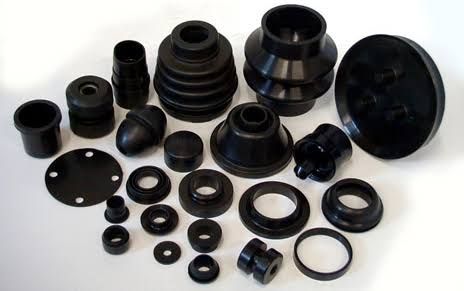
Types of Rubber Seals: Rubber seals come in various forms, including O-rings, gaskets, oil seals, diaphragms, lip seals, and more. Each type of seal is designed for specific sealing applications and has its own unique shape and configuration.
Material Selection: Rubber seals can be made from different rubber compounds, such as nitrile (NBR), silicone (VMQ), fluorocarbon (FKM), EPDM, neoprene, and natural rubber (NR). The material choice depends on factors like the intended application, temperature range, chemical compatibility, and specific performance requirements.
Sealing Applications: Rubber seals are widely used in industries such as automotive, aerospace, plumbing, HVAC, machinery, and manufacturing. They are used in various components and systems, including engines, pumps, valves, cylinders, pipes, fittings, and more.
Compression and Deformation: Rubber seals work by being compressed between two mating surfaces, creating a seal that fills gaps and prevents fluid or gas leakage. The rubber material deforms under compression to provide an effective seal and maintain its resilience.
Properties and Features: Rubber seals possess properties such as flexibility, resilience, chemical resistance, and temperature resistance, making them suitable for a wide range of environments and operating conditions. They can withstand high pressures, temperature variations, and exposure to oils, fuels, chemicals, and other fluids.
Customization and Standard Sizes: Rubber seals can be manufactured in standard sizes that conform to industry standards, or they can be custom-designed to meet specific requirements. Customization allows for precise dimensions, shapes, and material properties tailored to the application's need
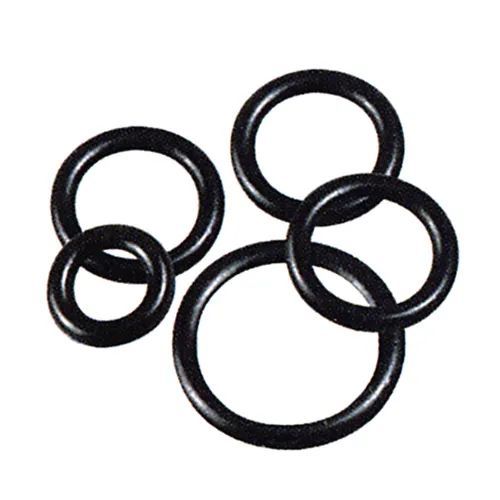
Material: O-rings can be made from different types of rubber, such as nitrile (NBR), silicone (VMQ), fluorocarbon (FKM), or EPDM. The choice of material depends on factors like temperature range, chemical compatibility, and application requirements.
Size: The size of an O-ring is specified by its inner diameter (ID), outer diameter (OD), and cross-sectional diameter (thickness). These dimensions are usually measured in millimeters (mm) or inches (in).
Hardness: O-rings have a hardness rating, typically expressed in Shore durometer (e.g., 70 durometer). The hardness affects the O-ring's resistance to compression and flexibility.
Temperature Range: O-rings have a recommended temperature range in which they can function effectively. This range varies based on the material used, and it is important to select an O-ring that can withstand the expected operating temperatures.
Pressure Rating: O-rings also have a maximum pressure rating, which indicates the amount of pressure they can withstand without failing. The pressure rating is usually given in units of pounds per square inch (psi) or megapascals (MPa).
Chemical Compatibility: It is essential to consider the chemical compatibility of the O-ring material with the substances it will come into contact with. Different rubber compounds have varying resistance to chemicals, oils, fuels, and other fluids.
These specifications may vary depending on the specific application and industry requirements. It is recommended to contact us for precise specifications tailored to your needs.
 Mr. Anil Ahuja & Mr. Sarthak Ahuja (Oshna enterprises)
 1062 /1 Dayanand Colony Railway Road, Gurugram, Haryana - 122001, India
 Share us via