Write a Review
Our Products
Leading Manufacturer, Supplier & Retailer of Steel Strips and Steel Channel.
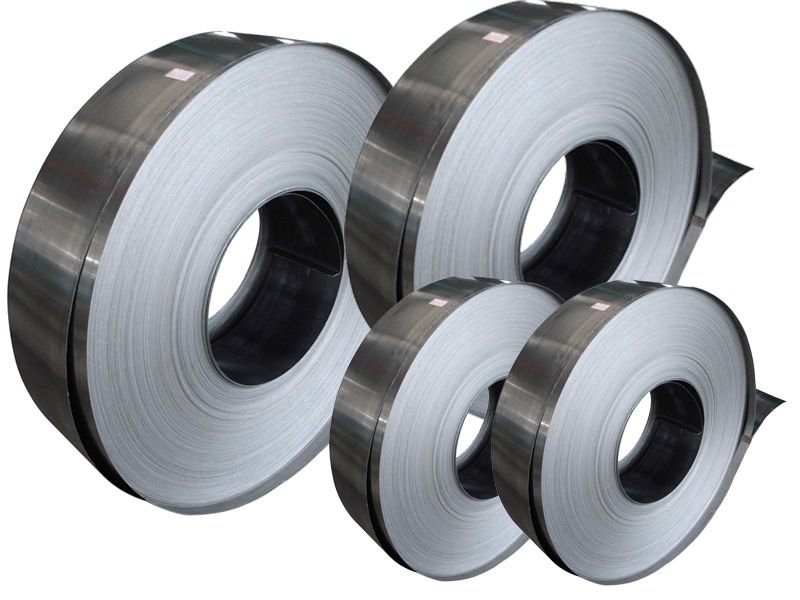
The traditional method of making Steel Strips is by using recycled steel. The newest method of Steel Preparation begins by first rolling steel rod stock and strips of appropriate dimensions into steel strapping of specified thickness. The resulting steel strapping is then heated with electrical resistance by passing electric current through it using roller contacts. When the strip stock reaches an appropriate temperature, it is hot rolled and heat treated. Heat Treatments are varied and chosen per the type of structural constitution required such as Pearlite, Marsenite, Bainite etc. It can be modified to obtain various properties such as Tensile Strength, Ductility etc. The resultant product is either coiled or cold rolled. This method results in energy savings that were hard to achieve in conventional heat furnaces.
Steel Strips are used for different industrial applications. Most common uses include Body Panels, Automotive Components, Tubes, Appliances like Refrigerators, Washers, and Dryers, Building Materials, Electric Components etc. Steel Strips have excellent forming and deep crawling capabilities. Cold Rolled Steel Strips possess excellent surface quality, cold formability, and uniform mechanical properties. Major areas of application include Civil Engineering, Tube Industry, Section Industry, Steel Service Centres, Re-Rollers and, Steel Trade. The Housing Industry uses Steel Strips for Roofing, Cladding, Drainage, and Household Appliances. The Automotive Industry also uses Steel Strips spanning Automotive sub-suppliers and the commercial vehicle industry. Hot Water Boilers, Stoves, Clothes Dryers, Dishwashers are few other areas of use for Steel Strips. The Radiator Industry also uses Steel Strips.
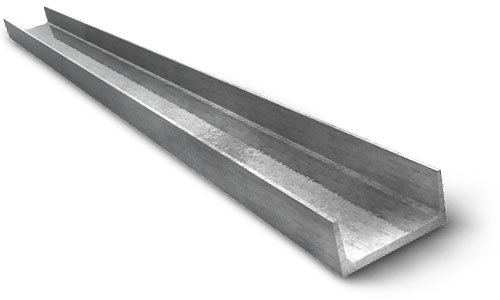
A Steel Channel is a C-shaped Structure made from Mild Steel that is hot rolled. The inside corners of the steel channel have specific radii that provides it the required strength and rigidity to support steel angles, and for various other structural and construction projects. They are fairly easy to prepare with the right equipment and dimensions. Steel Channels commonly follow the dimensional standards of ASTM 36. Post hot-rolling, the Steel Channels are generally subjected to additional inline fabrication. After the fabrication process, it is either painted or sent for galvanisation to make it resistant to corrosion. Steel Channels can be cut, drilled, or machined per requirements. They can also be welded with ease. Large Channels are usually manufactured using laser fusion technology.
Steel Channels fit both Indoor and Outdoor usage. They are normally employed for general construction. Few examples of use are as Lintel above doors and as support for floor joists. Indoor usage is mostly as Holders, Covers, Frames, Inserts, Dcor, Brackets, Tracks, Slides, Posts etc. Outdoor usage include as Standards, Supports, Reinforcements, Stiffeners, Railings, Rails, Rims, Purlins, Sub-girts, Girts, etc. Other industries that use Steel Channels are Ship Building and Automotive Industries. Majority of Manufacturing Industries make passive use of Steel Channels. They are also used for Repairs. Construction of Bridges and Machinery also make use of Steel Channels. Civil Engineering and Building/Construction are the two main Industrial sectors that see high demand for Steel Channels. Their Corrosion Resistant and high support properties make them useful in these two sectors.
 Manish Kumar Singh (Power2SME Pvt Ltd)
 Plot No 88 Udyog Vihar Phase 4 , Gurugram, Haryana, India
 Share us via